Trot is a Korean popular-music genre that took recognizable shape in the 1930s. Its classic sound is associated with a steady two-beat pulse, pentatonic melodies and expressive vocal turns—but trot has evolved, so no single feature defines every song. Its history reflects cultural exchange under Japanese colonial rule, and its appeal lies in the way a memorable melody can carry intense emotion.
What trot music is
Trot (트로트, teuroteu) is a Korean popular-music genre. The Academy of Korean Studies’ Encyclopedia of Korean Culture entry on trot, last revised June 21, 2024, describes it as music formed during Japanese colonial rule, with influence from Japanese enka. The entry’s author is identified as a specialist; the interpretation is not necessarily the Academy’s official position.
That history is better understood as cultural exchange than as a simple act of copying. Koreana’s account of early Korean popular music notes that Japanese popular music had itself developed through encounters between Western and Japanese traditions. Translated and adapted enka songs circulated in Korea before Korean compositions emerged around 1930, according to the encyclopedia.
How trot sounds
Classic trot often has a clearly marked two-beat rhythm, a pentatonic melody and a strong, emotionally expressive vocal line. The Korean encyclopedia describes both minor and major pentatonic patterns; Koreana’s discussion of “Tears in Mokpo” points to its two-beat rhythm, minor key and pentatonic scale.
Recommended Free Tools
#1 Best Overall
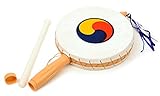
- Authentic Korean Traditional Instrument – Handcrafted to preserve the sound and quality of traditional Korean drumming.
- Professional Performance Drum – Suitable for adult musicians, hobbyists, and performers seeking authentic tones.
- High-Quality Materials – Made with durable wood and natural drum skin for long-lasting performance.
- Desktop or Stage Display – Ideal for both practice, performance, or decorative display in studios and homes.
- Engaging Musical Experience – Perfect for adults exploring traditional Korean music or adding a unique percussion instrument to their collection.
Another recognizable trait is kkeokk-ki (flexing), a style of vocal inflection. In a 2021 Korea.net cultural Q&A, published by the Ministry of Culture, Sports and Tourism, the technique is described as vibrato on lower notes and a crack or break on higher notes as the singer pushes the limits of the vocal range. These are listening cues, not a checklist every modern trot song must satisfy: rhythms and tempos have diversified, and contemporary songs blend with other styles.
Is trot the same as foxtrot?
No. The name “trot” is linked to the Western dance term “foxtrot,” but the Korean genre is not simply foxtrot. The Encyclopedia of Korean Culture identifies the main connection as a shared two-beat rhythm. Trot developed as its own Korean popular-music tradition, shaped by multiple influences.
Rank #2

- The Sogo drum is often used in ensembles alongside other traditional Korean instruments, such as the janggu (hourglass-shaped drum) and the buk (barrel drum).
How the genre got its name
The naming timeline is not settled in the cited accounts. The Encyclopedia of Korean Culture says “trot” became established as the label in the mid-1960s, while Koreana says the name is presumed to have come into use in the 1950s. Earlier, the music was called yuhaengga, meaning “popular songs.” The later term ppongjjak could be disparaging. Those changing labels reflect the genre’s changing place in Korean popular culture, rather than a single agreed naming date.
A landmark early recording: “Tears in Mokpo”
Lee Nan-young’s “Tears in Mokpo” (Mokpo-ui nunmul), released in 1935, is a useful starting point for hearing early trot. Koreana describes its two-beat rhythm, minor key and pentatonic scale, while the encyclopedia treats the song as a landmark in the style’s establishment. Listeners associated its sorrowful mood with the experience of colonization; that reception is part of the song’s history, not a claim that all trot lyrics carry the same political meaning.
Quick wins for a faster PC:
Fix the driver behind crashes, sound loss and screen glitchesFind Drivers →Clear out junk files and repair common Windows errorsFree Scan →Scan for outdated or missing drivers - takes under a minuteDriver Scan →Rank #3

- Korea traditional percussion instrument
- Stick included, Stick is inside drum. Unscrew cap at base of handle. please keep the stick here to prevent loss after use.
- You can tap on both sides.
- Frame Material : Plastic, Drum Material : Cowhide
- For Student, Made in Korea
How trot changed and returned to wider attention
Trot did not remain fixed in its early form. The Encyclopedia of Korean Culture says it lost prominence as standard pop and folk music gained strength from the 1960s, but continued by mixing with newer styles. Koreana also describes changes after liberation in scales, rhythms and tempos.
The Ministry’s Korea.net account says trot’s largest fan base was in the 1960s and 1970s, followed by lean years as K-pop rose in the 1990s. It points to the 2019 audition program Miss Trot, which went viral and helped spur a revival in television programming. That history shows renewed visibility, but it does not establish a precise picture of who listens today.
Quick Recap
Best Value

- Materials: Our Korean Janggu (Long Drum) is crafted from wood for the drum body and durable cowhide for the drumhead, ensuring a rich, resonant sound ideal for both adults and kids during shaman gatherings and festival celebrations.
- Versatile Musical Instrument: This hand drum serves as an excellent percussion instrument for various events, including cheerleading performances and sound baths
- Portable Design: With its lightweight construction and manageable dimensions (available in 30CM, 35CM, and 38CM options), this long drum is easy to transport, making it perfect for on-the-go musical sessions or outdoor events where you can immerse yourself in ocean sounds or thunder-like beats.
- Beautiful Aesthetic: The Korean Janggu features an eye-catching design that not only produces loud, vibrant sounds but also makes for a stunning visual centerpiece in any gathering or event
- Complete Package: Each set includes one Korean Janggu and a pair of drumsticks, making it a gift for music enthusiasts
Rank #4

- Beginner-Friendly Design: CUEl kalimba thumb piano is designed for simple playability, allowing users to produce clear tones without prior musical training
- No-Tuning Structure: Features CUEl’s aluminum key alignment system designed to maintain consistent key positioning and stable note performance during regular use
- Made in Korea Craftsmanship: Crafted and engraved in Korea with attention to material selection, surface finishing, and overall build quality
- Natural Wood Construction: Constructed with koa wood and steel keys to produce a deep and resonant tone characteristic of traditional kalimba instruments
- Complete Set Included: Includes kalimba instrument and protective components designed to support safe storage and delivery
Product prices and availability are accurate as of the date/time indicated and are subject to change. Any price and availability information displayed on Amazon at the time of purchase will apply.




