Electronic dance music (EDM) is a broad and changing family of dance-oriented music built substantially from synthesized or sampled sounds and percussive rhythms. It is made to support dancing, but its tempos, track lengths, vocal styles and cultural settings vary widely, so no single sound defines it. The label also carries two meanings: an umbrella term for dance-oriented electronic styles, and, in some U.S. marketing and festival contexts from around 2010, a narrower pop-flavoured sound.
The working definition
The chapter “Electronic dance music” in Electronic Music (Cambridge University Press, print year 2013) offers a clear working definition: electronic dance music “features electronic synthesized and sampled instrumentation, with at least some parts of a percussive nature, in tracks designed for dancing.” The excerpt does not name its author, so the definition is best attributed to the chapter itself.
Three related terms are easy to blur together, so the table below separates them.
| Term | What it refers to | Typical scope |
|---|---|---|
| Electronic music | Music primarily created, modified or performed with electronic instruments and technology | The widest category; includes listening-oriented work such as ambient |
| Electronic dance music | Dance-oriented electronic styles, defined by their function on the dance floor and their electronic sound-making | The umbrella for house, techno, trance, drum and bass and related styles |
| EDM | Shorthand for electronic dance music, or a narrower pop-oriented sound in some U.S. contexts | Depends on whether the speaker means the umbrella or the pop sound |
What makes a track count as EDM
The Cambridge definition works as a guide rather than a checklist. Tracks in this family commonly show the following traits, though few have all of them:
What’s actually slowing this PC down?
Pick the symptom - the matching free tool is one click away.
#1 Best Overall
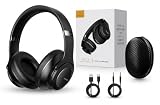
- 2-IN-1 HEADPHONES & WIRELESS SPEAKER Enjoy private listening in headphone mode or rotate the earcups to switch into Bluetooth speaker mode and share your music with friends and family. A unique design that combines two devices in one.
- POWERFUL SOUND WITH 3 EQ MODES Dual 40mm dynamic drivers deliver deep bass, clear vocals, and balanced audio. Choose between Bass Boost, Balanced, or High Definition sound modes to match your music, movies, and daily listening preferences.
- BLUETOOTH 5.3 & TF CARD PLAYBACK Experience a fast and stable wireless connection up to 33 feet. Insert a TF card and enjoy your favorite music without needing a phone, making it perfect for travel, workouts, and everyday use.
- CLEAR CALLS & ALL-DAY COMFORT Built-in microphone supports hands-free calling while soft protein leather ear cushions, memory foam padding, and an adjustable headband provide lasting comfort for work, study, travel, and entertainment.
- 18 HOURS PLAYTIME & PREMIUM GIFT PACKAGE Recharge with modern USB-C charging and enjoy extended listening. Includes a premium carrying case and elegant retail packaging, making it a thoughtful gift for men, women, teens, students, and music lovers.
- Electronic sound-making: synthesized instrumentation, sampled material, or both.
- Percussive drive: at least some parts are rhythmic or percussive in nature.
- Dance function: the track is designed to be danced to, in a club, at a rave or at a festival.
- Varied grooves: beats range from a literal four-on-the-floor kick pattern to more complex, broken or loose rhythms.
- Flexible length: tracks are sometimes extended well beyond radio-length songs.
- Flexible vocals: some tracks are purely instrumental, while others use rapped verses, sung hooks or complete songs built on sampled material.
Some electronic music is not dance-focused at all. Ambient, for example, often rejects conventional rhythm and melody, which is why the dance function is a key part of the definition rather than a side detail.
Two meanings of the label
As an umbrella term, EDM covers the whole family of dance-oriented electronic styles. As a narrower term, Cambridge’s editors describe a usage that gained traction in some U.S. marketing and festival contexts around 2010, when the label was attached to a more specific pop-flavoured sound. Which meaning applies depends on the speaker. A club DJ discussing techno and a festival promoter describing a headline set may both say “EDM” while meaning different things.
Rank #2

- Stereo Headset with Microphone for Classroom or Home - The Cyber Acoustics AC-5002 stereo wired headset with microphone delivers clear audio for lessons, calls, and everyday listening. A unidirectional noise-canceling microphone reduces background distractions, making this headset with microphone for PC ideal for K-12 classrooms, online learning, and home use.
- Adjustable Computer Headset with Durable Braided Cable – Designed for all-day comfort, the Cyber Acoustics AC-5002 wired headset with microphone features an adjustable headband, flexible boom mic that can be worn on the left or right, and soft leatherette earpads. The braided TuffCord cable resists tangles and wear, making this computer headset ideal for classrooms, home offices, and daily use.
- Connects to Gaming Console Controllers – Use this wired gaming headset with compatible Xbox and PlayStation controllers using the integrated 3.5mm connector. Enjoy reliable audio and voice chat for PS5, PS4, Xbox Series X|S, and Xbox One gaming.
- Plug-and-Play 3.5mm Headset for PC and Laptop - The Cyber Acoustics AC-5002 computer headset with microphone connects instantly with a standard 3.5mm audio jack, requiring no drivers or installation. This wired headset with mic works easily with PCs, Macs, laptops, tablets, and other devices with a 3.5mm connection.
- Complete Cyber Acoustics Headset Package - Includes the Cyber Acoustics AC-5002 Analog Stereo Headset and User Guide, backed by a 1-year warranty. Designed for classrooms, offices, and home learning, this Cyber Acoustics headset provides dependable audio and long-lasting performance.
When reading a review, article or event listing, check whether the writer is using the term to cover a whole scene or a particular commercial sound.
Where it came from
There is no single inventor and no single city of origin. Cambridge’s editors Hillegonda C. Rietveld and Toby Young describe the field as having no stable point of origin or single cultural meaning. The phrase “electronic dance music” has been in use since the 1980s, became an umbrella label during the 1990s, and gained further momentum internationally after 2000. House, techno, trance, gabber, hardcore rave, jungle and drum and bass, and UK garage are all part of this broad, cross-pollinating field.
The Tool Desk
Outbyte PC Repair FREEClear out junk files and repair common Windows errorsFree Scan →Outbyte Driver Updater FREEScan for outdated or missing drivers - takes under a minuteDriver Scan →Rank #3

- Digital Stereo Sound: Fine-tuned drivers provide enhanced digital audio for music, calls, meetings and more
- Rotating Noise Canceling Mic: Minimizes unwanted background noise for clear conversations; the rotating boom arm can be tucked out of the way when you’re not using it
- Handy In-line Controls: Simple in-line controls on the headset cable let you adjust the volume or mute calls without disruption
- Plug-and-Play USB Computer Headset: Simply plug the USB-A connector into your computer and you’re ready to talk or listen without the need to install software
- Padded Comfort: Comfortable headphones with adjustable headband features swivel-mounted, leatherette ear cushions for hours of comfort and is easy to clean
Two milestones from Berklee College of Music’s April 2025 guide, “Electronic Music Genres: A Guide to the Most Influential Styles,” help show how electronic sound moved into popular music:
- 1968: Wendy Carlos released Switched-On Bach, which Berklee credits with helping bring the synthesizer into popular consciousness.
- 1977: Donna Summer released “I Feel Love,” an all-electronic track with a four-on-the-floor beat and a Moog synthesizer arranged by Giorgio Moroder. Berklee describes it as an influence on the later emergence of house and techno.
These are milestones, not the start of the story. Club scenes in New York, Detroit, Chicago and Berlin each shaped the music, and several developed within queer circles. House, for instance, is tied in Berklee’s account to 1980s Chicago, underground dance culture and queer Black communities around Frankie Knuckles’s Warehouse sets. Local scenes and cross-cultural exchange matter as much as any single recording.
Rank #4

- Noise-cancelling microphone reduces room noise for clearer Internet calls
- Full stereo sound for your music, movies and games
- Rotating microphone boom can be worn on your left or right side
- Adjustable headband gives you a customized fit
- Works with Windows 10 or later, Windows 8, Windows 7, Windows Vista, Mac OS X 10.5 or later, Chrome OS, Linux Kernel 2.6 plus and iOS or Android devices
Major styles and how to tell them apart
Common examples under the umbrella include house, techno, trance, gabber, hardcore rave, jungle and drum and bass, UK garage, ambient and IDM. The list shows breadth rather than a tidy taxonomy: styles overlap, borrow from one another and often change meaning from one city to another. Instead of rigid definitions, the following axes are more useful for comparing them:
| Axis | What varies | Example |
|---|---|---|
| Rhythm and dance-floor function | Steady four-on-the-floor patterns versus broken or loose grooves; some styles are not dance-focused | House often uses a steady kick pattern; ambient often has no conventional beat |
| Sound-making | Sequenced synthesis, sample-based collage, vocals, or combinations | Sequenced instrumental techno versus sample-based tracks with rapped or sung vocals |
| Scene and setting | Local club, rave, festival or home listening, which shape how a style is played and understood | A Chicago warehouse party and a large festival stage can host the same family of sounds |
Tempo as one example, not a rule
Berklee’s guide lists 120–150 BPM as the tempo range for house. That is a figure for one style, not a general rule. Tempos vary across the umbrella, and a tempo number alone will not tell you whether a track is EDM.
Best Value
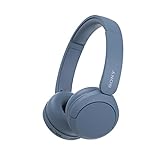
- LONG BATTERY LIFE: With up to 50-hour battery life and quick charging, you’ll have enough power for multi-day road trips and long festival weekends.(USB Type-C Cable included)
- HIGH QUALITY SOUND: Great sound quality customizable to your music preference with EQ Custom on the Sony | Headphones Connect App.
- LIGHT & COMFORTABLE: The lightweight build and swivel earcups gently slip on and off, while the adjustable headband, cushion and soft ear pads give you all-day comfort.
- CRYSTAL CLEAR CALLS: A built-in microphone provides you with hands-free calling. No need to even take your phone from your pocket.
- MULTIPOINT CONNECTION: Quickly switch between two devices at once.
What the 14-style count means
Berklee’s guide covers 14 electronic music types. That number describes the guide’s scope, not a definitive count of genres. Other guides and scenes divide the field differently.
Making it versus hearing it
Berklee’s career overview, “What does an Electronic Musician do?”, identifies synthesizers, drum machines, samplers and computers as common tools in electronic music, and lists MIDI keyboard controllers among the equipment electronic musicians use. These tools help explain how the sound is built, but they are not required to listen to, understand or enjoy the music. A listener needs only the definition above and a sense of the dance-floor function behind it.
Reading the term in context
Recording Academy GRAMMY.com maintains a Dance/Electronic Music category as part of its institutional awards overview, which reflects how the umbrella is used in mainstream industry settings. Those categories are a useful reference point, but they are not a definition. When the word appears in a headline or a playlist, ask whether it means the whole dance-oriented family or a particular pop-oriented sound, and the surrounding context will usually settle it.
Because EDM is a family rather than one fixed genre, the most reliable answer to “what is it?” is a description of the function, the sound-making and the setting, followed by a few named styles to show how they vary.
Free tools Windows power users keep installed
One-click scans. No signup required.
Quick Recap
Product prices and availability are accurate as of the date/time indicated and are subject to change. Any price and availability information displayed on Amazon at the time of purchase will apply.




