What’s actually slowing this PC down?
Pick the symptom - the matching free tool is one click away.
Ashoka is worth reading because his rock, pillar and cave inscriptions preserve a ruler’s own public account of his policies—and, most strikingly, of the conquest of Kalinga and the remorse he said it brought him. They are not a complete biography or a transparent record of how his rule worked. Read with those limits in mind, the edicts offer a rare window onto ancient political power and a useful way to think about the symbols a modern republic inherits.
What does “India’s first emperor” mean?
Ashoka ruled the Mauryan Empire, a vast power that extended across much of the subcontinent in the third century BCE. Calling him India’s “first emperor” is a familiar shorthand, not a precise description of a state bounded by today’s national borders. The INFLIBNET Centre’s chapter on the Mauryan Empire describes the period as the first time the whole of India was politically united under one king; such retrospective language should not be mistaken for a map of modern India. Ashoka is better understood as a Mauryan ruler whose empire became a later symbol of political unity.
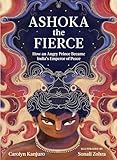


Even the dates require care. Historical chronologies distinguish between taking the throne and coronation, and accounts differ on the year of accession. It is more useful here to place Ashoka in the third century BCE than to give one exact accession year without specifying the convention.
Why are Ashoka’s inscriptions worth reading?
Inscriptions are among the most direct evidence available for Ashoka’s reign: they record public statements and policies issued in his name. They survive as rock edicts, pillar edicts and cave inscriptions, found across a wide geographic area. The Archaeological Survey of India calls them “the earliest decipherable inscriptions, so far available in India.” That makes them valuable not because they tell us everything, but because they let readers encounter a ruler’s official words rather than only later accounts about him.
Free tools Windows power users keep installed
One-click scans. No signup required.
The inscriptions were not all written in one language or script. The Archaeological Survey of India describes Prakrit in the earliest written records it discusses, alongside Ashokan inscriptions in Greek and Aramaic, and identifies Brahmi and northwestern Kharoshthi usage. Those differences reflect the range of places and communities addressed by the inscriptions.
They still have limits. An edict is a public presentation of a ruler’s conduct, not a private diary or an impartial report. World History Commons cautions: “We have no way of knowing what impact Ashoka’s edicts had on his actual reign.” Inscriptions should therefore be read alongside archaeological evidence and later Buddhist, Jain and literary traditions, while keeping those later traditions distinct from contemporary testimony.
Rank #2
What do the Kalinga edicts say?
The conquest of Kalinga is among the most compelling passages because Ashoka’s account places victory beside remorse. In the World History Commons translation, the edict says: “The Kalinga country was conquered by King Priyadarsi [Ashoka’s name for himself], Beloved of the Gods, in the eighth year of his reign.” It then states: “The Beloved of the Gods, conqueror of the Kalingas, is moved to remorse now.”
The same passage says that 150,000 people were deported, 100,000 were killed, and “many times that number died.” These are figures asserted in the ancient inscription, not independently verified demographic measurements. The passage is evidence of how Ashoka publicly represented the conquest and its consequences; it cannot, by itself, establish the full scale of events or provide a complete account of his inner life.
Rank #3
How is Ashoka connected to Republic Day?
The connection is one of national symbolism and political memory, not continuity between an ancient empire and a modern republic. The Ashoka Library notes that the Ashoka Wheel became the central symbol of the flag adopted at independence in 1947. On Republic Day, Ashoka is therefore relevant as a figure whom modern India has drawn into its account of unity and public life—not as a ruler whose empire was the same kind of political project as the republic.
Independent reader supportYour contribution helps us test, update, and keep practical guides available for everyone.Where can you read the edicts?
The University of Oslo and University of Texas at Austin’s Ashoka Library is a free online starting point, with inscriptions grouped alongside English translations. The library states that its texts and translations are based on E. Hultzsch’s 1925 edition; it is a useful route into the material, not a newly issued translation. For a focused first reading, compare its Kalinga passage with the World History Commons selection of rock and pillar edicts. The Archaeological Survey of India’s epigraphy overview can help orient readers to scripts, languages and the value of inscriptions.
Quick Recap
- Archaeological Survey of India, Bharat SHRI: About Epigraphy
- World History Commons: Selections from Ashoka, Rock and Pillar Edicts
- Bibliotheca Polyglotta: The Ashoka Library
- P. Bhaskar Reddy, “The Mauryan Empire,” INFLIBNET Centre
Product prices and availability are accurate as of the date/time indicated and are subject to change. Any price and availability information displayed on Amazon at the time of purchase will apply.




