What’s actually slowing this PC down?
Pick the symptom - the matching free tool is one click away.
Mark Kemp’s Rolling Stone profile “Life After Death,” published December 25, 1997, examined how Sublime’s breakthrough gathered momentum after frontman Bradley Nowell died. It follows the making of the band’s sound in Long Beach, Nowell’s struggles with addiction, and the posthumous rise of the group’s self-titled album—while capturing what was known and reported at that moment, rather than offering a documentary or a current account.
What “Life After Death” is—and when it appeared
“Life After Death” is a reported music profile by Mark Kemp, published in Rolling Stone on December 25, 1997. Its title points to the contrast at the center of the piece: Bradley Nowell died in 1996, but Sublime’s biggest commercial breakthrough was still unfolding more than a year later. The article is a snapshot of that period, not a documentary film or a present-day update.
| # | Preview | Product | Price | |
|---|---|---|---|---|
| 1 |

|
Sublime | $10.00 | Buy on Amazon |
| 2 |

|
SUBLIME/Gold | $21.07 | Buy on Amazon |
| 3 |

|
Sublime: Greatest Hits | $12.52 | Buy on Amazon |
| 4 |
|
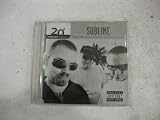
The Best Of Sublime 20th Century Masters The Millennium Collection | $39.99 | Buy on Amazon |
| 5 |
![Greatest Hits, Vol. 1 [Explicit]](https://m.media-amazon.com/images/I/61URy2gUEhL._SL160_.jpg)
|
Greatest Hits, Vol. 1 [Explicit] | $9.99 | Buy on Amazon |
The profile places Nowell’s death on May 25, 1996, in a San Francisco hotel room, seven days after he married Troy DenDekker and before the release of Sublime’s self-titled album. It also notes the couple’s son, Jakob. Those circumstances are presented here as Kemp reported them in 1997; this account does not independently verify the details.
Why Sublime’s success came after Nowell’s death
Sublime’s self-titled album arrived two months after Nowell died. Kemp describes its success as gradual: rather than an immediate surge driven by public mourning, the record built an audience as radio play and follow-up singles widened the band’s reach.
#1 Best Overall
In the article’s period-specific account, the album entered the Billboard Top 20 by April 1997, while “What I Got” reached No. 1 on the Modern Rock chart. Kemp reported that the album had sold more than two million copies by the profile’s publication and that Sublime was selling about 40,000 records a week roughly 18 months after Nowell’s death. These figures describe the moment Kemp was writing about in 1997, not current chart positions or lifetime sales.
The profile identifies “Santeria,” “Wrong Way” and “Doin’ Time” as later singles. It notes that “Doin’ Time” draws on the melody of George Gershwin’s “Summertime,” an example of the band’s ability to fold older musical material into its own mix.
Rank #2
How Long Beach shaped Sublime’s sound
Kemp connects Nowell’s songwriting to a Long Beach environment where punk, surf and hip-hop cultures met. The profile describes a sound that also drew on reggae, ska, dub, funk and heavy metal. Rather than treating those ingredients as a neat formula, it presents Sublime as a band whose music reflected the collision of local scenes and Nowell’s wide-ranging interests.
The group’s DIY beginnings are part of that story. Kemp identifies 40 Oz. to Freedom as Sublime’s 1992 debut, recorded in Long Beach and released on the band’s Skunk label. The profile traces Nowell’s musical drive back to adolescence, reporting that he began his own band, Hogan’s Heroes, at 13. It also says he left California State University Long Beach in 1990 to focus on Sublime.
Recommended Free Tools
Rank #3
- SUBLIME
- R&P INTERNACIONAL
- INTERNATIONAL
- MUSIC
Addiction and the strain behind the music
The article does not reduce Nowell’s life or the band’s success to addiction. Instead, Kemp recounts repeated efforts to get clean alongside accounts from DenDekker, band members, producer Paul Leary and Nowell’s father, Jim. Their recollections convey both concern for Nowell and the difficulty of working through periods of instability.
Leary described the recording sessions as “chaos in the studio,” while Jim Nowell recalled one period as “the worst I’d ever seen him,” according to Kemp’s report. These comments are glimpses into the experiences of people around Nowell, not a diagnosis or a complete explanation of his music.
Independent reader supportYour contribution helps us test, update, and keep practical guides available for everyone.What the 1997 profile says about Sublime’s recordings
Alongside the self-titled album and 40 Oz. to Freedom, Kemp discusses Second-Hand Smoke, released by MCA in November 1997. He describes it as a collection of early songs, previously unissued material, remixes and alternate takes. The article also reported that the surviving members had signed a deal for further archival releases; that was a statement about plans reported in 1997, not evidence of current plans.
For readers approaching the story through the music, these three records mark different parts of the account: the Long Beach DIY roots of 40 Oz. to Freedom, the posthumous breakthrough of Sublime, and the archival material assembled on Second-Hand Smoke. Current editions and track listings are not established by Kemp’s profile.
Quick Recap
Best Value
Product prices and availability are accurate as of the date/time indicated and are subject to change. Any price and availability information displayed on Amazon at the time of purchase will apply.




