The Tool Desk
Outbyte Driver Updater FREEScan for outdated or missing drivers - takes under a minuteDriver Scan →Outbyte PC Repair FREERepair Windows errors before they cause bigger problemsFix Now →The best-documented Peanuts Fourth of July story is a 1970 comic-strip sequence: Snoopy is invited to give a holiday speech at the Daisy Hill Puppy Farm, but his attempt to take the podium is interrupted. The record points to a memorable episode, not an annual Peanuts tradition.
What happens in the Fourth of July storyline?
Snoopy receives an invitation to deliver a Fourth of July speech at the Daisy Hill Puppy Farm, the place associated with his fictional beginnings. The comic premise sets up a formal holiday occasion for a character better known for his imaginative exploits than for public speaking.
In the sequence’s punch line, Snoopy is about to take the podium when a supper dish bonks him. The University of Alabama repository’s indexed excerpt dates the sequence’s beginning to July 2, 1970, and identifies the invitation premise. The repository page itself was not accessible, so that date and premise are supported by the search-indexed excerpt rather than a fully inspected document.
How do the 1970 publication and 2004 reprints differ?
| Record | What it establishes | What the date means |
|---|---|---|
| University of Alabama repository search excerpt | The sequence begins with Snoopy invited to give a Fourth of July speech at the Daisy Hill Puppy Farm. | July 2, 1970 is the indexed date for the original sequence’s beginning; the underlying page could not be opened. |
| Michigan State University Comic Art Collection index | Entries summarize Snoopy going to the farm to speak and approaching the podium before being bonked by a supper dish. | July 2 and July 3, 2004 are dates for Classic Peanuts reprint entries, not the original publication dates. |
Keeping those records separate matters: a later reprint date does not move the story’s first publication to 2004. The sources identify the 1970 sequence and later reprint entries; they do not establish a dedicated animated Fourth of July special or a recurring annual storyline.
#1 Best Overall
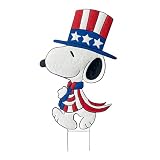
- PATRIOTIC DÉCOR: Bright and colorful and hand painted and coated for long lasting cuteness.
- FAN FAVORITE: Peanuts fans can rest assured that these are licensed products and have been approved by the Peanuts company themselves.
- SIZE:18 inch icon with 4 inch durable H stake for securing to ground or displaying in flowers pots
Was the Fourth of July a recurring Peanuts theme?
The available archival evidence supports one especially identifiable Independence Day storyline and subsequent reprints. It does not support describing the holiday as a frequent or annual Peanuts theme. That distinction is useful when comparing this strip with holiday material that was adapted, collected, or revisited regularly.
Why does the story fit Snoopy?
The Daisy Hill Puppy Farm setting connects the holiday speech to Snoopy’s fictional origin, while the interruption undercuts the ceremony before it can become a conventional patriotic address. The gag is about the mismatch between a formal podium moment and Snoopy’s vulnerable, comic role; it should not be mistaken for a documented statement by Charles M. Schulz about the holiday.
Rank #2

- An import from Medicom Toy
- From the classic comic strips
- Highly detailed non-articualted figure
- Compact enough to display anywhere
Where does this episode sit in Peanuts history?
Peanuts Worldwide identifies Charles M. Schulz as the creator, and the Charles M. Schulz Museum timeline records the strip’s debut on October 2, 1950, in seven newspapers. The Library of Congress describes the strip’s run as 1950–2000 and says it appeared in more than 2,600 newspapers worldwide at its peak. That broad reach gives context to the strip’s audience, but it is not a Fourth of July-specific readership figure.
Schulz’s official Charlie Brown character page includes his general observation that Charlie Brown represents the average person and that losing is more familiar—and funnier—than winning. It offers context for the series’ comic outlook, but it is not a quotation about Snoopy’s 1970 holiday speech.
Recommended Free Tools
Quick Recap
Best Value

- ENESCO FIGURINE: from the Peanuty by Jim Shore collection
- DESIGN: combines classic Peanuts characters with Jim Shore's signature folk art style
- HAND-CRAFTED: from high-quality stone resin material and intricately hand-painted
- PACKAGED: in an individual gift box
- DIMENSIONS: 2" L x 1.5" W x 2.5" H
Rank #4

- Officially Licensed by Peanuts
- H53493
- Lightweight, Classic fit, Double-needle sleeve and bottom hem
Rank #3

- Includes: 5 Snoopy toy figures.
- 75 Years of Snoopy: Celebrate a special anniversary with the Peanuts Collectible Snoopy Set.
- World’s Most Beloved Dog: This set of 5 Snoopy figurines captures the spirit of Charles Schulz’s iconic beagle, Snoopy.
- One Beagle, 5 Personas: These 3-inch toy figures showcase Snoopy as some of his most famous alter egos—Joe Cool, Flashbeagle, Masked Marvel, WWI Flying Ace, and Happy Snoopy.
- Play or Display: Share the good vibes with this collection of Snoopy toy figures. They’re not only adorable enough for display, but also inspire playtime adventures.
What the surviving records do not show
- They do not show that Peanuts ran a Fourth of July storyline every year.
- They do not establish a dedicated Fourth of July animated special.
- They provide no holiday-specific readership, circulation, or sales statistic.
- No directly attributable Schulz statement about this particular sequence is established by these records.
Product prices and availability are accurate as of the date/time indicated and are subject to change. Any price and availability information displayed on Amazon at the time of purchase will apply.




