Last Breath is based on a real 2012 North Sea diving accident: a dynamic-positioning failure caused a vessel to drift, and commercial diver Chris Lemons lost his life-support umbilical on the seabed. The 2025 feature preserves the documented outline, but its scripted scenes are not a scene-by-scene historical record. The evidence supports the central emergency; it does not establish which individual conversations or dramatic details happened exactly as shown.
First, which Last Breath?
There are two films to distinguish. Last Breath (2019) is an 86-minute documentary directed by Alex Parkinson and Richard Da Costa. The British Council describes its subject as a commercial diver stranded on the seabed with five minutes of oxygen and no chance of rescue for more than 30 minutes. The British Council film record was updated May 12, 2025.
| # | Preview | Product | Price | |
|---|---|---|---|---|
| 1 |

|
Last Breath (2025) - Collector's Edition Blu-ray + Digital | $10.99 | Buy on Amazon |
| 2 |
|
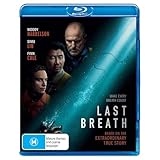
Last Breath Blu-ray | Woody Harrelson | $23.10 | Buy on Amazon |
| 3 |

|
Downton Abbey: The Grand Finale | $34.97 | Buy on Amazon |
Last Breath (2025) is Parkinson’s dramatic feature, released February 28, 2025. Focus Features lists Finn Cole, Simu Liu, Woody Harrelson, and Cliff Curtis among the cast, and credits Mitchell LaFortune, Alex Parkinson, and David Brooks as writers. Focus Features’ film page calls it a true-story film.
The feature adapts the same real emergency and the earlier documentary; it is not itself a documentary. Parkinson said the dramatic form let him explore the characters’ emotional lives more fully and use a different film language. In a Focus Features interview published February 28, 2025, he explained that the documentary recounted aspects of the story in detail but left some elements he wanted to address in a dramatic film.
Free tools Windows power users keep installed
One-click scans. No signup required.
#1 Best Overall
- Runtime: 93 minutes
What the movie gets right about the accident
The key mechanics are supported by Chris Lemons’s own account. In September 2012, a dynamic-positioning-system failure on the vessel above him led to his umbilical being severed while he worked on the seabed. The umbilical supplied breathing gas, light, and heat. Lemons says he was left in darkness about 300 feet below the surface, with approximately five minutes of gas in his emergency tanks. His professional biography describes the incident.
TIME’s reported account adds that the vessel drifted and dragged the diving bell, and that Lemons’s umbilical snagged on the manifold before it snapped. TIME describes two divers working on the seabed while a third remained in the bell. TIME’s account, published March 1, 2025, provides context, but it is not an incident investigation report.
That equipment failure explains the emergency at the heart of the film. The umbilical was not merely a line connecting Lemons to the ship: losing it meant losing his normal supply of breathing gas, heat, and light at once. The setting and peril are therefore grounded in the documented event, even though the feature shapes them into a scripted story.
Rank #2
- Woody Harrelson, Finn Cole
How long was Chris Lemons underwater, and how much gas did he have?
The often-quoted emergency-gas figure is about five minutes. Lemons’s biography gives that estimate for the gas in his emergency tanks, and the British Council’s 2019 documentary synopsis also says five minutes of oxygen. These descriptions should not be treated as a precise measurement of how long he could survive: one refers to an emergency reserve, and the other is a film synopsis.
What’s actually slowing this PC down?
Pick the symptom - the matching free tool is one click away.
Published descriptions also differ on the rescue interval. The British Council says there was no chance of rescue for more than 30 minutes; TIME describes Lemons as being at the bottom for nearly 40 minutes. Those figures come from different accounts and are not a single precise incident-log measurement. It is more accurate to attribute them than to present one number as settled fact.
What the feature changes—or what cannot be verified
The available accounts support the broad sequence—positioning failure, vessel drift, umbilical snag and loss, and Lemons’s isolation on the seabed. They do not provide an authoritative scene-by-scene comparison of the 2025 feature with a complete incident record. That means it is not responsible to label particular dialogue, private conversations, character actions, or precise timing as fabricated without a source that specifically checks them.
Rank #3
The distinction is between an established event and a dramatic reconstruction. Parkinson has described the feature as a way to explore emotional depth beyond what the documentary could address. That makes emotional framing and scripted scenes part of the adaptation; it does not, by itself, prove that any specific moment is invented or historically exact.
The 2019 documentary also uses a different kind of evidence and storytelling. Its production company says it grew out of Lifeline (2012), which followed Lemons and the dive-support-vessel team. Floating Harbour describes the documentary as using first-hand testimony, ROV archive footage, and staged reconstructions. The production page identifies the film’s production background. Reconstructed footage is not the same as continuous footage of every event, while the 2025 feature is a scripted dramatic interpretation.
The Tool Desk
Outbyte PC Repair FREERepair Windows errors before they cause bigger problemsFix Now →Outbyte Driver Updater FREEScan for outdated or missing drivers - takes under a minuteDriver Scan →Why the diving setup matters
In saturation diving, divers live in a pressurized chamber aboard a vessel and travel to the work site in a diving bell. TIME’s account describes two divers going down to work while a third supports them from the bell. Lemons’s account identifies the umbilical’s essential functions: breathing gas, light, and heat. Together, those details explain why the tether’s loss left him in darkness without his usual breathing-gas and heat supply.
This context also helps separate what the sources establish from what a film must construct. The working arrangement and life-support risk are documented; a feature’s shot choices, dialogue, and moment-to-moment tension are storytelling decisions unless independently confirmed.
Quick Recap
The clearest verdict on what is true
- Supported: The 2012 accident involved a dynamic-positioning failure, drift, and a severed life-support umbilical. Lemons’s own biography says the lost umbilical carried breathing gas, light, and heat.
- Reported with differing timing: Lemons had about five minutes of emergency gas, while published accounts describe the rescue delay as more than 30 minutes or his time at the seabed as nearly 40 minutes. Those figures have different attributions and should not be collapsed into one exact timeline.
- Not settled scene by scene: The available sources do not verify every line, private exchange, action, or precise beat in the dramatic feature. The feature is an adaptation, not a substitute for an incident record.
Product prices and availability are accurate as of the date/time indicated and are subject to change. Any price and availability information displayed on Amazon at the time of purchase will apply.




