There is no single best snare drum for every metal drummer. Steel is a useful starting point for a bright, aggressive, ringing sound; aluminum is worth auditioning for a drier, shorter response; and brass can combine a rich tone with a sharp attack. Those are broad tendencies, not guarantees: shell construction, size, tuning, heads, damping, playing dynamics and amplification all shape the sound.
A metal-shell drum is not a requirement for playing metal. A wood snare can also fit the genre, particularly if you want a warmer, more controlled sound. The best choice is the drum that delivers the attack, sustain and feel you want at your tuning, both in the room and through the sound system.
Start with the sound you want
Before choosing a model, decide what the snare needs to do in your music. Do you want a forceful crack with a long ring, or a shorter, drier response that leaves space for dense guitars? Do you rely on rimshots? Will the drum also need to work in other genres? These answers help narrow the field more reliably than choosing by shell material or a signature name alone.
- For a bright, aggressive sound: audition steel, while being prepared to manage its resonance with tuning or damping.
- For a crisp sound with shorter sustain: try aluminum.
- For a rich tone with a sharp attack: audition brass.
- For warmth and less metallic ring: include wood-shell snares in your comparison.
Yamaha’s guidance emphasizes that choosing a snare is personal and that no single drum is perfect for every purpose. The material descriptions below are manufacturer guidance, not results from controlled acoustic tests; individual drums can differ.
Do these 3 things before closing this tab:
1Fix the driver behind crashes, sound loss and screen glitches2Clear out junk files and repair common Windows errors3Scan for outdated or missing drivers - takes under a minute#1 Best Overall
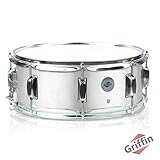
- METAL 14 X 5.5 STEEL SHELL SNARE DRUM WITH CHROME FINISH THAT GOES GREAT WITH YOUR ACOUSTIC DRUM SET: The shiny chrome finish on the Griffin 14 inch snare drum steel shell drum snare will stand out from your other snare drum kit. The metal drum shell will also reflect stage lights, giving your drum set a flash it’s never had before. Great for rock bands, acoustic shows, concert, church drummers, or school performances as a marching snare drum, it won’t let you down.
- METAL DRUM SHELL FOR A BRIGHTER SOUND WITH PRONOUNCED ATTACK : With a very distinctive sound, steel shell drums are best known for their bright tone, long sustain, and pronounced attack. They can be found in a wide variety of music including rock, reggae, and R&B. Their penetrating rimshot sound projects helping to get your sound above the rest of the cut and into the crowd where it belongs.
- CLASS-LEADING SNARE THROW OFF: Equipped with a top-notch, smooth and quiet snare strainer that promises flawless operation and a fluid movement every time, this drum throw-off will allow you to easily tighten, loosen or mute the snares according to your preference, all without failing or locking up! Specifications: Snare wire: 12 strands. Hardware finish: Chrome. Gross weight: 6 pounds.
- MORE TUNING LUGS FOR YOUR SNARE HEAD CREATING EXCELLENT SOUND: The percussion hardware includes a drum key, as well as eight (8) very durable tuning lugs that promise a much more stable and higher quality sound compared to six lug drums, allowing you to achieve excellent sound in even the lowest tuning option.
- 1-YEAR WARRANTY – All products we sell from laptop stands, recording studio equipment, disc jockey accessories and dj stands, to stage equipment and stage lighting packages, and everything in between comes with our exclusive, 30-day money back return policy and a premium 1-year warranty! All you have to do is contact us within 30 days to request a return, or within 365 days from purchase to request a warranty replacement.
How shell material shapes the sound
| Material | General tonal character | What to consider |
|---|---|---|
| Steel | Yamaha characterizes steel as aggressive and bright, with emphasized mid and high frequencies, more resonance and ring, and generally greater loudness than brass or aluminum. | Steel is heavier than aluminum and may need damping if its ring is excessive for your sound. |
| Aluminum | Yamaha describes aluminum as dry, bright and crisp, with shorter sustain. | It is the lightest of these three common metals. Yamaha also notes its durability and corrosion resistance; its shorter sustain may mean less need for damping. |
| Brass | Yamaha describes brass as articulate and responsive, with a rich, warm tone, sharp crack, dark overtones and more low end than other metals. | It is more resonant than aluminum and often needs damping, depending on the desired result. |
| Bronze | Yamaha describes bronze as loud and crisp, with a dark tone and low fundamental. | It is a less central option than steel, aluminum or brass in a basic comparison; audition the specific drum rather than relying on the material label. |
| Copper | Yamaha describes copper as having a tone between metal and wood, with pronounced low end. | Copper is relatively soft, so Yamaha advises care in setup and transport. |
| Wood | Yamaha describes wood shells generally as warm and full, with less ring than metal shells. | A wood snare may suit players seeking a more controlled or versatile sound. Metal is not compulsory for metal music. |
Shell construction matters as well as the material. Yamaha discusses cast and spun metal shells as construction approaches with different characteristics, so do not assume that two shells of the same metal will respond identically. Compare the actual drums where possible.
Choose dimensions for the response you need
Yamaha gives common snare dimensions as 12 to 15 inches in diameter and 4 to 8 inches in depth. Within that range, its general guidance is that smaller diameters tend toward a higher tuning range, shallower drums toward more crack, and deeper drums toward a fuller tone. Treat those as tendencies rather than fixed rules: tuning and construction also affect the result.
Rank #2

- 【DOMINANT LOW-FREQUENCY CANNON】 Unlike standard 5.5" snares that sound thin in heavy mixes, our 14"x8" extra-deep carbon steel shell generates 30% more low-frequency energy. This "Sonic Artillery" delivers the thunderous punch and earth-shaking backbeats required for metal, hardcore, and modern hip-hop sub drops.
- 【12-VENT INSTANT AIRFLOW SYSTEM】 Engineered with 12 precision-drilled vents to eliminate internal air resistance. Air displaces 40% faster than standard shells upon impact, providing a lightning-fast, aggressive "crack" with zero lag—perfect for rapid-fire blast beats and articulate ghost notes.
- 【ROAD-READY ARMORED CONSTRUCTION】 Built to withstand stadium-level punishment, featuring 12-point Taiwan-made chrome-plated steel lugs and 2.0mm reinforced bronze steel flanged hoops. This high-tension system ensures stable tuning and maximum durability during intense touring or long studio sessions.
- 【PRE-TUNED DARK HARMONICS】 Comes pre-mounted with a specialized Beatello Carbon Black sandblasted low-frequency batter head. The combination of the sandblasted surface and bronze-finished shell creates complex, growling harmonics that cut through dense guitar layers while maintaining a dark, sophisticated tonal profile.
- 【PROFESSIONAL STAGE-READY SETUP】 Designed for serious drummers, session musicians, and studio warriors. This deep-shell beast includes a premium steel snare wire system with military-grade responsiveness. Ready for professional recording or live performances straight out of the box.
For example, a 14 x 7-inch drum can offer a deeper format, but its dimensions alone do not guarantee a particular sound. The TAMA John Tempesta signature JT147 is one named example: TAMA lists it as a 14 x 7-inch drum with a 2 mm brass shell and describes it as throaty, with sharp high-end attack, for heavy genres. That is TAMA’s product description, not an independent test or proof that it is the best snare for metal.
Tuning, heads and damping can matter as much as the shell
Tuning
Yamaha calls tuning one of the most important elements in attaining a signature sound. Its guidance says medium and high tunings generally project better and offer greater sensitivity and dynamic range, while low tuning can limit dynamic range. The right pitch still depends on your playing, musical context and the response you want; do not choose a drum based on shell material while ignoring whether it can be tuned to your target.
Rank #3

- 8" x 14" Steel Snare Drum with 2.3mm Triple-flanged Hoops
Heads
Yamaha says clear heads generally offer more attack and openness, while coated heads can sound warmer. Double-ply heads have fewer overtones and suit heavier hitters who want added durability. These are starting points for experimentation, not a formula that guarantees a particular metal sound.
Damping
Damping can help control sustain, especially on a resonant drum. Yamaha notes that steel and brass may need damping, while aluminum’s shorter sustain may not. Start with the sound you want and adjust damping rather than assuming every metal snare needs the same treatment.
Rank #4

- GIVE YOUR KIT ANOTHER VOICE: Use The Kraken as your primary snare or add it as a side snare for a tight, aggressive sound that can completely change the character of your groove.
- CUT THROUGH THE MIX: The shallow 3.5" x 13" design and 1mm rolled chrome-over-steel shell deliver the fast response and piercing attack you want when your backbeat needs to be heard.
- MAKE YOUR RIMSHOTS COUNT: 1.5mm triple-flange hoops deliver powerful, precise rimshots with the attack and presence to stand out in a dense mix.
- DIAL IN YOUR ATTACK: DW True-Pitch tuning rods give you precise tuning control, while the sleek side-lever throw-off provides fast snare engagement.
- FROM EDM TO PUNK: Create tight piccolo snare sounds for EDM, samples, metal, punk and more, with an included Remo head ready to help you find your sound.
Named drums to audition, not a universal ranking
| Model | Official specification or description | Availability context |
|---|---|---|
| TAMA John Tempesta signature JT147 | TAMA lists a 14 x 7-inch drum with a 2 mm brass shell and describes it as throaty, with sharp high-end attack, suited to heavy genres. | Current inventory and price are not established here. |
| TAMA Lars Ulrich signature LU1465N | TAMA lists a 14 x 6.5-inch drum with a 3 mm diamond-plated steel shell and describes it as loud and aggressive. | Current inventory and price are not established here. |
| Ludwig Aluminum Slotted Coliseum, model L903XXCA | Ludwig specifies a 6 mm cast seamless aluminum shell, die-cast hoops, a P88 throw-off, Remo heads and Puresound Super 30 wires. Ludwig describes the model as limited to 100 worldwide. | The product page’s limited-edition statement does not establish current remaining stock. |
| Pearl Reference Metal Snares | Pearl lists brass and steel configurations and detailed specifications. | Pearl marks the line discontinued in 2023. Treat it as a discontinued reference or possible used-market option, not a confirmed current purchase. |
These examples illustrate different materials and constructions; they are not a head-to-head ranking. No controlled comparative test establishes which one performs best for metal, and current street prices and inventory have not been established.
A practical audition checklist
- Set a target: decide whether you want a ringing or controlled sustain, and whether the priority is crack, warmth, body or sensitivity.
- Compare relevant shells and sizes: audition more than one material if possible, and consider diameter and depth alongside the shell.
- Play at your real dynamics: test the drum with the kind of strokes and rimshots you use in practice or performance. Notice how it responds softly as well as when played hard.
- Try tuning and setup changes: listen at the pitches you expect to use, then compare suitable heads and damping. A drum that sounds wrong in one setup may behave differently in another.
- Listen through amplification: where possible, hear the snare mic’d through a sound system. Yamaha recommends considering how the drum sounds amplified, not only in the room.
- Check practical fit: consider weight, hardware and whether the drum will serve other styles. Yamaha notes that metal-shell resonance and construction vary; Pearl notes that its Reference design’s lug arrangement adds drum weight.
- Verify purchase status: check current model availability and condition with a retailer or seller. In particular, Pearl identifies its Reference Metal Snare line as discontinued in 2023.
How to decide between two candidates
Use the same head type, tuning target and playing approach when comparing drums, as far as practical. Then ask which one gives you the preferred attack and sustain, feels responsive at the dynamics you use, and works through the amplification you expect. If the choice is close, prioritize the instrument that reaches your sound with less compromise in tuning or damping.
Windows Errors? Fix Them Before They Spread
Repair common Windows errors and clear accumulated junk for a smoother, more stable PC - no reinstall needed.Free scan · no reinstallCrashes, No Sound, or Screen Glitches?
Random freezes, missing sound and display glitches usually trace back to one bad driver. Find and replace yours safely.Free scan · under a minuteDo not let a material label or a manufacturer’s genre description make the decision for you. Steel’s brightness, aluminum’s shorter sustain and brass’s warmth are useful auditioning clues; the drum in front of you, in your setup, is the thing to judge.
Quick Recap
Product prices and availability are accurate as of the date/time indicated and are subject to change. Any price and availability information displayed on Amazon at the time of purchase will apply.




