What are the most controversial Oscar wins of all time? This ranking weighs the reputation of the losing contender, the strength and duration of documented backlash, the nature of objections to the winner or its campaign, and how directly the dispute concerns the award itself. It is an editorial judgment, not an official Academy ranking: the Academy’s Awards Database records winners and nominees, not which result was most disputed. Published roundups differ in scope and ordering, so the list separates arguments about a film or performance from controversies about campaigns, representation, personal conduct, or category criteria.
Entries are ranked by the breadth and persistence of the dispute, not by a claim that a winner was objectively undeserving. Best Picture dominates because many of its contested outcomes are framed against enduringly celebrated losing films; narrower-category cases are included when the dispute itself is well documented.
25. Avatar — Best Cinematography
Avatar’s cinematography win is a category-boundary dispute more than a conventional argument that one film plainly outclassed another. Film Daily describes debate over whether a movie built substantially with computer-generated imagery should qualify for the cinematography award. That raises a real question about what the category recognizes: the photographed image, the visual result, or the combined craft of creating it. The dispute is worth including, but it is narrower than the sustained Best Picture arguments higher on this list.
24. Bohemian Rhapsody — Best Film Editing
The film’s editing win drew criticism from viewers who objected to its rapid cutting. whatNerd presents that reaction as a reason the result became controversial. This is an argument about whether the editing serves the scene and film, rather than a broad consensus among editors or critics; the evidence cited here establishes backlash, not a technical verdict on the work.
Recommended Free Tools
#1 Best Overall

- MATERIAL: Printed on 350gsm high-quality glossy paper. Provides clear image quality with a smooth finish. Made using environmentally friendly materials.
- PACKAGE INCLUDES: Set includes 10 printed posters. Produced on premium glossy photo paper for consistent color and detail.
- SIZE & FORMAT: Each print measures 11 x 14 inches . Unframed design allows use with standard frames or direct wall display.
- DESIGN: Suitable for home decoration in living rooms, bedrooms, or offices. Clean and modern print style fits various interior designs.
- USAGE: Lightweight and easy to handle. Can be framed or mounted using tape, clips, or poster hangers.
23. Mikey Madison — Best Actress for Anora
The Big Lead’s 2026 roundup reports that some cinephiles preferred Demi Moore’s performance in The Substance and compares the actresses’ precursor-award records. That makes this a recent, live disagreement about a specific acting result, not a settled historical controversy. It ranks low because the available case rests on one outlet’s account of competing preferences rather than a long-running dispute.
22. Casey Affleck — Best Actor for Manchester by the Sea
Film Daily describes backlash to Affleck’s win tied to sexual-harassment lawsuits and public response to the award. This controversy concerns the recipient’s public history as well as the performance and result, so those issues should not be collapsed together. Lawsuit-related claims require careful attribution; allegations should not be presented as adjudicated findings. The documented reaction makes the win contentious, while the nature of the objection differs from a straightforward disagreement about acting merit.
21. Annie Hall — Best Original Screenplay
whatNerd discusses Annie Hall’s screenplay win over Star Wars, while noting that some retrospective criticism is shaped by Woody Allen’s wider reputation. The award dispute itself is about the writing nominees; criticism of the creator is a separate line of argument and should not be used as proof that the screenplay result was wrong. The case is notable, but the cited coverage gives it less sustained, award-specific backlash than the films ranked above.
20. Chicago — Best Picture
Film Daily frames Chicago’s win against The Pianist and The Lord of the Rings: The Two Towers, two prominent alternatives in the same race. The disagreement is chiefly about which film deserved Best Picture, not a claim that the Academy record is in doubt. The official database is the appropriate record for confirming the award year and nominee slate; the controversy comes from retrospective preference among the contenders.
Do these 3 things before closing this tab:
1Repair Windows errors before they cause bigger problems2Scan for outdated or missing drivers - takes under a minute3Clear out junk files and repair common Windows errors19. Green Book — Best Picture
whatNerd describes criticism of Green Book’s win over Roma and points to other films in the field. The dispute is often discussed through questions of political framing and representation, but those judgments should be attributed to particular critics rather than treated as universal consensus. This ranks above a simple taste disagreement because the objection concerns not only the losing film, but also the perspective and framing rewarded by the Academy.
18. The Pianist — Best Director for Roman Polanski
The directing award for The Pianist is controversial partly because discussion of the result becomes entangled with Polanski as an individual. whatNerd and The Big Lead address that dimension alongside the award. A fair account keeps three questions distinct: the film’s direction, the Academy’s choice among nominees, and objections concerning the director. The controversy is substantial, but those are not interchangeable judgments, and claims about legal history should be grounded in reputable primary records rather than inferred from roundup coverage.
17. The King’s Speech — Best Director for Tom Hooper
whatNerd identifies Hooper’s directing win over David Fincher for The Social Network as a disputed result. This is a category-specific argument about directing, distinct from debate over The King’s Speech’s Best Picture win. Its force comes from the reputation of the losing contender and a recurring view that Fincher’s work was the stronger directorial achievement, rather than from a campaign or conduct controversy.
16. Rocky — Best Picture
Film Daily sets Rocky’s Best Picture win against Taxi Driver, a contrast that continues to invite arguments about which film better represents the year. The controversy is a retrospective comparison between very different kinds of achievement. It should not be conflated with separate disputes over directing awards: a Best Picture result and a director’s win are different decisions.
Quick wins for a faster PC:
Fix the driver behind crashes, sound loss and screen glitchesFind Drivers →Clear out junk files and repair common Windows errorsFree Scan →Rank #2

- Gallery-Style Pack - 12 curated poster prints in one collection
- Ready to Frame - Fits standard 8x12 frames or displays beautifully unframed
- High-Quality Paper - Acid-free 230 GSM paper for durability
- Crisp Detail & Color - Professional prints with sharp imagery and bold tones
- Instant Wall Décor - Add personality to bedrooms, dorms, offices, or theaters
15. Driving Miss Daisy — Best Picture
TIME notes criticism of the film’s racial framing as well as the competing nominees; Film Daily points to long-running criticism associated with Spike Lee. The argument is not simply that another film was more popular or aesthetically preferred. It concerns what the film’s treatment of race leaves out or centers, and what the award’s recognition signified. Those are critical interpretations, not a single uncontested verdict, and should be attributed to the critics making them.
14. The English Patient — Best Picture
TIME points to Fargo and Jerry Maguire as alternatives and describes critical dismissal of the Academy’s choice. The result has endured as a taste-driven controversy: admirers of the losing films see them as more distinctive or memorable, while the winning film’s reputation has not ended the argument. The cited coverage establishes recurring disagreement, rather than a measurable consensus about which nominee should have won.
13. How Green Was My Valley — Best Picture
TIME and whatNerd contrast the winner with Citizen Kane, whose later critical stature has become exceptional. That comparison gives this result unusual staying power: it is often used to illustrate the distance between an Academy decision at the time and the reputation a losing nominee later acquires. The retrospective canon is not itself proof of a bad vote, but it explains why this result remains a standard example of an Oscar choice people question.
12. Dances with Wolves — Best Picture
TIME describes the anger of Goodfellas fans and highlights critic Richard Corliss’s praise for the losing film. The dispute reflects a sharp divide between two celebrated films and what voters chose to reward. Because the case is anchored in an enduring rival rather than a controversy over campaign conduct or category rules, it belongs among the major Best Picture debates without displacing the more widely cited upsets above it.
11. Ordinary People — Best Picture
TIME contrasts the winner with Raging Bull and notes that Martin Scorsese later won Best Picture for The Departed; Film Daily also raises The Elephant Man as a losing alternative. The case has multiple counterfactuals, but Raging Bull is the central comparison in TIME’s account. This result is often remembered as a missed opportunity to recognize a film that later acquired especially strong critical standing.
10. The King’s Speech — Best Picture
TIME contrasts The King’s Speech with The Social Network, while Film Daily also discusses True Grit and Black Swan as alternatives. The win is debated as a choice between a traditional prestige drama and a field containing films many viewers regard as more formally or culturally adventurous. That disagreement concerns the Best Picture selection; it is separate from the Tom Hooper directing result ranked above.
9. Forrest Gump — Best Picture
TIME and whatNerd both draw attention to Pulp Fiction and The Shawshank Redemption as losing films many viewers rate highly. The result has become a recurring argument about what the Academy rewards: broad emotional appeal and a crowd-pleasing narrative, or the more unconventional qualities audiences associate with its rivals. The films’ later reputations keep the comparison alive, but that does not establish that voters shared today’s preferences.
8. Shakespeare in Love — Best Picture
TIME describes Shakespeare in Love’s victory over Saving Private Ryan as a major upset and reports analysts’ attribution of the result to Harvey Weinstein’s lobbying. That is an interpretation of campaign influence, not proof that lobbying caused the vote. The case stands out because the conversation combines a celebrated losing contender with persistent scrutiny of the campaign surrounding the winner.
Rank #3
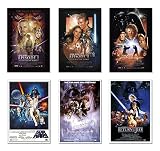
- Movie Poster Set
- Episode I, II, III, IV, V & VI
- 6 Individual Posters
- Size: 24" x 36" (each)
- Ships in sturdy cardboard tube
7. Crash — Best Picture
Crash beat Brokeback Mountain, a result TIME identifies as controversial. TIME also reports that director Paul Haggis later said he did not think Crash deserved the Oscar and that a 2015 poll found Academy voters reassessing the outcome. Those are unusually direct signs that the result remained contested, although a poll does not convert the question of merit into an objective fact. Criticism of Crash’s cultural and representational choices should be attributed to the specific critics making it, not generalized as universal agreement.
6. Saving Private Ryan — Best Picture loss to Shakespeare in Love
This entry names the specific Oscar result at issue: Shakespeare in Love’s victory over Saving Private Ryan. The loss is repeatedly presented as a major upset, and the losing film is the central rival in TIME’s account. Its position reflects both the contender’s reputation and continuing questions about how campaigning may shape the Best Picture race; the latter remains an attributed explanation, not established vote causation.
5. Pulp Fiction — Best Picture loss to Forrest Gump
Forrest Gump’s victory over Pulp Fiction is one of the clearest long-running examples of a Best Picture choice challenged by the losing nominee’s later stature. TIME and whatNerd both cite Pulp Fiction among the alternatives, alongside The Shawshank Redemption. The controversy is not that the Academy’s record is unclear; it is that viewers continue to disagree over whether the winner’s popular appeal should have outweighed the distinctive achievement they see in its rivals.
4. The Social Network — Best Picture loss to The King’s Speech
The Social Network is frequently invoked as the alternative to The King’s Speech in TIME’s account of the Best Picture debate. This is a distinct result from Tom Hooper’s directing win, though the two arguments overlap in their emphasis on the same losing film. Its high placement reflects how strongly the choice has come to symbolize a disagreement about whether the Academy recognized the year’s more urgent or formally ambitious work.
What’s actually slowing this PC down?
Pick the symptom - the matching free tool is one click away.
3. Citizen Kane — Best Picture loss to How Green Was My Valley
The Academy’s choice of How Green Was My Valley over Citizen Kane is a landmark retrospective disagreement because Citizen Kane later achieved extraordinary critical stature. TIME and whatNerd use the comparison to illustrate a result that looks striking through the lens of subsequent film history. That later reputation explains the controversy; it does not mean the Academy was voting with knowledge of a future canon.
2. Taxi Driver — Best Picture loss to Rocky
Film Daily presents Rocky’s win against Taxi Driver as a major Best Picture dispute. The films represent sharply different forms of American storytelling, and the long afterlife of Taxi Driver has intensified the sense that the Academy selected the more conventional choice. This is a retrospective judgment about the specific Best Picture outcome, not evidence that one film’s merits can be measured on a single scale.
1. Brokeback Mountain — Best Picture loss to Crash
Crash’s win over Brokeback Mountain earns the top position because the dispute combines a highly regarded losing film, sustained criticism of the winner, and evidence that the result itself remained a subject of reassessment. TIME reports Haggis’s later reservation about Crash’s victory and an Academy-voter poll in 2015, while also documenting the win over Brokeback Mountain. Criticism involving the films’ cultural or representational dimensions belongs to particular critics and should be attributed accordingly. No official ranking can settle the matter: the Academy database verifies the result, while the controversy is a continuing argument about what that result meant and what voters should have recognized.
What this ranking can—and cannot—tell you
The Academy’s official record establishes winners and nominees; it does not certify that a choice was wrong or controversial. A 2024 empirical analysis by Saraiva found that the Best Picture winner was also the ceremony’s biggest winner in 74 of 78%?
Quick Recap
Product prices and availability are accurate as of the date/time indicated and are subject to change. Any price and availability information displayed on Amazon at the time of purchase will apply.



