Free tools Windows power users keep installed
One-click scans. No signup required.
Subhas Chandra Bose met Emilie Schenkl in Vienna in June 1934, and their relationship endured through years of separation, political upheaval and wartime secrecy. Family and publisher accounts say they married secretly in December 1937, but the precise date and surviving documentation remain disputed. Bose later acknowledged a wife and daughter in a letter to his brother; their daughter Anita was born in November 1942.
How Bose and Schenkl met
In June 1934, Bose met Emilie Schenkl in Vienna. An Indian acquaintance had recommended Schenkl to help type the manuscript of The Indian Struggle. In the book’s preface, dated 29 November 1934, Bose thanked “Fraulein E Schenkl” for assisting him with the work. The acknowledgment establishes her role in the manuscript’s preparation, though it does not by itself establish the nature of their relationship.
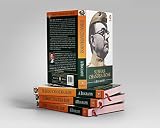


According to Krishna Bose’s family-history account, they kept in regular correspondence and met during Bose’s European visits, including periods when he was busy or imprisoned. Orient BlackSwan’s description of Letters to Emilie Schenkl 1934–1942 identifies a collection of 162 letters from Bose dated 1934–1942 and 18 surviving letters from Schenkl. The published collection makes the correspondence a substantial record of their connection, while the exact circumstances of their private life are also described through later family accounts.
Did Subhas Chandra Bose marry Emilie Schenkl?
The family-history account and the publisher’s description place a secret marriage in December 1937. That is the reported date, not a settled archival conclusion: accounts have offered other dates or years, and the available sources do not resolve the exact date or establish a complete, undisputed record of a ceremony.
#1 Best Overall
A significant piece of evidence is a letter Bose wrote to his brother in Bengali on 8 February 1943. In the English translation reproduced in Krishna Bose’s account, he wrote: “I have married here and I have a daughter. In my absence please give my wife and daughter a little affection – as you have to me all my life.” This is Bose’s reported acknowledgment of a wife and child, but readers encounter it here through a later family-history excerpt and its translation, rather than through an independently examined original letter.
A secondary overview of the controversy on the Netaji Subhas Bose website summarizes competing claims associated with Sugata Bose, Leonard Gordon and Sisir Kumar Bose, as well as disagreement over the letter’s provenance and the sufficiency of the surviving material. It maps the dispute but does not settle it. The careful conclusion is that Bose acknowledged a wife and daughter, while the precise marriage date and documentary trail remain contested.
What is known about pressure from Nazi officials?
Krishna Bose’s account attributes to Schenkl a recollection that someone discreetly encouraged her to end the relationship, invoking the Nazi regime’s racial attitudes toward relationships with people it deemed non-Aryan. The account also describes secrecy around the couple and efforts to avoid security services during Bose’s visits after Anita’s birth.
These details should be understood as testimony Schenkl later gave to Krishna Bose. The sources cited here do not establish a specific statute, written directive or formal state action applied to this couple. The relationship is therefore described as one that unfolded under the pressures of Nazi racial ideology, not as a marriage conclusively shown to have been subject to a particular legal order.
From Bose’s return to Berlin to his departure for Asia
1941: Bose asks Schenkl to join him
Krishna Bose’s account says Bose arrived in Berlin on 2 April 1941 and wrote to Schenkl the following day. He used the pseudonym Orlando Mazzotta in correspondence as he asked her to join him.
1942: Anita is born
The couple’s daughter, Anita, was born in Vienna in November 1942. Scroll’s account gives the date as 29 November, while Orient BlackSwan’s publisher description specifies November. Krishna Bose’s excerpt says Bose visited Schenkl and the infant in December.
1943: Bose leaves Europe
Bose’s letter to his brother, dated 8 February 1943 in Berlin, refers to his wife and daughter. That month he left Berlin for East Asia by submarine. Schenkl and the infant Anita remained in Europe; according to the family-history excerpt, Bose never saw Schenkl again.
Independent reader supportYour contribution helps us test, update, and keep practical guides available for everyone.What the sources can—and cannot—establish
The different kinds of evidence answer different questions. The correspondence collection and Bose’s published acknowledgment support the existence of a sustained connection and family. The reported marriage date comes from the family and publisher accounts, while later summaries describe disputes about the date and documentation. Schenkl’s recollections, as reported by Krishna Bose, provide the account of discreet pressure and wartime secrecy. These sources do not make every private detail or the ceremony’s exact date certain.
Quick wins for a faster PC:
Fix the driver behind crashes, sound loss and screen glitchesFind Drivers →Clear out junk files and repair common Windows errorsFree Scan →Scan for outdated or missing drivers - takes under a minuteDriver Scan →- Meeting and work: Bose’s preface thanks Schenkl for helping with The Indian Struggle; publisher and family accounts place their first meeting in Vienna in June 1934.
- Correspondence: The publisher describes 162 Bose letters from 1934–1942 and 18 surviving letters from Schenkl.
- Marriage: December 1937 is the date given in family and publisher accounts, but the precise date and surviving documentation are disputed.
- Family: Anita’s birth is dated to November 1942; Bose’s February 1943 letter, in the translation reproduced by Krishna Bose, acknowledges a wife and daughter.
- Nazi-era pressure: The account is Schenkl’s reported recollection; the sources cited here do not document a specific legal order against the couple.
Further reading
Orient BlackSwan’s publisher page for Letters to Emilie Schenkl 1934–1942 describes the published correspondence collection. Scroll’s excerpt from Krishna Bose’s family history reproduces the translated letter and retrospective accounts. Google Books catalogs Netaji: Collected Works, Volume 7, a 1994 Netaji Research Bureau publication edited by Sisir Kumar Bose and Sugata Bose that includes correspondence. A Netaji Subhas Bose website overview summarizes the marriage-date controversy.
Quick Recap
Product prices and availability are accurate as of the date/time indicated and are subject to change. Any price and availability information displayed on Amazon at the time of purchase will apply.




