Vilayat Khan’s performance begins as an unaccompanied sitar aalaap in Raag Kafi, then turns into a vivid vocal demonstration and, around the halfway point, a raagmala—a sequence of ragas. The singing is not a separate interlude: music commentator Aneesh Pradhan hears it as evidence of how deeply vocal expression shaped Khan’s instrumental phrasing.
How the performance unfolds
In his March 4, 2017 article for Scroll, Aneesh Pradhan describes an unaccompanied aalaap: an introductory melodic passage without rhythmic accompaniment. Khan’s sitar playing uses ornamentation associated with vocal music, giving the opening a fluid, voice-led character.

Pradhan characterizes the Kafi rendition as being played in thumri style. He also notes a fleeting use of komal Dhaivat—the flat sixth—in phrases that touch on Pilu, a raga closely associated with Kafi. These are brief colorings within the performance, not a full departure from its Kafi focus at the outset.
Why Khan sings during the sitar recital
After the instrumental opening, Khan sings to demonstrate the melodic material. Pradhan describes the vocal passage as vibrant and colorful, matching the instrumental style. The moment helps make audible a relationship that can otherwise be easy to miss: the sitar’s bends and ornaments can evoke the inflections of a sung line.
Do these 3 things before closing this tab:
1Fix the driver behind crashes, sound loss and screen glitches2Repair Windows errors before they cause bigger problems3Scan for outdated or missing drivers - takes under a minute#1 Best Overall
Pradhan places Khan’s singing within a broader practice among some Hindustani instrumentalists, who use the voice during a recital to show how vocal technique informs instrumental playing. Listeners and vocalists have responded differently to the practice. Pradhan’s judgment is that Khan’s interventions work especially well because they are tuneful and reveal a deeply absorbed vocal idiom.
As Pradhan puts it, “His vocal demonstrations were marked by extreme tunefulness, they were indicative of the manner in which he had internalised the vocal idiom, and his instrumental phrasing that followed was proof enough of his passion to recreate all that vocal music had to offer.” This is Pradhan’s critical assessment of Khan’s performance, not a statement by Khan.
Rank #2

- Instrument: Persian Quality Setar By Nava
- Bowl: Mulberry, Neck: Walnut, Pegs: Walnut
- Length of Instrument: 86 cm, Length of strings: 66 cm,
- It comes with soft case and extra strings
From Kafi to a raagmala
Around halfway through the track, the music moves beyond Kafi into a raagmala, or a stringing together of ragas. Khan announces some raga names as he shifts between phrases. The passage broadens the performance from a focused Kafi presentation into a succession of related melodic identities.
Pradhan’s account does not provide a complete inventory of the ragas heard in this later section, so it is best understood as a transition into a raagmala rather than a definitive catalog of every raga in the sequence.
Rank #3

- Acoustic-Electric Sitar. Can be played both ways. Comes installed with acoustic strings and a spare electric string set (magnetic strings). Simply change 3 brass strings to convert to electric
- Full cedar wood construction; the best wood for sitars to withstand the high tension created by over 21 Strings! Adds to the life of your Sitar dramatically and also ensures more consistent tuning
- Real bone bridges and brass frets, top of the line.
- 7 Main String RAVI SHANKAR configuration
What is known about the recording
Pradhan’s article presents the performance through YouTube. It does not establish when or where the recording was made, identify a recording label or physical edition, or provide detailed recording credits. The performance’s documented value here is musical: a Kafi aalaap, Khan’s singing, and the later raagmala make audible the connection between vocal idiom and his sitar phrasing.
Quick Recap
Best Value
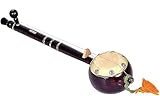
- Sale For - Pack Of 1 | Type - Musical Instrument Iktara
- Material - Wooden | Color - Multicolor
- Item Size - Length - 22 Inches (Approx)
- Pure Handmade Fine Crafted Indian Musical Playing Instruments Wooden Iktara.
- It is used in genres like bhajans, kirtans, and other forms of music.
Rank #4
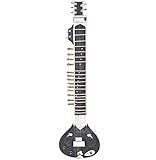
- BRAND NEW ORIGINAL SITAR
- FULLY TUNED, PROFESSIONAL QUALITY - KHARAJA PANCHAM STYLE
- SINGLE TOOMBA SITAR - BLACK COLOR - EXQUISITE CELLULOID WORK - CAMEL BONE BRIDGES
- INCLUDES PADDED GIG/TRAVEL BAG FOR SITAR, MIZRABS AND EXTRA SET OF STRINGS
- INSTRUMENT HAND CRAFTED IN INDIA - PROFESSIONALLY TESTED BEFORE DISPATCH!
Product prices and availability are accurate as of the date/time indicated and are subject to change. Any price and availability information displayed on Amazon at the time of purchase will apply.




