What’s actually slowing this PC down?
Pick the symptom - the matching free tool is one click away.
Ancient-astronaut theories argue that extraterrestrial visitors influenced or assisted ancient societies. The claim is modern; the sites and objects it interprets are real. To assess it, separate what archaeologists can observe from what evidence supports about human makers and context, what remains uncertain, and what a modern writer infers. The examples most often raised—Nazca geoglyphs and Egyptian pyramids—show why an unanswered question or a striking resemblance is not, by itself, evidence of alien contact.
What are ancient-astronaut theories?
Ancient-astronaut theories propose that extraterrestrials visited Earth in the past and shaped human history, sometimes by providing knowledge or technology. Proponents have interpreted ancient images, monuments, and other remains as signs of those visitors. In his book Chariots of the Gods?, Erich von Däniken presented archaeological remains as evidence for ancient alien contact; one example was his interpretation of the Nazca Lines as possible landing or launching facilities. The archaeology textbook Principles of Archaeology discusses his claims in the context of evaluating archaeological evidence.


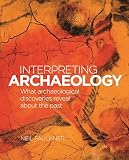


A record of what a proponent claims establishes that the interpretation exists, not that it is true. For example, the catalog page for Astronaut Gods of the Maya documents a modern interpretation of Mesoamerican imagery. It is a publisher’s page for a proponent’s book, not independent archaeological evidence.
How should an archaeological claim be evaluated?
Start with the physical evidence, then ask what its context supports. A useful comparison checks four things:
Quick wins for a faster PC:
Scan for outdated or missing drivers - takes under a minuteDriver Scan →Clear out junk files and repair common Windows errorsFree Scan →Fix the driver behind crashes, sound loss and screen glitchesFind Drivers →#1 Best Overall
- Direct observation: What is physically present—lines, stones, inscriptions, tool marks, or construction layers?
- Cultural and chronological context: What related artifacts, earlier building forms, or site evidence connect it to the society that made it?
- Explanatory fit: Does the interpretation account for the evidence, or does it rely chiefly on resemblance or on the idea that no human explanation is known?
- Uncertainty: What remains unresolved, and does that gap provide positive evidence for the proposed explanation?
The last distinction matters: a missing detail is not affirmative evidence for aliens. An interpretation becomes stronger when it explains observations and fits the surrounding context, rather than simply matching an object to something familiar today. A Penn Museum Expedition essay captures the problem of relying on visual resemblance: “The ‘looks-like-a-spaceman-to-me’ line of argument treats the archaeological record as if it were a Rorschach test, and provides as little evidence about our ancient history as a Rorschach provides about ink and paper or butterflies and dragons.”
Were the Nazca Lines landing strips?
Von Däniken interpreted some Nazca lines as landing strips and one figure as astronaut-like. Those are modern interpretations of the geoglyphs, not observations that establish alien visitors. The archaeological account in Archaeology: An Introduction to the World’s Greatest Sites notes similarities between Nazca designs and motifs on Nazca pottery, placing the geoglyphs within a human cultural setting.
Rank #2
That comparison is relevant to who made the designs; it does not prove one purpose for every line or figure. The makers and the reason they created particular geoglyphs are separate questions. Archaeologists also study when the geometric Nasca lines were made: a peer-reviewed article in Antiquity addresses their dating. Its subject establishes that dating is an area of archaeological research, not that a particular date or purpose proves or disproves an alien explanation.
Who built the Egyptian pyramids?
The Egyptian pyramids belong to a documented sequence of human construction. The Smithsonian describes the development from Djoser’s Step Pyramid through smooth-sided pyramid forms to the Great Pyramid commissioned by Khufu. The account gives the Great Pyramid a base of “Over 13 acres” and estimates its original height at “Over 481 feet.” These are approximate historical dimensions reported by the Smithsonian Institution’s National Museum of Natural History, in a page revised in February 2005.
Recommended Free Tools
The Smithsonian account also describes physical traces and materials associated with construction: local quarrying, stone transported from Tura and Aswan, marks left by quarry workers, copper tools, and sledges. It discusses ramps as proposed construction methods. Together, the building sequence and material evidence place the monument within Egyptian construction history; they do not depend on an extraterrestrial explanation.
Not every procedure is settled. The Smithsonian notes that ancient records are scarce, leaving some functions and construction details uncertain. Proposed ramps are proposals, not a complete, proven account of every stage. That qualification should be preserved without turning an incomplete record into evidence that aliens supplied the missing answer.
Independent reader supportYour contribution helps us test, update, and keep practical guides available for everyone.Could aliens have helped ancient civilizations?
The examples above do not establish extraterrestrial involvement. A resemblance between an artifact and modern technology is an interpretation, not independent evidence of contact. For that claim to be persuasive, resemblance would need support from evidence that independently connects the object or site to extraterrestrials; an unexplained detail alone does not make that connection.
Archaeology can be confident about observations while candid about what remains unsettled. For the Nazca Lines, human cultural comparisons help contextualize the designs, while their purpose is a distinct question. For the pyramids, a sequence of construction, sources of stone, worker marks, tools, and transport methods provides material context even though some procedures remain uncertain. The careful conclusion is neither that every archaeological question is solved nor that uncertainty points to aliens: the evidence described here supports ancient human societies and leaves some specific questions open.
Quick Recap
Best Value
Product prices and availability are accurate as of the date/time indicated and are subject to change. Any price and availability information displayed on Amazon at the time of purchase will apply.




