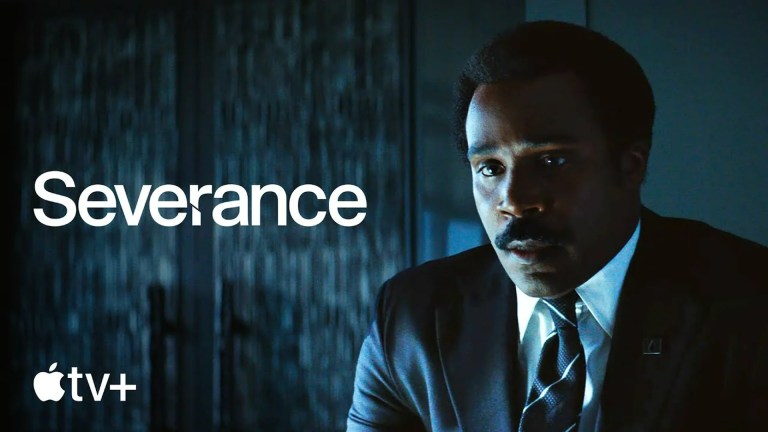
Severance turns the familiar idea of leaving work at the office into a literal division of memory—and asks what happens when a company gets to define the boundary. That makes the series a pointed way to think about work, identity and corporate power. It does not prove that a real-world technology like Lumon’s exists or predict that it will.
What the severance procedure makes literal
Apple’s official synopsis describes Lumon Industries employees undergoing a procedure that separates memories of their work lives from their personal lives. The workplace selves are called “innies”; their counterparts outside work are “outies.” Mark Scout leads a team at Lumon and is forced to confront both the nature of his work and himself. Apple frames the arrangement as an experiment in “work-life balance.” Apple TV Press’ series synopsis
| # | Preview | Product | Price | |
|---|---|---|---|---|
| 1 |

|
Severance: Season 1 | $18.49 | Buy on Amazon |
| 2 |
![Severance [Blu-ray]](https://m.media-amazon.com/images/I/41YMZCOgtsL._SL160_.jpg)
|
Severance [Blu-ray] | $19.52 | Buy on Amazon |
| 3 |
![Severance - Series 1 [Blu-ray] [Region A & B & C]](https://m.media-amazon.com/images/I/41H7RjkDq4L._SL160_.jpg)
|
Severance - Series 1 [Blu-ray] [Region A & B & C] | $41.07 | Buy on Amazon |
| 4 |

|
Severance | Buy on Amazon | |
| 5 |
|
Severance: Season 1 Blu-ray | Adam Scott, Patricia Arquette | Region B (Australia) | $31.11 | Buy on Amazon |
The premise sharpens a question many workplaces leave unresolved: where does the job end, and what does a worker owe the institution? In ordinary life, people carry knowledge, feelings and memories across the work-home boundary. In Severance, the procedure makes that boundary absolute for the innie. The employee is not simply off duty after leaving the office; that version of the person has no access to life outside it.
Innies and outies: one body, divided autonomy
The contrast is fictional, not a clinical account of separate personalities. Within the show’s premise, the two selves differ in what they can remember and in how much control they have over the conditions of their lives.
What’s actually slowing this PC down?
Pick the symptom - the matching free tool is one click away.
#1 Best Overall
| Question | Innie | Outie |
|---|---|---|
| Memory | Has access to the work-life memories presented by the series, but not the outie’s personal life. | Has access to personal-life memories, but not the innie’s experiences at work. |
| Relationship to work | Experiences Lumon as the whole world available to that self. | Chooses or accepts the arrangement from outside, but does not share the innie’s work memories. |
| Autonomy and consent | Lives with the consequences of the arrangement without access to the outie’s life or its context. | Can make decisions about the procedure, but cannot experience work from the innie’s point of view. |
This imbalance gives the premise its moral force: consent by one self cannot automatically settle what is fair to the other self, who must live through the workday. The table describes the show’s fictional setup, not a real-world medical or psychological category.
How a disliked job became a science-fiction premise
Creator Dan Erickson traced the original idea to his experience working as an office manager at a door-parts company. He told the Television Academy that he wondered, “What if I could just jump ahead to the end of the day and have already done the work?” The Television Academy’s March 28, 2025 feature
Rank #2
That wish is recognizable as a fantasy of escape: get through the labor without having to feel its duration. The show makes the fantasy unsettling by asking who remains to experience the time that the other self has skipped. Its workplace satire grows from that reversal rather than from a claim that real workers can divide their memories.
What the show suggests about work and identity
The Television Academy describes Severance as dystopian science fiction, workplace drama and black comedy, with identity, grief and the corporate machine among its themes. The series’ public framing supports reading Lumon as more than an unusual employer: it is an institution with power over how its workers understand themselves and what they are allowed to know.
Rank #3
- Drama, Blu-Ray
That reading does not mean the creators have issued a forecast about the future of work. “Where this is all headed” is an interpretation of the series: if institutions increasingly demand attention and loyalty, the show asks what it would mean for a worker’s personhood to be treated as something an employer could partition. It dramatizes that concern through an impossible procedure rather than documenting a real technology or measurable trend.
Actor Britt Lower offered one interpretation of the two selves to TIME: “The outie is more nurture, and the innie is nature.” That is Lower’s perspective on the characters, not a scientific claim or a definitive explanation of the show’s meaning. TIME’s December 18, 2024 interview
Rank #4
The series’ place in the culture—and what comes next
The Television Academy reported that the first season received 14 Emmy nominations and won two. Its March 2025 feature also situated the show among conversations about identity, grief and corporate power. Television Academy
Apple lists January 17, 2025, as the premiere date for season two. In March 2025, the Associated Press reported that Apple TV+ had confirmed a third season after the second-season finale; that report did not establish a release date. Ben Stiller, a director and executive producer, described the production process as “It’s constantly in process.” Associated Press, March 2025
Quick Recap
Best Value
- Adam Scott, Patricia Arquette
Product prices and availability are accurate as of the date/time indicated and are subject to change. Any price and availability information displayed on Amazon at the time of purchase will apply.