The Age of Disclosure is a 2025 documentary directed and produced by Dan Farah. Through interviews with 34 people described as U.S. government, military and intelligence-community insiders, it argues that governments have concealed evidence of non-human intelligent life and pursued technology said to be of non-human origin. Those are the film’s allegations, not conclusions established by the documentary’s existence or by the testimony alone.
What is The Age of Disclosure about?
The film builds its case through interviews and testimony. Its official synopsis presents an alleged 80-year cover-up of non-human intelligent life and a secret international effort to reverse-engineer technology said to have a non-human origin. The documentary frames the subject not only as a question about unexplained aerial phenomena, but also as a national-security issue: who knows what, and why has information been kept secret? The official film page describes that thesis in promotional terms; it should be understood as the film’s argument, not an independently verified finding.
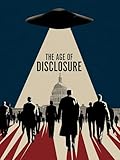


The title premiered in the context of the 2025 SXSW program, whose film schedule lists it. Its central material is testimony from 34 interviewees, rather than a count of independently confirmed witnesses to a single event.
Who appears in the documentary?
The film features 34 interviewees, according to its official website. Participants include people presented as government, military and intelligence-community insiders, as well as public figures discussing UAP reports and secrecy. Their roles and experiences are part of the film’s case; an interviewee’s position or confidence does not by itself verify the claims being made.
#1 Best Overall
One example highlighted in The Guardian’s November 22, 2025 coverage is former defense official Jay Stratton, who says in the film: “I have seen with my own eyes non-human craft and non-human beings.” That is Stratton’s testimony, not independently demonstrated proof of non-human craft or beings.
The Washington Post reports that Marco Rubio says in the film: “We’ve had repeated instances of something operating in the airspace over restricted nuclear facilities, and it’s not ours. And we don’t know whose it is. … Just that statement alone deserves inquiry, deserves attention, deserves focus.” The statement concerns Rubio’s characterization of unidentified objects; it does not establish their origin.
Rank #2
Does the film prove its claims?
No. The documentary presents testimony and allegations, but the reporting reviewed by The Guardian and The Washington Post raises questions about how much publicly inspectable evidence accompanies some of its claims. The Guardian’s March 12, 2025 review says the film offers little direct documentary evidence for some extraordinary assertions. Its November 22, 2025 feature also describes little room for skeptical voices or pushback. The Washington Post’s March 11, 2025 coverage reports critics’ objection that conviction in a witness’s account is not the same as proof.
That criticism is about the film’s evidentiary presentation; it does not settle every underlying UAP report. A careful viewer can distinguish among what a participant says they experienced, what the film supplies to support the account, and what independent records or corroboration establish. The film’s central claims should remain attributed to its interviewees and filmmakers unless corroborating evidence can be examined independently.
What does UAP mean here?
UAP means an observation or report that has not yet been identified. The term describes an unresolved observation; it does not identify the object as extraterrestrial, or even establish that it is a craft. The Guardian’s coverage places the film within a broader debate over UAP reporting and government disclosure. Treating “UAP” as a synonym for “alien craft” collapses the distinction between an observation and an explanation.
How to assess the film’s argument
For viewers weighing the documentary’s case, these questions help separate the film’s persuasive framing from what its evidence can establish:
- Evidence type: Is a point based on first-person testimony, or can viewers examine documents, sensor data or independent corroboration?
- Uncertainty: Does the film leave an unexplained observation unresolved, or move from “unidentified” to a non-human explanation?
- Editorial balance: Are competing explanations and skeptical responses represented, and does the film distinguish established facts from speculation?
- Purpose: Is a passage making a disclosure or national-security argument, or offering a scientific explanation or historical account?
These are ways to evaluate the documentary’s framing, not a ranking of UAP films or a verdict on every report discussed in it.
Independent reader supportYour contribution helps us test, update, and keep practical guides available for everyone.Where can you watch The Age of Disclosure?
The film’s official site says it is available worldwide to rent or purchase on Prime Video. The Prime Video listing is the current documented digital viewing route. Availability, formats and prices can vary by territory and change, so check the listing for your location before renting or buying. The listing accessed for this article displayed UHD rental and purchase options; those displayed prices are not a guarantee of what viewers will see in every region or at a later date.
Free tools Windows power users keep installed
One-click scans. No signup required.
Quick Recap
Product prices and availability are accurate as of the date/time indicated and are subject to change. Any price and availability information displayed on Amazon at the time of purchase will apply.




