Do these 3 things before closing this tab:
1Repair Windows errors before they cause bigger problems2Fix the driver behind crashes, sound loss and screen glitches3Clear out junk files and repair common Windows errorsIn Premchand’s short story “The Child,” the child is Gomti’s newborn son. Though Gangu is not the baby’s biological father, he welcomes the boy as his own. That choice changes how Gangu’s employer—and the reader—understands love, parenthood, and social judgment.
Who is the child in Premchand’s story?
The child is Gomti’s newborn son, conceived before her marriage to Gangu. Gangu accepts the baby and cares for him as part of his family. The title, “The Child,” points to this baby and to the story’s central question: what makes someone a parent?
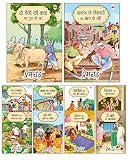


Summary of “The Child”
Gangu chooses to marry Gomti
The story is narrated by Gangu’s employer, who regards Gangu as an unusual servant. Gangu is a Brahmin and takes pride in his caste status, yet he does not show the deference his employer expects. When Gangu says he wants to marry Gomti, the employer objects. Gomti’s previous marriages and departures have led others to view her with suspicion, and the employer shares that judgment. Gangu marries her anyway.
Gomti disappears
After a period of domestic happiness, Gomti vanishes. Gangu does not immediately accuse or condemn her. He searches for her and eventually finds her in a Lucknow hospital, where she has given birth. The baby was conceived before their marriage.
#1 Best Overall
Gangu welcomes the baby
Gangu returns with Gomti and the newborn, openly delighted. He accepts the boy despite knowing he is not the biological father. His employer initially interprets the situation through biological parentage and respectability, but Gangu’s response unsettles those assumptions. The employer asks to accompany him to visit Gomti.
What the story means
Parenthood can be an act of care
The turning point is not the discovery of the baby alone, but Gangu’s decision to welcome him. The story asks readers to look beyond biology: Gangu’s care, rather than descent, gives the child a place in his family.
Reputation is not the same as character
The employer and the wider society judge Gomti by her past and by circumstances they regard as shameful. Gangu responds with patience and trust instead. The story does not require readers to treat every detail of Gomti’s life as known; it shows how quickly other people’s judgments can harden into a verdict, and contrasts those judgments with Gangu’s conduct.
The narrator’s change reveals his own bias
Because the employer tells the story, readers first see Gangu and Gomti through his assumptions. His response to the baby marks a shift: Gangu’s compassion leads him to reconsider his view and seek out Gomti himself. The narrative gives moral authority to Gangu’s actions, not to the employer’s education or social position.
The Tool Desk
Outbyte PC Repair FREERepair Windows errors before they cause bigger problemsFix Now →Outbyte Driver Updater FREEScan for outdated or missing drivers - takes under a minuteDriver Scan →Rank #3
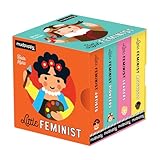
- LEARN ABOUT INSPIRING WOMEN: The books include colorful yet simple illustrations of Maya Angelou, Josephine Baker, Ella Fitzgerald, Cleopatra, Indira Gandhi, Hillary Clinton, Harriet Tubman, Rosa Parks, Amelia Earhart, Billie Jean King, and more
- SMALL & CONVENIENT SIZE: Each book features 8 chunky pages, perfect for even small hands to grasp and manipulate. The books are (4 x 4 x 4) Inches in size, ideal for tossing in a diaper bag or in the stroller for entertainment on the go
- COLORFUL ILLUSTRATIONS: Illustrations by Lydia Ortiz and words by Emily Kleinman introduce children to these important people in history with images that are fun for youngsters and also realistic
- AWARD WINNING BOOKS: The Little Feminist Board Book Set is the winner of the Oppenheim Awards Gold Seal
- SCREEN FREE FUN: For over 25 years, Mudpuppy has created quality non digital puzzles, games and toys for families that facilitate creative play and imaginative thinking. All Mudpuppy products adhere to CPSIA, ASTM, and CE Safety Regulations
Title and publication context
The story’s Hindi title is “Balak” (बालक), meaning “child.” The Munshi Premchand Digital Archive says it was first published in Hindi in 1930 and later included in Mansarovar, Vol. 2. That publication history is reported by the archive; the university materials cited here support the story’s identity and plot but do not independently confirm those bibliographic details. Read “The Child” at the Munshi Premchand Digital Archive.
English versions differ. The archive describes its English text as a 2026 translation, while educational sources provide or describe other versions; the available sources do not establish one definitive English translation. If quoting the story, identify the edition or translator you are using and verify the wording in that text. The archive calls Gomti “Gomti Devi,” while the educational materials also use “Gomti”; both names refer to the same character.
Rank #4
Sources and further reading
- Munshi Premchand Digital Archive, “The Child”: story page, English text, plot synopsis, and publication-history claim.
- A.H. Wadia Institute of Social Sciences, “AHFSM: AEC. SEM. 1 – SHORT STORY”: educational material identifying the story and discussing its plot.
- Directorate of Distance Education, GJUS&T, “English (Compulsory) BA-101: Literature and Language”: educational text on the narrator and themes.
The archive associates “Balak” with Mansarovar, Vol. 2. Check a particular edition’s contents if you are looking for the story in print.
Quick Recap
Product prices and availability are accurate as of the date/time indicated and are subject to change. Any price and availability information displayed on Amazon at the time of purchase will apply.




