What’s actually slowing this PC down?
Pick the symptom - the matching free tool is one click away.
In Saumya Kedia’s reading of Han Kang’s The Vegetarian, illness and sickness name different conditions: illness can be recognized within a system of knowledge and care, while sickness describes suffering that is not met with useful understanding or help. This is Kedia’s literary-critical framework, not a medical definition or a diagnosis of the novel’s protagonist, Yeong-hye.
What happens to Yeong-hye—and why the response matters
Yeong-hye begins the novel as an apparently ordinary, compliant wife. After disturbing dreams, she stops eating meat. Her decision is not treated by those around her as a private change in diet: it disrupts household expectations and draws coercive responses. Kedia reads the conflict as part of a wider pattern involving bodily autonomy, habitual violence and the failure to understand what Yeong-hye needs.

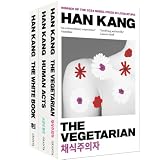

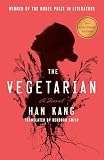

That distinction matters. The novel’s central tension is not simply whether her choice is unusual, but how other people respond to a body and a desire they cannot—or will not—understand. The refusal of meat becomes one visible point in a story about who has authority over Yeong-hye’s body and whose account of her condition is allowed to count.
What Kedia means by “illness” and “sickness”
Kedia proposes a distinction grounded in knowledge and care. In her account, illness is associated with being situated within a system of knowledge that can help someone get better. Sickness describes being ill without access to useful knowledge or care. The body is common ground between the terms: a person may be pushed into sickness when others fail to understand that body or deny it appropriate care.
#1 Best Overall
This is an interpretive vocabulary for reading the novel, not an official clinical taxonomy. Kedia argues that the people and institutions around Yeong-hye repeatedly interpret her through categories that do not provide meaningful understanding or care. She calls the story’s mental-illness label a diagnosis of convenience and sees the hospital’s treatment as failing to resolve the underlying problem of knowledge. Those are Kedia’s judgments about the novel, not an independent medical assessment of Yeong-hye.
Why the novel does not give readers direct access to Yeong-hye
Han Kang deliberately tells Yeong-hye’s story through other characters. In a 2023 interview with the Booker Prizes, Han said she wanted readers to see Yeong-hye being observed, hated, misunderstood, pitied and objectified, and to piece together her truth through those distortions. Yeong-hye’s limited direct voice is therefore part of the novel’s design, not a gap readers can simply fill with a definitive diagnosis.
Rank #2
Han has described the novel as three sections about two sisters: one tries to stop being part of the human race, while the other tries to hold her back from death. She wrote it between 2003 and 2005; the full-length Korean novel appeared in 2007. The novel’s intense scenes and sensory detail also reflect Han’s stated interest in pursuing questions about humanity through images and bodily experience.
In her 2024 Nobel lecture, Han identified one of the painful questions she lived with while writing the book: “Can a person ever be completely innocent?” That question helps explain why the novel’s violence and bodily imagery invite ethical scrutiny, but it does not supply a single answer to what Yeong-hye wants or why.
Crashes, No Sound, or Screen Glitches?
Random freezes, missing sound and display glitches usually trace back to one bad driver. Find and replace yours safely.Free scan · under a minuteWindows Errors? Fix Them Before They Spread
Repair common Windows errors and clear accumulated junk for a smoother, more stable PC - no reinstall needed.Free scan · no reinstallDoes Yeong-hye want to become a tree?
Kedia does not offer a definitive explanation for Yeong-hye’s wish to become a tree. The novel gives readers reasons to consider the conditions surrounding her desire, including coercion and the failure of others to understand her, but it does not settle that desire into one familiar explanatory framework. Accepting the uncertainty is part of Kedia’s argument: interpretation may illuminate what is happening around a character without claiming to solve her.
Is The Vegetarian a feminist novel?
Han says the novel can be read as a parable against patriarchy, while cautioning that patriarchy is not unique to Korean society and that she did not set out to create a portrait of Korean society in particular. A feminist reading can therefore attend to gendered power and control over Yeong-hye’s body without treating the book as a definitive account of Korea or as reducible to one intended message.
Han has said that when she writes, she tries to reach “the end of the question – not an answer” that first drew her to the work. That openness is compatible with more than one reading: the novel can expose the harm of coercive interpretation while leaving Yeong-hye’s own desire unresolved.
Independent reader supportYour contribution helps us test, update, and keep practical guides available for everyone.Translation and edition context
The English translation of The Vegetarian is by Deborah Smith and was published in 2015, eight years after the Korean original. Han has described translation as a difficult process involving losses of rhythm, poetic tension, layered meanings and cultural context. She also said Smith made 67 corrections in 2017 and that UK and US editions were reprinted with those corrections in 2018. Readers discussing exact English wording should keep the translation and edition in view rather than assume every printing is identical.
Best Value
The novel received International Booker Prize recognition in 2016. These dates situate the book’s publication and English-language history; they are not evidence for a clinical claim about illness or sickness.
Quick Recap
Product prices and availability are accurate as of the date/time indicated and are subject to change. Any price and availability information displayed on Amazon at the time of purchase will apply.




