Free tools Windows power users keep installed
One-click scans. No signup required.
Marie-Catherine d’Aulnoy, Marie-Jeanne L’Héritier, and Charlotte-Rose de La Force were among the women who helped make the literary fairy tale a prominent French genre in the 1690s. Their stories gave heroines room to claim power and take on roles conventionally coded as masculine—but they did not simply discard social conventions. Read alongside the Grimms, these tales invite a more precise question: who gets to act, and what kinds of choices can women make?
Who were these women writers?
D’Aulnoy, L’Héritier, and La Force belonged to a circle of French women writers known as conteuses, or women who composed literary tales. Oxford’s account of the genre places them among the authors who cultivated the conte de fées alongside Charles Perrault. Their work belongs to a literary movement, not simply to an anonymous tradition of folktale telling.


The genre came to prominence in France in the 1690s. The conteuses drew on literary materials including medieval romance, troubadour writing, fable, and classical intertexts. Their tales combined entertainment with arguments about women’s learning, female lineages, and literary value. These ambitions help explain why the stories can feel both fantastical and engaged with the debates of their own time.
How do their tales unsettle gender roles?
Heroines take on conventionally masculine roles
In Marie-Jeanne L’Héritier’s “Marmoisan, or the Innocent Deception” and d’Aulnoy’s “Belle-Belle or the Fortunate Knight,” heroines cross-dress and appropriate forms of power associated with men. Charlotte Trinquet du Lys’s study connects these choices to challenges to masculine authority during the wars of Louis XIV. The disguise is more than a plot trick: it lets a woman enter roles and spaces ordinarily reserved for men.
#1 Best Overall
Agency can coexist with convention
That disruption does not mean every story rejects familiar expectations. Scholarship on d’Aulnoy’s “Finette Cendron” finds that it retains a heteronormative outlook on marriage and women’s duties. At the same time, its purposefully manipulative female characters gain power in ways that undermine the traditionally dominant masculine role. The tale negotiates gender conventions rather than simply replacing them with an opposite set of rules.
What can—and can’t—be said about the Grimms?
The comparison with the Grimms is useful when it focuses on specific narrative choices, not on a blanket claim that French women writers overturned a single, uniform Grimm ideology. To compare a particular tale responsibly, ask who resolves the plot, whether a heroine takes on a masculine-coded role, how marriage and women’s duties are framed, and whether the story foregrounds learned literary authorship.
Rank #2
The cited scholarship supports those questions for the French tales discussed here, but it does not establish a close comparison with particular Grimm stories. The answer will depend on which Grimm tale is chosen and how its plot and ending work. Claims that all three conteuses uniformly reversed Grimm conventions would go beyond what the available tale-specific evidence demonstrates.
Why were they “forgotten”?
“Forgotten” is best understood as a description of their relative place in popular memory, not as a claim that these writers disappeared from literary history altogether. The Oxford account identifies women as central participants in the early French fairy-tale movement, while modern scholarly books and anthologies continue to bring their work into view. Their stories offer a reminder that the classic fairy tale has a richer authorship history than a focus on Perrault or later collections alone suggests.
Rank #3
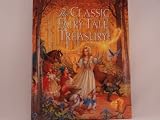
- Beautiful Art Work
- Wonderful Stories
Where to read more
The Centre for Renaissance and Reformation Studies lists Enchanted Eloquence: Fairy Tales by Seventeenth-Century French Women Writers, an anthology containing eight tales by women writers including d’Aulnoy, La Force, and L’Héritier. For scholarly context, the University of Chicago Press describes Anne E. Duggan’s The Lost Princess: Women Writers and the History of Classic Fairy Tales, which examines women writers including these three and addresses gender, female agency, cross-dressing, and arranged marriage. Check the publisher or institution for the edition and format currently available.
Quick Recap
Rank #4

- FINGERPRINT with FP logo
- The Complete Grimms' Fairy Tales (Complete Grimms' Fairy Tales; Fingerprint! Classics)
Product prices and availability are accurate as of the date/time indicated and are subject to change. Any price and availability information displayed on Amazon at the time of purchase will apply.




