Quick wins for a faster PC:
Clear out junk files and repair common Windows errorsFree Scan →Fix the driver behind crashes, sound loss and screen glitchesFind Drivers →The Ramsay brothers used songs in horror films for more than one reason: to establish romance, give viewers a pause from sustained scares, turn a comic moment into spectacle, or make a character’s theme recur. That range—not a claim that they were the first filmmakers to put songs in horror—helps explain why music became such a memorable part of their Hindi horror films.
Why put songs inside a horror story?
In a 2017 retrospective, Scroll reports that Tulsi and Shyam Ramsay regarded music and comedy as interludes that kept audiences from becoming exhausted by horror and gore. The article relays Tulsi Ramsay’s remark through Shamya Dasgupta’s book, Don’t Disturb the Dead: The Story of the Ramsay Brothers: “You can’t scare people constantly for two–three hours.” It is best understood as the brothers’ reported rationale, not as a direct interview conducted for that retrospective. Scroll’s account
![Universal Classic Monsters 6-Movie Collection (Dracula / Frankenstein / The Bride of Frankenstein / The Wolf Man / The Invisible Man / The Mummy) [DVD]](https://m.media-amazon.com/images/I/51uo3RNHn-L._SL160_.jpg)

![4 Film Favorites: Nightmare on Elm Street 1-4 Ultimate Classic Horror 4 Movie Collection [DVD]](https://m.media-amazon.com/images/I/518QnTAH3EL._SL160_.jpg)
![John Carpenter: Master of Fear 4-Film Collection [DVD]](https://m.media-amazon.com/images/I/51T5ZE+wRCL._SL160_.jpg)
The music could therefore change the emotional temperature without abandoning the film’s horror setting. A love song made a couple’s relationship legible; a comic number briefly shifted attention from dread to performance; a recurring melody could attach feeling to a character. Songs were not simply interchangeable breaks in the plot.
Four songs, four different jobs
| Film and song | Place in the film | What the song does |
|---|---|---|
| Aur Kaun? (1979), “Haan Pehli Baar” | Early in the story | Establishes the romantic couple before the horror intensifies. |
| Guest House (1980), “Kuch Tum Kaho” | Mid-film | Gives the secondary couple a romantic breather. |
| Saamri (1985), “Bacha Le” | A graveyard scene | Turns a comic encounter with zombies into a dance spectacle rather than advancing the plot. |
| Veerana (1988), “Saathi Mere Saathi” | Recurs three times | Serves as Jasmine’s theme, linking the music to a character. |
Scroll’s 2017 song-by-song account describes “Haan Pehli Baar” as an early love-song setup in Aur Kaun?, following a similar structure in Darwaza (1978). “Kuch Tum Kaho” offers a pause centered on the secondary leads in Guest House. In Saamri, Jagdeep performs “Bacha Le” among zombies in a graveyard; Scroll says the staging was inspired by Michael Jackson’s “Thriller” video. By contrast, the three appearances of Kavita Krishnamurthy’s “Saathi Mere Saathi” in Veerana make the song a recurring character cue.
What’s actually slowing this PC down?
Pick the symptom - the matching free tool is one click away.
#1 Best Overall
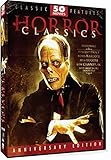
- An instant library of 50 horrorics assembled on 12 DVD's.
How the numbers balance horror and entertainment
These examples show why it is misleading to say that Ramsay songs all served as comic relief or all interrupted the story. Their function depended on placement and tone. An early romantic number prepared viewers to care about a couple; a mid-film song could ease the pressure; a comic dance could be an attraction in its own right; and a repeated theme could reinforce a character’s presence.
- Romance: Songs such as “Haan Pehli Baar” establish a relationship while the film still has room for lightness.
- Breather: “Kuch Tum Kaho” places a romantic interlude midway through the horror.
- Comic spectacle: “Bacha Le” makes the graveyard and its zombies part of a dance performance.
- Character association: “Saathi Mere Saathi” returns as Jasmine’s theme rather than functioning only as a pause.
The distinction matters: a number may temporarily suspend the horror, but that does not mean it has no dramatic purpose. Likewise, a memorable sequence can entertain without moving the plot forward. Scroll characterizes “Bacha Le” in that latter way.
Music as part of the Ramsays’ filmmaking style
Retrospectives describe the Ramsays’ films as economical productions, often built around a limited number of locations and fresh faces, while giving attention to elements such as monsters and soundtracks. That contrast helps explain the appeal of a distinctive musical number: it could provide scale, character, or a change of mood without requiring the story to leave its horror world. The available reporting does not establish exact production budgets, so the point is about the described production approach, not a precise cost comparison.
Scroll names Bappi Lahiri, R. D. Burman, Rajesh Roshan, Anand-Milind, Ajit Singh, and Uttam Singh among composers or score collaborators associated with Ramsay films. It also reports that Lahiri composed for 10 Ramsay films; that is Scroll’s 2017 figure, not an independently audited count of the filmography.
PC Slower Than It Used to Be?
A free scan shows the junk files, broken settings and background clutter dragging Windows down - then fixes them in one click.Free scan · Windows 10 & 11Outdated Drivers Are Slowing You Down
One free scan finds every outdated or missing driver and matches the right update for your exact hardware.Free scan · exact hardware matchRank #3
What “pioneered” means in this context
The title’s “pioneered” is most defensible as a description of the Ramsays’ distinctive, recurring use of song and dance within popular Hindi horror—not as evidence that they invented songs in horror or were the first filmmakers to use them. The Guardian places the brothers in the development of Hindi horror thrillers in the 1970s and describes their approach as combining Indian mythology with a Western approach to horror. Hindustan Times later identified Do Gaz Zameen Ke Neeche (1972), Saamri (1985), Veerana (1988), and Zee Horror Show (conceived in 1993) among milestones in the family’s horror career. These are retrospective accounts of their significance, not proof of an absolute first.
Read together, the films show a flexible musical method: use a song where a conventional horror sequence might otherwise sustain tension, and let the song’s tone determine whether the moment deepens a relationship, relieves pressure, creates comic spectacle, or keeps a character in the audience’s mind.
Quick Recap
Best Value
Rank #4
Product prices and availability are accurate as of the date/time indicated and are subject to change. Any price and availability information displayed on Amazon at the time of purchase will apply.




