Adam Savage became a familiar face on television by bringing a real working maker’s skills—and an unmistakably energetic on-camera style—to MythBusters. Years of theater, commercial and film-effects work prepared him to build and test things under pressure; the show turned that craft into visible entertainment. Its long international run made Savage widely recognizable, while later projects such as Tested kept his maker-centered work in public view.
He was an experienced effects maker before he became a host
Savage’s television fame did not begin with a sudden discovery of his talent. His Tested biography traces his concentrated work in special effects to 1993 and describes a career spanning television commercials and feature films. TED’s biography also notes earlier theater work. By the time he took on MythBusters, he had spent years making things for performance and the screen.
| # | Preview | Product | Price | |
|---|---|---|---|---|
| 1 |

|
Every Tool's a Hammer: Life Is What You Make It | $12.09 | Buy on Amazon |
| 2 |
|
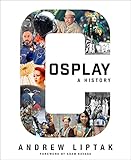
Cosplay: A History: The Builders, Fans, and Makers Who Bring Your Favorite Stories to Life | $14.61 | Buy on Amazon |
| 3 |

|
Romp #1 Image | $6.99 | Buy on Amazon |
| 4 |

|
Black Adam #3D DC | $6.99 | Buy on Amazon |
| 5 |

|
The Maker's Field Guide: The Art & Science of Making Anything Imaginable | $24.88 | Buy on Amazon |
That work included model-making for Star Wars Episodes I and II, a connection that later made him especially recognizable to fans of the franchise. StarWars.com’s 2016 interview identifies him as a prequel model-maker who became a television myth-buster.
Commercial effects work prepared him for the show’s practical demands
Savage has said that commercial production taught him to make things quickly with limited time and resources. In the StarWars.com interview, he contrasted that pressure with the scale and schedules of large effects shops, saying the commercial skills proved more directly useful on MythBusters than much of his large-studio experience. That is Savage’s retrospective account of his own preparation, not proof that it alone caused the show’s success.
#1 Best Overall
The connection mattered because MythBusters made building part of the story. Rather than present a claim and announce a verdict, the program showed Savage, Jamie Hyneman and the team constructing tests, trying them out and observing what happened. Savage’s background in practical effects gave him experience with the material side of that process: turning an idea into something viewers could see and evaluate.
MythBusters turned experiments into television
The show tested everyday assumptions, conspiracy theories and urban legends through hands-on experiments, often borrowing the scale and spectacle of movie action. The Los Angeles Times described the program in terms of rigorous experimentation. For viewers, the appeal was not only the result; it was watching the setup, construction and test unfold.
Rank #2
Savage’s lively screen presence helped make that process engaging. StarWars.com characterized him as the animated, exuberant counterpart to Hyneman’s straight-faced, straightforward manner. Their contrasting television personas gave the program an easy-to-read dynamic. That description concerns how the pair appeared on screen, not their private relationship.
The format made experimentation entertaining, but entertainment is not the same as a guarantee that every test was scientifically definitive. The show’s premise and presentation explain how viewers encountered the experiments; they do not establish a comprehensive verdict on the validity of every method or conclusion.
Crashes, No Sound, or Screen Glitches?
Random freezes, missing sound and display glitches usually trace back to one bad driver. Find and replace yours safely.Free scan · under a minutePC Slower Than It Used to Be?
A free scan shows the junk files, broken settings and background clutter dragging Windows down - then fixes them in one click.Free scan · Windows 10 & 11Rank #3
- Written by Adam Pollina
- Illustrated by Adam Pollina
A long international run expanded his recognition
MythBusters lasted long enough and traveled widely enough to introduce Savage to audiences well beyond the special-effects world. The figures differ by source, so they should be kept attributed rather than combined:
| Source | Reported program scale |
|---|---|
| Television Academy, 2023 | Nearly 300 episodes over 13 years, distributed in more than 100 countries |
| TED biography, accessed October 8, 2026 | 270 episodes aired in over 100 countries for 14 years |
These are descriptions of the show’s run and distribution, not audience-viewership measurements or direct statistics of Savage’s personal fame. The sources report different episode totals and durations; without a common counting method, there is no sound basis for averaging them or treating either as a single definitive total.
Rank #4
- Written by Christopher Priest
- Illustrated by Rafa Sandoval
He kept making things after the original series
Savage’s public identity remained tied to making after the original MythBusters run. His Tested biography describes his work producing build videos and behind-the-scenes film deep dives, as well as later Discovery projects including MythBusters Jr. and Savage Builds. These projects carried the craft-focused part of his television persona into new formats.
A 2017 TIME list of YouTube channels highlighted Tested for fans who wanted to keep following Savage, including its one-day prop builds. That is a snapshot of how the channel was presented at the time, not a current measure of its audience or performance.
Why his path to fame worked
Savage’s rise combined three things that reinforced one another: a substantial practical-effects career, a show built around making experiments visible, and a distinctive on-screen contrast with Hyneman. His craft gave him a credible role in the work; the format made the work legible and exciting to viewers; and the long-running broadcast reached audiences internationally. Later digital projects offered a way to keep watching him build and explain things.
That is a more precise account than saying he became famous simply because he was an entertainer or a special-effects artist. The sources support a career path and a program that brought the craft to television; they do not provide a direct figure for how many people watched or a metric measuring Savage’s fame.
Quick Recap
Product prices and availability are accurate as of the date/time indicated and are subject to change. Any price and availability information displayed on Amazon at the time of purchase will apply.




