Frankenstein; or, The Modern Prometheus is Mary Shelley’s Gothic novel about a creator who abandons the being he brings to life—and the isolation and consequences that follow. The scientist is Victor Frankenstein; the being is usually called the Creature, not Frankenstein. The novel’s layered narration and its two major textual versions, 1818 and 1831, matter to how readers understand its story and ideas.
Who is Frankenstein?
Frankenstein is Victor Frankenstein, the ambitious scientist at the center of Mary Shelley’s novel. The being he creates is not given the name Frankenstein; readers and adaptations often call him the Creature. The British Library identifies the mistaken naming as a common misconception.

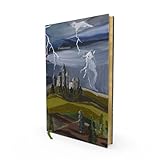

That distinction matters: the story is not simply about a monster named Frankenstein. It asks what Victor owes to the being he has made, and how the Creature’s rejection by Victor and by other people shapes what happens next.
What is Frankenstein about?
The novel begins in the Arctic, where Captain Robert Walton writes letters about his expedition and encounter with Victor. Walton records Victor’s account of his life and experiment; within that account, the Creature tells his own story. The layered structure means readers encounter the Creature’s experience through other narrators, not as an unmediated account.
Do these 3 things before closing this tab:
1Scan for outdated or missing drivers - takes under a minute2Clear out junk files and repair common Windows errors3Fix the driver behind crashes, sound loss and screen glitches#1 Best Overall
- Victor’s ambition: Victor pursues the secret of creating life. Shelley does not present a reproducible scientific procedure.
- Abandonment: When the being comes to life, Victor recoils from what he has made and leaves him without care or guidance.
- Isolation: The Creature seeks connection but is feared and rejected. His account of those encounters complicates the judgment readers may have formed from Victor’s version.
- Confrontation and pursuit: The conflict between creator and Creature drives Victor toward the Arctic, where Walton’s frame brings the story to its opening setting.
The British Library describes the Creature’s actions in relation to loneliness and sorrow. That context does not erase the harm in the story; it makes the novel’s moral questions harder than a simple division between a good scientist and an evil monster.
Why does the novel still invite debate?
Creation brings responsibility
Victor’s experiment is only the beginning of his responsibility. His response after the Creature comes to life—especially his rejection of the being who depends on him—is central to the novel’s ethical conflict. Shelley makes ambition inseparable from the obligations that follow it.
Rank #2
Isolation and social rejection shape the Creature
The Creature’s loneliness is not merely a mood or a Gothic effect. His encounters with people deepen his exclusion and shape his choices. The shifting narrators also invite readers to consider whose account they trust and how sympathy changes when the Creature speaks for himself.
Science meets uncertainty
Shelley wrote amid contemporary debates about science and galvanism, the use of electricity in experiments. The British Library connects that context to the novel. It does not mean Shelley specified a workable method for making life. Calling Frankenstein “the first science-fiction novel” is a longstanding, qualified view, not an uncontested genre fact.
Free tools Windows power users keep installed
One-click scans. No signup required.
Gothic atmosphere and mythic echoes
The Arctic frame, Swiss landscapes, storms, and sublime natural settings give the novel its Gothic and Romantic atmosphere. Its subtitle, The Modern Prometheus, recalls the mythic figure associated with stealing fire; the opening epigraph invokes John Milton’s Paradise Lost. These allusions place Victor’s ambition within a wider tradition of dangerous knowledge, creation, and rebellion.
Why are there 1818 and 1831 versions?
The novel first appeared anonymously in three volumes on 1 January 1818, published in London by Lackington and partners. Mary Shelley later substantially revised it for the 1831 edition. An edition’s title alone does not tell you which text it prints, so check the edition’s note or publication information if the version matters to your reading.
| Text | What distinguishes it | Best suited to |
|---|---|---|
| 1818 first-edition text | The original published version. Project Gutenberg’s transcription is based on a photo-reprint of the 1818 edition. | Readers studying the novel as first published or comparing it with Shelley’s later revisions. |
| 1831 revised text | Shelley’s substantial revision changes elements of the character relationships and Victor’s backstory; it also brings the doppelgänger motif forward. | Readers who want to encounter the revised text commonly printed in many editions, while checking the publisher’s description to confirm the text. |
Among the documented changes, Elizabeth is Victor’s cousin in the 1818 text and a foundling without a blood relationship to him in the 1831 revision. The later version also adds a chapter expanding Victor’s childhood. These differences can affect discussions of family, fate, and character relationships. For a free digital reading of the 1818 text, use Project Gutenberg’s 1818 transcription.
Independent reader supportYour contribution helps us test, update, and keep practical guides available for everyone.How did Mary Shelley begin the novel?
Shelley began the story in 1816 while staying near Geneva with Percy Bysshe Shelley, Lord Byron, Claire Clairmont, and John Polidori. After the group read ghost stories during a spell of bad weather, Byron proposed that they each write one. The familiar challenge is useful context for the novel’s origin, but it should not be mistaken for a claim that Shelley wrote the finished book in a single sitting.
Shelley later recalled the image that sparked the story: “I saw – with shut eyes, but acute mental vision – I saw the pale student of unhallowed arts kneeling beside the thing he had put together.” The account is reproduced by the British Library’s overview of Frankenstein.
The surviving manuscript record offers another view of how the book took shape. The Shelley-Godwin Archive says the surviving draft contains about 87% of the 1818 novel, while about 12% of the fair copy survives. Those percentages describe how much of particular manuscripts survives, not how much of the novel Shelley wrote. The Archive also traces a draft composed in 1816–17 and its transformation into a three-volume fair copy in spring 1817. See the Shelley-Godwin Archive’s Frankenstein materials and its introduction to the Frankenstein notebooks.
What did Shelley say about her artistic aim?
In the 1818 preface, Shelley wrote: “I have thus endeavoured to preserve the truth of the elementary principles of human nature, while I have not scrupled to innovate upon their combinations.” The line offers a concise account of the balance at work in the novel: recognizable human emotions and conflicts placed in an extraordinary story.
How did Frankenstein become a cultural touchstone?
The novel has been repeatedly adapted for stage and screen. The British Library documents a history of horror films and dramatizations, including an 1883 play illustration. Adaptations have helped cement familiar images of the Creature, but they are interpretations of Shelley’s book, whose frame narrative and competing voices are central to its design. The genre label “first science-fiction novel” remains a qualified description rather than a settled ranking.
What’s actually slowing this PC down?
Pick the symptom - the matching free tool is one click away.
Quick Recap
Product prices and availability are accurate as of the date/time indicated and are subject to change. Any price and availability information displayed on Amazon at the time of purchase will apply.