The title-track lyric explicitly names poet Dylan Thomas, singer and poet Patti Smith, and singer-songwriter Charlie Puth. Across the wider 31-track release—including The Anthology—other notable references include Stevie Nicks, actor Clara Bow, the band The Blue Nile, and the fictional Ken. This is a guide to prominent, verifiable names and references, not an exhaustive catalogue of every allusion on the album.
Who is named in the title track?
Swift’s official lyrics identify Dylan Thomas and Patti Smith in the line, “I laughed in your face and said, ‘You’re not Dylan Thomas. I’m not Patti Smith.’” The lyric page credits the song to Taylor Swift and Jack Antonoff; the words are part of the song, not an interview statement. Read Swift’s official lyrics and credits.
| # | Preview | Product | Price | |
|---|---|---|---|---|
| 1 |

|
The d Poets Department: The Anthology | $18.99 | Buy on Amazon |
| 2 |

|
THE TORTURED POETS DEPARTMENT | $9.97 | Buy on Amazon |
| 3 |
![The Tortured Poets Department (Bonus Track) [CD]](https://m.media-amazon.com/images/I/41vqtgHer6L._SL160_.jpg)
|
The Tortured Poets Department (Bonus Track) [CD] | $19.99 | Buy on Amazon |
| 4 |
|
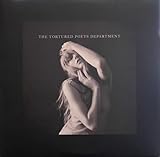
Tortured Poets Department: The Black Dog - Limited Deluxe Collector's Edition | $12.99 | Buy on Amazon |
Dylan Thomas
Thomas was a Welsh poet, best known for “Do not go gentle into that good night,” according to Good Morning America’s guide to the album. His name appears directly in the title-track lyric.
Patti Smith
Smith is a singer and poet. Good Morning America identifies her as known for “Because the Night,” co-written with Bruce Springsteen. Swift names her directly alongside Thomas.
#1 Best Overall
- Contains 35 tracks, including 4 exclusive acoustic bonus songs.
- Features the complete album "THE TORTURED POETS DEPARTMENT" and its companion release, "THE ANTHOLOGY".
- Physical product format is a CD presented in a standard jewel case.
- Officially licensed 2024 release from Taylor Swift.
- Includes a disclaimer that the product image is a digital rendering; actual detailing may vary.
Charlie Puth
Puth, a singer-songwriter, is named later in the title track, followed by the lyric’s assertion that he should be a bigger artist. That is Swift’s line in the song, not an independent claim about his career.
Lucy, Jack, and the Chelsea Hotel
The title-track lyrics also include the first names Lucy and Jack and mention the Chelsea Hotel. The sources cited here do not establish who Lucy and Jack refer to, so proposed identities should be treated as unconfirmed. The Chelsea Hotel is a place reference, not a person’s name.
Rank #2
What other names and references appear across the album?
The standard edition has 16 songs; The Anthology adds 15, for 31 tracks in the combined release. The Recording Academy’s tracklist coverage documents both editions. The following are prominent references identified in album coverage, not a verified list of every name across all 31 songs.
Stevie Nicks and Clara Bow
“Clara Bow” names actor Clara Bow, Stevie Nicks, and Swift herself, as noted by Good Morning America. Separately, the Recording Academy reports that physical copies of the album feature an original poem by Nicks. Being named in a song and contributing a poem to physical editions are distinct connections.
Rank #3
- Taylor Swift's hit CD The Tortured Poets Department!
The Blue Nile
“Guilty as Sin?” references Scottish band The Blue Nile and its song “The Downtown Lights.” This is a musical reference, rather than a claim that the band is the subject of the song.
Ken
“My Boy Only Breaks His Favorite Toys” invokes Ken in a lyric about playing pretend. It is a pop-culture reference, not a named real-life person.
Cassandra
The song title “Cassandra” invokes the Greek mythological figure whose warnings were not believed. In Associated Press coverage, University of Texas at Austin professor Elizabeth Scala discusses Cassandra in that context. This is an allusion, not an explicit name-drop of a contemporary person.
Independent reader supportYour contribution helps us test, update, and keep practical guides available for everyone.Who are the songs about?
A name in a lyric does not by itself identify the private person or experience behind a song. Good Morning America presents readings involving Joe Alwyn, Matty Healy, and Travis Kelce as fan speculation and notes that Swift does not confirm the theories it discusses. The Washington Post’s album coverage also cautions against treating lyrics as straightforward biographical evidence. It is more accurate to distinguish names explicitly in the words from interpretations about who inspired them.
What counts as a name-drop here?
- Explicit name: A person or entity is named in the lyric, as with Thomas, Smith, and Puth in the title track.
- Cultural reference: A lyric or title invokes a fictional character, artist, work, or mythological figure, such as Ken or Cassandra.
- Unconfirmed interpretation: A theory about a song’s real-life subject remains a theory unless Swift or a reliable source confirms it.
These categories help keep a documented lyric separate from a reasonable allusion and from speculation about private relationships.
Quick Recap
Product prices and availability are accurate as of the date/time indicated and are subject to change. Any price and availability information displayed on Amazon at the time of purchase will apply.




