O.J. Simpson denied killing Nicole Brown Simpson and Ron Goldman in sworn testimony during their families’ civil lawsuit. Later, he participated in a book framed as a hypothetical account of the killings, and Fox aired a previously unseen 2006 interview in 2018. Those statements came in different settings and should not be confused with the legal outcomes: a criminal jury acquitted Simpson in 1995, while a civil jury found him liable for the deaths in 1997.
What did O.J. Simpson say about the murders?
The clearest documented statements are from excerpts of Simpson’s 1996 testimony in the families’ civil case. Asked by plaintiffs’ attorney Daniel Petrocelli whether he confronted and killed Nicole, Simpson answered, “That is absolutely not true.” Asked whether he killed Ronald Goldman, he replied, “That’s absolutely not true.” The Los Angeles Times published these excerpts on Nov. 23, 1996; they are not a complete transcript of the testimony. Read the Los Angeles Times account.




In the same testimony, Simpson was asked whether he had hit, struck, slapped, kicked, or beaten Nicole. He answered “Never” to each question. Asked whether he knew Nicole had told people and written that he hit her, he said yes. When asked whether he considered that account false, the Times reported his answer as “True. Yes.” The sequence matters: the reported answer came in response to the question about whether he viewed her account as false.
What did he say about Ron Goldman before the civil trial?
In a January 1996 deposition in the wrongful-death lawsuits, Simpson said he did not know whether he had met or seen Goldman and said he had not heard Goldman’s name before Goldman’s death. These details come from excerpts published by the Los Angeles Times on Feb. 3, 1996, rather than a complete deposition transcript. Read the deposition excerpts.
Crashes, No Sound, or Screen Glitches?
Random freezes, missing sound and display glitches usually trace back to one bad driver. Find and replace yours safely.Free scan · under a minuteWindows Errors? Fix Them Before They Spread
Repair common Windows errors and clear accumulated junk for a smoother, more stable PC - no reinstall needed.Free scan · no reinstall#1 Best Overall
How did Simpson describe public belief in his guilt?
In 1995, Simpson told The New York Times, “I don’t think most of America believes I did it,” according to the Associated Press’s retrospective account. The quote describes his view of public opinion; it is not a statement about what the criminal jury decided. Read the AP report.
What did he say in If I Did It?
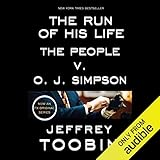
The book’s premise was hypothetical: If I Did It presented an account of how the killings could have happened, rather than a straightforward admission. The original publisher canceled the book after public outrage. The Goldman family later won the manuscript rights, and the work appeared as If I Did It: Confessions of the Killer, with additional commentary from the family, according to the Associated Press and the Wake County Public Libraries catalog. The catalog identifies a 2008 first paperback edition published by Beaufort Books. AP’s timeline of the case and the Wake County catalog entry document the publication history.
The catalog also reproduces ghostwriter Pablo F. Fenjves’s note: “O.J. read the book, his book, several times. I made every change he asked for, and he signed off on it…(I)f there are errors in the book, it’s because O.J. didn’t correct them, or worse, he fed them to me.” That is Fenjves’s statement as reproduced in the library record, not independent proof of how every passage was prepared or approved.
After the Goldman family gained the manuscript rights, Simpson told the AP, “It’s all blood money, and unfortunately I had to join the jackals.” He was discussing the book and its proceeds. The quote captures his reaction to the arrangement; it does not change the book’s hypothetical framing.
Free tools Windows power users keep installed
One-click scans. No signup required.
What was in the 2006 interview that aired in 2018?
Fox broadcast a previously unseen interview with Simpson in March 2018, recorded in 2006. The AP describes Simpson as theorizing about the night of the killings, including a fictionalized “lost confession.” The AP account does not provide a full transcript, so specific lines from the interview cannot be reliably quoted here. Read the AP timeline.
Independent reader supportYour contribution helps us test, update, and keep practical guides available for everyone.How do the statements relate to the verdicts?
Simpson was acquitted of the criminal murder charges in 1995. In a separate civil case, a jury found him liable for the deaths in 1997 and ordered him to pay the victims’ families $33.5 million, according to the AP’s 2024 retrospective timeline. An acquittal is not a civil verdict, and a civil finding of liability is not a criminal conviction. The two outcomes belong to different proceedings and legal standards; neither changes what Simpson said in the settings described above. See the AP timeline.
Quick Recap
What the record establishes—and what it does not
- Sworn civil testimony: The Los Angeles Times excerpts report direct denials of killing Nicole and Goldman, along with Simpson’s answers about allegations that he had hit Nicole.
- Deposition: Published excerpts report that Simpson said he was unsure whether he had met or seen Goldman and had not heard Goldman’s name before his death.
- Book: The title and publication history establish a hypothetical framing and later Goldman family involvement; Fenjves’s quoted note remains his statement, as reproduced in a library catalog.
- Television interview: AP reports the 2006 recording and its 2018 broadcast, but its account does not establish the interview’s full wording.
Product prices and availability are accurate as of the date/time indicated and are subject to change. Any price and availability information displayed on Amazon at the time of purchase will apply.