There is no single best microphone for every string instrument. For detailed studio recording of mandolin and other plucked strings, start with a small-diaphragm condenser; for bowed strings, a cardioid condenser is a practical first choice. Consider a large-diaphragm condenser for cello or upright bass when you want more low-frequency body, a ribbon for a smoother tonal character, or an instrument-mounted mic when mobility and isolation matter. The room, placement, and player all shape the result as much as the microphone.
Choose by instrument and recording situation
Start by deciding what matters most: detail, body, room ambience, isolation, or freedom to move. Microphone categories offer different starting points, not guaranteed results. Yamaha’s guidance distinguishes plucked from bowed instruments, while Shure, Royer Labs, and Countryman describe approaches for particular instruments and uses.
| Microphone type | Useful starting point | Trade-offs |
|---|---|---|
| Small-diaphragm condenser | Mandolin and other plucked strings; studio recording or a stereo pair | Yamaha recommends this type for mandolin and plucked strings. Choose a particular mic based on its sound, pickup pattern, self-noise, and how it behaves in your room; the category alone does not determine the result. Yamaha |
| Cardioid condenser | Bowed solo instruments | A useful starting point for balancing body resonance and bow articulation. A more distant position brings in more room sound and may increase bleed. Yamaha |
| Large-diaphragm condenser | Cello or upright bass when low-frequency body is a priority | Yamaha suggests considering a larger diaphragm for these instruments. The Shure PGA27 is one named large-diaphragm cardioid condenser example for strings, not an established overall winner. Shure · Yamaha |
| Ribbon microphone | Violin, fiddle, cello, or ensemble when a smoother tonal character is wanted | Royer Labs recommends ribbons for violin and cello and gives different distance starting points for classical violin and fiddle. This is manufacturer guidance, not a blind comparative test. The R-121 is a category example, not a universal or budget recommendation. Royer Labs |
| Instrument-mounted microphone | Live playing, repeatable close placement, or setups where a stand is impractical | Countryman’s I2 is designed for violin and viola, with a mount behind the bridge and the mic aimed at the instrument body. Check mount fit and whether its sound suits your needs before buying. Countryman |
Starting microphone positions by instrument
Distances below are starting points from the cited guides, not fixed rules. They come from different recording situations, so use your ears and adjust for the instrument, player, room, and desired amount of ambience.
Violin
Shure suggests trying a stand mic a few inches from the violin’s side for a natural, balanced sound. Its guide also describes a miniature lavalier between the bridge and tailpiece for a fuller, brighter result. Royer Labs suggests placing a ribbon three feet or more above a classical violinist, but 15–24 inches from a fiddle player. These differing distances reflect different approaches: move closer for a more focused sound and farther away when you want more room and a broader balance. Shure · Royer Labs
#1 Best Overall

- High-quality audio:Enhance your violin performance with the violin microphone. This MIC is designed specifically for violin, ensuring clear and accurate sound transmission.
- Gooseneck microphone: The violin microphone wireless transmitter is specially equipped with a retractable clamping device, which can flexibly control the length to adapt to the size of different violins and the individual needs of the performers. Just easily adjust it to firmly clamp it on the side of the violin, ensuring a firm and stable grip during performance, without worrying about any damage to your precious violin.
- Wireless freedom:Enjoy the freedom of WIRELESS VIOLIN MIC with TRANSMITTERS & RECEIVERS, eliminating cable clutter.
- Widely compatible, versatile use:The violin pickup is equipped with 6.5mm and 3.5mm plugs, compatible with mixers, speakers, computers and other equipment. Suitable for teaching, entertainment and small performances, plug and play, to ensure high-quality sound effects.
- Long-term use: The transmitter and receiver of the violin microphone are powered by a built-in rechargeable battery, which only needs to be charged for 2.5 to 3 hours to provide long-term uninterrupted performance. Perfect for a variety of events, including performances, weddings, church services, music lessons, band performances, bar performances, personal performances and intimate concerts.
Viola
Countryman’s I2 is made for violin and viola and can be aimed at the instrument body from its mount. The cited guidance does not give a viola-specific stand-mic distance; Yamaha’s general bowed-string approach can serve as an initial experiment, not a viola-specific prescription. Countryman · Yamaha
Cello
Shure suggests starting about one foot from the bridge for a defined, balanced sound. Yamaha’s broader bowed-string starting point is three feet above and in front of the instrument. The closer position can help focus the sound; the more distant one takes in more room. Yamaha also recommends considering a large-diaphragm condenser when low-frequency body is important. Try each position in the actual room rather than treating either distance as mandatory. Shure · Yamaha
Rank #2

- 🎺 Designed for Sax & Brass Instruments – Versatile Clip-On Mic optimized for saxophone, trumpet, trombone, tuba, cornet, and French horn, this wireless instrument mic also works with flute and other acoustic instruments. It captures clear, balanced tone across different brass and wind instruments, making it a reliable choice for students, teachers, and performers.
- 🎷 Stable 2.4G Wireless 12ms Low Latency – Perfect for Teaching, Practice & Small Gigs. Built with advanced 2.4GHz wireless technology, this saxophone microphone system delivers stable transmission with only 12ms latency for natural, real-time sound. Featuring automatic frequency hopping and strong anti-interference, multiple sets can be used simultaneously—ideal for music classes, rehearsals, busking, and small live performances.
- 🔄 360° Adjustable Gooseneck – Precise Sound Pickup. The reinforced flexible metal gooseneck allows full 360° adjustment, so you can easily position the mic for the best sound source. Whether on sax or brass instruments, it ensures accurate pickup of natural tone for amplification, recording, or live sound reinforcement.
- 🔋 15-Hour Battery + Type-C Dual Charging - All-Day Use. Built-in rechargeable battery supports up to 15 hours of continuous use - perfect for long lessons, rehearsals, or gigs. The included Type-C dual charging cable powers both transmitter and receiver simultaneously, with LED indicators for easy battery monitoring.
- ⚡ Plug & Play Auto Pairing – Easy Setup for Beginners & Pros. Simply power on and the transmitter and receiver auto-connect in seconds—no complicated setup or apps required. Quick-access controls allow easy on-stage volume adjustment (single click up / double click down), making it beginner-friendly for students and teachers, yet reliable for performers.
Upright bass
Shure describes starting six inches to one foot in front of the instrument, above the bridge, for a natural sound, or near the f-hole for more fullness while watching for boominess. Yamaha’s guidance for plucked upright bass starts around a foot behind the bridge and suggests moving the mic while the player performs to balance low body tone with string attack. These positions are context-specific examples rather than a single agreed distance. Shure · Yamaha
Mandolin and other plucked strings
Yamaha recommends starting with a small-diaphragm condenser aimed where the body and neck meet, slightly toward the higher strings. Test roughly 3–12 inches away: moving closer emphasizes presence, while moving farther back adds ambience. Listen while the musician plays and adjust the angle and distance. Yamaha
Rank #3

- Versatile - This instrument mic features a suction cup design that allows it to be easily attached to any smooth surface of your musical instrument. Whether you're playing the guitar, violin, or accordion, our microphone provides strong adhesion and stability, allowing you to focus on your performance without worrying about any unwanted vibrations.
- Stability performance - Equipped with 2.4G transmission system, can provide a stable signal within 30 meters, even in crowded places can ensure uninterrupted sound. It has a long battery life of 6-8 hours, making it ideal for concerts, outdoor performances and recording studios.
- Easy to use - two suction cups of different sizes can be used without causing damage to the paint. Attach the transmitter to the smooth surface of the instrument, insert the receiver into the MIC interface of the speaker, then turn it on and use it.
- High-fidelity Microphone --- Our instrument microphone is designed for professional musicians and performers, providing a and seamless audio experience. With its advanced technology, it ensures crystal clear sound reproduction without any delays or interference.
- Wide Compatibility --- 2.4G wireless microphone can be used with voice amplifier/large power speakers/portable pa system/mixer/karaoke microphone speaker system. We also provide 3.5mm to 6.35mm adapter, which helps you can have more choices.
Balance instrument detail with room sound
Mic distance changes the balance between the instrument and the space around it. A closer mic tends to give a more focused sound and reduce room contribution; a farther mic can capture a more natural blend of the instrument and ambience, but may pick up more unwanted sound from other players or the room. Shure describes this trade-off, and Yamaha advises trying another position in the room if the sound is unsatisfactory. Shure · Yamaha
For a quiet home setup in a room that sounds poor, a closer condenser or an instrument-mounted mic can be a practical way to reduce room sound. In a suitable space, greater distance may capture more of a solo instrument’s body and ambience. These are placement-based choices, not guarantees: move the mic while the player performs and listen for body, bow or pick attack, room sound, scratchiness, and boominess.
Rank #4

- High Quality Sound Reproduction : KENBAIDIO U-730 violin cello microphone wireless system built-in highly sensitive cardioid pick-up condenser mic, perfectly capture the soundtrack of the instrument, high-fidelity sound quality, make the sound more clear and realistic while reducing environmental noise. Sample rate 24-bit / 48 kHz, Audio frequency response 30 Hz – 20 kHz. Wireless instruments microphone ideal for indoor/outdoor performance, stage, recording, youtube, live streaming, and vlogging performance or teaching. Note: By combining your device, you can adjust the sensitivity (volume) of the transmitter for optimal results.
- UHF Stable Transmission : The violin instrument microphone wireless system adopts UHF and digital audio transmission technology, stable signal.Transmission distance up to 196 feet in open area. Wireless microphone transmitter and receiver system featuring infrared automatic pairing, ultra-low latency ensuring seamless and real-time audio reproduction for a professional performance experience.
- Easy Use & LED Digital Screen : Clip-on instrument microphone is plug and play, easy to use, you can connect it to your violin cello instruments. The plug on receiver is 1/4''(6.35mm), we also equipped with a 1/8'' (3.5mm) can be used for various devices, speakers, lever speakers, etc. The wireless violin pickup microphone system with LED digital screen that can see the frequency/ battery power and volume esaily.
- Stable Violin/Cello Clamps, Leaves No Marks : This wireless instrument system is equipped with violin clips(1.18-2.28in) and cello clips(1.18-5.71in). The wireless transmitter is specially equipped with a retractable silicone clamping , which can flexibly control the length to adapt to different sizes of violins and personalized needs of performers. Simply adjust it easily to securely clip it onto the side of the violin, ensuring a firm and stable grip during performance without worrying about damaging your precious violin.Simply move the bottom gently to remove the clip from the violin.
- Multi-Channel Flexibility : The wireless violin microphone system offers 200 adjustable UHF channels (510-590MHz), ensuring stable audio transmission in complex or crowded wireless environments, preventing potential interference and supports up to more systems for use on the same occasion. Instrument mic ideal for live performances with multiple instruments or performers.
Recording a string section or ensemble
For an ensemble, decide whether you want a blended section sound or individual control over each instrument. A stereo or section pickup can preserve a shared acoustic perspective; individual spot mics offer more isolation and adjustment later, but can make the setup more complex. Royer Labs illustrates multi-mic and stereo-ribbon approaches. Sound On Sound recommends a relatively large recording environment for strings and notes that directional capacitor microphones with good off-axis response can be useful. Royer Labs · Sound On Sound
What to check before choosing a mic
- Instrument and playing style: distinguish bowed from plucked sources and consider whether low-frequency body or string attack is the priority.
- Room and ambience: decide how much of the room you want and whether it sounds good enough to include.
- Isolation and bleed: consider whether other instruments or stage sound will enter the mic, and whether a closer or mounted setup would help.
- Pickup pattern and off-axis sound: check how the mic handles sound arriving from the side, especially for ensemble recording.
- Quiet passages: look at self-noise as well as frequency response when recording soft, detailed playing.
- Mount and power needs: for an instrument-mounted mic, confirm fit and the required power supply before purchase.
Countryman lists the I2’s phantom-power requirement as 6–50 V at 4 mA, with reduced overload SPL below 24 V. Its published specifications give a frequency response of 20 Hz–20 kHz in omnidirectional mode and 50 Hz–20 kHz in directional mode, and an overload sound level of 150 dB SPL at 1% THD. These are manufacturer specifications, not independent comparisons of recording quality. Countryman
Recommended Free Tools
Best Value
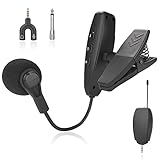
- UHF Wireless Microphone - The wireless cordless clip microphone system adopt advanced UHF wireless transmission technology, has excellent performance on audio ●Stable Signal ●No transmission delay ●Anti-jamming ●Constant frequency ●No break ●Clear and smooth sound ●automatic connection.● Support transmit distance up to 131 ft, and multiple devices can be used at the same time without interference. Please note that the receiver needs to be connected to audio, amplifier device.
- Rotatable Silicone Clip - 360-degree rotatable silicone shock-proof clip and strong steel collar clip make it easy to fix on instruments. It has small and exquisite appearance, firm and reliable quality. The surface is also treated to prevent corrosion. ●Applied for various occasions, musical instrument amplification, concerts, live broadcasts, outdoor performances, karaoke, saxophone, conference presentations, voice amplifier, etc.
- High-sensitivity Pickup - Adopt high-sensitivity high-frequency wide pickup head, perfectly capturing the soundtrack of the instrument. We also design the sound hole and angle to the best state to easily capture your sound. The recording microphone is super lightweight and solid, unburdened to take anywhere. The plug on the receiver is 1/8''(3.5mm), we also add a 1/4''(6.35mm) plug for more audio equipment.
- Plug and Play - ●Plug the receiver into the audio device, and turn on the wireless transmitter and receiver. It starts to work now! What if I can't Pair or not sound? 1. Turn off the receiver and transmitter; 2. Press the power button of the transmitter for 5 seconds until the blue light goes out, then press the button quickly and it's ready to pair. The blue light flashes at this time; 3. Turn on the receiver; 4. Press the transmitter button to complete the pair. The blue light keeps light.
- Long Use Time - Sustainable use about 4 hours, while charging for about 3 hours. 2-in-1 charging cable to charge both transmitter and receiver at the same time. Coming with a square protector box for convenient carrying and storage. It's really a cost-effective choice for changing a new device for yourself or a surprise gift to friends. This microphone has a 2 years warranty. If your microphone has any defect or stops working within 2 years, we help you troubleshoot or send a whole new product.
A practical way to find the position
- Set up the microphone type you already own, using the instrument-specific starting point above where applicable.
- Have the player perform the passage at normal playing intensity while you listen from the recording position.
- Move the mic in small increments and listen for the balance of body, bow or pick articulation, room, and unwanted scratchiness or boom.
- Compare closer and farther positions, and change rooms or room positions if the sound is not working.
- For live use or a stand-free setup, try a compatible instrument-mounted option and assess its sound and mount placement during normal playing.
A small-diaphragm condenser is a well-supported first experiment for plucked strings, and a cardioid condenser is a practical starting point for bowed strings. Treat both as starting choices: the right placement and a room that suits the recording are essential to capturing the sound you want.
Quick Recap
Product prices and availability are accurate as of the date/time indicated and are subject to change. Any price and availability information displayed on Amazon at the time of purchase will apply.




