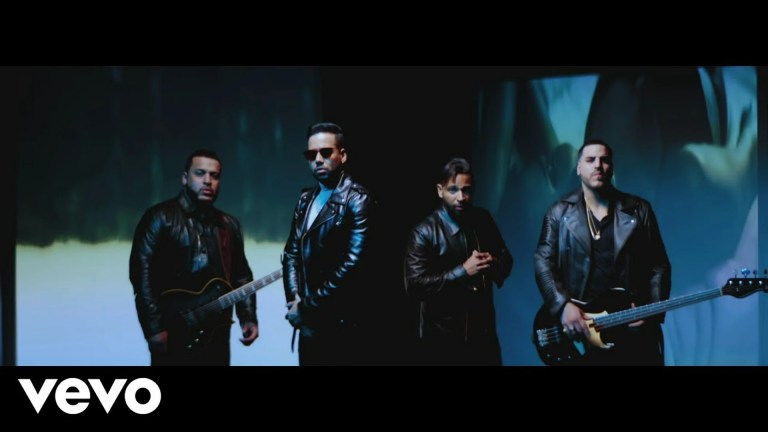
Bachata is a Dominican music and dance tradition whose journey from working-class community life to international stages reflects more than a change in popularity. Its history is bound up with rural migration, class stigma, Black Dominican experience, and the creativity of Dominican communities at home and abroad. Its global reach has brought new styles and audiences, but it has not erased the tradition’s Dominican roots.
What is bachata?
Bachata is a Dominican music and dance tradition, not simply a general category of Latin dance. UNESCO describes its music as a fusion of rhythmic bolero and Afro-Antillean forms including son, cha-cha-cha, and merengue. The word “bachata” is presumed to have African origins; it once referred to a lively gathering or party rather than to a musical genre. UNESCO’s description of Dominican bachata places the practice within community celebrations and social life.
| # | Preview | Product | Price | |
|---|---|---|---|---|
| 1 |

|
We Broke the Rules | $16.99 | Buy on Amazon |
| 2 |

|
Los Mejores De La Bachata 2009 | $9.80 | Buy on Amazon |
| 3 |

|
Fórmula, Vol. 3 | $11.98 | Buy on Amazon |
| 4 |

|
Bachata en La Calle 2008 | $8.87 | Buy on Amazon |
| 5 |

|
Bachata Rosa | $29.97 | Buy on Amazon |
The traditional ensemble centers on one or two guitars, bass, bongos, maracas, and güira, usually with a lead singer. Songs often dwell on love, passion, longing, and nostalgia. The dance is performed by couples and commonly uses an eight-step structure with sensual hip movement. People learn it through family and community life as well as in dance academies and schools.
Where did bachata come from?
Bachata developed in rural settings and later took root in Santo Domingo’s working-class neighborhoods. Wilfredo José Burgos Matos, a scholar of Dominican culture and senior researcher with the CUNY Dominican Studies Institute’s project on Dominican music in the United States, dates its first recording to 1962. As rural residents moved to the capital, the music circulated in new urban settings, including neighborhoods that mainstream media and audiences often looked down on.
Do these 3 things before closing this tab:
1Repair Windows errors before they cause bigger problems2Scan for outdated or missing drivers - takes under a minute3Clear out junk files and repair common Windows errors#1 Best Overall
Radio Guarachita, operated by promoter Radhamés Aracena, became an important outlet when mainstream stations gave bachata little attention. Its audience and social associations made it a lasting record of working-class Dominican life, even while those associations were used to dismiss it.
Why was bachata stigmatized, and how does race fit its history?
Bachata’s association with poor and rural Dominicans, working-class venues, and emotionally frank lyrics helped fuel elite disdain. Deborah Pacini Hernandez’s university-press social history describes a music emerging from poor and dispossessed communities and denigrated by media, mainstream musicians, and middle- and upper-class Dominicans. During the late 1970s and 1980s, some performers called it música de amargue—“music of romantic bitterness”—a phrase that asserted the seriousness of its emotional register.
Rank #2
The title’s focus on Black Dominicans points to an important dimension of this history, but it should not be read as a claim that all Dominicans share one racial identity or that bachata has a single racial meaning. Harvard ReVista notes that early bachata was often labeled poor people’s music rather than recognized as Black or diasporic music. That framing shows how class stigma could obscure racial context in a society where poverty and race were intertwined. Bachata’s history is therefore best understood through both its classed reception and the Black Dominican lives and cultural contributions that such reception could push out of view.
How did bachata gain recognition and reach a global audience?
Juan Luis Guerra helped change its public standing
In the 1990s, Dominican singer-songwriter Juan Luis Guerra’s Bachata Rosa helped bring the genre greater legitimacy and international notice. Burgos Matos’s account reports that the album had sold more than 5 million copies worldwide by 1994, citing the History of Dominican Music in the US project. That figure refers to Bachata Rosa, not to bachata sales as a whole.
Quick wins for a faster PC:
Fix the driver behind crashes, sound loss and screen glitchesFind Drivers →Repair Windows errors before they cause bigger problemsFix Now →Scan for outdated or missing drivers - takes under a minuteDriver Scan →Rank #3
Diaspora artists carried the sound into new musical settings
By the mid-1990s, Dominican communities in New York were an important setting for bachata’s next phase. Aventura, a group formed in the Bronx, combined traditional bachata rhythms with urban genres such as hip-hop. Their sound expressed a bicultural immigrant experience: connection to Dominican musical traditions alongside life in the United States. In 2002, their song “Obsesión” topped charts in France, Germany, Italy, the United States, and elsewhere, according to Burgos Matos.
Diaspora audiences made bachata both a sound of longing for home and a way to celebrate Dominican community. Its wider circulation did not make it less Dominican; it gave artists and listeners more places in which to reshape and share it.
Rank #4
How do bachata styles differ?
International popularity has produced varied dance vocabularies, not one replacement for Dominican practice. Burgos Matos distinguishes traditional bachata, with its box step and fast footwork, from modern bachata, which adds turns and draws on salsa. Bachata sensual, which emerged in Spain by the mid-2000s, is associated with influences from zouk and tango and with smoother, closer, body-led movement.
These labels are useful descriptions, not exhaustive categories or a ranking of authenticity. The styles differ in movement and in the migration and international dance settings where they developed, while remaining connected to a tradition whose music and social practice are rooted in Dominican life.
Windows Errors? Fix Them Before They Spread
Repair common Windows errors and clear accumulated junk for a smoother, more stable PC - no reinstall needed.Free scan · no reinstallOutdated Drivers Are Slowing You Down
One free scan finds every outdated or missing driver and matches the right update for your exact hardware.Free scan · exact hardware matchBest Value
What does UNESCO recognition mean for bachata?
UNESCO inscribed “Music and dance of Dominican Bachata” on its Representative List of the Intangible Cultural Heritage of Humanity in 2019. Its account emphasizes community learning and the music’s place in Dominican celebrations. UNESCO writes: “The Dominican people consider the music and dance of Bachata as a vernacular cultural manifestation, omnipresent in community celebrations and social gatherings.”
The inscription also raises a concern: over-commercialization can folklorize or decontextualize the practice. As bachata travels, safeguarding its context means recognizing the Dominican communities that transmit it and avoiding the idea that international visibility alone tells its full story.
Further reading
For a scholarly account of bachata’s social history, see Deborah Pacini Hernandez’s Bachata: A Social History of a Dominican Popular Music, published by Temple University Press. It is a historical study, not a step-by-step dance manual. Temple University Press book information.
Quick Recap
Product prices and availability are accurate as of the date/time indicated and are subject to change. Any price and availability information displayed on Amazon at the time of purchase will apply.
What’s actually slowing this PC down?
Pick the symptom - the matching free tool is one click away.