Alasdair Wilkins’s 2011 Gizmodo feature lists 25 entries by scientists and science-minded writers, but one entry pairs two Richard Feynman titles—so it names 26 books. It is an editorial selection, not a current ranking. The books range from landmark scientific works and popular explanations to memoir, essays, and arguments that readers should distinguish from scientific consensus.
The guide below preserves the article’s selection while making its variety easier to navigate. Subject and reading style are useful ways to choose a starting point; the original article did not score the books on those criteria.


What kind of books are on the list?
The selection brings together books that offer quite different experiences. Some are foundational or historical works; others explain scientific ideas for general readers, recount a scientist’s life, or argue for a particular interpretation.
| Reading experience | Books in the selection |
|---|---|
| Foundational or historical works | The Origin of Species by Charles Darwin; Radioactive Substances by Marie Curie; The Realm of the Nebulae by Edwin Hubble; Science in History by J.D. Bernal |
| Popular science and conceptual explanation | Pale Blue Dot by Carl Sagan; The Selfish Gene by Richard Dawkins; A Brief History of Time by Stephen Hawking |
| Memoir and personal history | Surely You’re Joking, Mr. Feynman! by Richard Feynman; The Sky Is Not the Limit by Neil deGrasse Tyson; Jane Goodall: 50 Years at Gombe by Jane Goodall; Disclosing the Past by Mary Leakey |
| Argument or contested interpretation | The Genial Gene by Joan Roughgarden; Shadows of the Mind by Roger Penrose |
| Essays, reflections, and other forms | The Sense of Wonder by Rachel Carson; Dazzle Gradually by Lynn Margulis and Dorion Sagan; Ideas and Opinions by Albert Einstein; and other titles listed below |
These categories describe the kinds of reading represented in the list, not an independent judgment of each book’s quality or the present standing of its arguments.
#1 Best Overall
The 25 entries, with all 26 titles
- The Origin of Species — Charles Darwin
- The Basic Writings of Sigmund Freud, translated by A.A. Brill
- Radioactive Substances — Marie Curie
- The Double Helix — James Watson
- The Emperor’s New Clothes: Biological Theories of Race at the Millennium — Joseph L. Graves Jr.
- The Realm of the Nebulae — Edwin Hubble
- The Sense of Wonder — Rachel Carson
- Pale Blue Dot: A Vision of the Human Future in Space — Carl Sagan
- Dazzle Gradually: Reflections on the Nature of Nature — Lynn Margulis and Dorion Sagan
- Survival of the Wisest — Jonas Salk
- Surely You’re Joking, Mr. Feynman! and Six Easy Pieces — Richard Feynman
- The Sky Is Not the Limit: Adventures of an Urban Astrophysicist — Neil deGrasse Tyson
- Jane Goodall: 50 Years at Gombe — Jane Goodall
- A Brief History of Time — Stephen Hawking
- The Mirage of a Space between Nature and Nurture — Evelyn Fox Keller
- The Selfish Gene — Richard Dawkins
- The Genial Gene: Deconstructing Darwinian Selfishness — Joan Roughgarden
- The Discovery of the Tomb of Tutankhamen — Howard Carter
- Letters from the Field, 1925–1975 — Margaret Mead
- The Periodic Table — Primo Levi
- Disclosing the Past: An Autobiography — Mary Leakey
- Shadows of the Mind: A Search for the Missing Science of Consciousness — Roger Penrose
- Science in History — J.D. Bernal
- How the Universe Got Its Spots: Diary of a Finite Time in a Finite Space — Janna Levin
- Ideas and Opinions — Albert Einstein
How to read the more argumentative selections
Some entries advance interpretations that should not be mistaken for settled scientific consensus. The 2011 article presents Joan Roughgarden’s The Genial Gene and Roger Penrose’s Shadows of the Mind as controversial or argumentative works. That description identifies how the list frames them; it does not establish the current status of every claim in either book.
Likewise, Joseph L. Graves Jr.’s book is explicitly about biological theories of race, and Evelyn Fox Keller’s title addresses nature and nurture. Treat these as arguments to examine in context, rather than as interchangeable introductions to scientific consensus. The list itself does not provide a contemporary evaluation of their claims.
Rank #2
What the original list does—and does not—establish
Gizmodo’s Alasdair Wilkins published the selection on April 20, 2011. It spans biology, physics, astronomy, psychology, anthropology, archaeology, chemistry, and the history of science, alongside memoir and popular science. Its praise and selection criteria belong to that article; it is not evidence of a current ranking, current bestseller status, or current book availability.
The article says Hawking’s A Brief History of Time spent “237 straight weeks” on bestseller lists, but it does not identify the list or provide an underlying chart. That figure is therefore a claim reported by Wilkins in 2011, not an independently substantiated statistic here. The article also calls Primo Levi’s The Periodic Table the “best science book ever written” based on an unnamed vote; without the poll, date, or method, that superlative cannot be treated as established fact.
Free tools Windows power users keep installed
One-click scans. No signup required.
Wilkins also reproduces a quotation attributed to Jonas Salk about the “biophilosopher,” but supplies no separate primary source for it. The wording should be understood as a quotation reproduced in the article, not an independently checked attribution.
Quick Recap
Best Value
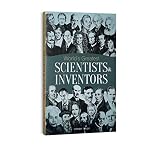
- World's Greatest Scientists & Inventors : Biographies of Inspirational Personalities For Kids [Paperback] Wonder House Books
- ABIS_BOOK
Rank #4
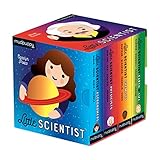
- LEARN ABOUT INSPIRING SCIENTISTS: The books include colorful yet simple illustrations of Carl Sagan, Carolyn Porco, Isaac Newton, Albert Einstein, Charles Darwin, Jane Goodall, Louis Pasteur, Marie Curie, and more!
- SMALL & CONVENIENT SIZE: Each book features 8 chunky pages, perfect for even small hands to grasp and manipulate. The books are 4 x 4 x 4” in size, ideal for tossing in a diaper bag or in the stroller for entertainment on-the-go.
- COLORFUL ILLUSTRATIONS: Illustrations by Lydia Ortiz and words by Emily Kleinman introduce children to these important people in history with images that are fun for youngsters and also realistic.
- SAFE MATERIALS: The Little Scientists Board Book greyboard contains 90% recycled paper, the packaging contains 70% recycled paper and it is printed with nontoxic, soy-based inks.
- SCREEN-FREE FUN: For over 25 years, Mudpuppy has created quality non-digital puzzles, games and toys for families that facilitate creative play and imaginative thinking. All Mudpuppy products adhere to CPSIA, ASTM, and CE Safety Regulations.
Source: Alasdair Wilkins, Gizmodo, April 20, 2011.
Product prices and availability are accurate as of the date/time indicated and are subject to change. Any price and availability information displayed on Amazon at the time of purchase will apply.




