PC Slower Than It Used to Be?
A free scan shows the junk files, broken settings and background clutter dragging Windows down - then fixes them in one click.Free scan · Windows 10 & 11Outdated Drivers Are Slowing You Down
One free scan finds every outdated or missing driver and matches the right update for your exact hardware.Free scan · exact hardware matchIn the United States, many works published in 1929 entered the public domain on January 1, 2025. That includes books such as William Faulkner’s The Sound and the Fury, Ernest Hemingway’s A Farewell to Arms, and Virginia Woolf’s A Room of One’s Own, as well as the original 1929 versions of Popeye and Tintin. You can generally copy, perform, display, and adapt public-domain material without copyright permission—but the status applies to specific versions and does not automatically clear trademarks, later additions, or rights in other countries.
What entered the public domain in 2025?
The main U.S. copyright cohort covers works published in 1929. Duke University’s Center for the Study of the Public Domain described the group as “thousands of copyrighted works from 1929”; it did not provide a precise total. The Library of Congress says the cohort includes works “ranging from motion pictures to music to books.” (Duke University, Public Domain Day 2025; Library of Congress, Lifecycle of Copyright: 1929 Works in the Public Domain)


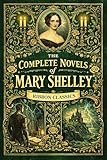
Books and other literary works
- William Faulkner’s The Sound and the Fury, published October 7, 1929. Its title draws on Shakespeare’s Macbeth.
- Ernest Hemingway’s A Farewell to Arms, a 1929 novel based in part on his experience driving an ambulance in Italy during World War I.
- Virginia Woolf’s 1929 essay A Room of One’s Own.
Characters, films, and music
The 1929 versions of Popeye and Tintin entered the U.S. public domain in 2025. The cohort also includes 1929 Mickey Mouse cartoons, films, and musical compositions. Duke highlights George Gershwin’s An American in Paris, Maurice Ravel’s Bolero, Fats Waller’s Ain’t Misbehavin’, and Singin’ in the Rain. A composition and a particular sound recording of it are separate works: a modern recording is not automatically public domain just because the underlying composition is.
Sound recordings have a separate timeline. Recordings from 1924 entered the U.S. public domain on January 1, 2025; that does not mean every recording of a 1929 composition is free to reuse. (Duke University, Public Domain Day 2025)
#1 Best Overall
What can you do with a public-domain work?
Once copyright protection has expired for the version you are using, you can generally reproduce it, perform or display it publicly, and make adaptations or translations without asking the copyright owner for permission. That can mean reprinting a text, staging a work, adapting a public-domain song, or writing a new story around a public-domain character. (Library of Congress, Lifecycle of Copyright: 1929 Works in the Public Domain)
The public domain makes it possible to build on an earlier work; it does not make every later work based on it free to copy. Duke points to adaptations of Shakespeare such as The Lion King, West Side Story, and 10 Things I Hate About You as examples of that creative principle. Their modern scripts, music, performances, and other new contributions are not thereby cleared for reuse.
Rank #2
Can you use Popeye in a new story?
You can use the original 1929 Popeye character as it appeared in the public-domain source, but later versions may contain separately protected material. Duke describes the 1929 character as tough and gruff with a softer side, wearing a sailor suit and pipe and sporting an anchor tattoo. Start with the source version rather than assuming every familiar feature from later comics, cartoons, or films is free to use.
Duke reports that its researchers found no copyright renewal for the 1931 strip that introduced Popeye’s spinach power, and therefore believe that feature may have been public domain for decades. Treat that as Duke’s archival conclusion, not as a universal legal determination for every use or jurisdiction.
Rank #3
Copyright is not the only concern. Duke says “Popeye” may be used accurately to identify the character, but a new work or its promotion should not lead people to think Hearst produced or sponsored it. The Library of Congress likewise cautions that public-domain works may still be subject to other protections. Avoid branding or presentation that suggests an affiliation you do not have. (Duke University, Public Domain Day 2025; Library of Congress, Lifecycle of Copyright: 1929 Works in the Public Domain)
Does the 2025 status cover every version and every country?
Check the version
The change frees the eligible 1929 work or version, not every later adaptation, translation, film, or addition by the same author. A later edition can include new creative material that remains protected even when the original content is free. Identify the source you plan to use and keep newer contributions separate.
Check the country
Public-domain status in the United States does not settle the status elsewhere. Duke notes that the 1929 Tintin version entered the U.S. public domain in 2025 but, according to its article, remains protected in the European Union until 2054. If you distribute or perform a work in more than one country, check the rules for each territory rather than relying on U.S. status alone.
Rank #4
Check what you can actually access
Legal permission and practical availability are different. Duke notes that many films from the period are lost or incomplete, so a work’s public-domain status does not guarantee that a complete, usable copy is easy to find.
Quick wins for a faster PC:
Fix the driver behind crashes, sound loss and screen glitchesFind Drivers →Clear out junk files and repair common Windows errorsFree Scan →A practical checklist before you reuse a work
- Identify the exact source. Record the title, medium, publication date, and version. Do not substitute a later edition, recording, or adaptation without checking its rights separately.
- Separate the components. For music, distinguish the composition from the sound recording. For a character or text, separate the public-domain material from later creative additions.
- Check where the work will be used. Confirm status for each country where you plan to publish, distribute, perform, or display it.
- Review how you present it. Use names and references accurately, and avoid implying sponsorship or endorsement.
- Keep a record of your source and checks. For a planned commercial use, verify the relevant publication and renewal record, territory, trademarks, and separately protected material. The 2025 cohort is not a work-by-work clearance opinion.
Duke’s directors, Jennifer Jenkins and James Boyle, describe the 1929 works as “free for all to copy, share, and build upon.” The useful boundary is the particular public-domain material: it can be a starting point for new work, while later contributions and non-copyright protections still need their own review. (Duke University, Public Domain Day 2025)
Quick Recap
Product prices and availability are accurate as of the date/time indicated and are subject to change. Any price and availability information displayed on Amazon at the time of purchase will apply.




