The best mafia and gangster movies range from sprawling family epics to intimate portraits of people trapped in criminal systems. “Mafia” and “mob” films are part of the broader gangster genre: the American Film Institute defines gangster films as stories centered on organized crime or maverick criminals in a twentieth-century setting. That leaves room for films about gangs, syndicates and criminal networks beyond the Sicilian-American Mafia.
This is an editorial ranking, not a definitive or measurable canon. It balances influence and craft with era, setting, point of view and style, and includes international crime films alongside familiar American classics. The Godfather is the clearest starting point: AFI ranks it first in its gangster-film list and records three Academy Awards—Best Picture, Best Actor for Marlon Brando and Best Adapted Screenplay.
| # | Preview | Product | Price | |
|---|---|---|---|---|
| 1 |
|
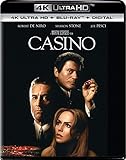
Casino - 4K Ultra HD + Blu-ray + Digital | $12.99 | Buy on Amazon |
| 2 |

|
American Hustle - Blu-ray + DVD | $8.56 | Buy on Amazon |
| 3 |
![Mafia! / The Crew (Double Feature) [Blu-ray]](https://m.media-amazon.com/images/I/513kMOSi+lL._SL160_.jpg)
|
Mafia! / The Crew (Double Feature) [Blu-ray] | $12.99 | Buy on Amazon |
| 4 |
![Hop [Blu-ray]](https://m.media-amazon.com/images/I/51zRpExiiFL._SL160_.jpg)
|
Hop [Blu-ray] | $8.48 | Buy on Amazon |
25. A Prophet (2009)
Jacques Audiard’s French crime drama follows Malik El Djebena, a young prisoner navigating prison power structures and building influence. Its confined setting gives the gangster story a different scale: the organization is not a family dynasty or street crew, but a network of alliances forged behind bars. The Week included it in its selection of top mob films, a useful reminder that gangster cinema extends well beyond the United States.
24. On the Waterfront (1954)
Rather than placing the audience inside a crime family, Elia Kazan’s drama focuses on a longshoreman pressured to testify against a mob-controlled union. Its perspective makes corruption a force shaping ordinary working lives, not merely a contest among criminals. The Week’s inclusion of the film in a mob-movie list reflects how broadly organized-crime stories can be understood.
Crashes, No Sound, or Screen Glitches?
Random freezes, missing sound and display glitches usually trace back to one bad driver. Find and replace yours safely.Free scan · under a minutePC Slower Than It Used to Be?
A free scan shows the junk files, broken settings and background clutter dragging Windows down - then fixes them in one click.Free scan · Windows 10 & 11#1 Best Overall
23. The French Connection (1971)
William Friedkin’s gritty police thriller follows New York detectives investigating an international heroin-smuggling operation. Its law-enforcement point of view and procedural momentum broaden the list beyond stories about gangsters themselves. The criminal network matters as much as any individual boss.
22. The Long Good Friday (1980)
John Mackenzie’s British crime film centers on London gangster Harold Shand as his plans for a major business deal unravel amid violence and betrayal. The story’s focus on a crime boss trying to convert street power into respectability gives it a distinct place among gangster films: ambition and insecurity are inseparable.
21. Miller’s Crossing (1990)
The Coen brothers set this stylized tale of rival gangs and shifting loyalties in a Prohibition-era American city. Its central figure, fixer Tom Reagan, is neither a conventional boss nor a lawman; he survives through calculation, making the film a study of the political work behind gang conflict.
20. Eastern Promises (2007)
David Cronenberg’s London-set thriller follows a midwife whose search for a child’s family leads her into the world of a Russian criminal organization. The point of view begins outside the underworld, while the film gradually reveals its rules and hierarchies. That perspective makes the criminal world feel like a closed institution rather than a collection of colorful individual villains.
Recommended Free Tools
19. The Untouchables (1987)
Brian De Palma’s period crime drama dramatizes the campaign to bring down Al Capone through the work of federal agent Eliot Ness and his team. Its law-enforcement focus offers a counterpoint to gangster films that trace a criminal’s rise from the inside. The result is a heightened, action-driven portrait of the public battle against organized crime.
18. Scarface (1983)
Brian De Palma’s film follows Cuban immigrant Tony Montana’s violent rise in Miami’s cocaine trade. Its excess is part of its argument: the pursuit of wealth and dominance becomes self-destructive. It is a gangster story about a criminal empire, but also about the appetite that corrodes the person trying to build one.
Rank #2
- From the director of Silver Linings Playbook and The Fighter, AMERICAN HUSTLE is outrageously entertaining and one of the most acclaimed films of the year.
17. The Killing (1956)
Stanley Kubrick’s heist film follows a group of criminals attempting a carefully planned racetrack robbery. Instead of a Mafia family or gang hierarchy, it builds tension around a temporary alliance and the practical weaknesses of a scheme. Its compact structure makes it an effective entry point for readers interested in crime films that emphasize planning and consequence.
16. Mean Streets (1973)
Martin Scorsese’s New York drama stays close to small-time criminals, friends and family in Little Italy. It is less a story of a grand criminal operation than a portrait of people whose daily lives are entangled with neighborhood loyalties, money and violence. Its intimate scale gives the gangster genre a restless, personal edge.
15. The Irishman (2019)
Martin Scorsese’s long view of organized crime follows labor-union figure Frank Sheeran and his ties to mob figures. Where many gangster films build toward the thrill of ascent, this one gives unusual weight to time, memory and aftermath. It belongs on a broad list because its central question is not just what criminal power can achieve, but what remains when a life organized around it is nearly over.
14. The Departed (2006)
Martin Scorsese’s Boston-set thriller turns on an undercover state trooper inside a criminal organization and a mob informant inside the police. Its paired infiltrations make identity and institutional trust the engine of the plot. The film’s two-sided structure distinguishes it from gangster stories built around a single rise or fall.
13. City of God (2002)
Fernando Meirelles and Kátia Lund’s Brazilian crime drama portrays the growth of violence and criminal power in Rio de Janeiro’s Cidade de Deus housing project. Its community perspective is essential: the story is not simply about gang leaders, but about how criminal authority reshapes the lives of residents across generations. It expands the genre’s geography and social frame.
12. Gomorrah (2008)
Matteo Garrone’s Italian crime film turns from the glamour of a singular mob boss to the reach of the Camorra and the people caught in its orbit. Its multiple strands offer a more systemic view of organized crime than a conventional rise-and-fall story. The Week’s inclusion of Gomorrah alongside American classics illustrates how a mob-film list can make room for different national settings and approaches.
What’s actually slowing this PC down?
Pick the symptom - the matching free tool is one click away.
11. The Roaring Twenties (1939)
Raoul Walsh’s crime drama follows a veteran whose postwar circumstances lead him into bootlegging during Prohibition. Its historical setting connects criminal ambition to economic upheaval and the era’s illicit markets. The film also shows how early Hollywood gangster stories could link an individual’s fate to a much larger social moment.
10. The Public Enemy (1931)
William A. Wellman’s early sound-era crime film traces the ascent of Tom Powers, a young man drawn into organized crime. Its place in gangster-film history comes partly from its direct focus on the criminal’s trajectory, a shape that later films would revisit with more psychological and social complexity. It remains a foundational choice for anyone exploring the genre’s early form.
9. White Heat (1949)
Raoul Walsh’s crime film centers on Cody Jarrett, a volatile gang leader whose mother is central to his emotional world. Its attention to the criminal’s inner life makes the character study as important as the gang’s operations. The film is a reminder that gangster cinema has long made room for unstable, tragic figures as well as calculating bosses.
8. Once Upon a Time in America (1984)
Sergio Leone’s epic follows Jewish gangsters in New York across decades, moving between youth, criminal success and old age. Its long timeline and reflective mood set it apart from tighter crime thrillers: memory itself becomes part of the story. The film’s scope makes it one of the genre’s most ambitious examinations of friendship, regret and the cost of a life in crime.
7. A Bronx Tale (1993)
Robert De Niro’s directorial debut follows a boy growing up in a Bronx neighborhood where a local mob boss commands attention and respect. Its central tension is familial and moral: a young person must decide what kind of manhood to admire. That coming-of-age perspective distinguishes it from films focused chiefly on the mechanics of a criminal empire.
6. Casino (1995)
Martin Scorsese’s Las Vegas crime drama examines the mob’s influence over a casino and the volatile relationships surrounding its operation. It shifts the familiar gangster story into a business environment where discipline, money and spectacle coexist uneasily. Its scale and energy make it a natural companion to Goodfellas, while its setting gives it a different social world.
Rank #4
5. The Godfather Part III (1990)
Francis Ford Coppola’s final Godfather film follows an older Michael Corleone seeking to legitimize the family’s power and protect the next generation. Its inclusion completes the saga’s arc, even though the first two films are more often treated as the central achievements. TIME’s 2024 selection recognizes both The Godfather and The Godfather Part II among the greatest gangster stories, a reminder that the series’ influence is not limited to its opening chapter.
4. Pulp Fiction (1994)
Quentin Tarantino’s interlocking crime stories are not a conventional Mafia saga, but criminal crews, enforcers and underworld codes shape its world. Its nonlinear structure and shifts between violence, comedy and conversation expanded the range of styles associated with crime cinema. It earns a place here as a gangster-adjacent classic that treats criminal life as one strand in a larger, deliberately fractured portrait.
Free tools Windows power users keep installed
One-click scans. No signup required.
3. Bonnie and Clyde (1967)
Arthur Penn’s film follows the Depression-era bank robbers Bonnie Parker and Clyde Barrow, a criminal pair rather than an organized Mafia family. Its place in this broader list underscores the distinction between mob films and gangster cinema: the latter can center on maverick criminals as well as institutions. The film combines outlaw romance with a stark account of violence and consequence.
2. Goodfellas (1990)
Martin Scorsese’s account of Henry Hill and his associates follows the seductions and costs of mob life from the inside. Its kinetic style makes criminal routine feel immediate, while its changing perspective exposes how quickly belonging can become danger. The Week included it among its five best mob movies, and Tom’s Guide placed it first in its 2025 gangster selection; those are editorial judgments, but they reflect its enduring standing in the genre.
1. The Godfather (1972)
Francis Ford Coppola’s film begins with the Corleones as a New York crime family and follows Michael, a decorated World War II veteran, as he becomes involved in the family business. Its power comes from holding two views together: the family’s private bonds and the organized violence that sustains its influence. AFI ranks it first in its gangster-film top ten, and it appears across five AFI lists. It won three Academy Awards: Best Picture, Best Actor for Marlon Brando and Best Adapted Screenplay.
Why the best gangster-movie lists differ
There is no single objective formula for ranking these films. AFI’s gangster category offers a useful genre definition and places The Godfather at the top of its ten-film list. Other selections make different choices because they vary in scope and method: The Week published five mob-film picks; TIME’s 2024 roundup spans film and television and describes a balance of influential, frequently quoted stories and unusual choices; Tom’s Guide used a one-film-per-filmmaker approach in its 2025 selection.
Quick wins for a faster PC:
Repair Windows errors before they cause bigger problemsFix Now →Scan for outdated or missing drivers - takes under a minuteDriver Scan →Clear out junk files and repair common Windows errorsFree Scan →This list uses those different kinds of judgment as context, not as a vote count. It gives weight to craft and influence while making room for distinct eras, countries, criminal systems and points of view: the boss, the associate, the investigator, the family and the community living alongside organized crime. That is why a list of mafia and gangster movies can include a mob family epic, a prison drama, a labor-corruption story and films about outlaw pairs.
Quick Recap
Sources and further reading
- American Film Institute, AFI’s 10 Top 10
- American Film Institute, The Godfather
- The Week, best mob movies of all time
- TIME, best gangster movies
- Tom’s Guide, best gangster movies of all time
Product prices and availability are accurate as of the date/time indicated and are subject to change. Any price and availability information displayed on Amazon at the time of purchase will apply.




