Quick wins for a faster PC:
Clear out junk files and repair common Windows errorsFree Scan →Fix the driver behind crashes, sound loss and screen glitchesFind Drivers →Repair Windows errors before they cause bigger problemsFix Now →Star Trek: Strange New Worlds has the ingredients of the franchise—an exploratory starship, familiar faces, and experiments in genre. The harder question is whether those ingredients consistently serve the ideas that make Star Trek matter: curiosity about the unknown, moral inquiry, and a credible belief that people can build a better future. Season 3, released in 2025, put that question in focus. Its variety and continuing Gorn story offered an opportunity to bring those parts together, but promotional promises alone cannot establish whether the episodes did.
What does it mean for Strange New Worlds to be Star Trek?
It cannot mean simply looking like Star Trek. The Enterprise, Captain Pike, uniforms, familiar names, and visual callbacks establish continuity with the franchise, but they do not by themselves make an episode thoughtful, exploratory, or hopeful. A story can be unmistakably part of the brand and still leave its central ideas untouched.
![Star Trek: Strange New Worlds - Season Three [Blu-ray]](https://m.media-amazon.com/images/I/511qNw4cbWL._SL160_.jpg)
![Star Trek: Strange New Worlds - Staffel 1 (3 BR4K) [Blu-ray]](https://m.media-amazon.com/images/I/51mYl3nskbL._SL160_.jpg)
A more useful standard is to ask what the episode does with its premise. Does encountering a new people or problem lead the crew to question their assumptions? Do conflicts invite ethical judgment rather than merely provide a villain to defeat? Does optimism emerge from choices and consequences, rather than from a reassuring speech at the end? These questions make “becoming Star Trek” a creative test, not a claim that can be settled by iconography.
Exploration should change the question
Star Trek’s exploratory framework is strongest when discovery is more than a new setting or species. The unknown should put pressure on the crew’s beliefs: what they owe to others, where their authority ends, and how they should act when no solution is clean. Familiar references can help orient viewers, but new ideas and civilizations are what keep the journey from becoming a tour of the franchise’s own history.
The Tool Desk
Outbyte Driver Updater FREEFix the driver behind crashes, sound loss and screen glitchesFind Drivers →Outbyte PC Repair FREERepair Windows errors before they cause bigger problemsFix Now →#1 Best Overall
Hope must be earned by the story
Optimism does not require easy resolutions or a world without danger. It asks the story to take the possibility of learning, cooperation, and change seriously. If characters make costly decisions, face the consequences, and still find a way forward, hope has dramatic weight. If the episode simply declares a better future without showing how anyone works toward it, the ideal is less persuasive.
Why 2025 made this a turning point
In June 2025, Paramount+ announced that the series would end with a fifth season of six episodes, while the fourth season was in production. That announcement set a finite planned horizon for the show; it did not establish how the eventual ending would handle its characters or themes. But with a five-season run announced, 2025 was a natural moment to ask what the series wanted its identity to be—not just what genres it could try, but what its range was ultimately in service of.
Rank #2

- Blu-ray Movies, Blu-ray TV Shows
The show’s executive producers Akiva Goldsman, Henry Alonso Myers, and Alex Kurtzman described their intent this way: “From the very beginning, STRANGE NEW WORLDS set out to honor what STAR TREK has always stood for — boundless curiosity, hope and the belief that a better future is possible.” That is a statement of purpose, not independent proof that every episode fulfills it. The meaningful test is on screen: whether curiosity leads to discovery, whether hope survives contact with consequences, and whether the series makes its future feel possible through the decisions its characters make.
Is Strange New Worlds too episodic?
Not inherently. Paramount+ describes the first season as a return to episodic roots and the second as a broader genre experiment, including a musical episode and an animated/live-action crossover. Those are the distributor’s characterizations of the seasons, not a verdict about which approach is more authentic. An episodic structure can give each encounter room to explore a distinct ethical or scientific question. Serial continuity can make past choices matter and let threats or relationships develop over time.
The question is not whether one format is more “Star Trek” by definition. It is whether the structure suits the idea. A self-contained story can be meaningful without advancing a season-long plot; a continuing storyline can deepen the consequences of earlier events. Either can feel thin if it treats its premise as a gimmick or uses continuity as a substitute for reflection.
What genre experiments need to preserve
Comedy, musical storytelling, and crossovers can widen the emotional vocabulary of a science-fiction series. They are not departures from Star Trek simply because they look different. The test is whether the experiment still gives the crew and the audience something worth considering—about identity, community, responsibility, or the unknown—or whether novelty is doing all the work.
Rank #4
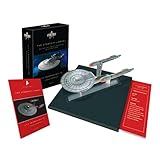
- The Flagship of Captain Pike's Enterprise Era: This collector set features the legendary U.S.S. Enterprise NCC-1701 as seen in Star Trek: Strange New Worlds, capturing the optimistic spirit of exploration that defines Pike’s command. It’s a tribute to the ship that boldly goes first, serving as Starfleet’s symbol of discovery, diplomacy, and hope.
- Authentic Design: The included die-cast Enterprise is crafted with collector-grade detail and accurate proportions, offering a premium look and feel. From its instantly recognizable silhouette to its refined surface detailing, the model rewards close inspection and looks commanding from every viewing angle.
- Expanding The Legend: Paired with the model is an accompanying book that explores the Enterprise's history, design evolution, and on-screen production. This written companion adds depth and context, transforming the display from a model into a curated Starfleet archive piece.
- Designed As A Unified Display Set: The ship and book are meant to be showcased together, creating a cohesive presentation that feels like a museum-style exhibit. Whether placed on a shelf, desk, or display case, the combined set delivers a polished, intentional look worthy of the Enterprise's legacy.
- Essential Collectible for Trekkers & Starship Enthusiasts: Ideal for Star Trek collectors, sci-fi fans, and anyone who believes in exploration without maps, this set makes a standout gift or display piece. It's a reminder that no matter the era, the Enterprise remains Starfleet’s greatest symbol, ready to head toward strange new worlds.
Season 3’s promise—and the test it set
StarTrek.com announced that Season 3 would open with two episodes on July 17, 2025, then release weekly on Thursdays through a September 11 finale. The announcement said the story would pick up after the Enterprise crew’s Season 2 Gorn encounter and described a season spanning faith, duty, romance, comedy, and mystery across different genres. Paramount+’s guide lists ten episodes for the season.
That combination creates a productive tension. A continuing Gorn storyline supplies serial momentum and consequences from an earlier season; a wide range of subjects and genres offers room for the self-contained, exploratory storytelling associated with the show’s first-season identity. The key question is whether the two modes strengthen each other. Does continuity make the crew’s choices more consequential, while individual episodes still make space for discovery and moral inquiry? Or does the ongoing threat crowd out the distinct questions that episodic stories can explore?
Best Value

- Ceramic
- 11 oz mug dimensions: 3.85" × 3.35" (9.8 cm × 8.5 cm)
- NOT dishwasher or microwave safe
- Hand-wash only
- OFFICIALLY LICENSED STAR TREK GEAR
The announcement tells viewers what kind of range to expect, not how well the episodes use it. A season can include many genres and still feel thematically scattered; it can also move among tonal registers while remaining anchored by a consistent interest in curiosity, responsibility, and possibility. That judgment has to come from the stories themselves, rather than the list of subjects in a preview.
Independent reader supportYour contribution helps us test, update, and keep practical guides available for everyone.How to judge whether the series makes the leap
For viewers considering whether the show feels fully at home in Star Trek, these are more revealing tests than counting references or ranking episodes by format:
- Does discovery matter? New encounters should expose the limits of what the crew knows, not merely decorate a familiar adventure.
- Do ethical choices have consequences? Duty and compassion are more compelling when the story makes their costs visible.
- Does continuity deepen the people in the story? A recurring threat or relationship should change what characters understand and what they are responsible for.
- Do experiments serve an idea? A shift into comedy, romance, mystery, or another genre should add perspective, not just surprise.
- Is hope shown rather than announced? The future feels better when the episode shows characters making it so, even imperfectly.
These standards do not require every installment to deliver the same tone or a grand philosophical debate. They ask the series to make its different forms answer to a recognizable set of values. That is how a show can be playful, suspenseful, or serialized without losing its bearings.
What the 2025 announcements can—and cannot—settle
The public information around Season 3 establishes its release schedule, ten-episode count, intended range of stories, and place in a planned five-season run. The producers’ remarks clarify the values they say they wanted to honor. None of those facts settles whether Season 3 fulfills the title’s challenge, and they do not establish a critical or audience consensus. That conclusion belongs to an evaluation of the episodes and the choices they make.
So 2025 was not proof that Strange New Worlds had either become—or failed to become—Star Trek. It was the moment when the series’ announced creative ambitions and finite planned run made the question difficult to avoid. The answer depends on whether the show can make its variety feel like more than variety: whether its stories use discovery, continuity, and genre to dramatize curiosity, responsibility, and earned hope.
Quick Recap
Product prices and availability are accurate as of the date/time indicated and are subject to change. Any price and availability information displayed on Amazon at the time of purchase will apply.




