Recommended Free Tools
“Surprisingly conservative” is a description of how a public figure’s views may differ from fans’ expectations—not proof that the person is a Republican or holds a consistent conservative ideology. The evidence varies: some people have described their views, while other claims rest on a donation, an issue position, or audience interpretation. Here are five cases where the distinction matters.
What “surprisingly conservative” can—and cannot—mean
A celebrity’s political identity is not always reducible to a party label. A self-description, a campaign donation, support for a particular issue, and a decision to keep politics private are different kinds of evidence. A single action can be reported accurately without turning it into a claim about someone’s entire worldview.
| # | Preview | Product | Price | |
|---|---|---|---|---|
| 1 |

|
Moonwalk: A Memoir | $23.38 | Buy on Amazon |
| 2 |

|
Friends, Lovers, and the Big Terrible Thing: A Memoir | $10.26 | Buy on Amazon |
| 3 |
|
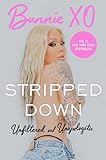
Stripped Down: Unfiltered and Unapologetic – A Modern-Day Memoir from the Trailer Parks of Vegas... | $15.25 | Buy on Amazon |
| 4 |

|
Intimate Audrey: An Authorized Biography | $15.96 | Buy on Amazon |
| 5 |

|
The Book of Sheen: A Memoir | $16.61 | Buy on Amazon |
A July 2026 AOL roundup on a similar premise drew its entries from BuzzFeed Community submissions. That makes it a snapshot of reader perceptions, not a systematic survey or definitive record of every celebrity’s political identity. The examples below focus on what the cited reports establish, and where they do not.
Adam Sandler: a campaign donation and a separate issue position
AOL reported that Sandler donated $2,100 to Rudy Giuliani’s 2007 presidential campaign. The same article described Sandler as “very pro-Israel,” while cautioning that support for Israel does not, by itself, establish that someone is Republican. The donation is a specific, dated political action; it should not be stretched into a complete account of his views. AOL’s account
#1 Best Overall
Taylor Swift: silence in 2016 was not an endorsement
Swift’s decision not to endorse Hillary Clinton in 2016 prompted speculation, but her explanation was that a political opponent was “weaponizing the idea of the celebrity endorsement.” The Washington Post reported her reasoning and later public positions: in 2018, she said she planned to vote for Tennessee Democrats Phil Bredesen and Jim Cooper and voiced support for LGBTQ rights. That chronology makes her earlier silence poor evidence for a conservative position. The Washington Post’s report
Nick Cannon: conservative views, without a party label
In a March 2026 account of a conversation with Amber Rose, TheWrap quoted Cannon saying, “Both you and I have some conservative views. You’re just a little bit more outspoken than I am.” The same report said he did not subscribe to either party. His words support the narrower claim that he sees some of his views as conservative—not that he identifies as a Republican. TheWrap’s account
Josh Duhamel: keeping politics private is not a political position
Duhamel told TheWrap that he has “real strong opinions about things,” but does not discuss them publicly because he does not want to “alienate half my audiences.” His remarks explain why he limits political commentary; they do not reveal what his opinions are or establish a conservative identity. Treating privacy as evidence of a hidden political stance would go beyond what he said. TheWrap’s report
Tim Allen: public actions and criticism that complicate the label
The Washington Post reported that Allen attended Donald Trump’s inauguration and spoke about his perception that conservatives faced pressure in Hollywood. It also reported Allen’s criticism of Trump’s comments about immigrants: “Forget the stupid s— he says about immigrants. That’s just ignorant.” Taken together, these details are more informative than selecting only the evidence that supports a simple partisan label. The Washington Post’s account
Do these 3 things before closing this tab:
1Repair Windows errors before they cause bigger problems2Fix the driver behind crashes, sound loss and screen glitches3Clear out junk files and repair common Windows errorsDennis Quaid: a stated tendency, not a party affiliation
During a February 2026 appearance on The Greg Laurie Show, Quaid described himself as a “commonsense independent” who tends to “lean more conservative in my head,” according to Fox News. That is a self-description made in a particular setting; it does not amount to a declaration of formal party membership. Fox News’ report
Independent reader supportYour contribution helps us test, update, and keep practical guides available for everyone.Why fan surprise is not proof
Public reaction can explain why a view or action feels unexpected, but it cannot verify a person’s politics. Reader comments such as disappointment in Gwen Stefani or surprise at Kelsey Grammer are examples of audience response, not evidence that either person holds a particular ideology. For any celebrity, the most reliable account separates what they said or did from what fans infer—and leaves room for views that do not fit neatly into a party shorthand. The AOL roundup and its reader-submission context
Quick Recap
Best Value
Rank #4
Product prices and availability are accurate as of the date/time indicated and are subject to change. Any price and availability information displayed on Amazon at the time of purchase will apply.




