By a measure that weighs intent, danger, narrative importance, originality and staying power—not strength alone—Sauron is The Lord of the Rings’ most consequential villain. The ranking below covers antagonists in J.R.R. Tolkien’s three novels, not just the film adaptations. It includes individuals, hostile creatures and organized forces where they make distinct contributions to the story; those categories are not morally or narratively interchangeable.
This is an interpretive ranking, not an official Tolkien list. “Best villain” means the antagonist who works most effectively in the novels, not necessarily the strongest or scariest. The publisher’s descriptions foreground Sauron, Saruman, Gollum and the Ringwraiths; the wider field below also includes creatures and armies that are threats rather than fully developed individual villains. Penguin Random House’s series page


15. Trolls
Trolls are memorable as blunt, physical dangers, but Tolkien gives them less individual agency and narrative depth than the higher-ranked antagonists. Their place here recognizes their role as hostile creatures, not a shared motive or a single villainous character.
14. Mûmakil
The great war-beasts of the southern forces bring a distinctive scale of danger to the battle narratives. They are formidable obstacles, but the novels do not develop them as scheming antagonists with personal intent.
Recommended Free Tools
#1 Best Overall
13. Wargs
Wargs add a different kind of menace from the organized armies: fast, predatory pursuit. Their impact is immediate, yet they remain creatures in the story rather than psychologically developed villains.
12. Easterlings
The Easterlings are among the human forces fighting for Sauron. Their presence broadens the conflict beyond the Fellowship’s encounters with individual enemies, but a collective entry should not be mistaken for a portrait of every person in that people as inherently evil.
11. Haradrim
Haradrim warriors appear among Sauron’s allied forces, bringing the war’s reach into view. As with other armies in this ranking, they are a collective antagonist in the military conflict, not one character with a single established motive.
Rank #2
10. Corsairs of Umbar
The Corsairs represent a maritime threat tied to Sauron’s wider war. Their role helps show how danger extends beyond the Ring-bearer’s immediate path, though they have far less characterization than the central villains.
9. Orcs
Orcs are among the most persistent sources of danger in the novels: they pursue, capture and fight the protagonists as part of the larger conflict. Their repeated presence gives them a stronger narrative footprint than a single encounter, but they are a varied collective rather than one unified individual villain.
8. The remaining Nazgûl
The Nazgûl, or Ringwraiths, are Sauron’s terrifying servants, sent in search of the Hobbit carrying the Ring. They are ranked here collectively apart from their leader, the Witch-king, to avoid counting him twice. Their shared function and persistent pursuit make them more narratively important than many creature or army entries, even though the group is not characterized like a single person. The publisher’s series description identifies the Ringwraiths as fearsome figures searching for the Ring-bearer.
7. The Balrog of Moria
The Balrog is a concentrated, overwhelming danger rather than a political antagonist. Its encounter with the Fellowship is brief compared with the long campaigns of Sauron and Saruman, but its presence makes the passage through Moria one of the story’s defining confrontations.
6. Gríma Wormtongue
Gríma’s menace comes from proximity and influence, not battlefield power. His position near Théoden makes political sabotage possible, while his connection to Saruman places him within a larger strategy. That intimate form of corruption is distinctive, even if Gríma’s reach and independent agency are limited beside the major villains.
What’s actually slowing this PC down?
Pick the symptom - the matching free tool is one click away.
5. Shelob
Shelob is a predatory, ancient creature whose danger is personal and immediate: Frodo and Sam must face her in a confined, perilous passage. Unlike the armies, she is not simply a force on a battlefield; unlike Saruman, she is not a political schemer. The contrast gives her a memorable place among the novel’s antagonists. The film production notes discuss the adaptation’s visual design, which should not be confused with Tolkien’s narrative description. TheOneRing.net’s Return of the King production notes
Rank #4
4. Gollum
Gollum is both an antagonist and a tragic, compromised character. The Ring’s corruption has shaped his obsession, and his deceitful guidance makes him dangerous to Frodo and Sam; at the same time, his divided relation to the Ring gives him a complexity the armies and creatures lack. The publisher describes him as an obsessive, deceitful guide and a slave to the Ring’s corrupting power. Penguin Random House’s series description
3. The Witch-king of Angmar
The Witch-king earns a place apart from the other Ringwraiths because he is their leader and a distinct focal point of menace. His role gives the Nazgûl’s pursuit a face and a hierarchy, making him more than a convenient representative of the group. He ranks below the central antagonists because his influence is ultimately part of Sauron’s larger design.
Independent reader supportYour contribution helps us test, update, and keep practical guides available for everyone.2. Saruman
Saruman is a particularly effective villain because his opposition is a betrayal from within the order of the wise. He is a visible political operator, using influence and force to pursue his own power rather than merely serving as an unseen distant threat. Penguin Random House’s synopsis of The Two Towers calls his role “the treachery of the wizard Saruman”—the publisher’s wording, not a quotation from Tolkien. Penguin Random House’s series page
Best Value
1. Sauron
Sauron is the ranking’s strongest overall antagonist because he unites scale, intent and narrative centrality. The One Ring is the instrument through which his power can be restored; the central quest is therefore not simply to defeat an enemy in battle, but to destroy the object that sustains his dominion. His relative distance from the protagonists does not diminish his influence: the whole conflict turns on resisting and undoing his will. The publisher’s description likewise presents Sauron as the Dark Lord whose defeat depends on the Ring’s destruction. Penguin Random House’s series description
How to read the ranking
This list favors a blend of agency, danger, narrative centrality, distinctiveness and memorability. That is why an individual schemer or a complex character can outrank a more physically imposing creature, and why collective entries sit lower: they matter to the war, but are not developed as individual villains. A ranking of raw power or fear would produce a different order.
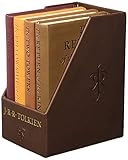
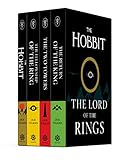
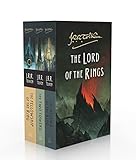
For readers who want to compare these antagonists in context, Penguin Random House lists the three component volumes and formats on its The Lord of the Rings series page.
Quick Recap
Product prices and availability are accurate as of the date/time indicated and are subject to change. Any price and availability information displayed on Amazon at the time of purchase will apply.
The Tool Desk
Outbyte PC Repair FREERepair Windows errors before they cause bigger problemsFix Now →Outbyte Driver Updater FREEScan for outdated or missing drivers - takes under a minuteDriver Scan →



