Do these 3 things before closing this tab:
1Fix the driver behind crashes, sound loss and screen glitches2Repair Windows errors before they cause bigger problems3Scan for outdated or missing drivers - takes under a minuteFor ASMR, start with clean audio and no filters. If steady room or computer noise is audible, try Noise Suppression gently; add a Compressor only when loudness varies enough to need control, then use an Expander if low-level unwanted noise remains. Put a Limiter last. Listen for lost whispers, breathing, taps, and sound tails at every step: OBS does not provide an ASMR-specific preset, and aggressive processing can remove the sounds your viewers came for.
Choose filters for the problem you can hear
Filters do different jobs; stacking them all is not a goal. First improve the recording itself with sensible microphone placement and a quiet environment. Then add only processing that solves an audible problem.
| Filter | Use it for | Main risk or requirement | Placement |
|---|---|---|---|
| Noise Suppression | Mild steady background or white noise, such as computer or environmental noise. | Can distort wanted sounds when too strong and may not help in a loud room. RNNoise uses more CPU than Speex; NVIDIA Noise Removal requires the NVIDIA Broadcast SDK redistributable. | Audition early, before dynamics processing. |
| Compressor | Reducing substantial loudness variation or controlling peaks. | Changes dynamics; output gain can raise average level and make noise more audible. | Typically near the beginning of the chain. |
| Expander | Reducing low-level unwanted sound more gradually than a hard gate. | A threshold set too high can turn down quiet wanted material. | After compression and other effects, before the Limiter. |
| Noise Gate | Cutting background noise while the microphone is inactive. | Can cut breathing, whispers, or the decay of a tap if thresholds are too aggressive. | Test quietly; set close threshold above the noise and open threshold slightly below wanted voice level. |
| Limiter | Setting a final ceiling to reduce the chance of peaks exceeding a level. | Cannot repair distortion already present in the source. | Last in the chain. |
| Gain | Adjusting source level. | Does not remove noise or fix poor recording conditions. | Adjust while monitoring levels. |
Build and audition a gentle filter chain
- Record a representative test. Include the quietest whisper, breathing, taps, and any other sounds in the planned stream, as well as pauses. Monitor with headphones so processing artifacts and noise are audible.
- Start with no processing. Confirm that the source is not already clipping and that the mic placement and room are acceptable. Add a Gain filter only if the source level needs adjustment; gain does not remove noise.
- Try Noise Suppression only if steady noise is present. Compare the available modes by listening to the same test. OBS describes RNNoise as higher quality but more CPU intensive than Speex; Speex is configurable. NVIDIA Noise Removal has the separate NVIDIA Broadcast SDK redistributable requirement. Back off or remove suppression if it makes whispers, breaths, or textures sound watery or diminished. OBS cautions that suppression can be ineffective in a loud room and may distort other sounds (OBS Noise Suppression filter).
- Add a Compressor only if the source needs dynamic control. It is typically near the beginning of the chain. OBS’s documented defaults are a -18 dB threshold and 10:1 ratio; these are software defaults, not ASMR recommendations. Adjust while listening for flattened dynamics, elevated room noise, or uncomfortable changes in the intimate sound (OBS Compressor filter).
- Choose an Expander or Gate only if needed. For ASMR, an Expander is a sensible first audition when quiet unwanted sound needs reducing because it offers an adjustable ratio and typically opens and closes more smoothly than a fixed-ratio gate. OBS gives 5–10 ms attack and 50–120 ms release as starting ranges for the Expander, not a validated ASMR preset; its guide recommends RMS detection. A Noise Gate is better suited to cutting noise when the mic is inactive, but test it against the quietest wanted sound. OBS lists -32 dB close and -26 dB open as gate defaults, not universal targets. If any breath, whisper, or sound tail disappears, lower the threshold or remove the filter (OBS Expander filter; OBS Noise Gate filter).
- Put the Limiter last. OBS documents -6 dB as the Limiter default, not a required stream target. It is a peak ceiling, not a repair for clipping that happened before the signal reached it (OBS Limiter filter).
- Compare the processed and unprocessed sound. Replay quiet passages and transitions, not just the loudest moments. Remove any filter whose benefit is smaller than its effect on wanted detail.
OBS’s documentation describes the filters and their roles but does not prescribe an ASMR chain. Its ordering guidance places a Compressor near the start, an Expander after compression or other effects, and a Limiter last. Treat that as a workflow to audition, not a one-size-fits-all preset. The OBS filters guide describes the available filters.
Test the stream and monitor it live
Audio processing cannot establish that a stream will remain live continuously. YouTube recommends testing with audio and movement similar to the intended event, previewing the feed in Live Control Room, and monitoring stream health and audio/video quality during broadcast. A test can reveal whether the stream sounds and looks right; it does not certify uninterrupted operation for 24 hours or longer. See YouTube’s live streaming tips and encoder settings before choosing stream settings, since platform guidance can change.
#1 Best Overall

- CONDENSER MICROPHONE: High sensitivity, low noise, and low distortion with a large 14mm diaphragm and clear sound pickup
- FOR STREAMING & MORE: 360° rotation adjustable stand mic is ideal to track your voice in real-time conference, online streaming, podcasting, music recording, solo vocals or instruments and more
- CARDIOID PICKUP PATTERN: Cardioid pickup pattern microphone effectively isolates background noise, ensuring clear and clean sound for recording and broadcasting
- ONE TAP SILENT MODE: Stylish design USB microphone built-in convenient one-tap mute function that syncs with your laptop or PC. Compatible with Windows OS 7, XP, 8, 10 or higher, Mac OS 10.10 or higher, streaming and broadcasting applications
- PLUG AND PLAY: Easy to use with no additional drivers required and connect with USB data transfer cable; it can be detached and installed on tripods, boom arm or microphone stands that with a standard 5/8 inch thread
YouTube’s encoder guidance recommends AAC or MP3 audio and 128 Kbps for stereo. Check the current instructions in Live Control Room and your encoder rather than assuming those settings are unchanged. If keeping a local archive, verify that the recording file is intact and continues to grow during the broadcast.
Protect the stream from music-rights problems
YouTube requires streamers to have the necessary rights for streamed material, including music. Its live-stream system scans for third-party content; a match can trigger a warning, a placeholder image, an interruption, or termination. A track described as “free” is not automatically cleared for your use. YouTube says Creator Music tracks offered for licensing or revenue sharing cannot be used in live streams. Consider original music, tracks from the YouTube Audio Library, or third-party music whose terms explicitly permit the intended livestream use. Read YouTube’s terms and Creator Music guidance.
Rank #2

- [Convenient Setup] Plug and play recording USB microphone for PC, with 5.9-Foot USB cable included for computer PC laptop, is connected directly to USB-A port for recording music, computer singing or podcast. The office condenser microphone for computer is easy to use and install. (NOT compatible with Xbox and Phones)
- [Durable Metal Design] Solid sturdy metal construction design, the computer microphone for Zoom meetings with stable tripod stand is convenient when you are doing voice overs or livestreams on YouTube. Durable material extends the service life of the voice-over microphone.
- [Mic Volume Knob] Gaming condenser USB mic compatible for PS4 with additional volume knob itself has a louder or quieter adjustment and is more sensitive. Your voice would be heard well enough through the zoom microphone USB when gaming, skyping or voice recording. Also, you can adjust your volume to zero and protect your privacy.
- [Widely Use] USB-powered design, the condenser microphone for recording no need the 48v Phantom power supply, works well with Cortana, Discord, voice chat and voice recognition. The podcast microphone for Mac, with USB-B to USB-A/C cable, is compatible with desktop, laptop or PS4/PS5, which meets most of your daily recording needs.
- [Clear Output Voice] Cardioid condenser microphone for PC captures your voice properly, producing clear smooth and crisp sound. Great computer recording mic for gamers/streamers/youtubers focus on the main source and reduces background noise. The streaming microphone does the job well for broadcast ,OBS and teamspeak.
Common filter problems and fixes
- Whispers or breaths vanish: Reduce suppression, lower the Expander or Gate threshold, or remove the offending filter. Test again at the quietest intended level.
- Taps or other transients sound distorted: Bypass Noise Suppression and compare; if the sound returns naturally, keep suppression off or use it less aggressively.
- Room noise becomes more noticeable after compression: Revisit the Compressor and its output gain. Compression controls dynamics; it is not noise removal.
- Audio is distorted even with a Limiter: Check for clipping earlier in the signal path and reduce the source level. A Limiter cannot undo source distortion.
- Suppression burdens the computer: Compare Speex with RNNoise; OBS documents RNNoise as more CPU intensive. NVIDIA Noise Removal also requires the NVIDIA Broadcast SDK redistributable.
- The stream is interrupted or flagged: Check Live Control Room stream health and review the content and music rights. Filters do not prevent platform interruptions or resolve rights issues.
Keep a YouTube stream running without leaving a computer on
OBS filters improve audio; they do not make a local computer or connection reliable for continuous operation. For a do-it-yourself OBS stream, the computer running OBS and its internet connection must remain available. If you want an uploaded ASMR recording or playlist to keep looping on YouTube without a computer running at home, StreamNeo is a cloud option: upload the recording or build a playlist, add your YouTube stream key once, and go live. It plays uploaded videos, not a live camera feed.
Or let it run in the cloud
With StreamNeo, nothing has to stay on at home; each slot streams your upload at the quality you made it, up to 4K 60fps, for one flat price per slot, with no re-encode or quality tiers. It automatically recovers if YouTube drops the stream. The first day is free with no card; one free day is available per account. Monthly is $9.99 per month. StreamNeo is for YouTube streams of uploaded videos and playlists, not camera broadcasts. Start your free day with StreamNeo.
Recommended Free Tools
Quick Recap
Best Value
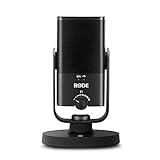
- PLUG AND PLAY USB: connects straight to Mac, PC or iPad over USB, no interface or drivers needed
- STUDIO SOUND ON A DESK: condenser capsule with built-in pop filter tuned for voice, calls and streams
- HEAR YOURSELF LIVE: zero-latency headphone monitoring with hardware volume control on the mic
- MAGNETIC DESK STAND: detaches instantly to mount on any arm with the standard thread
- IN THE BOX: NT-USB Mini with stand and USB-C cable, ready in under a minute
Rank #4

- Designed to capture less unwanted noise: Engineered from the inside to reduce vibrations from the outside, with a built-in suspension system that delivers shock mount benefits in a compact, no-fuss design.
- An All-In-One mic that doesn’t ask for more: Everything you need is built in — foam pop filter, tiltable stand, and mic arm threads. No extras required. Just clear sound and a smart design for a setup that keeps things simple.
- Fits in any gaming setup: Tilt-adjustable with a weighted base for stability, ready to use out of the box. Built-in 3/8" and 5/8" threads offer easy mounting to compatible mic arms for added versatility.
- Audio Filters Customizable via HyperX NGENUITY: Customize sound with high-pass, low-pass, or voice enhancement filters - reduce rumble, soften sharp tones, and boost voice clarity. Save settings to the mic for consistent sound anywhere.
- Tap-to-Mute with LED Indicator: Control your mic with a simple tap. Red LED on when live, off when muted.
Rank #3

- Custom three-capsule array: This professional USB mic produces clear, powerful, broadcast-quality sound for YouTube videos, Twitch game streaming, podcasting, Zoom meetings, music recording and more
- Blue VO!CE software: Elevate your streamings and recordings with clear broadcast vocal sound and entertain your audience with enhanced effects, advanced modulation and HD audio samples
- Four pickup patterns: Flexible cardioid, omni, bidirectional, and stereo pickup patterns allow you to record in ways that would normally require multiple mics, for vocals, instruments and podcasts
- Onboard audio controls: Headphone volume, pattern selection, instant mute, and mic gain put you in charge of every level of the audio recording and streaming process
- Positionable design: Pivot the mic in relation to the sound source to optimize your sound quality thanks to the adjustable desktop stand and track your voice in real time with no-latency monitoring
Product prices and availability are accurate as of the date/time indicated and are subject to change. Any price and availability information displayed on Amazon at the time of purchase will apply.