Do these 3 things before closing this tab:
1Fix the driver behind crashes, sound loss and screen glitches2Clear out junk files and repair common Windows errors3Scan for outdated or missing drivers - takes under a minuteYou can use a Raspberry Pi as a local encoder for a continuous bhajan livestream, but the Pi alone cannot guarantee that a YouTube broadcast will stay up. First secure permission for the specific music and visuals; then test the complete playback, encoding, network and recovery setup on your actual Pi before relying on it around the clock. This guide covers the practical workflow and the trade-offs of running the stream yourself.
Before anything else, clear the music and visuals
Devotional subject matter does not automatically make a recording free to rebroadcast. Check rights for the specific composition, arrangement, sound recording and any images or video in the stream. A permission to listen to or download a track may not include live transmission, every territory, or keeping a replay available afterward. Confirm the scope with the rights holder and retain written records.
YouTube says, “All live streams are scanned for matches to third-party content, including copyrighted content in the form of another live broadcast.” If it identifies a match, YouTube may replace the image with a placeholder and warn the creator; continued use can interrupt or terminate the stream. If you have licensed third-party material, YouTube advises asking the rights owner to add your channel to its Content ID allowlist. A license you believe covers the broadcast does not itself prevent an automated match. See YouTube Help: Copyright issues with live streams.
These platform rules do not determine whether a particular bhajan is protected or what permission applies in your country. Check local requirements and the rights for each item in your playlist rather than assuming a traditional or widely shared song is clear to rebroadcast.
Recommended Free Tools
#1 Best Overall

- Includes Raspberry Pi 4 4GB Model B with 1.5GHz 64-bit quad-core CPU (4GB RAM)
- Includes Pre-Loaded 32GB EVO+ Micro SD Card (Class 10), USB MicroSD Card Reader
- CanaKit Premium High-Gloss Raspberry Pi 4 Case with Integrated Fan Mount, CanaKit Low Noise Bearing System Fan
- CanaKit 3.5A USB-C Raspberry Pi 4 Power Supply (US Plug) with Noise Filter, Set of Heat Sinks, Display Cable - 6 foot (Supports up to 4K60p)
- CanaKit USB-C PiSwitch (On/Off Power Switch for Raspberry Pi 4)
Decide whether your Pi can handle the workload
What the Pi 5 reference figure means
Raspberry Pi documentation describes H.264 1080p30 encoding through the Pi 5 image signal processor at roughly 30–40% CPU. Raspberry Pi’s processor documentation, consulted 3 October 2026, presents this as a workload figure—not a guarantee of spare capacity or uninterrupted operation for a 24/7 YouTube stream. It does not establish how a particular playlist, encoder software, operating system or stream configuration will perform.
The Pi 5 camera pipeline uses software video encoding. Raspberry Pi’s camera documentation notes that low-latency encoder options can lower latency while trading off coding efficiency and potentially maximum frame rate. Those details are useful context, but they do not certify an OBS or FFmpeg setup for continuous playlist streaming. Read the Raspberry Pi processor documentation and rpicam-vid documentation for the relevant platform details.
Rank #2
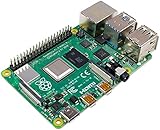
- Broadcom BCM2711, quad-core Cortex-A72 (ARM v8) 64-bit SoC @ 1. 5GHz
- 2. 4 GHz and 5. 0 GHz IEEE 802. 11b/g/n/ac wireless LAN, Bluetooth 5. 0, BLE
- 2 × USB 3. 0 ports, 2 x USB 2. 0 Ports
- 2 × micro HDMI ports supproting up to 4Kp60 video resolution
- Micro SD card slot for loading operating system and data storage
Test your real stream, not just the encoding number
Before launch, run the exact Pi, operating system, playback method, resolution, frame rate, encoder settings, media files and network connection you intend to use. Let it run long enough to expose playback stalls, overheating-related instability, dropped network connections or encoder failures; then deliberately interrupt power, internet and playback one at a time to see how recovery works. No documented figure here certifies any configuration for continuous service.
Choose resolution and frame rate that your encoder can sustain while leaving enough upload capacity for a stable connection. There is no single bitrate or resolution established for every Pi and network. Verify the actual signal in YouTube’s live preview before promoting the broadcast.
Rank #3
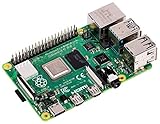
- Broadcom BCM2711, Quad core Cortex-A72 (ARM v8) 64-bit SoC @ 1.5GHz
- 1GB, 2GB, 4GB or 8GB LPDDR4-3200 SDRAM (depending on model)
- 2.4 GHz and 5.0 GHz IEEE 802.11ac wireless, Bluetooth 5.0, BLE Gigabit Ethernet
- 2 USB 3.0 ports; 2 USB 2.0 ports.
- Raspberry Pi standard 40 pin GPIO header (fully backwards compatible with previous boards)
Set up the YouTube live connection
- Create the live event: In YouTube Studio or Live Control Room, set up the live stream and obtain the stream endpoint and stream key supplied for the event.
- Configure the encoder: Enter YouTube’s endpoint and key in the encoder you have chosen, and set resolution, frame rate and bitrate to values your tested system and upload connection can sustain.
- Keep the key private: Treat the stream key as a password. Do not publish it or include it in public notes. If it is exposed, replace it in YouTube’s live setup and update the encoder.
- Check the preview and status: Start the encoder, confirm that YouTube receives the stream and inspect the live preview and status before sharing the event with viewers.
YouTube’s developer documentation covers RTMPS, HLS and DASH ingestion. HLS and DASH have protocol-specific playlist, segment, codec and timing requirements for encoder implementations; a typical creator using YouTube’s supplied stream setup does not need to build those protocols by hand. See YouTube RTMPS ingestion, HLS ingestion and DASH encoding.
Build a continuity plan for a 24/7 target
An always-on broadcast is an operating plan, not just a successful test start. The Pi setup depends on local power, internet, media playback and encoder operation. Keep the media playlist available locally, decide what should restart automatically after a reboot, and arrange a way to check YouTube’s stream status remotely. Test recovery from a deliberate interruption before launch and decide who will respond if the stream stops. No source establishes a guaranteed uptime level for a Raspberry Pi configuration.
Rank #4

- Vilros Complete Starter Kit for Pi 4 Includes Raspberry Pi 4 Model B Board and all the accessories you need to get started.
- 9-PART KIT WILL HAVE YOU READY TO GET UP AND RUNNING: Kit Includes 1. Raspberry Pi 4 Model B Board 2. Case With Easy to connect Built-in fan 3. 64GB Micro SD card Preloaded with RP OS 4. Vilros Pi 4 Compatible Power Supply with Inline on/off switch (power supply color may vary white/black) 5. Micro HDMI to Standard HDMI cable (5ft) 6. Micro SD to USB adapter to reflash card if desired 7. Neoprene Storage Bag to store all parts when not in use 8. Set of 4 Heatsinks 9. Vilros QuickStart Guide instruction booklet for Pi 4
- PASSIVE & ACTIVE COOLING: The included case is well-vented and the kit also includes a set of heatsinks with thermal stickers for easy application and a pre-installed fan to keep the board cool in any use.
- CONVENIENT ACCESSORIES: The power supply features an inline on/off switch neoprene bag that holds and protects all the parts when not in use and the QuickStart guide is updated and written for Raspberry Pi 4.
- IMPORTANT: Kit does NOT include Keyboard, Mouse or Monitor
- Power: Identify how you will detect and recover from a power interruption or reboot.
- Internet: Check that the connection can sustain the chosen stream and plan what to do if it drops.
- Playback and encoder: Test that the playlist advances as intended and that a stalled process can be noticed and restarted.
- Monitoring: Decide how often someone checks the live preview or status and how they will be alerted to a failure.
- Rights and replay: Keep permissions accessible and ensure they cover any replay you choose to retain.
Local Raspberry Pi or cloud streaming?
Running a Pi locally gives you control over the hardware and media playback, with an up-front device cost if you do not already own suitable equipment. It also makes the broadcast dependent on the Pi’s power, local network and your restart and monitoring arrangements. A cloud service shifts the streaming operation away from the home encoder but has an ongoing service cost and still requires sound rights management and a working YouTube connection. There is no controlled head-to-head performance evidence here, so compare the approaches against your own requirements rather than assuming either one is inherently more reliable.
| Consideration | Local Raspberry Pi | Cloud option |
|---|---|---|
| Control and cost | Local hardware and media control; hardware cost depends on what you already own and what your workload requires. | Ongoing service cost; plan and terms depend on the provider. |
| Where streaming runs | On your Pi, so local power and internet are dependencies. | In the provider’s cloud; your home computer does not need to stay on. |
| Monitoring and recovery | You plan and test your own monitoring and restart behavior. | Capabilities vary by provider; check the service’s stated recovery and monitoring features. |
| Media and rights | You manage the local playlist and clear its content. | You still manage the uploaded content and its rights; cloud hosting does not grant music permission. |
Or let it run in the cloud
StreamNeo is a YouTube-only cloud service for keeping uploaded videos live; it does not stream from a camera. Upload a recording or build a playlist, add your YouTube stream key, then go live. The stream runs in the cloud, so nothing has to stay on at home. It plays your upload as made, up to 4K 60fps, at one flat price per slot; it also has automatic recovery if YouTube drops the stream. The first day is free with no card, once per account. Monthly pricing is $9.99 per month. UPI and cards are accepted in India; card checkout is available worldwide. Details are at StreamNeo. To try it, start your free first day.
Quick Recap
Best Value

- Includes Raspberry Pi 4 4GB Model B with 1.5GHz 64-bit quad-core CPU (4GB RAM)
- CanaKit 3.5A USB-C Power Supply with Noise Filter (UL Listed) specially designed for the Raspberry Pi 4 (5-foot cable)
- CanaKit USB-C PiSwitch (On/Off Power Switch)
- Set of 3 Aluminum Heat Sinks for the Raspberry Pi 4
Product prices and availability are accurate as of the date/time indicated and are subject to change. Any price and availability information displayed on Amazon at the time of purchase will apply.