Do these 3 things before closing this tab:
1Fix the driver behind crashes, sound loss and screen glitches2Repair Windows errors before they cause bigger problems3Scan for outdated or missing drivers - takes under a minuteSpoiler warning: This list discusses major events across Jujutsu Kaisen, including its late-series story and ending.
There is no official ranking of Jujutsu Kaisen’s best panels, and fan discussion is not a representative poll. This is an editorial selection: the panels stand out for their composition, emotional force, character or theme revelation, consequences for the story, and staying power. The order is a judgment, not a claim of consensus.
| # | Preview | Product | Price | |
|---|---|---|---|---|
| 1 |

|
A Silent Voice Complete Series Box Set | $42.47 | Buy on Amazon |
| 2 |

|
Chainsaw Man Box Set: Includes volumes 1-11 | $78.36 | Buy on Amazon |
| 3 |
|
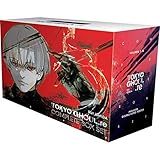
Tokyo Ghoul: re Complete Box Set: Includes vols. 1-16 with premium | $135.99 | Buy on Amazon |
| 4 |

|
Bleach Box Set (Vol. 1-21) | $190.41 | Buy on Amazon |
| 5 |

|
Death Note Complete Box Set: Volumes 1-13 with Premium | $97.74 | Buy on Amazon |
Chapter references below are deliberately omitted: the available official chapter index does not verify panel-by-panel locations, and scene labels alone are not enough to assign precise chapter numbers confidently. Use the official VIZ chapter reader to find each scene in its licensed context. Jujutsu Kaisen is Gege Akutami’s manga, serialized in Weekly Shonen Jump beginning in 2018, according to VIZ’s series page.
25 memorable Jujutsu Kaisen manga panels
1. Yuji swallows Sukuna’s finger
Yuji’s choice to swallow the cursed object turns a desperate attempt to protect others into the story’s defining gamble. The panel’s force is in that collision between a seemingly ordinary teenager and an irreversible act.
#1 Best Overall
2. Sukuna first appears through Yuji
The shift from Yuji’s earnest presence to Sukuna’s predatory control establishes the danger of their shared body at a glance. It is an early visual statement of the series’ central tension: power can arrive with a terrible cost.
3. Gojo removes his blindfold
The reveal makes Gojo’s eyes an event in themselves. Its impact comes from contrast and restraint: the character who has been concealed suddenly commands the page without needing a long explanation.
4. Gojo demonstrates Limitless
When an attack cannot reach Gojo, an abstract ability becomes something readers can see and feel. The scene turns distance into a visual effect, making his confidence seem physically justified.
5. Yuji and Todo coordinate against Hanami
Their exchanges make teamwork legible as movement, timing, and surprise. The paneling gives a complicated fight a buoyant rhythm while showing Yuji learning in the middle of danger.
6. Todo casts Yuji as his best friend
Todo’s extravagant framing of Yuji is comic, but it also becomes a kind of instant bond. The moment reveals how confidently Todo invents a shared history—and how quickly that absurd premise can change the energy of a scene.
Rank #2
7. Gojo and Geto as students
The Hidden Inventory flashback presents the pair before the weight of their later choices separates them. Their youthful ease makes the friendship feel real, giving the eventual rupture a human foundation rather than treating it as a mere plot twist.
8. Young Gojo awakens after Toji nearly kills him
Gojo’s return marks a turning point in both ability and self-understanding. The contrast between near-defeat and sudden clarity gives the scene its force: survival is not a reset, but a transformation.
9. Gojo’s “Honored One” moment
After mastering his technique, Gojo’s self-assurance takes on a startling, almost serene scale. The panel is memorable because it fuses character revelation with a change in the balance of power.
The Tool Desk
Outbyte Driver Updater FREEFix the driver behind crashes, sound loss and screen glitchesFind Drivers →Outbyte PC Repair FREERepair Windows errors before they cause bigger problemsFix Now →10. Toji recognizes Megumi in Shibuya
Recognition briefly breaks through Toji’s violence and redirects the scene toward his son. The emotional turn is spare, and that restraint makes the consequences of the moment land harder.
11. Mahito transforms Junpei
Junpei’s fate makes Mahito’s cruelty concrete and strips away any easy distance between Yuji’s ideals and the world he faces. The scene matters not for spectacle alone, but for what it does to Yuji’s understanding of his enemy.
Rank #3
- This product will be an excellent pick for you
- Easy to maintain
- This product comes in a proper packaging
12. Sukuna expands his domain in Shibuya
Sukuna’s domain overwhelms the page with scale and devastation. Its spectacle is inseparable from its horror: the scene shows what happens when immense power is unleashed without regard for the people caught nearby.
13. Gojo is sealed
The Prison Realm reveal converts the apparent security of Gojo’s presence into a crisis. It is a major narrative reversal, and its visual clarity makes the trap feel sudden even as the plan snaps into place.
14. Nanami’s final walk through Shibuya
Nanami’s exhausted walk gathers the cost of the Shibuya events into one quiet image. His composure, set against the damage around him, gives the scene emotional weight without needing to turn it into a spectacle.
15. Nobara confronts Mahito
Nobara’s confrontation puts her confidence and nerve in direct opposition to Mahito’s cruelty. The panel stands out because she is not reduced to a bystander in Yuji’s conflict; she meets the threat on her own terms.
16. Todo returns to help Yuji
Todo’s arrival changes the emotional and physical momentum of Yuji’s fight. The scene combines tactical support with the series’ offbeat humor, making friendship feel like an active force rather than a sentimental pause.
Rank #4
17. Yuji tells Mahito, “I’m you”
Yuji’s confrontation rejects the comfort of seeing Mahito as an entirely separate kind of monster. The line’s significance lies in the difficult recognition beneath it: Yuji understands the shape of their conflict even as he refuses Mahito’s cruelty.
Free tools Windows power users keep installed
One-click scans. No signup required.
18. Yuta returns during the Culling Game period
Yuta’s return reintroduces a major character with a declaration that immediately raises the stakes. The scene works as both a dramatic entrance and a reminder that the story’s conflicts extend beyond Yuji’s immediate circle.
19. Maki confronts the Zenin clan
Maki’s confrontation turns a family’s entrenched power structure into the focus of a brutal reckoning. The panel’s impact rests on character change and consequence: the struggle is personal, but it also exposes the clan’s cruelty.
20. Hakari’s domain against Kashimo
The domain sequence makes Hakari’s unpredictable style part of the visual experience. Against Kashimo, its shifting stakes keep the fight lively while showing how a technique can shape not just what a character does, but the rules of the encounter.
21. Yuta faces Ryu and Uro in Sendai
The Sendai fight balances three distinct abilities and personalities in a crowded contest. Its memorable panels make the clash readable while preserving the sense that Yuta is navigating opponents with their own ambitions, not merely clearing obstacles.
Windows Errors? Fix Them Before They Spread
Repair common Windows errors and clear accumulated junk for a smoother, more stable PC - no reinstall needed.Free scan · no reinstallCrashes, No Sound, or Screen Glitches?
Random freezes, missing sound and display glitches usually trace back to one bad driver. Find and replace yours safely.Free scan · under a minuteBest Value
- Death Note box set (Volume 01-13) graphic novel
- Manufactured by: simon
- Height: 11.00 in. Width: 5.00 in
22. Kenjaku and Takaba turn combat into comedy
The confrontation bends the series’ battle logic around Takaba’s comedic sensibility. That shift is the point: the scene makes humor consequential, unsettling the expectations built by the manga’s more conventional fights.
23. Sukuna and Gojo’s battle
Their fight pits two exceptional sorcerers against each other and makes tactical escalation part of the visual drama. A compelling panel from this sequence should be judged in its actual scene context rather than attached to a chapter number by guesswork; a VIZ reader page for chapter 222 does not, by itself, verify that any particular image appears there.
24. Yuji’s final confrontation with Sukuna
The final confrontation brings the series’ long conflict back to Yuji and the consequences of sharing a body with Sukuna. Its strongest panels draw their weight from accumulated history: the fight is not only about who prevails, but what Yuji has learned to value.
25. The closing reunion or epilogue image
The ending image earns its place through contrast with the suffering and upheaval that came before. Its meaning depends on the exact image selected and the surrounding final-volume pages, so it should be located and read in sequence rather than treated as a detachable poster moment.
What’s actually slowing this PC down?
Pick the symptom - the matching free tool is one click away.
How to choose a favorite
Different readers will rank these moments differently. A panel can be visually striking yet less emotionally affecting for one reader; another may matter because it changes a relationship or reframes a character. For comparisons, consider four questions: how the page directs the eye, what emotion it creates, what it reveals, and how much the story changes because of it. Readers looking for discussion of the cast can also consult VIZ’s Jujutsu Kaisen: The Official Character Guide, whose publisher description notes character profiles, background on Akutami, and an interview with Bleach creator Tite Kubo.
Quick Recap
Product prices and availability are accurate as of the date/time indicated and are subject to change. Any price and availability information displayed on Amazon at the time of purchase will apply.