Free tools Windows power users keep installed
One-click scans. No signup required.
Short answer: YouTube’s published help pages do not explain the specific “variable frame rate” warning for pre-recorded live streams, identify what triggers it, or say whether it blocks a stream. Treat it as a warning to investigate—not proof that YouTube rejects variable-frame-rate video. First note where it appears and its exact wording, then check the source and encoder settings and run a representative test stream.
What the variable frame rate warning does—and does not—tell you
The wording alone does not establish whether the warning came from YouTube Live Control Room, your streaming encoder, or a third-party prerecorded-streaming application. YouTube’s published live error guidance describes certain video-setting errors, including interlaced video and frame rates that are too high, but the reviewed page does not define this particular VFR warning or its consequences. It does not establish that the warning blocks the stream, causes dropped frames, or means YouTube rejects variable frame rate.
Separate the warning from YouTube’s general live ingest guidance. The official YouTube live encoder settings describe supported streaming formats and recommended settings; they do not identify a specific VFR-warning fix. The page does not support a claim that you need a particular conversion tool, capture card, or hardware encoder.
Identify which part of the setup is reporting it
- Copy the exact warning text. Avoid paraphrasing it as “YouTube rejects VFR” unless the message itself says that.
- Note where it appears. Record whether it is shown in YouTube Live Control Room, the encoder, or the app that plays prerecorded video into a live stream.
- Record the context. Note which video was loaded, whether the warning appeared before or during the test, and whether the stream preview and stream-health indicators showed a problem.
This distinction matters because the reviewed official guidance does not identify the issuer of the warning or explain what that warning means for a particular stream.
#1 Best Overall
Check the video and live encoder settings
Compare the source frame rate with the encoder output
Inspect the source file’s properties and compare its frame rate with the output frame rate configured in the encoder or prerecorded-streaming application. YouTube’s upload encoding guidance says, “Content should be encoded and uploaded in the same frame rate it was recorded.” It lists common rates of 24, 25, 30, 48, 50, and 60 fps, while noting that other frame rates are also acceptable.
That sentence is about uploaded videos. It is sensible guidance when preparing a source file, but YouTube does not identify it as the remedy for this live-stream warning. Keep that distinction clear: matching the source rate is a check, not a confirmed fix.
Rank #2
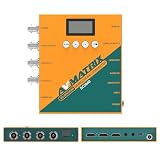
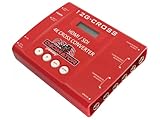
- 【FIBER OPTIC TRANSMISSION】The built-in MSA-compliant SFP slot accepts standard 3G video SFP transceivers — use your own module or add an optional AVMATRIX module — for bidirectional, uncompressed 3G-SDI over a single 1310 nm single-mode LC fiber up to 20 km / 12.4 miles. Hot-swappable with 3G-SDI Level A/B support; ideal for long-distance runs in house of worship, stadium, and broadcast installs. Module not included.
- 【3G-SDI / HDMI BI-DIRECTIONAL CONVERTER with scaler】Convert in either direction — SDI to HDMI or HDMI to SDI — with built-in up/down scaling and frame rate conversion up to 1080p60. Mix cameras, switchers, and displays of different resolutions seamlessly in live event and video production workflows.
- 【24 CONVERSION MODES & BUILT-IN TEST PATTERNS】Cover format, scaling, and frame rate needs with 24 preset conversion modes at the press of a button. The built-in generator delivers 23 test patterns plus audio test tones, so you can verify signal chain and routing on set without carrying extra test gear.
- 【AUDIO EMBEDDING & DE-EMBEDDING】Add external audio into your SDI or HDMI stream, or extract embedded audio for monitoring and routing, via the 3.5 mm stereo analog input/output. Independent audio routing supports SDI (up to 8 stereo pairs) and HDMI (up to 4 stereo pairs) for flexible mixing in streaming, recording, or broadcast.
- 【DUAL POWER SUPPLY】Power the converter from USB-C (5 V) or DC 9–24 V with locking connector — run it off a USB power bank, camera battery, or studio supply in the field. Low 7 W draw keeps it cool and budget-friendly for long installs.
Verify documented live-stream settings
YouTube’s live encoder page lists RTMP or RTMPS and H.264, H.265/HEVC, and AV1 as supported options. Its live guidance says frame rate is up to 60 fps, recommends a two-second keyframe interval, and says not to exceed four seconds. It also specifies constant bitrate (CBR) for live encoding. Check your encoder’s output settings against the current values on YouTube’s page, since platform guidance can change.
YouTube’s bitrate recommendations depend on codec, resolution, and frame rate. In the page’s US English table, for example, H.264 is listed at 10 Mbps for 1080p30 and 17 Mbps for 1080p60. These are YouTube recommendations, not minimum hardware requirements. Consult the current table for your chosen format rather than treating those two examples as universal targets.
The Tool Desk
Outbyte PC Repair FREEClear out junk files and repair common Windows errorsFree Scan →Outbyte Driver Updater FREEFix the driver behind crashes, sound loss and screen glitchesFind Drivers →Rank #3
- 【SDI and HDMI signal cross conversion】This video converter with SDI and HDMI signal input. easily and quickly convert SDI to HDMI, or HDMI to SDI signals for output to back-end devices. Ideal for live stream and broadcasts, or even professional broadcast productions, OB vans and security systems etc.
- 【DIP switches, SDI/HDMI Quick Switching]】Quick switching between SDI and HDMI inputs is achieved via DIP switches. It's a clever way to do this, while it can also be connected to a computer via USB and set up remotely using software.
- 【Plug and play & multi frame rate up/down scaling】 This video converter very easy to use, no separate driver installation required, and automatic detection of input signals and automatic identification of matching output signals, supporting SD, HD and Full HD signals. Can be converted to any signal format the user needs.
- 【External Audio Embedding, 3.5mm audio in】External analogue audio is embedded into the SDI and HDMl outputs, making it suitable for a wide range of applications. The most commonly used 3.5mm connector makes it easy to add external audio signals to the SDI/HDMIl video outputs.
- 【3-year guarantee, Long-term technical support】 All machines are fully inspected at the factory to ensure that the product you receive is perfect. You have any questions during the purchase and use, please contact us directly, we will provide you with excellent after-sales service.
Do not confuse upload and live bitrate guidance
YouTube’s upload page specifies variable bitrate (VBR) for upload encoding, while its live encoder page specifies CBR for the live stream. Those recommendations apply to different workflows: an uploaded file and a live ingest stream. They are not contradictory, and upload VBR guidance should not be substituted for the live encoder’s CBR setting.
Run a representative test before relying on the stream
- Use the same source type, encoder, and output settings planned for the real broadcast.
- Include audio and movement similar to what the stream will contain. YouTube recommends testing with representative audio and motion.
- Check the Live Control Room preview and monitor stream health during the test, as YouTube advises.
- Note whether the warning persists and whether the preview or stream-health indicators show a separate issue. The warning’s presence alone does not establish a failure.
If the issue continues, keep the exact warning, source-file properties, encoder settings, and test observations together when contacting platform or encoder support. That information can help distinguish a source-file mismatch from an encoder configuration or platform-side message; it is a practical troubleshooting record, not a documented YouTube requirement.
Rank #4

- Upgraded High-Efficiency Recording – Capture smooth, high-quality video with advanced compression and 60fps frame rate, preserving detail while reducing file size. Perfect for archiving vintage footage.
- Analog to Digital Converter for Camcorders & VCRs – Digitize VHS, VHS-C, 8mm, MiniDV, and Digital8 tapes directly to micro SD card (up to 512GB Class 10). Ideal for home video preservation, retro content creators, and video archivists.
- Resolutions – Build-in 2.4 inch 640 × 480 RGB LCD screen. Records video at AV 720x576 (PAL) 50fps, 720x480 (NTSC) 60fps.
- Portable DVR with Clip Mount – Compact, lightweight design includes a clip mount for hands-free use and easy portability. Great for field recording, on-the-spot transfers, and mobile video capture.
What the warning does not justify buying or changing
The reviewed YouTube pages do not establish that this warning requires a hardware encoder, capture card, or specific transcoding utility. YouTube discusses software and hardware encoders generally and recommends professional-grade hardware for higher-production events, but not specifically to clear a VFR warning. Avoid replacing equipment or converting every source file based on the warning alone; first identify its source and test the relevant settings.
Or let it run in the cloud
If your goal is to keep uploaded documentaries looping as a YouTube live stream, StreamNeo is a separate cloud option: upload the video, add your YouTube stream key, and go live. It plays uploaded videos, not a camera feed, and keeps the stream running without a home computer left on. It supports the uploaded quality up to 4K 60fps at one flat price per slot, automatically recovers if YouTube drops the stream, and includes a first day free with no card. Monthly service is $9.99 per month. See StreamNeo for details, then start your free day.
What’s actually slowing this PC down?
Pick the symptom - the matching free tool is one click away.
Quick Recap
Best Value

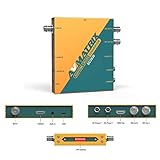
- 【HDMI / SDI Signal Conversion – All Outputs Active】The AVMATRIX SC2030 video converter features 1×HDMI, 1×SDI, and 1× analog audio input, with 2×3G-SDI and 1×HDMI outputs. Supports HDMI to SDI, SDI to HDMI, and cross-conversion modes, making it a flexible professional HDMI SDI converter for live production, streaming, and broadcast setups.
- 【Broadcast-Grade Up/Down Scaling & Frame Rate Conversion for Multi-Format Workflows】This video scaler converter supports real-time up/down scaling (SD ↔ HD) and frame rate conversion (e.g., 1080i to 1080p),ensuring compatibility between cameras, switchers, and displays. Ideal for users needing a versatile SDI HDMI scaler in mixed-resolution environments.
- 【Audio Embedding – Synced to Video】Embed external audio (via 3.5mm jack) into both SDI and HDMI outputs with tight audio-video sync. Perfect for adding mic or commentary audio without extra gear—great for live streaming, video conferencing, or broadcast where clean embedded audio is required.
- 【Easy Setup: DIP Switches + USB Control】This video converter equipped with DlP switches,and quickly configure settings with no software needed for basic use. For advanced control, connect via USB to adjust parameters or update firmware on PC. A practical choice for both field use and studio installations.
- 【Dual Locking Power & Wall Mount – Built for Reliability】Equipped with dual redundant locking DC power inputs to prevent dropouts, plus a detachable wall-mount bracket. Designed for 24/7 operation in demanding applications like OB vans, houses of worship, or permanent AV systems..
Product prices and availability are accurate as of the date/time indicated and are subject to change. Any price and availability information displayed on Amazon at the time of purchase will apply.