Windows Errors? Fix Them Before They Spread
Repair common Windows errors and clear accumulated junk for a smoother, more stable PC - no reinstall needed.Free scan · no reinstallOutdated Drivers Are Slowing You Down
One free scan finds every outdated or missing driver and matches the right update for your exact hardware.Free scan · exact hardware matchPush VOD is a context-dependent term for sending prepared video or files toward a receiver or application so they can be used later. In broadcast-oriented discussions such as DVB-NIP, “push” describes the delivery path; it is not the same as a viewer requesting a stored video over ordinary HTTP streaming. The term is also easy to confuse with “push” in live streaming, where an encoder sends a live feed to a platform.
What “push VOD” means
VOD means video on demand: content is available for playback when a viewer chooses it. In a broadcast-oriented use of “push VOD,” prepared content is ingested into a delivery system and distributed toward receiver-side equipment or an application for later use. The Eutelsat DVB-NIP white paper discusses generic file ingest for push-style delivery, including situations where continuous connectivity is unavailable or inefficient, as well as server-side content management and ingest and client-side applications.
That description does not define one universal push-VOD workflow. The schedule for delivery, where files are stored, how a catalogue is updated, whether a return connection is needed, and what devices can play the content all depend on the particular deployment.
How a push-style VOD system works
- Prepare the content. Video or other files are selected and made ready for the service’s ingest process.
- Ingest the files. A server-side system or content-management workflow accepts the files for delivery.
- Distribute them toward the receiving side. The deployment sends or makes content available to receiver equipment or an application. The precise delivery schedule and network arrangement are implementation-specific.
- Store, catalogue, or expose the content. The receiving system must make the delivered material available in some way, but storage and catalogue behavior are not universal features of the term.
- Play it later. A compatible receiver or application selects the prepared content for playback on demand.
A cited motivation for push delivery is avoiding reliance on continuous connectivity in circumstances where that connection is unavailable or inefficient. That is a use case, not a guarantee that push delivery is always faster, cheaper, or more reliable.
The Tool Desk
Outbyte Driver Updater FREEScan for outdated or missing drivers - takes under a minuteDriver Scan →Outbyte PC Repair FREERepair Windows errors before they cause bigger problemsFix Now →#1 Best Overall

- Easily store and access 2TB to content on the go with the Seagate Portable Drive, a USB external hard drive
- Designed to work with Windows or Mac computers, this external hard drive makes backup a snap just drag and drop
- To get set up, connect the portable hard drive to a computer for automatic recognition no software required
- This USB drive provides plug and play simplicity with the included 18 inch USB 3.0 cable
- The available storage capacity may vary.
How push VOD differs from HTTP VOD
In conventional HTTP video on demand, a video is typically packaged into segments, with a playlist or manifest describing those segments. The files are hosted on a web server or content delivery network (CDN), and a compatible player requests them for playback. Apple’s HLS overview explains that HTTP Live Streaming supports prerecorded VOD as well as live broadcasts, can provide multiple bitrate variants, and adapts playback to network conditions. Apple’s HLS workflow documentation describes the packaging-and-playback workflow; AWS also documents on-demand streaming through CloudFront.
MPEG-DASH is another HTTP-based adaptive streaming approach that supports live and on-demand use. It is not a synonym for broadcast push VOD; see the MPEG-DASH standards overview.
Rank #2
- Easily store and access 5TB of content on the go with the Seagate portable drive, a USB external hard Drive
- Designed to work with Windows or Mac computers, this external hard drive makes backup a snap just drag and drop
- To get set up, connect the portable hard drive to a computer for automatic recognition software required
- This USB drive provides plug and play simplicity with the included 18 inch USB 3.0 cable
- The available storage capacity may vary.
| Question | Broadcast-oriented push VOD | HTTP VOD, such as HLS or DASH |
|---|---|---|
| How does content reach playback? | Prepared files are distributed toward or made available to receiving equipment or an application; the exact method depends on the deployment. | A compatible player requests packaged video files over HTTP. |
| Does playback begin with a viewer request? | Delivery can take place before the viewer chooses the content; timing and catalogue behavior vary. | The player requests the needed manifests and segments for playback. |
| Where is content held? | Receiver-side or application storage may be involved, but the term does not establish a universal storage arrangement. | Packaged assets are hosted on a web server or CDN and fetched by a player. |
| What connectivity assumptions apply? | A cited motivation is use where continuous connectivity is unavailable or inefficient; this is not a blanket performance claim. | Playback relies on HTTP delivery to a compatible player; HLS can adapt among available bitrate variants to network conditions. |
| What must be compatible? | The specific receiver, gateway, or application must match the service’s implementation. | The player must support the chosen packaging and streaming format. |
Do not confuse push VOD with live-stream “push”
In live streaming, “push” commonly means sending a live audio-and-video feed from a host or encoder to cloud servers. Tencent Cloud’s guide to push, live streaming, and VOD distinguishes that live publishing flow from stored video played later. So a phrase such as “push a stream” may mean publishing a live feed, while “push VOD” in a broadcast context refers to distributing prepared content for later playback.
A 24/7 YouTube stream made from prerecorded videos is a different use case again: it continuously broadcasts uploaded recordings as a live channel. It does not make that workflow DVB-NIP push VOD or ordinary viewer-requested HTTP VOD.
Recommended Free Tools
Rank #3
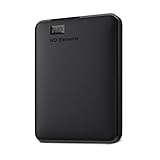
- High capacity in a small enclosure – The small, lightweight design offers up to 6TB* capacity, making WD Elements portable hard drives the ideal companion for consumers on the go.
- Plug-and-play expandability
- Vast capacities up to 6TB[1] to store your photos, videos, music, important documents and more
- SuperSpeed USB 3.2 Gen 1 (5Gbps)
Compatibility and practical checks
There is no single receiver that can be assumed to work with every push-VOD deployment. Before choosing equipment or planning an integration, confirm the service’s actual implementation and obtain compatibility information from the provider.
- Which delivery standard and service implementation does the provider use?
- Which receiver, gateway, or client application is supported, and which software or firmware version is required?
- How are files ingested, scheduled, and removed or replaced?
- Where does delivered content reside, and how is it exposed in the user’s catalogue?
- Does playback or catalogue access need a return-channel connection?
- What video formats, codecs, and packaging formats are accepted?
These checks matter because a generic reference to “push VOD” does not certify a particular consumer device or establish a common catalogue, storage model, or setup procedure.
Rank #4
- Easily store and access 4TB of content on the go with the Seagate Portable Drive, a USB external hard drive.Specific uses: Personal
- Designed to work with Windows or Mac computers, this external hard drive makes backup a snap just drag and drop
- To get set up, connect the portable hard drive to a computer for automatic recognition no software required
- This USB drive provides plug and play simplicity with the included 18 inch USB 3.0 cable
- The available storage capacity may vary.
Or let it run in the cloud
If your goal is a 24/7 YouTube channel playing uploaded recordings rather than broadcast push VOD, StreamNeo is a separate cloud option: upload your recording or build a playlist, add your YouTube stream key once, and go live. Nothing has to stay on at home; it streams uploaded video as made, up to 4K 60fps, at one price per slot, with automatic recovery if YouTube drops the stream. The first day is free with no card. Monthly pricing is $9.99 per month. Start the free day with StreamNeo.
Quick Recap
Best Value

- High capacity in a small enclosure – The small, lightweight design offers up to 6TB* capacity, making WD Elements portable hard drives the ideal companion for consumers on the go.
- Plug-and-play expandability
- Vast capacities up to 6TB[1] to store your photos, videos, music, important documents and more
- SuperSpeed USB 3.2 Gen 1 (5Gbps)
Product prices and availability are accurate as of the date/time indicated and are subject to change. Any price and availability information displayed on Amazon at the time of purchase will apply.
Do these 3 things before closing this tab:
1Repair Windows errors before they cause bigger problems2Scan for outdated or missing drivers - takes under a minute3Clear out junk files and repair common Windows errors