Do these 3 things before closing this tab:
1Scan for outdated or missing drivers - takes under a minute2Repair Windows errors before they cause bigger problems3Fix the driver behind crashes, sound loss and screen glitchesVerdict: The Lenovo Legion Pro 7i Gen 10 is an outstanding 16-inch gaming laptop when you prioritize sustained, plugged-in performance, a 240Hz OLED screen and a premium metal chassis. Its high price, roughly six-pound travel weight, 400W power brick, middling battery life, lack of biometric login and bundled software advertising make it a poor choice for frequent unplugged use. The Legion 7i Gen 10 is the more practical mainstream alternative, while Legion Go is a very different Windows handheld rather than a laptop replacement.
Lenovo Legion Pro 7i Gen 10 review
Tom’s Hardware tested a configuration with an Intel Core Ultra 9 275HX, Nvidia GeForce RTX 5080 Laptop GPU (16GB GDDR7, up to 175W graphics power), 32GB DDR5-6400 memory, two 1TB SSDs, a 16-inch 2560×1600 16:10 OLED panel running at 240Hz, a 1440p camera, a 99.99Wh battery and Windows 11 Home. That configuration cost $3,204 in the review published May 12, 2025; prices, stock and regional specifications can change.
The hardware explains the review’s strong result. Tom’s Hardware praised the overall performance, exceptional OLED display, aluminum construction, customizable RGB lighting and sharp webcam. The same review identified the high price, absent biometric features, middling battery life and software advertisements as drawbacks. Lenovo’s current Pro 7i listing also highlights 400W charging, optional 140W USB-C charging and Wi-Fi 7.
Performance is the point
The RTX 5080 configuration is designed for high frame rates and demanding ray-traced games when connected to AC power. Do not treat its results as representative of every Pro 7i: Lenovo sells versions with different processors, graphics chips, memory, storage and displays. An RTX 5070 Ti, RTX 5080 or RTX 5090 model targets a different performance and price tier than a lower-GPU configuration.
Recommended Free Tools
#1 Best Overall
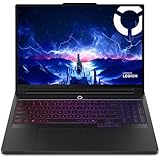
- UNOPENED RETAIL PACKAGING, sold as configured by Lenovo. Includes one year of Courier or Carry-in Lenovo Warranty. Add up to 4 years of Lenovo Premium Care Onsite Plus when you register your computer with Lenovo.
OLED display and build quality
The 16-inch 2560×1600 OLED combines a tall 16:10 workspace with a 240Hz refresh rate. OLED contrast and fast response are major advantages for games and video, while the aluminum chassis gives the machine a more substantial feel than a typical plastic gaming notebook. When comparing listings, verify the exact refresh rate, HDR specification, color coverage and variable-refresh-rate support; Lenovo also sells 165Hz and 240Hz OLED options in the Legion family.
Portability and battery limits
A 99.99Wh battery is close to the practical airline limit, but capacity alone does not make the Pro 7i a travel-friendly computer. The tested system weighs about six pounds and uses a large 400W proprietary adapter. Battery life was only middling in Tom’s Hardware’s testing, so expect the best gaming performance at a wall outlet. USB-C charging can be useful for lighter workloads, but Lenovo specifies the optional 140W mode rather than a replacement for the full-power adapter during demanding play.
Rank #2
- Processor - Intel Ultra 9 275HX, 24C (8P + 16E) / 24T, P-core 2.7 / 5.4GHz, E-core 2.1 / 4.6GHz, 36MB
How the Legion 7i Gen 10 differs
The current Legion 7i Gen 10 is the sensible comparison for buyers who want a conventional laptop but do not need the Pro model’s highest power envelope.
| Model | Published or listed configuration | Best fit | Main compromises |
|---|---|---|---|
| Legion Pro 7i Gen 10 | Tested: Core Ultra 9 275HX, RTX 5080 16GB, 32GB RAM, two 1TB SSDs, 16-inch 2560×1600 240Hz OLED, 99.99Wh battery, 400W adapter | Maximum plugged-in gaming performance and premium display | High cost, about six-pound system, large charger, middling battery, no biometrics |
| Legion 7i Gen 10 | Lenovo lists Core Ultra 7/9, RTX 5060 or RTX 5070, up to 32GB DDR5, up to 2TB PCIe 4 SSD, 84Wh battery, Wi-Fi 7 and 165Hz or 240Hz 2560×1600 OLED options | Lower-cost, more mainstream Legion laptop | Lower GPU ceiling and materially different configurations by region |
| Legion Go | Windows handheld with an 8.8-inch 144Hz display, detachable controllers and a kickstand | Handheld play and console-style flexibility | Poor battery life, only decent performance and an unusual right-controller function |
The 7i’s 84Wh battery is smaller than the Pro’s 99.99Wh unit, but the complete system can still be easier to carry depending on its GPU, chassis and charger. Compare the weight and adapter listed for the exact SKU rather than assuming that the model name determines portability.
Rank #3
- Processor - Intel Ultra 9 275HX, 24C (8P + 16E) / 24T, P-core 2.7 / 5.4GHz, E-core 2.1 / 4.6GHz, 36MB
- Operating System - Windows 11 Pro 64
- Graphic Card - NVIDIA GeForce RTX 5080 16GB GDDR7, Boost Clock 2287MHz, TGP 175W, 1334 AI TOPS
- Memory - 64 GB DDR5-6400MHz (CSODIMM) - (2 x 32 GB)
- Storage - 2 TB SSD M.2 2280 PCIe Gen4 TLC (2 x 1 TB)
Legion Go: better than Steam Deck?
Legion Go is a Windows 11 handheld, not a direct substitute for a high-power Legion laptop. Tom’s Guide called it arguably the best Windows 11 handheld because of its large 8.8-inch 144Hz display, detachable controllers and intuitive launcher. The same assessment found poor battery life, an odd right-controller function and only decent performance. Those trade-offs matter more in a handheld than peak laptop specifications: the Go’s appeal is screen size, controls and flexibility, while a Steam Deck-style device may be preferable if simpler console-like software and endurance matter more to you. The available evidence does not establish a universal winner for every game or Steam Deck model.
Choosing the right Legion configuration
Start with the GPU and power limit
- Choose RTX 5060 or RTX 5070 Legion 7i configurations when price and mainstream 1600p gaming matter more than maximum ray tracing.
- Choose RTX 5070 Ti, RTX 5080 or RTX 5090 Pro configurations for higher frame-rate and ray-tracing headroom.
- Check the listed graphics power limit; the same GPU name can perform differently in differently powered laptops.
Match the display to your games
- A 240Hz OLED is most valuable for competitive games and buyers who can drive very high frame rates.
- A 165Hz OLED can be the better value when the selected GPU will not approach 240 frames per second.
- Confirm 2560×1600 resolution, HDR, color gamut and VRR on the exact regional listing.
Check upgradeability and the complete bundle
- Verify RAM slots, SSD slots and regional serviceability for the specific SKU; the family name does not guarantee identical internals.
- Compare memory and storage alongside the GPU. The tested Pro 7i includes 32GB RAM and two 1TB SSDs, while other listings may not.
- Include the charger, warranty and return terms in the price comparison. A lower headline price can represent a different display, less storage or a smaller memory configuration.
Who should buy each model?
Buy the Legion Pro 7i Gen 10 if:
- You mostly play near an outlet and want sustained high-end performance.
- You value a fast 16-inch OLED panel, aluminum construction and strong webcam quality.
- You accept the premium price and the weight of the laptop plus its power adapter.
Choose the Legion 7i Gen 10 if:
- You want a less extreme Legion specification with RTX 5060 or RTX 5070 options.
- You can trade some GPU headroom for a potentially easier-to-carry system and lower total cost.
- You are willing to compare each retailer’s memory, SSD, display and warranty details.
Choose Legion Go if:
- You specifically want a Windows handheld with detachable controllers, a kickstand and a large 8.8-inch screen.
- You accept short battery endurance and performance that Tom’s Guide rated as decent rather than class-leading.
Bottom line
The Legion Pro 7i Gen 10 earns its flagship reputation through performance, a superb 240Hz OLED display and a well-built aluminum chassis. It is best understood as a powerful desktop-replacement gaming laptop: excellent when plugged in, inconvenient when carried far from a socket. The Legion 7i Gen 10 offers a more attainable route into the family, and Legion Go serves handheld buyers with very different priorities. Before ordering, match the exact CPU, GPU power limit, RAM, SSDs, panel, charger and regional warranty—not just the Legion label.
Quick Recap
Rank #4

- Processor: Intel Core Ultra 9 275HX Processor (E-cores up to 4.60 GHz P-cores up to 5.40 GHz)
- Brilliant 16" WQXGA (2560x1600) OLED 500nits Glossy, 100% DCI-P3, 240Hz, DisplayHDR True Black 1000, Dolby Vision, G-SYNC, Low Blue Light, High Gaming Performance, Flicker Free
- Memory: 64GB: 2x 32 GB SO-DIMM DDR5-6400; Two DDR5 SO-DIMM slots, dual-channel capable; Up to 64GB DDR5-5600 offering each; Storage: 2 (1 +1) TB SSD M.2 PCIe 4.0x4 NVMe; Up to two drives: One M.2 2280 PCIe 5.0 x4 slot, One M.2 2280 PCIe 4.0 x4 slot
- Wi-Fi 7, 802.11be 2x2 + BT5.4; 10/100/1000Mbps LAN. 1x USB 3.2 Gen 2 Type-C support Power Delivery / DisplayPort / 10Gbps, 1x USB 3.2 Gen 2 Type-C support DisplayPort / 10Gbps, 1x USB 3.2 Gen 1 Type-A support Always On / 5Gbps, 3x USB 3.2 Gen 1 Type-A support 5Gbps, 1x HDMI v2.1, 1x Headphone/Microphone Combo Jack; 1x RJ-45 LAN, 1x Rectangle plug Power Jack
- 24-Zone RGB Backlit Backlit Keyboard with Numpad; Speakers 2Wx2; 80Whr 4-cell lithium-ion battery (up to 8 hours non-gaming battery life); 13.58 x 10.05 x 0.79 inches, 4.19 lbs; Eclipse Black Color; 245W AC Adapter
Product prices and availability are accurate as of the date/time indicated and are subject to change. Any price and availability information displayed on Amazon at the time of purchase will apply.