Crashes, No Sound, or Screen Glitches?
Random freezes, missing sound and display glitches usually trace back to one bad driver. Find and replace yours safely.Free scan · under a minuteWindows Errors? Fix Them Before They Spread
Repair common Windows errors and clear accumulated junk for a smoother, more stable PC - no reinstall needed.Free scan · no reinstallStudio Ghibli did not, on the public record reviewed here, separately sue OpenAI. The documented event was a CODA request made at the request of member companies including Studio Ghibli. CODA asked OpenAI to stop using member content to train Sora 2 without permission and to address copyright complaints about Sora-generated outputs.
The verified story is narrower than the headline suggests: Studio Ghibli was represented in a collective Japanese rightsholder request to OpenAI through the Content Overseas Distribution Association (CODA). CODA said it submitted a written request on October 27, 2025, published the next day, asking OpenAI to stop using member companies’ content to train Sora 2 without permission and to respond to claims that Sora outputs infringed copyright. The sources reviewed here do not show Studio Ghibli filing a separate lawsuit or issuing its own publicly published cease-and-desist letter.
What CODA asked OpenAI to do
OpenAI launched Sora 2 on September 30, 2025. In its October 28 notice, CODA said it had confirmed that a large portion of Sora 2 content closely resembled Japanese content or images. CODA said this led it to conclude that Japanese content had been used as machine-learning data.
CODA’s notice made two central requests:
- Do not use member companies’ content for Sora 2 training without permission.
- Respond sincerely to member-company claims and inquiries about copyright infringement connected with Sora 2 outputs.
CODA also advanced a legal position: when specific copyrighted works are reproduced or similarly generated as outputs, the replication of protected material during machine learning may constitute copyright infringement. That was CODA’s allegation and interpretation of the issue, not a judicial finding that Sora 2 had infringed Studio Ghibli’s copyrights.
What’s actually slowing this PC down?
Pick the symptom - the matching free tool is one click away.
#1 Best Overall

- OFFICIALLY LICENSED - This Death Note Misa Collectible Figure is officially licensed Death Note merchandise and makes a great gift for fans of Death Note
- FEATURES - This Death Note Misa Collectible Figure features Misa Amane holding a Death Note.
- GIFT - Packaged with Death Note branding, this Misa Amane PVC figure makes for an excellent and thoughtful gift for fans of the series. Whether for birthdays, holidays, or special occasions, it's a visually striking and meaningful present for Anime lovers.
- HIGH QUALITY - This Death Note Misa Collectible Figure is made out of high quality PVC material
- DECOR - Display this figure in various settings, including your living room, bedroom, or office, to infuse your space with the charismatic and fashionable presence of Misa Amane. It's a statement piece that sparks conversation and admiration.
Why Studio Ghibli became central to the controversy
The October dispute followed a viral episode in March 2025, when users generated images that strongly resembled Studio Ghibli animation through ChatGPT’s image-generation tools. Contemporary reporting found that OpenAI’s system was particularly effective at producing the studio-associated visual look.
That episode created a difficult policy distinction. OpenAI told TechCrunch that it blocked prompts asking for the style of individual living artists, while allowing broader prompts referring to a studio style. Hayao Miyazaki, a living artist closely associated with Studio Ghibli’s visual identity, made that distinction especially controversial. A request for a recognizable studio aesthetic could appear to avoid naming an individual artist while still pointing users toward a highly identifiable body of work.
The March images did not, by themselves, establish that OpenAI had trained its models on a particular Ghibli film, frame, or production file. Nor did the viral trend produce a verified Studio Ghibli lawsuit in the public record reviewed for this article. It is better understood as the visible cultural backdrop to the later Japanese rightsholder challenge.
What the headline gets right—and what it compresses
| Claim | What the documented record supports |
|---|---|
| Studio Ghibli challenged OpenAI | Studio Ghibli was among the companies represented through a CODA request made at the request of member companies. |
| Ghibli demanded that OpenAI stop using its work | CODA asked OpenAI not to use member companies’ content for Sora 2 machine learning without permission. |
| Studio Ghibli sued OpenAI | No standalone lawsuit by Studio Ghibli is established by the sources reviewed here. |
| OpenAI admitted stealing Ghibli art | No such admission is established. OpenAI’s later statements described product controls and possible rights-management changes. |
| Every Ghibli-like Sora output was trained on a Ghibli film | That has not been proven. CODA expressed its determination that Japanese content had been used as training data, but the sources do not identify the training source for every output. |
In other words, Studio Ghibli’s connection to the dispute was real and significant, but the public procedural record describes a collective industry request rather than a separately reported Ghibli legal action.
The dispute involved four different copyright questions
Arguments about AI image generation often collapse several legally distinct issues into one. The Sora 2 controversy involved at least four:
Rank #2

- Ideal size: toy size: about 28cm/11 inches,Action Figure Classic cartoon image, the best holiday gift
- Production of PVC materials.The animated model has highly restored and realistic images.Environmental, harmless to human body
- DESIGN:Anime-inspired 3D vivid and fun characters.It is a great toy not only for fun, but also improve cognitive ability, imagination ability and touch sensation.
- Best Gift: best gift for your family and friends on Birthday, Christmas Day, Valentine's Day, Thanksgiving Day and more, It displays well on a dresser, desk, or shelf
- Collector: No matter what angle you look at, the collector can appreciate its perfect posture, suitable for collection
- Training-data use. Did the company copy or otherwise use copyrighted works while building or training the model? If so, was that use authorized or covered by a relevant legal exception?
- The generated output. Does a particular image or video reproduce protected expression, a recognizable character, a specific composition, or another protected element from an existing work?
- Distribution. What happens when a user publishes, transmits, sells, or otherwise shares an allegedly infringing output? The legal exposure can involve more than the act of generating it.
- Style. Is the complaint about a broad artistic style, or about identifiable expression and elements associated with particular works? Copyright law generally does not treat every broad style as exclusive property, but that does not answer questions involving characters, images, scenes, or close reproductions.
These questions also depend on jurisdiction. CODA’s position was grounded in its understanding of Japanese copyright law. It should not automatically be presented as a statement of United States law, where debates over training data, fair use, and generated outputs have their own unsettled analysis.
That distinction matters because “it looks like Ghibli” is not the same legal claim as “this output reproduces protected expression from a specific Ghibli work.” The former is a broad stylistic comparison. The latter can raise more concrete questions about copying and infringement.
Opt-out controls versus permission before training
Reporting before and immediately after Sora 2’s launch described an opt-out approach: rightsholders would need to ask that their material not be used. CODA objected that, under its understanding of Japanese law, permission is generally required before using protected content for this purpose. In CODA’s view, allowing a later objection or opt-out would not automatically erase liability for earlier use.
Free tools Windows power users keep installed
One-click scans. No signup required.
Sam Altman subsequently said OpenAI would give rightsholders more granular control over character generation. That included the ability to specify that particular characters could not be used. He also said OpenAI was considering revenue sharing with rightsholders who wanted their characters to be generated by users. Altman acknowledged that some prohibited generations could get through while the system was still being iterated.
Those proposals represented a change in rights-management policy, not a public admission that OpenAI had infringed Studio Ghibli’s copyrights. They also did not, on the record reviewed here, resolve CODA’s objection about whether permission should have been obtained before training.
Rank #3
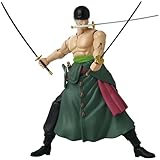
- Join the Straw Hat Crew in their search for the One Piece with Anime Heroes One Piece 6.5 inch action figures, from Bandai Namco Toys & Collectibles
- Relive or recreate epic moments from one of the longest running anime titles with over 1000 episodes and countless adventures to be had
- Anime Heroes brings all the iconic One Piece characters to life with fan favorites that remind you why you love the show, and how the journey of finding the One Piece isn't finished yet
- With over 20 points of articulation, it's primed for dynamic, action-packed poses that will ignite your imagination and keep the adventures going non-stop!
- For Ages 4+
What Sora’s safety measures could—and could not—solve
OpenAI’s official Sora safety materials described provenance measures including visible and invisible signals and C2PA metadata. These measures can help identify or track AI-generated media and may make misuse easier to investigate.
They do not answer the underlying copyright questions. A provenance label does not determine whether the training data was lawfully obtained. It also does not decide whether a particular generated image reproduces protected expression, whether a character can legally be generated, or who bears responsibility when a user distributes the result. Provenance and copyright compliance are related but separate problems.
Quick wins for a faster PC:
Fix the driver behind crashes, sound loss and screen glitchesFind Drivers →Repair Windows errors before they cause bigger problemsFix Now →Japan’s government and creative organizations responded
On October 10, 2025, Japan’s government publicly addressed concerns about Sora 2 generating anime and manga characters. In the official press-conference record and contemporaneous reporting, the government said OpenAI should avoid conduct that could infringe Japanese intellectual property. Officials described manga and anime-related cultural assets as exceptionally important to Japan.
A broader joint statement issued on October 31 by Japanese creator and publishing organizations said Sora 2 had produced publicly shared images and videos that appeared strongly dependent on, or similar to, famous creative works. The organizations criticized a system in which works could be generated, published, or transmitted unless rightsholders expressly opted out.
The statement also said that Altman’s social-media indication of a shift toward opt-in controls had not yet been confirmed as a formal company policy at that point. This highlights the difference between a public proposal, a platform feature, and a binding rights-management system with clear enforcement and retrospective effect.
Rank #4

- OFFICIALLY LICENSED - This Death Note Light Figure is officially licensed merchandise and makes a great gift for fans of Death Note
- CUSTOM DESIGN - This Death Note Figure features Light holding a scythe
- RECOMMENDED AGES - This Death Note Light Figure is suitable for ages 14+
- HIGH QUALITY - This Death Note Light Figure is made out of high quality PVC material
- GIFT - This Death Note Light Figure makes a great Birthday, Christmas, Anniversary, Father's Day, Mother's Day Gift. It is a perfect gift for any occasion
What happened to Sora after the dispute?
As of August 12, 2026, OpenAI’s official pages state that the Sora web and app experiences were discontinued on April 26, 2026. OpenAI’s help documentation separately states that the Sora API was scheduled to be discontinued on September 24, 2026.
That makes the original Sora 2 product dispute a historical conflict involving a discontinued consumer product. It does not make the underlying issues disappear. Questions about what data was used for training, whether past outputs infringed protected works, what users distributed, and how future AI systems should handle rightsholder permissions can continue after a product is shut down.
The researched record does not establish that Studio Ghibli won a lawsuit, settled with OpenAI, received compensation, or obtained a judicial ruling that Sora 2 infringed its copyrights. None of those outcomes should be reported as fact without a new primary-source confirmation.
Independent reader supportYour contribution helps us test, update, and keep practical guides available for everyone.The defensible conclusion
Studio Ghibli was part of a serious Japanese rightsholder challenge to OpenAI’s Sora 2 practices, but the most accurate description is that CODA acted at the request of its member companies. CODA challenged the use of Japanese content as machine-learning data without permission and requested meaningful responses to infringement concerns about Sora outputs.
Best Value

- OFFICIALLY LICENSED - This Death Note Detective L Collectible Figure is officially Licensed Death Note merchandise and makes a great gift for Death Note fans
- CUSTOM DESIGN - This Death Note Collectible Figure features the brilliant detective L in his signature crouched pose.
- MEASURES - This Death Note Detective L Collectible Figure measures approximately 6" tall
- GIFT - Packaged with Death Note branding, this Detective L PVC figure makes for an excellent and thoughtful gift for fans of the series. Whether for birthdays, holidays, or special occasions, it's a visually striking and meaningful present for Anime lovers.
- RECOMMENDED AGES - 12+
The dispute was not resolved by calling every Ghibli-like image a copyright violation, and it was not resolved by saying that style alone is never protectable. The important questions were more specific: what material entered the training process, whether permission was required, whether particular outputs reproduced protected expression, and what happened when users shared those outputs. The public sources reviewed here leave those questions unresolved.
Public record used for this account
The account is based on CODA’s October 28, 2025 notice; reporting on the March 2025 Ghibli-image wave and OpenAI’s policy statements; OpenAI’s official Sora safety materials; Japan’s October 10 government press-conference record; the October 31 joint statement from Japanese creator and publishing organizations; and OpenAI’s current Sora shutdown and help documentation.
Frequently Asked Questions
Did Studio Ghibli sue OpenAI over Sora 2?
No standalone lawsuit or separately published cease-and-desist letter from Studio Ghibli is established by the sources reviewed. The documented action was CODA’s written request to OpenAI, submitted at the request of its member companies and representing the broader Japanese rightsholder position.
Was Sora 2 trained on Studio Ghibli films?
Not specifically. CODA said it had determined that Japanese content had been used as Sora 2 machine-learning data, but the sources do not prove that every Ghibli-like output came from a particular Studio Ghibli film, frame, or file.
Did OpenAI admit that it stole Studio Ghibli’s artwork?
No. OpenAI’s subsequent statements concerned granular character controls, possible revenue sharing, and other rights-management measures. They were not a public admission that OpenAI had infringed Studio Ghibli’s copyrights.
Is Sora still available?
OpenAI’s web and app Sora experiences were discontinued on April 26, 2026. OpenAI’s help documentation said the Sora API was scheduled to be discontinued on September 24, 2026. Product shutdown does not by itself settle questions about past training or outputs.
The Bottom Line
Bottom line: Studio Ghibli was represented in CODA’s October 2025 request that OpenAI stop using Japanese rightsholders’ content to train Sora 2 without permission. The record does not show a standalone Ghibli lawsuit, an admission of infringement, a court ruling, or a settlement. Sora’s consumer web and app products were later discontinued, but the copyright questions surrounding training data and AI outputs remain unresolved.
Quick Recap
Product prices and availability are accurate as of the date/time indicated and are subject to change. Any price and availability information displayed on Amazon at the time of purchase will apply.