Some links on this page are affiliate links: if you buy through them we may earn a commission, at no extra cost to you.
The idea of “Disney Princess rules” didn’t start as a fan theory or an internet checklist. It started as a business decision in the late 1990s, when Disney realized that its most iconic female characters were being marketed separately despite sharing the same cultural space. What followed wasn’t a story mandate, but the creation of a unified brand designed to bring those characters together under one recognizable banner.
The Disney Princess line is not a genre, a narrative universe, or a set of moral qualifications. It is an official merchandising franchise, overseen by Disney Consumer Products, that groups select characters for branding, licensing, and cross-promotional purposes. Everything from toys and clothing to theme park appearances flows from this distinction, which is why the label carries far more weight than it might seem at first glance.
Understanding that difference is key to untangling why some characters are “official” princesses and others, even wildly popular ones, are not. The rules exist less to define royalty and more to protect a carefully managed global brand.
Quick wins for a faster PC:
Fix the driver behind crashes, sound loss and screen glitchesFind Drivers →Repair Windows errors before they cause bigger problemsFix Now →A Brand, Not a Fairytale Rulebook
At its core, the Disney Princess line was created to solve a marketing problem. Characters like Cinderella, Ariel, and Belle were selling enormous amounts of merchandise individually, but there was no single identity tying them together. By grouping them into one franchise, Disney created a powerful shorthand for parents, kids, and retailers: this is a specific fantasy experience with a specific look, tone, and promise.
That means inclusion is driven by brand cohesion, not story logic. A character doesn’t need to be born royal, married into royalty, or even rule a kingdom to qualify. What matters is whether they fit the visual style, aspirational tone, and long-term merchandising strategy that defines the line.
#1 Best Overall

- These 12 Disney Princess small dolls are inspired by beloved animated characters from popular Disney movies!
- Each Disney Princess small doll (3.5 inches) wears her classic movie outfit, with removable skirt or pants, and is posable for play and display fun.
- Includes Disney Princess characters Mulan, Ariel, Rapunzel, Jasmine, Snow White, Tiana, Merida, Moana, Aurora, Pocahontas, Belle and Cinderella.
- Makes a perfect gift for kids to imagine stories and adventures with all their favorite Disney Princess dolls!
- Fans can collect all the Disney Princess small dolls and playsets for the ultimate adventure! Each sold separately, subject to availability.
Why the Line Is So Carefully Curated
Because the Disney Princess brand is one of the company’s most valuable assets, it is tightly controlled. Adding a character isn’t just a creative decision; it affects licensing deals, shelf space, and how the brand reads across cultures. Too many characters dilute the identity, while the wrong kind of character can clash with the image Disney wants to maintain.
This is also why the lineup changes slowly and deliberately. Characters may appear in films for years before being officially added, and some are intentionally kept separate to protect other profitable franchises. The result is a lineup that feels selective, sometimes confusing, but always intentional.
Do these 3 things before closing this tab:
1Repair Windows errors before they cause bigger problems2Fix the driver behind crashes, sound loss and screen glitches3Clear out junk files and repair common Windows errorsWhy This Confuses Fans So Much
Most confusion comes from assuming the Disney Princess title reflects narrative importance or personal qualities. Viewers naturally expect bravery, kindness, or royal status to be the deciding factors, especially given how the films present these characters. In reality, those traits are secondary to branding considerations.
Once you understand that the Disney Princess line exists to sell a specific fantasy, not to crown the “best” heroines, the rules start to make sense. They aren’t about who deserves the title in-story. They’re about who fits the brand Disney wants the world to recognize.
The Core Criteria: How Disney Officially Decides Who Is a Princess
Once you strip away the fairy-tale logic, Disney’s actual process for choosing a Princess is surprisingly pragmatic. There is no single written rulebook released to the public, but over time, a clear set of internal standards has emerged through patterns, brand statements, and lineup decisions. These criteria are less about crowns and castles and more about consistency, marketability, and long-term brand health.
At its core, the Disney Princess title is a designation within a merchandising franchise. That means every addition must serve the brand’s visual language, storytelling tone, and global appeal. If a character disrupts that balance, even if she seems like an obvious fit, she is likely to be left out.
Windows Errors? Fix Them Before They Spread
Repair common Windows errors and clear accumulated junk for a smoother, more stable PC - no reinstall needed.Free scan · no reinstallOutdated Drivers Are Slowing You Down
One free scan finds every outdated or missing driver and matches the right update for your exact hardware.Free scan · exact hardware matchTheatrical Origins Matter More Than Fans Realize
Nearly every official Disney Princess originates from an animated theatrical feature produced by Walt Disney Animation Studios. This immediately excludes characters from television series, direct-to-video releases, and most live-action films, no matter how popular they may be. Giselle from Enchanted, for example, looks like a Princess in every sense, but her live-action status keeps her outside the core lineup.
Pixar characters are also typically excluded, with Merida standing as the lone exception. Her inclusion reflects a specific moment when Disney wanted to broaden the brand’s definition while still maintaining its hand-drawn and storybook roots. Even then, Merida’s addition was cautious and heavily curated.
Royal Status Is Optional, But Presentation Is Not
Contrary to popular belief, a character does not need to be born royal or marry into royalty to qualify. Mulan, Moana, and Raya all prove that leadership, heroism, and cultural significance can substitute for a crown. What matters more is whether the character fits the aspirational fantasy Disney Princesses are meant to represent.
That fantasy has a very specific visual and emotional tone. The character must be human or at least humanoid, clearly feminine in presentation, and designed to translate cleanly into toys, apparel, and illustrated branding. This is why beloved characters like Nala or Maid Marian, despite their royal status, are excluded.
The Tool Desk
Outbyte PC Repair FREERepair Windows errors before they cause bigger problemsFix Now →Outbyte Driver Updater FREEFix the driver behind crashes, sound loss and screen glitchesFind Drivers →Box Office Success and Cultural Staying Power
A film’s performance plays a significant role in whether its heroine is considered for Princess status. Disney has historically avoided adding characters from movies that underperformed or failed to resonate long-term. The Princess line is meant to represent enduring icons, not cult favorites or one-off experiments.
That said, success is measured over time, not just opening weekend numbers. Some characters are added years after their debut, once Disney is confident they have lasting appeal across generations. This delayed approach helps explain why the lineup evolves slowly, even in an era of constant new releases.
Why Queens, Sisters, and Franchise Anchors Are Excluded
One of the most misunderstood rules is why characters like Elsa and Anna are not officially part of the Disney Princess lineup. Their exclusion has nothing to do with popularity or royal legitimacy. In fact, Frozen is so successful that Disney benefits more from keeping it as a standalone franchise rather than folding its characters into a larger group.
The same logic applies to queens and characters whose stories center on shared protagonism. The Princess brand traditionally focuses on singular heroines, not ensembles or co-leads. When a character’s identity is inseparable from another character or a separate brand pillar, Disney keeps them siloed to avoid brand overlap.
Recommended Free Tools
How the Rules Have Shifted Over Time
The criteria for becoming a Disney Princess have quietly evolved alongside changing cultural values. Early additions emphasized romance and royalty, while modern selections prioritize agency, leadership, and self-discovery. This shift reflects broader audience expectations without abandoning the brand’s core fantasy appeal.
Still, evolution does not mean openness. Every new Princess is evaluated against decades of brand identity, global market considerations, and internal competition. The result is a lineup that adapts carefully, expands selectively, and remains far more strategic than most fans initially assume.
Royal by Birth, Royal by Marriage, or Royal by Storytelling?
At first glance, the Disney Princess title sounds simple: be born royal, marry into royalty, or wear a crown by the final act. In practice, Disney has always treated royalty more like a narrative shorthand than a strict bloodline requirement. What matters most is not lineage, but whether a character’s story fulfills the emotional and symbolic role of a Princess within Disney’s mythology.
This is where many online debates begin, and where the official rules quietly bend.
What’s actually slowing this PC down?
Pick the symptom - the matching free tool is one click away.
Royal by Birth: The Traditional Fairytale Path
Characters like Snow White, Aurora, Jasmine, and Ariel represent the most straightforward interpretation of Princess status. They are born into royalty, their stories are rooted in kingdoms, and their identities are inseparable from that world. These characters align closely with the classic European fairytale template that defined the brand’s earliest years.
Even within this group, Disney prioritizes narrative focus over titles. A character must still be the emotional center of the film, not merely a royal figure in the background. Being born a princess is helpful, but it is not sufficient on its own.
Royal by Marriage: Earning the Crown
Cinderella and Belle are the clearest examples of Princesses by marriage, though Disney rarely frames it that way in marketing. Their stories emphasize virtue, resilience, and personal growth long before a royal proposal enters the picture. The crown is a result of the journey, not the reason for it.
This distinction matters. Disney is less interested in who a character marries and more interested in whether her story embodies aspirational transformation. The romance supports the arc, but it does not define eligibility by itself.
Royal by Storytelling: When the Crown Is Metaphorical
This is where characters like Mulan, Pocahontas, Moana, and Raya fit in, and where the rules become more nuanced. These heroines are not always queens or princesses in a Western sense, but their stories place them in positions of leadership, legacy, and cultural significance. Disney treats their roles as functionally royal within their respective narratives.
Mulan saves an empire, Moana leads her people, and Raya is positioned as a unifier of nations. Their authority comes from responsibility rather than inheritance. Disney recognizes that modern audiences respond to leadership and heroism as much as crowns.
Why Some “Almost Princesses” Still Don’t Qualify
This storytelling-based logic also explains why certain beloved characters remain excluded. Megara from Hercules is tied to a mythological world but lacks royal status and narrative centrality within the Princess framework. Esmeralda, despite her strength and compassion, exists in a story defined more by tragedy and social critique than aspirational fantasy.
Alice, Wendy, and other iconic heroines face a similar issue. Their stories are influential, but they are structured around surrealism or coming-of-age themes rather than legacy, leadership, or mythic destiny. Disney celebrates them, but they occupy a different storytelling lane.
Free tools Windows power users keep installed
One-click scans. No signup required.
The Unifying Thread: Aspirational Identity
Across every era, the Disney Princess title ultimately hinges on whether a character represents an aspirational identity that can stand alone across cultures, generations, and merchandise aisles. Royal birth, marriage, and leadership are tools, not requirements. What Disney is curating is a mythic role, not a genealogy chart.
Rank #2
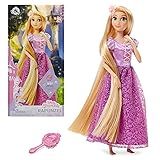
- Imaginative Play: This Tangled doll offers endless opportunities for creative play and storytelling.
- Fully Posable Doll: Our Disney Rapunzel doll features fully posable arms, legs, and head, providing endless possibilities. This Rapunzel toy is perfect for creating enchanting adventures with other Disney princess doll toys.
- Realistic Rooted Hair: This Princess Rapunzel doll boasts realistic, rooted hair adorned with a delicate fabric flower detail. It is an ideal Tangled toy for those who appreciate the beauty of Rapunzel dolls.
- Elegant Satin Dress: The satin dress with puff sleeves and lace-up detailing on the bodice adds a touch of elegance to this Rapunzel toy. It's a must-have for collectors of princess dolls and Disney's Rapunzel fans alike.
- Inspired by Tangled: This exquisite doll captures the essence of Disney's Rapunzel, offering fans of Tangled toys a chance to own a piece of the magic with this doll crafted to resemble the beloved character from the movie.
Understanding that distinction makes the lineup feel less arbitrary and far more intentional. The crown may sparkle, but the story is what truly makes a Princess.
Why Some Fan-Favorite Heroines Are Not Disney Princesses
Once you understand that the Disney Princess lineup is a curated brand rather than a catch-all label, some of the exclusions start to make sense. Many of Disney’s most beloved heroines fail to qualify not because they lack popularity or strength, but because they serve a different narrative or commercial purpose within the company’s ecosystem.
The Elsa and Anna Exception: Too Powerful to Fold In
Elsa and Anna are royalty by every traditional definition, yet they sit conspicuously outside the official Disney Princess lineup. That choice is almost entirely strategic. Frozen is not just a film; it is a self-sustaining franchise with its own branding, mythology, and merchandising identity.
Including Elsa and Anna in the Princess lineup would actually dilute their value. Disney treats them as leads of a separate empire rather than members of an ensemble brand, a distinction that has only grown more pronounced as Frozen expanded into sequels, shorts, and theme park attractions.
Sidekicks, Sprites, and Supporting Icons
Characters like Tinker Bell, Maid Marian, and even Princess Leia often come up in fan debates, but their exclusions follow a consistent logic. Tinker Bell was long positioned as a company mascot and later became the face of the Disney Fairies franchise, which functioned independently of the Princess brand.
Maid Marian and Leia, meanwhile, exist within ensemble-driven or genre-specific narratives. Robin Hood and Star Wars are worlds where no single heroine is meant to represent aspirational identity in isolation. Their stories prioritize adventure, rebellion, or mythos over the personal fairy-tale arc that defines a Disney Princess.
Modern Heroines and the Franchise Factor
Recent fan favorites like Mirabel from Encanto and Vanellope from Wreck-It Ralph often spark confusion because they feel emotionally adjacent to the Princess mold. However, both characters are firmly embedded in ensemble stories where the central theme is community, family, or satire rather than individual mythic destiny.
Encanto, in particular, is about dismantling the idea of exceptionalism. Mirabel’s power lies in her ordinariness, which is thematically powerful but intentionally at odds with the aspirational fantasy Disney curates for its Princess lineup.
Not a Ranking, but a Role
The most important misconception to clear up is that being excluded from the Disney Princess lineup is not a demotion. It is not a statement about a character’s importance, feminism, or cultural impact. It is simply an acknowledgment that not every heroine is designed to carry the same symbolic weight.
The Disney Princess title is a specific narrative role, one rooted in myth, identity, and timelessness rather than popularity alone. Some characters shine brightest when they are allowed to stand apart, and Disney’s brand decisions often reflect that understanding rather than contradict it.
The Gray Areas: Honorary Princesses, Retcons, and Rule-Bending
Even with Disney’s internal guidelines, the Princess lineup has never been entirely static. Over the decades, branding priorities, cultural shifts, and fan reception have created a handful of gray areas where characters drift in and out of contention. These edge cases are where the “rules” feel less like laws and more like living policy.
Honorary Princesses and the Characters Who Almost Made It
Some characters are frequently described as “honorary” Disney Princesses, meaning they fit the spirit of the archetype without officially joining the brand. Esmeralda from The Hunchback of Notre Dame and Megara from Hercules are the most cited examples, both driven by mature narratives that skew darker, more sensual, or morally complex than the Princess line typically allows.
Jane Porter from Tarzan and Kida from Atlantis: The Lost Empire fall into a similar category. They are romantic leads in animated films, but their stories are rooted in genre adventure rather than fairy-tale mythology. Disney has historically treated these films as standalone cult favorites, not evergreen fantasy pillars, which quietly disqualifies their heroines.
When the Rules Bend Without Breaking
Mulan is the clearest example of rule-bending done intentionally. She is neither royal nor married into royalty, yet she has been a core Princess since the early 2000s. Disney positioned her as a mythic folk hero, allowing cultural legacy and narrative impact to override the usual requirements.
Pocahontas also exists in a complicated space. While she is treated as a Princess within the brand, her inclusion reflects an older era of Disney decision-making, before the company became more publicly cautious about historical adaptation and representation. She remains part of the lineup, but her presence underscores how the rules have evolved rather than remained fixed.
Do these 3 things before closing this tab:
1Repair Windows errors before they cause bigger problems2Scan for outdated or missing drivers - takes under a minute3Clear out junk files and repair common Windows errorsRetcons, Rebranding, and Late Additions
Anna and Elsa were famously excluded from the Princess lineup at Frozen’s release, largely because Disney believed Frozen could stand as its own franchise. That stance softened over time, and both sisters were officially folded into the Princess brand once their cultural staying power became undeniable.
Raya’s inclusion marked another shift. She does not come from a musical-driven fairy tale, nor does her story center on romance, but Disney leaned into her mythic world-building and Southeast Asian-inspired fantasy. Her addition signaled a broader interpretation of what a Princess story can look like in the modern era.
Why Consistency Matters More Than Completeness
The Princess lineup is not meant to be an exhaustive list of Disney heroines. It is a curated mythos, shaped as much by merchandising strategy and thematic cohesion as by narrative criteria. That curation sometimes means saying no, even when a character feels close enough to qualify.
These gray areas are not flaws in the system so much as proof that the system is flexible. Disney adapts its rules when culture changes, audiences evolve, or a character proves to have lasting symbolic power. The Princess crown, in other words, is not just inherited. It is negotiated.
How the Rules Have Changed Over Time (From Snow White to Moana)
The Disney Princess rules were not written all at once. They evolved gradually, shaped by shifts in storytelling, audience expectations, and Disney’s own understanding of what its heroines represent. Looking at the lineup from Snow White to Moana reveals how flexible the criteria have become over nearly a century.
The Early Era: Royalty as Destiny
Snow White, Cinderella, and Aurora defined the original template. They were unmistakably royal, European-coded, and rooted in classic fairy tales where birthright or marriage cemented their status. In this era, being a Princess was literal, visible, and inseparable from crowns, castles, and happily-ever-afters.
These early films also established another unspoken rule: the Princess story revolved around romance. Love was not just a subplot, but the narrative engine. For decades, that structure went largely unquestioned.
The Renaissance Shift: Agency and Cultural Expansion
The Disney Renaissance of the late 1980s and 1990s began to loosen the definition. Ariel was technically a princess by birth, but her story emphasized rebellion and self-determination. Belle was not royal at all, yet marriage into royalty and her literary-minded independence helped her slide comfortably into the lineup.
Quick wins for a faster PC:
Fix the driver behind crashes, sound loss and screen glitchesFind Drivers →Repair Windows errors before they cause bigger problemsFix Now →Jasmine pushed the boundaries further. She was royal, but not the film’s protagonist in a traditional sense, signaling that narrative focus was becoming more flexible. By the time Pocahontas and Mulan arrived, Disney was prioritizing cultural scope, legend, and symbolic heroism alongside royal status.
The Post-Renaissance Era: Branding Takes the Lead
In the 2000s, the Princess designation became more openly tied to branding strategy. Characters like Tiana and Rapunzel were carefully designed to echo classic fairy tale elements while updating them for modern audiences. Tiana’s lack of royal birth was offset by her marriage and her status as a business-minded heroine, while Rapunzel’s story returned fully to fairy tale roots with contemporary humor.
This period also clarified that the Princess lineup was a commercial identity as much as a narrative one. Characters were evaluated not just by story logic, but by how well they fit the cohesive visual and thematic brand.
The Modern Era: Myth, Leadership, and Cultural Legacy
Moana represents the clearest example of how far the rules have stretched. She is not a princess in title, does not marry, and does not pursue romance at all. Her inclusion rests on leadership, mythic destiny, and her role as a cultural figure tied to ancestral legacy and heroism.
Recommended Free Tools
Rank #3

- Inspired by the animated character in Disney Pixar's Brave, this Merida doll is ready to change her fate!
- The posable fashion doll wears her sparkling signature fashion inspired by the movie the movie, including removable shoes and tiara.
- Her outfit includes a glitter top and removable skirt with a storytelling pattern unique to Merida.
- This Disney Princess doll features long hair for endless brushing and styling fun!
- Kids will love to play out their favorite movie moments from Disney Pixar's Brave or make up their own stories!
With Moana, Disney effectively codified a new principle: a Princess can be defined by responsibility and symbolic leadership, not just monarchy. This shift helps explain why characters like Mirabel or Elsa exist adjacent to the brand without fully redefining it. The rules have expanded, but they still revolve around a carefully curated idea of what a Disney Princess is meant to embody.
Marketing, Merchandising, and the Power of the Princess Brand
By the time Moana joined the lineup, Disney Princess was no longer just a storytelling label. It was one of the most lucrative and carefully managed brands in entertainment history, designed to function seamlessly across toys, apparel, theme parks, publishing, and global licensing.
Understanding who qualifies as a Disney Princess means understanding how marketing considerations quietly shape the rules as much as narrative logic ever did.
The Princess Lineup as a Curated Brand
Officially, the Disney Princess brand is a curated lineup, not an open-ended category. Disney selects characters who can coexist visually, tonally, and emotionally on lunchboxes, backpacks, and castle-stage lineups.
This is why the Princesses tend to share certain design traits: expressive eyes, human protagonists, elegant silhouettes, and a fairy tale-adjacent aesthetic. Even when cultural styles differ, the characters are designed to look cohesive when standing side by side.
Why Popular Characters Are Excluded
This branding logic explains many of the most common exclusions. Elsa and Anna are royalty, protagonists, and massively popular, yet they are not officially Disney Princesses. Frozen proved so successful that Disney positioned it as its own standalone franchise rather than folding it into the Princess brand.
The same applies to characters like Mirabel from Encanto. While beloved and thematically rich, she exists within an ensemble-driven story and a distinct visual style that Disney has chosen to market separately.
Pixar, Protagonists, and the One-Franchise Rule
Pixar characters are also excluded by design. Merida is the lone exception, and her inclusion required visual redesigns to better align her with the Princess brand’s aesthetic standards.
What’s actually slowing this PC down?
Pick the symptom - the matching free tool is one click away.
Generally, Disney avoids mixing Pixar’s brand identity with the Princess lineup. Even characters who are technically royal or heroic, like Asha or Raya, are evaluated through the lens of brand compatibility as much as story qualifications.
The Role of Merchandising Power
Merchandising potential plays a decisive role in Princess designation. Dresses, accessories, transformation moments, and iconic color palettes translate directly into consumer appeal, especially for younger audiences.
This does not mean the characters are shallow or manufactured, but it does mean that marketability is a factor Disney openly acknowledges. A Princess must function as both a character and a symbol that can travel easily across cultures and generations.
What the Brand Ultimately Represents
At its core, the Disney Princess brand represents a specific fantasy promise. It blends aspiration, kindness, courage, and individuality into a form that feels timeless yet adaptable.
The rules are flexible, but they are never accidental. Every Princess is chosen not just because of who she is in her story, but because of what she represents when she steps outside it and into the larger Disney legacy.
Common Myths, Misconceptions, and the Future of the Disney Princess Lineup
As the Disney Princess brand has grown more visible, so have the misconceptions surrounding it. Online debates often frame Princess status as a checklist of royal titles or heroic deeds, but the reality is far more strategic. Understanding what the brand is and is not helps clear up why some characters are celebrated as Princesses while others remain adjacent.
Myth: You Have to Be a Princess by Birth
One of the most persistent myths is that a character must be born royal to qualify. In reality, several core Princesses are commoners who become royal through marriage, destiny, or symbolic leadership. Cinderella, Belle, and Mulan all entered the lineup because of their narrative impact and cultural resonance, not bloodlines.
Disney has consistently treated royalty as flexible rather than literal. What matters more is whether the character embodies the aspirational fantasy the brand is built around.
Free tools Windows power users keep installed
One-click scans. No signup required.
Myth: Every Female Lead Automatically Qualifies
Another misconception is that starring in a Disney animated film guarantees Princess status. Characters like Alice, Wendy Darling, and Megara are iconic, but they were never positioned as part of the Princess brand. Their stories, aesthetics, or eras didn’t align with the cohesive fantasy Disney later curated.
The Princess lineup is selective by design. Being beloved or memorable is not the same as being brand-compatible.
Myth: Popularity Forces Disney’s Hand
Fans often assume that massive popularity will eventually lead to Princess coronation. Frozen alone proves that assumption wrong. Elsa and Anna remain outside the lineup because their franchise performs better independently, not because they fail to qualify narratively.
In some cases, popularity actually works against inclusion. When a character becomes a brand unto herself, Disney has little incentive to fold her into a shared identity.
PC Slower Than It Used to Be?
A free scan shows the junk files, broken settings and background clutter dragging Windows down - then fixes them in one click.Free scan · Windows 10 & 11Crashes, No Sound, or Screen Glitches?
Random freezes, missing sound and display glitches usually trace back to one bad driver. Find and replace yours safely.Free scan · under a minuteThe Evolution of the Rules
The Disney Princess rules have evolved alongside audience expectations. Early Princesses reflected fairy-tale passivity, while modern entries emphasize agency, leadership, and cultural specificity. Characters like Moana and Raya expanded the definition of what a Princess story can look like without abandoning the brand’s core fantasy.
What hasn’t changed is Disney’s insistence on cohesion. Visual style, tone, and cross-generational appeal remain essential, even as the themes grow more progressive.
Who Could Join the Lineup Next?
Speculation about future Princesses often centers on recent heroines like Asha or potential original characters yet to debut. Inclusion will likely depend on how well these characters translate beyond their films into merchandise, park experiences, and global branding.
Disney has shown a willingness to adapt, but it rarely rushes. New Princesses are introduced carefully, often years after a film’s release, once their staying power is proven.
Why the Rules Still Matter
The Disney Princess brand is not a simple honorific; it is a curated legacy. These characters are designed to stand together across decades, cultures, and mediums without losing their individual identities.
Understanding the rules reveals that exclusion is not a judgment of worth. It is a reflection of how Disney manages its most enduring symbols, ensuring the Princess lineup remains both timeless and intentionally chosen.
In the end, the Disney Princess rules are less about crowns and more about continuity. They explain not only who belongs, but why the brand has remained one of Disney’s most powerful and recognizable stories ever told.
Quick Recap
Product prices and availability are accurate as of the date/time indicated and are subject to change. Any price and availability information displayed on Amazon at the time of purchase will apply.

