Recommended Free Tools
Wonder Woman should have one of the cleanest live-action legacies in superhero history, yet her on-screen journey is anything but straightforward. Unlike Batman or Superman, whose portrayals tend to move in clearly defined eras, Diana of Themyscira has appeared sporadically, across aborted pilots, tonal experiments, and long creative gaps that left each new incarnation feeling like a reinvention rather than a continuation. That fractured path is precisely why her live-action history can feel confusing, even to devoted DC fans.
Four actresses, four very different moments in pop culture
Cathy Lee Crosby was the first to wear the Wonder Woman name in a 1974 ABC television movie, portraying a modernized, non-superpowered Diana Prince that bore little resemblance to the comics. Lynda Carter followed just a year later, anchoring the character in pop culture with the iconic CBS series that ran from 1975 to 1979 and finally aligned Wonder Woman with her mythic roots, costume, and moral clarity. Decades later, Adrianne Palicki stepped into the role for NBC’s 2011 Wonder Woman pilot, a darker, corporate-era reimagining that never aired but still counts as a full live-action portrayal.
Gal Gadot ultimately redefined Wonder Woman for the modern blockbuster age, debuting in 2016’s Batman v Superman: Dawn of Justice before headlining Wonder Woman and its sequel within the DC Extended Universe. Each actress emerged from a different industry moment, shaped by shifting ideas of feminism, heroism, and commercial risk. The result is a legacy built not on evolution, but on reinvention, where every live-action Wonder Woman reflects the era that created her as much as the Amazon warrior she was meant to portray.
1974: Cathy Lee Crosby and the First Live-Action Experiment
Before Wonder Woman became a pop culture certainty, she was a television risk. ABC’s 1974 TV movie Wonder Woman, starring Cathy Lee Crosby, arrived at a time when networks were cautiously testing superhero concepts without fully committing to comic book fidelity. The result was less an adaptation and more an experiment, one that revealed just how uncertain Hollywood was about bringing Diana of Themyscira to live action.
What’s actually slowing this PC down?
Pick the symptom - the matching free tool is one click away.
#1 Best Overall

- Featuring heroic figures: 2.5” scale Amy as Wonder Woman and 5” scale Wonder Woman for play and display
- Amy as Wonder Woman has 5 points of articulation and Wonder Woman has 21 points of articulation for ultimate poseability
- Quintessential pairing of 2 heroic characters
- The perfect gift for fans of DC and Sonic the Hedgehog, plus the hit crossover comic book series!
- Suggested for ages 3 years and up
A Diana Prince Almost Unrecognizable
Crosby’s Diana Prince shared little with the Amazon warrior fans knew from DC Comics. This version had no superhuman strength, no mythological origin, and no iconic red, blue, and gold costume. Instead, she was portrayed as a blonde, athletic secret agent working for a government organization, closer in tone to The Avengers or The Six Million Dollar Man than to a superhero epic.
The decision to strip Wonder Woman of her powers and mythology wasn’t accidental. Network executives believed a grounded, modernized heroine would be more accessible to 1970s audiences and less “fantastical” for primetime television. In doing so, they removed the very elements that defined the character’s appeal.
The Costume Controversy and Creative Hesitation
Perhaps the most telling symbol of the project’s uncertainty was the costume. Crosby’s Diana wore a modest, eagle-emblazoned jumpsuit inspired by early Golden Age designs, but even that felt tentative. There was no star-spangled armor, no tiara, and none of the bold iconography that would later make Wonder Woman instantly recognizable.
Cathy Lee Crosby herself later acknowledged she was not a fan of the traditional comic book costume, reflecting a broader discomfort at the time with overt superhero imagery. That hesitation mirrored an industry still unsure whether audiences would take a costumed female hero seriously.
The Tool Desk
Outbyte PC Repair FREEClear out junk files and repair common Windows errorsFree Scan →Outbyte Driver Updater FREEScan for outdated or missing drivers - takes under a minuteDriver Scan →Why the Experiment Still Matters
The 1974 Wonder Woman movie did not become a series, but its failure was instructive. Ratings were modest, and fan response made it clear that removing Wonder Woman’s identity stripped away her power, both literally and symbolically. The project demonstrated that Diana could not simply be rebranded as a generic action heroine without losing what made her unique.
In hindsight, Crosby’s portrayal represents an important false start. It showed that Wonder Woman demanded authenticity, myth, and confidence in her larger-than-life nature. Without this early misstep, the course correction that followed might never have been as bold or as definitive.
1975–1979: Lynda Carter Defines the Icon for a Generation
If the 1974 television movie proved what Wonder Woman could not be, Lynda Carter’s arrival one year later revealed exactly what she needed to be. Premiering in 1975, ABC’s Wonder Woman didn’t hedge its bets or shy away from comic book roots. It embraced them fully, restoring Diana Prince’s mythology, costume, and unapologetic heroism.
Carter’s casting was transformational. A former Miss World USA with classical beauty and an imposing screen presence, she embodied the character’s strength and grace without irony. Where earlier attempts softened or modernized Diana, Carter leaned into the fantasy and made it feel natural.
Windows Errors? Fix Them Before They Spread
Repair common Windows errors and clear accumulated junk for a smoother, more stable PC - no reinstall needed.Free scan · no reinstallCrashes, No Sound, or Screen Glitches?
Random freezes, missing sound and display glitches usually trace back to one bad driver. Find and replace yours safely.Free scan · under a minuteA Faithful Return to the Comics
Set initially during World War II, the series drew heavily from William Moulton Marston’s Golden Age comics. Diana was once again an Amazon princess from Paradise Island, gifted with superhuman strength, speed, and compassion. Steve Trevor returned as a central figure, and the show framed Wonder Woman as both a patriotic symbol and a mythic protector.
The costume, redesigned but unmistakably classic, became iconic overnight. The red bodice, blue star-spangled shorts, gold tiara, and silver bracelets restored the character’s visual identity and cultural impact. Carter wore it with confidence, helping audiences accept a costumed female superhero as both credible and commanding.
Power, Poise, and the Carter Effect
What truly set Carter apart was her performance. She projected warmth without softness, authority without coldness, and strength without aggression. Her Wonder Woman could disarm villains with a smile just as easily as with a spinning kick.
That balance mattered. In an era when female action heroes were rare, Carter presented Diana as aspirational rather than apologetic. She was powerful, compassionate, and feminine without compromise, a portrayal that resonated deeply with viewers of all ages.
Free tools Windows power users keep installed
One-click scans. No signup required.
Rank #2

- Incredibly detailed 7” scale figure based off the DC Multiverse
- Designed with Ultra Articulation with up to 22 moving parts for full range of posing and play
- Wonder Woman is featured in a brand new design from the mind of Todd McFarlane
- Comes with a sword, shield and a base
- Included collectable art card with Wonder Woman figure photography on the front, and character biography on the back
The CBS Years and Cultural Longevity
After one season, the series moved from ABC to CBS, shifting its setting from World War II to the contemporary late 1970s. While the time jump altered the show’s tone, Carter remained its constant anchor. Even as the storytelling became more episodic and less myth-focused, her portrayal maintained the character’s integrity.
The series ran until 1979, and its impact extended far beyond its four-season lifespan. For decades, Lynda Carter was Wonder Woman in the public imagination, the definitive live-action embodiment of the character. Every portrayal that followed would be measured, fairly or not, against the standard she set.
2011: Adrianne Palicki and the Wonder Woman Series That Never Was
After decades of reruns and reverence for Lynda Carter’s era, Wonder Woman’s next live-action chapter nearly arrived in a very different form. In 2011, NBC commissioned a modern television reboot that aimed to reintroduce Diana Prince for a post-Dark Knight, post-Marvel boom television landscape. This version never made it to air, but its brief existence remains one of the most fascinating what-ifs in DC adaptation history.
A High-Profile Reboot for a New TV Era
The pilot was developed by David E. Kelley, the prolific creator behind Ally McBeal, Boston Legal, and The Practice. His approach reimagined Diana as a complex, conflicted figure juggling three identities: corporate executive, masked vigilante, and public superhero icon. It was a deliberate attempt to modernize Wonder Woman as both a cultural brand and a psychological study.
Adrianne Palicki, then best known for Friday Night Lights, was cast in the title role. Physically commanding and emotionally expressive, Palicki brought a sharper edge to Diana than previous incarnations. This Wonder Woman was more abrasive, more wounded, and less mythic, reflecting early-2010s television’s preference for flawed protagonists.
A Costume, a Controversy, and a Creative Disconnect
The first images from the pilot ignited immediate backlash. Gone was the classic star-spangled look, replaced by a glossy, pants-based costume with darker tones and an overtly militarized aesthetic. For many fans, the redesign symbolized a broader unease with how far the reboot seemed to drift from the character’s core iconography.
Beyond the costume, the pilot struggled to reconcile its competing tones. The series oscillated between legal drama, corporate satire, and superhero action, never fully committing to any one identity. Test screenings reportedly revealed uneven pacing and a protagonist who felt more cynical than inspirational.
Why the Pilot Was Shelved
NBC ultimately chose not to move forward, shelving the pilot before it aired. While Palicki’s performance was often cited as a highlight, the network lacked confidence in the show’s creative direction and mass appeal. In a crowded television landscape, Wonder Woman needed clarity of purpose, something the pilot never fully achieved.
Despite its failure, the 2011 reboot played an important role in Wonder Woman’s live-action evolution. It underscored how difficult the character was to modernize without losing her essence and reinforced the need for a version that embraced both power and idealism. Just a few years later, that lesson would inform the portrayal that finally brought Wonder Woman back to the forefront of pop culture.
2016–2023: Gal Gadot and Wonder Woman’s Modern Cinematic Reinvention
After decades of uneven live-action attempts, Wonder Woman finally found her definitive modern incarnation with Gal Gadot. Introduced during the early years of the DC Extended Universe, Gadot’s Diana Prince marked a decisive shift back toward mythic grandeur, emotional sincerity, and unapologetic heroism. Where earlier versions struggled to balance realism and idealism, this portrayal leaned fully into both.
Gadot, an Israeli actress and former IDF combat instructor, brought a physical credibility and quiet authority that immediately set her apart. Her Wonder Woman was compassionate without being naïve, powerful without being detached, and deeply rooted in ancient myth while navigating a contemporary world.
Batman v Superman: Dawn of Justice (2016)
Wonder Woman’s reintroduction came in Batman v Superman: Dawn of Justice, where Gadot’s Diana entered the narrative as a mysterious outsider observing humanity from the shadows. Though limited in screen time, her presence was electric, culminating in a battlefield debut underscored by one of the most instantly recognizable musical themes in modern superhero cinema.
Rank #3
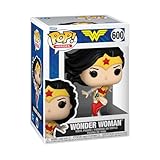
- IDEAL COLLECTIBLE SIZE - At approximately 3.75 inches (9.5 cm) tall, this vinyl figurine complements other collectable merchandise and fits perfectly in your display case or on your desk.
- PREMIUM VINYL MATERIAL - Made from durable vinyl, this collectible is built to last and withstand daily wear, ensuring long-lasting enjoyment for fans and collectors alike.
- GIFT IDEA FOR DC COMICS FANS - Ideal for holidays, birthdays, or special occasions and as a present this figurine is a must-have addition to any DC Comics merchandise collection
- EXPAND YOUR COLLECTION - Add this unique Wonder Woman vinyl display piece to your growing assortment of Funko Pop! figures, and seek out other rare and exclusive collectible items for a complete set
- LEADING POP CULTURE BRAND - Trust in the expertise of Funko, the premier creator of pop culture merchandise that includes vinyl figures, action toys, plush, apparel, board games, and more.
This version of Diana was older, world-weary, and cautious, shaped by centuries of disillusionment. It was a stark contrast to previous live-action portrayals, presenting Wonder Woman not as an aspirational symbol from the outset, but as one who had stepped away from mankind and needed a reason to believe again.
Wonder Woman (2017): A Cultural and Critical Breakthrough
Patty Jenkins’ Wonder Woman transformed the character from supporting player to cultural phenomenon. Set largely during World War I, the film reframed Diana’s origin as a moral awakening, positioning her compassion as her greatest strength rather than a vulnerability.
Gadot’s performance balanced sincerity and steel, allowing Wonder Woman to be both tender and formidable without irony. The film’s success was historic, becoming the first female-led superhero movie of the modern era to achieve both blockbuster box office returns and near-universal critical acclaim, reshaping industry perceptions of female superheroes overnight.
Justice League and the Weight of Myth
Gadot reprised the role in Justice League (2017), where Wonder Woman served as the emotional and tactical center of the team. While the theatrical cut struggled with tonal inconsistency, her portrayal remained a stabilizing force, emphasizing leadership, empathy, and resolve.
Zack Snyder’s Justice League (2021) expanded that vision, leaning further into mythological imagery and battlefield ferocity. Here, Diana was portrayed as an Amazonian warrior-scholar, bridging gods and mortals while embodying the cost of eternal responsibility.
Wonder Woman 1984 and a Divisive Sequel
Released in 2020, Wonder Woman 1984 took a bold tonal departure, embracing optimism, excess, and comic book surrealism. Set during the Reagan-era Cold War, the film explored themes of desire, sacrifice, and truth, though its execution divided audiences and critics alike.
Gadot’s performance remained earnest and emotionally grounded, even as the film’s narrative choices sparked debate. For some fans, it reinforced Wonder Woman’s role as a moral compass; for others, it highlighted the difficulty of balancing spectacle with character-driven storytelling in a franchise context.
Legacy and Lasting Impact
By the time of her final appearances, including a brief return in The Flash (2023), Gal Gadot’s Wonder Woman had become inseparable from the character’s modern identity. She restored Diana to the center of DC’s mythos, proving that the character could anchor blockbuster cinema without sacrificing empathy or idealism.
Quick wins for a faster PC:
Clear out junk files and repair common Windows errorsFree Scan →Fix the driver behind crashes, sound loss and screen glitchesFind Drivers →Repair Windows errors before they cause bigger problemsFix Now →More than any live-action portrayal since Lynda Carter, Gadot’s era reestablished Wonder Woman as a global icon. Her version synthesized warrior, diplomat, and believer, ensuring that Diana of Themyscira once again stood not just alongside superheroes, but above them as a symbol of hope.
How Each Portrayal Reflected Its Era’s View of Power, Femininity, and Heroism
Each live-action incarnation of Wonder Woman did more than reinterpret a comic book character. These portrayals acted as cultural mirrors, reflecting how society understood women’s power, autonomy, and heroism at that particular moment in time.
Cathy Lee Crosby and 1970s Transitional Feminism
Cathy Lee Crosby’s 1974 TV movie version emerged during a period when television was still negotiating second-wave feminism. Her Diana Prince was athletic, confident, and independent, yet deliberately stripped of overt mythological power to appear more grounded and approachable.
This portrayal emphasized competence over spectacle, aligning Wonder Woman with the era’s push for women to be taken seriously in male-dominated spaces. While it distanced itself from the comics, it reflected a cautious industry testing how much strength audiences were willing to accept from a female lead.
Rank #4

- COMICS-INSPIRED SQUADRON SUPREME POWER PRINCESS: This collectible Squadron Supreme Power Princess action figure is inspired by the character's appearance in Marvel's Avengers comic books
- PREMIUM DESIGN AND DECO: Fans and collectors can display premium Marvel 6 inch action figures (15 cm) with comics-inspired design and deco in their collection
- MARVEL COMICS-INSPIRED ACCESSORIES: This officially licensed Hasbro Marvel Legends action figure comes with 4 accessories, including alternate hands, sword, and shield
- INCLUDES BUILD-A-FIGURE PARTS (MARVEL'S THE VOID): Comes with 2 Build-A-Figure leg pieces. Collect other Marvel Legends figures to assemble additional figure of Marvel's The Void (Additional figures each sold separately. Subject to availability.)
- DISPLAY-WORTHY ARTICULATION: Collectible action figure features over 20 points of articulation with fully poseable head, arms, and legs for dynamic poses on your shelf
Lynda Carter and Idealized Empowerment
Lynda Carter’s Wonder Woman arrived as feminism entered the mainstream conversation, and her portrayal embraced both strength and traditional femininity without apology. She was powerful, compassionate, glamorous, and morally unwavering, presenting heroism as something that could be both gentle and formidable.
The series framed Wonder Woman as a reassuring moral authority in a time of political distrust and cultural change. Carter’s version suggested that female power did not need to reject beauty or empathy, redefining heroism as balance rather than domination.
Adrianne Palicki and the Post-Recession Antihero Moment
Adrianne Palicki’s unaired 2011 pilot reflected an era fascinated by flawed, corporate, and psychologically complex heroes. This Diana Prince was a public figure, CEO, and celebrity, wrestling with image management and personal isolation as much as crime-fighting.
Though the pilot never aired, its tone echoed the early 2010s skepticism toward pure idealism. Heroism was framed as transactional and morally ambiguous, revealing a cultural discomfort with sincerity that ultimately clashed with Wonder Woman’s core identity.
Do these 3 things before closing this tab:
1Repair Windows errors before they cause bigger problems2Scan for outdated or missing drivers - takes under a minute3Clear out junk files and repair common Windows errorsGal Gadot and the Return of Mythic Idealism
Gal Gadot’s portrayal emerged during a renewed demand for representation and authentic empowerment in blockbuster cinema. Her Wonder Woman re-centered compassion, truth, and moral clarity, presenting strength as rooted in empathy rather than cynicism.
In an era shaped by global unrest and cultural fragmentation, this Diana stood as a symbol of principled resistance and hopeful leadership. Gadot’s performance reflected a modern desire for heroes who inspire not through dominance, but through conviction and humanity.
Independent reader supportYour contribution helps us test, update, and keep practical guides available for everyone.From Cult TV to Global Blockbuster: Wonder Woman’s Evolving Legacy in Live Action
Wonder Woman’s live-action journey is a rare case study in how one character can be reshaped by shifting cultural expectations without losing her symbolic core. Across five decades, four actresses each reflected the moment they emerged from, translating Diana of Themyscira for audiences who were still negotiating what female heroism should look like on screen.
From made-for-TV experiments to billion-dollar franchises, Wonder Woman’s adaptations chart the industry’s evolving comfort with women as mythic leads. Each portrayal didn’t simply reinterpret the character; it revealed the limits and possibilities of its era.
Cathy Lee Crosby and the Cautious Beginning
Cathy Lee Crosby was the first actress to play Wonder Woman in live action, debuting in the 1974 ABC television film. This Diana Prince was largely stripped of her Amazonian mythology, reframed as a grounded espionage figure more in line with 1970s crime dramas than comic-book fantasy.
The film’s reluctance to fully embrace Wonder Woman’s powers reflected an industry unsure whether audiences would accept a superpowered woman as a serious protagonist. While divisive among fans, Crosby’s portrayal marked the character’s initial step into live-action storytelling and set the stage for more faithful interpretations to follow.
Lynda Carter and the Defining Image
Lynda Carter’s portrayal, which ran from 1975 to 1979, became the cultural template for Wonder Woman. Her series leaned unapologetically into comic-book iconography, mythic strength, and moral certainty, presenting Diana as a heroic constant in an uncertain decade.
Carter’s Wonder Woman wasn’t conflicted about her power or her purpose. She embodied a form of aspirational idealism that resonated far beyond genre television, cementing the character as a pop culture icon rather than a niche experiment.
Do these 3 things before closing this tab:
1Repair Windows errors before they cause bigger problems2Fix the driver behind crashes, sound loss and screen glitches3Clear out junk files and repair common Windows errorsBest Value

- Wonder Woman is based on her look from the Wonder Woman #1 comic
- Incredibly detailed 7” scale figure, designed with Ultra Articulation with up to 22 moving parts for full range of posing and play
- Accessories include 4 extra hands and base
- Also includes English-only reprint Wonder Woman #1 comic book
- Included collectible art card with character art on the front, and character biography on the back
Adrianne Palicki and the Lost Reinvention
Adrianne Palicki’s 2011 Wonder Woman pilot represented a radical tonal shift that ultimately proved unsustainable. This version emphasized celebrity culture, corporate branding, and psychological distance, reframing Diana as a modern figure struggling with visibility rather than invisibility.
Though the pilot never moved forward, Palicki’s portrayal remains an important artifact of a transitional era in superhero storytelling. It highlighted the tension between deconstruction and reverence, and how far Wonder Woman could be altered before losing the clarity that defines her.
Gal Gadot and the Global Reintroduction
Gal Gadot’s debut as Wonder Woman in Batman v Superman: Dawn of Justice and her subsequent standalone films marked the character’s full arrival as a global cinematic force. Rooted in myth, sincerity, and emotional intelligence, her Diana reasserted Wonder Woman as a moral compass in a fractured world.
Gadot’s portrayal benefited from decades of groundwork laid by earlier versions, combining Carter’s idealism with modern spectacle and narrative ambition. For many viewers worldwide, she became the definitive Wonder Woman, proving that compassion-driven heroism could anchor blockbuster storytelling.
Across television pilots, network series, and cinematic universes, Wonder Woman’s live-action legacy reflects more than casting choices. It traces how popular culture has gradually learned to embrace female power not as novelty or contradiction, but as enduring myth.
What Comes Next for Wonder Woman After Four Defining Performances
Across more than five decades, live-action Wonder Woman has been shaped by four actresses working in very different eras, each reflecting what audiences were ready to accept from a female superhero. From Cathy Lee Crosby’s grounded reinterpretation, through Lynda Carter’s iconic television idealism, Adrianne Palicki’s unrealized reinvention, and Gal Gadot’s mythic blockbuster presence, the character has proven remarkably adaptable without losing her core identity.
What unites these portrayals is not costume or continuity, but purpose. Each actress presented Diana as a moral force shaped by her time, whether that meant countercultural experimentation, Cold War certainty, postmodern skepticism, or globalized cinematic heroism. The challenge now is deciding which of those threads the next iteration will emphasize.
The DCU Reset and the Search for a New Diana
With DC Studios undergoing a creative reset, Wonder Woman’s future is once again open-ended. James Gunn and Peter Safran have confirmed that Diana remains a cornerstone of the DC Universe, even as timelines, casting, and continuity are re-evaluated.
This moment echoes earlier transitions in the character’s live-action history. Just as Carter emerged from a failed TV movie, and Gadot followed an abandoned pilot experiment, the next Wonder Woman will likely arise from a deliberate redefinition rather than simple replacement.
Balancing Myth, Humanity, and Modern Relevance
Future portrayals will inevitably build on the expectations set by Gadot’s global success. Audiences now associate Wonder Woman with epic scale, emotional sincerity, and mythological weight, elements that can no longer be stripped away without consequence.
At the same time, the character’s longevity depends on evolution. Whether through a new film franchise, a prestige television series, or a multiverse-driven approach, the next Diana will need to speak to contemporary conversations about power, leadership, and compassion without losing the clarity that has always defined her.
Why Wonder Woman Endures in Live Action
Unlike many superheroes, Wonder Woman has never been tied to a single “definitive” version. Each actress brought something essential, proving the character could survive reinvention, rejection, and resurgence while remaining culturally relevant.
What’s actually slowing this PC down?
Pick the symptom - the matching free tool is one click away.
That flexibility is her greatest strength. It ensures that Wonder Woman is not locked to one face, one decade, or one interpretation, but instead continues to evolve as a living myth.
After four defining performances, Wonder Woman stands ready for her next transformation. Whoever next dons the armor will inherit more than a role; she will carry a legacy built on idealism, strength, and the enduring belief that heroism, at its best, is rooted in empathy.
Quick Recap
Product prices and availability are accurate as of the date/time indicated and are subject to change. Any price and availability information displayed on Amazon at the time of purchase will apply.




