For decades, Hugh Grant’s screen persona was defined by a self-aware charm that made romantic missteps feel endearing and moral flaws forgivable. That legacy is precisely what makes his turn as Mr. Reed in Heretic so unnerving. Grant isn’t just playing against type; he’s weaponizing audience memory, allowing the warmth and wit people trust to curdle into something predatory.
The Appeal of Corruption and Control
Grant has long hinted at a growing fascination with characters who conceal rot beneath refinement, and Mr. Reed offered a chance to push that impulse to its extreme. Rather than leaning on theatrical villainy, his preparation reportedly centered on restraint, psychological specificity, and the quiet confidence of someone who believes they’re right. The performance is designed to feel conversational, even reasonable, which only sharpens the horror when Reed’s true moral emptiness reveals itself.
| # | Preview | Product | Price | |
|---|---|---|---|---|
| 1 |
|
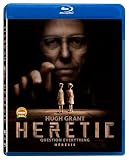
Heretic (Blu-ray) 2024 | $28.99 | Buy on Amazon |
| 2 |

|
Exorcist II: The Heretic | $20.62 | Buy on Amazon |
| 3 |
![Heretic [Blu-ray]](https://m.media-amazon.com/images/I/61tiVgSjKmL._SL160_.jpg)
|
Heretic [Blu-ray] | $17.49 | Buy on Amazon |
| 4 |
![The Heretic [Blu-ray]](https://m.media-amazon.com/images/I/41gVWyUgcfL._SL160_.jpg)
|
The Heretic [Blu-ray] | $12.49 | Buy on Amazon |
| 5 |
![Exorcist 2: The Heretic [Blu-ray]](https://m.media-amazon.com/images/I/618qnaYBzEL._SL160_.jpg)
|
Exorcist 2: The Heretic [Blu-ray] | $19.99 | Buy on Amazon |
What drew Grant to the role wasn’t just the darkness, but the discipline required to sustain it without winking at the audience. Heretic asks him to deny viewers the comfort of irony and instead sit inside a worldview that is chillingly coherent. In doing so, Grant signals a deliberate break from nostalgia, positioning both himself and the film as something more dangerous than expected: a thriller that understands how easily charisma can become a mask for cruelty.
Inside Heretic: The Film’s Sinister Premise and the Role of Mr. Reed
At its core, Heretic is less interested in jump scares than in erosion. The film unfolds as a slow-burn psychological thriller that interrogates belief systems, moral certainty, and the quiet violence of persuasion. Rather than presenting evil as something monstrous and obvious, Heretic frames it as polite, articulate, and dangerously convincing.
#1 Best Overall
The story places its characters in a controlled environment where ideas become weapons. Isolation is key, not just physically but intellectually, as conversations tighten and philosophical debates take on life-or-death stakes. This is a film that understands horror as a process, something that seeps in gradually while the audience is still deciding whom to trust.
A Villain Built on Intellect, Not Spectacle
Mr. Reed is the engine of that unease. He isn’t introduced as a threat in any conventional sense, but as a man whose intelligence and composure immediately command attention. Grant’s Reed speaks with measured calm, offering logic instead of threats, curiosity instead of rage.
What makes the character unsettling is how rarely he raises his voice or signals overt menace. Reed believes in what he’s doing, and that conviction gives him power. Grant plays him as someone who sees himself not as a villain, but as an arbiter of truth, which makes every interaction feel like a trap disguised as dialogue.
Weaponizing Charisma Within the Story
Heretic smartly builds its premise around the very qualities Grant brings into the room. Reed’s charm isn’t incidental; it’s structural to the plot, allowing the film to explore how easily warmth and intellect can be mistaken for morality. The audience, like the other characters, is invited to lean in before realizing how compromised that trust has become.
Grant’s dedication to the role reportedly extended to understanding Reed’s internal logic rather than judging it. That creative mindset aligns perfectly with the film’s thesis: that the most dangerous figures are often those who can explain themselves convincingly. In Heretic, the horror doesn’t come from what Mr. Reed does, but from how reasonable he sounds while doing it.
A Premise That Redefines Expectations
By anchoring its sinister premise to conversation and belief rather than spectacle, Heretic positions itself as a sharp departure from genre norms. The film asks viewers to stay alert, to question their own reactions to confidence and authority. Grant’s performance becomes the focal point of that challenge, forcing audiences to confront how deeply conditioned their trust in him really is.
This is where Heretic signals its ambition. It isn’t just a darker turn for Grant; it’s a film that uses his persona as a narrative device, turning familiarity into discomfort. Mr. Reed isn’t simply a character within the story, but a test of how easily charm can rewrite the rules of fear.
Building the Monster: Grant’s Psychological Preparation and Character Research
Rather than approaching Mr. Reed as a traditional antagonist, Hugh Grant reportedly began from a place of belief. The actor has suggested that Reed only works if he is never played as “evil,” but as intellectually convinced, emotionally composed, and internally justified. That reframing guided Grant’s preparation, shifting the focus away from menace and toward ideology.
Free tools Windows power users keep installed
One-click scans. No signup required.
Grant’s goal wasn’t to frighten the audience directly. It was to make them understand Reed well enough to feel complicit in listening to him.
Researching Belief Systems, Not Body Counts
Grant immersed himself in the psychology of absolutism, studying how articulate, educated figures rationalize morally corrosive ideas without ever seeing themselves as wrong. Reed isn’t driven by chaos or cruelty, but by a belief that clarity and logic excuse any outcome. That mindset, Grant has indicated, was more important than backstory or overt villain traits.
By grounding Reed in intellectual certainty, Grant taps into something more disturbing than violence. The character becomes a mirror for how dangerous conviction can be when detached from empathy, especially when delivered with elegance and patience.
Suppressing Instincts to Find Control
One of Grant’s most deliberate choices was restraint. He reportedly worked against instinctual performance flourishes, paring down expression and emotional emphasis to create a man who never needs to push. Reed’s calm isn’t accidental; it’s practiced, almost ceremonial, and Grant’s control becomes the character’s sharpest weapon.
What’s actually slowing this PC down?
Pick the symptom - the matching free tool is one click away.
Rank #2
This approach demanded a kind of discipline unfamiliar to audiences accustomed to Grant’s expressive charm. Silence, pauses, and eye contact replace humor and verbal rhythm, forcing viewers to sit with Reed’s ideas longer than is comfortable.
Refusing to Judge the Character
Perhaps the most unsettling aspect of Grant’s preparation was his refusal to moralize Reed while playing him. Grant has long argued that actors cannot indict their characters without weakening them, and Heretic required absolute commitment to Reed’s worldview. The performance never signals disapproval, and that neutrality is what allows the horror to seep in.
By treating Reed as rational rather than deranged, Grant removes the safety net audiences often rely on. There is no exaggerated madness to distance oneself from, only calm reasoning delivered by someone who seems frighteningly sure of himself.
A Performance Built on Trust and Betrayal
Grant’s research also extended to understanding how trust is earned and exploited. Reed’s conversational style, his curiosity, and his apparent openness are all tools refined through observation, not improvisation. Grant reportedly studied how authority figures create intimacy through language, making others feel seen before quietly asserting control.
Recommended Free Tools
That preparation transforms every exchange in Heretic into psychological terrain. Grant isn’t just playing a character; he’s engineering an experience, one where the audience realizes too late that listening was the first mistake.
Weaponized Charm: How Grant Twists His Classic Persona into Something Unsettling
Grant’s greatest advantage in Heretic is the very quality that once made him a romantic icon. His warmth, verbal precision, and ease in conversation arrive pre-loaded with audience trust, and the film exploits that familiarity with surgical intent. Mr. Reed doesn’t announce himself as a threat; he invites you to listen.
Where past performances leaned on charm as reassurance, Heretic reframes it as camouflage. Grant understands that the most disturbing villains don’t repel; they persuade. Reed’s politeness becomes a strategy, his civility a mechanism for control.
Charm Without Safety Nets
What makes Reed so disarming is how recognizable he feels at first. Grant speaks with the same relaxed cadence audiences associate with wit and intelligence, but here those traits never resolve into comfort. The charm lingers without payoff, leaving conversations suspended in unease rather than release.
Quick wins for a faster PC:
Repair Windows errors before they cause bigger problemsFix Now →Fix the driver behind crashes, sound loss and screen glitchesFind Drivers →Grant reportedly leaned into that tension, resisting the urge to soften scenes with humor or self-awareness. Instead, he lets the charm exist in a vacuum, forcing viewers to question why they’re still leaning in. The longer Reed speaks, the more dangerous that familiarity becomes.
Rewriting the Grant Grammar
Heretic functions as a quiet rebellion against the performance language that defined Grant’s early career. The expressive eyebrows, the self-deprecating timing, the emotional transparency—all are deliberately absent. In their place is a man who never checks if he’s being liked, because he already assumes control.
Grant’s commitment lies in denying audiences the emotional cues they expect from him. There’s no wink to signal irony, no fracture in confidence to suggest vulnerability. That refusal to reassure turns his persona inside out, transforming affection into apprehension.
When Intelligence Becomes Intimidation
Reed’s intellect is presented not as brilliance, but as certainty, and Grant plays it with unnerving calm. His arguments unfold patiently, almost generously, as though he’s offering clarity rather than coercion. The horror emerges when viewers realize how little room Reed leaves for disagreement.
Rank #3
Grant’s performance suggests a man who enjoys being understood more than being liked. That distinction is crucial, and chilling. Intelligence, delivered without humility, becomes another form of dominance.
Audience Complicity as Performance Strategy
Perhaps Grant’s boldest move is how he implicates the viewer. By using a persona audiences instinctively trust, he turns attention into vulnerability. Watching Reed feels like participating in the trap rather than observing it from a safe distance.
This is where Heretic announces itself as a turning point. Grant isn’t just subverting expectations; he’s leveraging decades of audience goodwill as part of the film’s psychological design. The result is a performance that doesn’t ask to be re-evaluated—it demands it.
On-Set Intensity: Commitment, Physicality, and the Demands of Playing Mr. Reed
If Grant’s performance strategy in Heretic is psychological, the execution is intensely physical. On set, Mr. Reed is not played as a concept but as a sustained state of control, one that requires absolute precision in posture, pacing, and presence. Grant reportedly approached the role as something to inhabit rather than perform, allowing the character’s menace to live in stillness as much as speech.
The Tool Desk
Outbyte Driver Updater FREEFix the driver behind crashes, sound loss and screen glitchesFind Drivers →Outbyte PC Repair FREERepair Windows errors before they cause bigger problemsFix Now →This wasn’t a transformation built on volume or spectacle. Instead, it demanded discipline—holding tension without release, resisting the natural actor’s impulse to explain or soften. Reed’s power comes from how little he moves, how rarely he expends energy, and Grant treats that restraint as a physical challenge rather than an absence of action.
Weaponized Stillness and Controlled Movement
Grant’s body language in Heretic is unnervingly economical. He sits longer than expected, stands closer than comfort allows, and turns movement into a form of pressure. Each gesture feels deliberate, as if Reed is constantly measuring the effect he has on others before deciding whether to act.
That level of control requires endurance. Maintaining such restraint over long shooting days means never breaking the character’s internal rhythm, never allowing fatigue or familiarity to loosen Reed’s grip. Grant’s dedication shows in how the character’s physicality never wavers, even when the scenes escalate.
Psychological Endurance Over Emotional Release
Unlike many darker roles that rely on emotional volatility, Mr. Reed demands emotional containment. Grant plays him without catharsis, denying both himself and the audience any moment of relief. That choice creates a sustained psychological pressure that becomes exhausting by design.
Do these 3 things before closing this tab:
1Clear out junk files and repair common Windows errors2Scan for outdated or missing drivers - takes under a minute3Repair Windows errors before they cause bigger problemsFor an actor long associated with emotional accessibility, this denial is radical. Grant commits to the discomfort, allowing scenes to linger in silence or intellectual confrontation without offering an emotional off-ramp. The result is a performance that feels mentally taxing to watch, which is precisely the point.
A Set Environment Built on Unease
The intensity extended beyond individual scenes. Grant has suggested that staying in Reed’s headspace was essential to maintaining the film’s tone, even between takes. Rather than resetting with humor or familiarity, he preserved a degree of distance, keeping the atmosphere unsettled.
That approach reinforces Heretic’s broader ambition. This is not a film content with momentary scares; it’s designed to wear the audience down, and Grant’s on-set commitment mirrors that goal. By treating the role as an endurance test—physical, psychological, and artistic—he anchors the film’s tension in something palpable and relentless.
Collaborating with the Directors: Shaping Heretic’s Tone and Mr. Reed’s Presence
Grant’s dedication did not exist in a vacuum. It was sharpened through close collaboration with directors Scott Beck and Bryan Woods, whose control-driven approach to tension aligned perfectly with his instinct to underplay rather than explode. From early rehearsals, the conversations weren’t about how frightening Mr. Reed could be, but how quietly destabilizing he should feel.
Rank #4
Rather than pushing Grant toward overt menace, Beck and Woods encouraged subtraction. Scenes were refined by removing inflection, trimming dialogue, and letting pauses do the work that music or camera movement typically might. The directors trusted Grant’s restraint, and Grant trusted them to let silence remain uncomfortable instead of rushing to relieve it.
Calibrating Fear Through Intellect, Not Volume
One of the key creative agreements between actor and directors was that Heretic would operate on intellectual dread. Mr. Reed doesn’t dominate through physical threat or theatrical cruelty; he unsettles by being one step ahead, always probing, always listening. Grant leaned into that philosophy, shaping Reed as someone who believes conversation itself is a weapon.
Beck and Woods reportedly fine-tuned scenes by adjusting how much Reed reveals versus withholds. Grant would sometimes play a moment flatter than scripted, allowing the directors to decide how much information the audience truly needed. That restraint transforms Reed into an active participant in the film’s psychological games rather than a conventional antagonist.
Trusting the Camera to Catch the Threat
The directors’ visual language also influenced Grant’s performance choices. Knowing the camera would often linger close, Grant resisted expressive gestures, allowing micro-reactions to carry scenes. A blink held half a beat too long or a smile that never fully lands becomes unsettling when the lens refuses to look away.
Outdated Drivers Are Slowing You Down
One free scan finds every outdated or missing driver and matches the right update for your exact hardware.Free scan · exact hardware matchWindows Errors? Fix Them Before They Spread
Repair common Windows errors and clear accumulated junk for a smoother, more stable PC - no reinstall needed.Free scan · no reinstallThis trust allowed Grant to underplay without fear of disappearing. Beck and Woods framed Reed as a presence rather than a performer, letting composition and blocking amplify his stillness. The result is a character who feels oppressive even when doing very little, a collaborative achievement built on mutual restraint.
A Shared Commitment to Discomfort
Perhaps most crucially, Grant and the directors shared a willingness to make the audience uneasy without apology. There was no mandate to soften Reed, no insistence on likability or explanation. Beck and Woods gave Grant permission to deny empathy, and Grant embraced that freedom fully.
That alignment defines Heretic’s tone. The film isn’t interested in comforting viewers or reassuring them with familiar beats, and neither is Grant’s performance. By working in lockstep, actor and directors create a sustained unease that feels intentional, precise, and deeply unnerving—an artistic gamble that repositions Grant as a fearless collaborator in one of the most tonally uncompromising projects of his career.
Independent reader supportYour contribution helps us test, update, and keep practical guides available for everyone.Audience Shock and Critical Reassessment: What This Performance Signals for Grant’s Career
For many viewers, the initial shock of Heretic isn’t just its creeping dread or philosophical cruelty—it’s seeing Hugh Grant at the center of it. Audiences arrive with decades of romantic-comedy muscle memory, only to watch that familiar cadence turned into something manipulative and quietly predatory. The whiplash is intentional, and Grant seems acutely aware that his own persona is part of the film’s weaponry.
Rather than fight expectations, he exploits them. Reed’s politeness, verbal charm, and apparent reasonableness feel disarming precisely because they echo earlier Grant performances. When those traits reveal themselves as tools of control, the betrayal feels personal, forcing audiences to reassess not only the character but the actor they thought they knew.
From Charming Lead to Cinematic Threat
Critically, Heretic has prompted a reframing of Grant’s late-career trajectory. What once felt like a series of amusing deviations into villainy now reads as a deliberate progression toward riskier, more confrontational work. Reed is not camp, not indulgent, and not designed to steal scenes with theatrical flourish; he’s meant to erode the viewer’s sense of safety over time.
This restraint has earned particular praise from critics who note how little Grant relies on overt menace. His performance suggests a confidence that no longer needs audience approval, only attention. In a genre crowded with loud antagonists, Grant’s Reed stands out by refusing to announce himself, trusting silence and intellect to do the damage.
Redefining Audience Expectations
Heretic also signals a recalibration of what audiences can expect from Grant going forward. This is not a novelty casting choice or a temporary detour into darkness; it feels like a line crossed with purpose. Grant isn’t parodying his image or subverting it with a wink—he’s discarding it when it no longer serves the story.
Free tools Windows power users keep installed
One-click scans. No signup required.
Best Value
That willingness to alienate portions of his fanbase may be the performance’s most radical aspect. Reed offers no redemptive arc, no softened edges, and no ironic distance. Grant commits fully, suggesting an actor less interested in legacy maintenance than in creative provocation.
A Career Entering Its Most Unpredictable Phase
If Heretic marks a turning point, it’s not because Grant has suddenly become a horror villain. It’s because he’s embracing roles that demand intellectual severity and emotional denial, even at the cost of comfort. Reed is a character built on control, and Grant’s mastery lies in how thoroughly he withholds himself from the audience.
In that sense, Heretic doesn’t just reposition Grant within a genre—it reframes him as an actor operating from a place of artistic autonomy. The shock may fade on repeat viewings, but the reassessment lingers. Hugh Grant, once defined by affability, now feels most alive when denying it, and that evolution may prove to be the most unsettling revelation of all.
A New Era of Hugh Grant: Why Mr. Reed May Be His Most Defining Late-Career Role
What makes Mr. Reed so significant is not simply that Hugh Grant plays against type, but that he does so without commentary. There’s no ironic framing, no meta-awareness cushioning the impact. Grant approaches Reed as a fully realized human threat, allowing the character’s intelligence and conviction to become the most unsettling elements on screen.
What’s actually slowing this PC down?
Pick the symptom - the matching free tool is one click away.
This is the work of an actor no longer negotiating with his audience. Grant isn’t asking viewers to follow him into darker territory; he assumes they will, and proceeds accordingly. That confidence fundamentally alters the power dynamic between performer and spectator, and it’s where Heretic finds its sharpest edge.
A Performance Built on Discipline, Not Deconstruction
Grant has spoken about approaching Reed with almost clinical restraint, focusing less on psychology as explanation and more on behavior as fact. Reed doesn’t need to be understood to be convincing; he needs to be precise. Every pause, every measured line delivery feels considered, suggesting a performance shaped by preparation rather than instinctual flourish.
This discipline is what separates Reed from the caricatured villains that populate much of modern horror. Grant resists the urge to externalize menace, instead letting it surface through intellect and moral certainty. The result is a character who feels frighteningly plausible, not because he is loud, but because he is sure.
Creative Risk as a Late-Career Philosophy
At this stage in his career, Grant could comfortably coast on familiarity. Instead, Heretic reveals an actor actively seeking discomfort, both for himself and for his audience. Reed offers no emotional accessibility, no charm to soften the blow, and Grant’s willingness to inhabit that void speaks to a broader shift in his creative priorities.
Outdated Drivers Are Slowing You Down
One free scan finds every outdated or missing driver and matches the right update for your exact hardware.Free scan · exact hardware matchPC Slower Than It Used to Be?
A free scan shows the junk files, broken settings and background clutter dragging Windows down - then fixes them in one click.Free scan · Windows 10 & 11This is not reinvention for novelty’s sake. It’s an evolution rooted in trust—trust in the material, in the filmmakers, and in his own ability to carry a film without the safety net of likability. In doing so, Grant reframes what longevity in acting can look like when driven by curiosity rather than preservation.
What Mr. Reed Signals for Heretic—and for Grant
Mr. Reed doesn’t just redefine Hugh Grant; he recalibrates the stakes of Heretic itself. The film leans heavily on the credibility Grant brings to the role, using his familiar presence to lure audiences into increasingly hostile terrain. That tension between expectation and execution becomes the film’s most effective weapon.
If this is a new era for Grant, it’s one defined by refusal—refusal to reassure, to soften, to explain. Reed stands as a culmination of that philosophy, a performance that feels both meticulously controlled and quietly radical. Long after the shock of casting fades, what remains is the sense that Hugh Grant has finally arrived at the most dangerous position an actor can occupy: complete artistic freedom.
Quick Recap
Product prices and availability are accurate as of the date/time indicated and are subject to change. Any price and availability information displayed on Amazon at the time of purchase will apply.




