Kevin Costner doesn’t make safe movies, and Horizon: An American Saga might be his boldest declaration yet. Self-financed, sprawling in scope, and unapologetically rooted in the mythmaking language of classic Westerns, the project represents an increasingly rare kind of Hollywood gamble: one driven by conviction rather than algorithms. For the cast, stepping onto Horizon wasn’t just another job; it was a front-row seat to an artist betting everything on a story he believes America still needs.
Luke Wilson describes Costner’s approach as deeply personal, the kind of leadership that comes from someone who has lived inside a genre long enough to understand its emotional grammar. Isabelle Fuhrman has spoken about the clarity of Costner’s vision, noting how every character choice felt tied to a larger historical tapestry rather than a single scene or arc. Ella Hunt, meanwhile, has pointed to the scale of the production as both intimidating and galvanizing, a reminder that Horizon isn’t chasing trends but attempting to reclaim something elemental about cinematic storytelling.
| # | Preview | Product | Price | |
|---|---|---|---|---|
| 1 |

|
Horizon: An American Saga Chapter 1 (DVD) | $5.00 | Buy on Amazon |
| 2 |
|
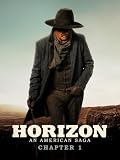
Horizon: An American Saga Chapter 1 | Buy on Amazon | |
| 3 |

|
Horizon: An American Saga Chapter 1 DVD | Kevin Costner | $22.17 | Buy on Amazon |
| 4 |

|
The Great Horizon: Photographing Kevin Costner's American Saga | $18.99 | Buy on Amazon |
| 5 |
|
Wyatt Earp | $4.99 | Buy on Amazon |
What makes Horizon matter isn’t just its ambition, but the sincerity behind it. Costner isn’t revisiting the Western to deconstruct it or dress it up with irony; he’s expanding it, insisting there’s still room for epic human drama played against vast American landscapes. In an industry often wary of passion projects this large, Horizon stands as a rare, all-in act of faith, one that challenges both audiences and collaborators to meet it on its own terms.
Inside Costner’s Vision: What Luke Wilson, Isabelle Fuhrman & Ella Hunt Saw From Day One
From the moment Horizon moved from idea to lived-in reality, Kevin Costner’s intentions were unmistakable. This wasn’t a Western built around spectacle for spectacle’s sake, but a carefully orchestrated mosaic of lives intersecting at the edges of American expansion. For the cast, Costner’s vision was less about explaining the movie and more about inviting them into its worldview.
#1 Best Overall
Luke Wilson and the Language of the Western
Luke Wilson has often spoken about how quickly Costner communicated the emotional rules of Horizon. As someone steeped in the genre, Costner didn’t need to intellectualize the Western’s rhythms; he embodied them. Wilson sensed early on that every scene was anchored in character behavior rather than plot mechanics, with Costner treating the frontier not as a backdrop but as a pressure cooker for human choices.
What struck Wilson most was Costner’s refusal to rush emotional beats. Horizon’s scale could easily have encouraged shorthand storytelling, yet Costner consistently pushed for patience, allowing moments to breathe even when the production machine was massive. For Wilson, it felt like watching an old-school filmmaker apply classical discipline to a modern, high-risk canvas.
Isabelle Fuhrman and the Weight of History
For Isabelle Fuhrman, Costner’s vision revealed itself through specificity. From early conversations, it was clear that Horizon wasn’t interested in flattening history into broad strokes. Costner emphasized how individual characters exist within overlapping social, political, and cultural currents, making even small decisions feel historically consequential.
Fuhrman has described how Costner framed character work as part of a much larger continuum. Rather than focusing solely on arcs within a single chapter, he encouraged actors to think about who their characters were before the camera found them and who they might become long after. That long view gave Horizon a lived-in authenticity that Fuhrman recognized as rare in contemporary studio filmmaking.
Windows Errors? Fix Them Before They Spread
Repair common Windows errors and clear accumulated junk for a smoother, more stable PC - no reinstall needed.Free scan · no reinstallOutdated Drivers Are Slowing You Down
One free scan finds every outdated or missing driver and matches the right update for your exact hardware.Free scan · exact hardware matchElla Hunt and the Intimidation of Scale
Ella Hunt’s introduction to Costner’s vision came with a jolt of scale. The physical scope of Horizon was impossible to ignore, from sprawling locations to the sheer logistical ambition of telling multiple interwoven stories. Yet Costner never let that enormity overshadow the human core of the film.
Hunt has noted that Costner’s confidence set the tone. His calm authority made the risk feel purposeful rather than reckless, transforming what could have been an intimidating environment into a creatively galvanizing one. For a younger performer, watching a filmmaker stake so much on a singular belief in story and character was both grounding and inspiring.
A Director Leading by Conviction
What unites Wilson, Fuhrman, and Hunt’s experiences is a shared recognition that Horizon was never treated like a calculated product. Costner led with conviction, trusting that clarity of purpose would ripple outward through cast and crew. He wasn’t selling the idea of Horizon; he was living it, and that commitment became contagious.
In a Hollywood climate often defined by cautious iteration, Costner’s approach felt almost radical. From day one, Horizon asked its collaborators to invest emotionally, intellectually, and creatively in something bigger than themselves. For those inside the project, Costner’s vision wasn’t just visible; it was inescapable, shaping every performance and every frame.
Luke Wilson on Scale, Brotherhood, and Trusting Costner’s Old-School Leadership
For Luke Wilson, Horizon felt less like stepping onto a conventional set and more like joining a working frontier. The scale was immediate and unavoidable, not just in landscapes or crowd scenes, but in the sheer number of lives and storylines moving in parallel. Wilson has suggested that you couldn’t fake your way through a production like this; the size demanded presence and commitment from everyone involved.
What surprised him most wasn’t the logistical ambition, but how personal the experience remained despite it. Even on days when the production sprawled across vast terrain, Costner kept the focus grounded in relationships. The result was a sense that every character, no matter how briefly seen, belonged to a larger human ecosystem rather than a narrative machine.
A Western Built on Brotherhood
Wilson has often spoken about the camaraderie that emerged during filming, describing it as something closer to a shared ordeal than a standard ensemble shoot. The demanding schedule and physical conditions created an unspoken bond among the cast, echoing the themes of survival and community embedded in the story itself. That sense of brotherhood wasn’t manufactured; it grew organically from the work.
Costner, Wilson noted, encouraged that connection by treating the cast like collaborators rather than pieces on a board. Conversations about character often happened casually, between setups or over meals, reinforcing the idea that everyone was contributing to the same long game. It mirrored the world Horizon depicts, where trust is built slowly and maintained through action rather than words.
Trusting an Old-School Leader
At the center of it all was Costner’s distinctly old-school leadership style, something Wilson found both reassuring and rare. Costner led from experience, not trend awareness, drawing on instincts shaped by decades of filmmaking rather than contemporary formulas. That confidence allowed actors to relax into the process, trusting that the story was in steady hands.
Wilson has framed that trust as essential to Horizon’s ambition. When a filmmaker is asking collaborators to commit to something this expansive and risky, belief becomes the currency that keeps everything moving forward. Costner’s belief, quietly but consistently expressed, set the tone, making Horizon feel less like a gamble and more like a shared mission carried out with purpose and pride.
Isabelle Fuhrman on Finding Humanity in the Frontier: Character Depth Amid Epic Ambition
If Luke Wilson’s experience centered on trust and camaraderie, Isabelle Fuhrman’s entry point into Horizon was rooted in intimacy. For her, the project’s sweeping scale only mattered insofar as it created space for quieter, more vulnerable human moments to exist within it. That balance, between enormity and emotional precision, is what convinced her that Costner’s ambition wasn’t spectacle-driven, but character-led.
Fuhrman has described being struck by how seriously Costner took every individual life in Horizon’s vast mosaic. Even characters who pass briefly through the frame are treated as people with histories, fears, and contradictions, rather than narrative devices. In a genre often defined by mythmaking, that insistence on humanity gave the frontier a lived-in authenticity.
The Tool Desk
Outbyte PC Repair FREERepair Windows errors before they cause bigger problemsFix Now →Outbyte Driver Updater FREEFix the driver behind crashes, sound loss and screen glitchesFind Drivers →Playing the Interior Against the Immense
For Fuhrman, performing in Horizon meant learning to play interior emotions against overwhelming physical environments. Wide-open landscapes and period detail could easily dwarf a performance, but Costner encouraged the opposite approach. The camera, she noted, often lingers just long enough to catch hesitation, doubt, or resolve flicker across a character’s face.
That attention to emotional specificity allowed Fuhrman to ground her performance in small, personal choices rather than grand gestures. The West of Horizon isn’t romanticized through bravado, but filtered through individuals trying to survive morally as much as physically. Fuhrman’s work reflects that ethos, emphasizing restraint over declaration.
Costner’s Respect for Process
What stood out most to Fuhrman was Costner’s respect for an actor’s process, even within a production of daunting complexity. He didn’t impose rigid interpretations, but asked questions, listened, and adjusted when something felt emotionally true. That flexibility, she felt, was essential in a film attempting to capture multiple lives unfolding simultaneously.
In a modern industry where scale often overrides sensitivity, Fuhrman sees Horizon as a rare reversal. Costner’s willingness to risk time, money, and legacy on a story that privileges character over convenience gave actors permission to do the same. The result is a Western that doesn’t just chart the expansion of a nation, but the fragile inner lives caught in its wake.
Quick wins for a faster PC:
Clear out junk files and repair common Windows errorsFree Scan →Scan for outdated or missing drivers - takes under a minuteDriver Scan →Ella Hunt on Youth, Perspective, and Entering Costner’s Expansive American Myth
If Fuhrman’s experience was shaped by interior restraint, Ella Hunt’s entry into Horizon was defined by perspective — both generational and cinematic. As one of the younger cast members stepping into Costner’s sweeping American saga, Hunt was acutely aware of the scale she was joining, and of her place within it. Rather than feeling overwhelmed, she describes that awareness as grounding.
For Hunt, Horizon wasn’t just another period project; it felt like stepping into an inherited mythology and being asked to interrogate it from the inside. Costner’s vision, she noted, wasn’t about preserving a myth intact, but examining how it’s formed, who it serves, and who it leaves behind. That framework allowed her to approach the material with curiosity rather than reverence.
Rank #3
- Kevin Costner, Sienna Miller, Sam Worthington, Jena Malone
Seeing the Frontier Through Younger Eyes
Hunt has spoken about how youth shapes the way her character experiences the frontier — not as a completed idea, but as a volatile, unfinished reality. In Costner’s Horizon, the West isn’t destiny; it’s uncertainty. That distinction was crucial for her performance, allowing fear, hope, and confusion to coexist without needing resolution.
Costner encouraged that ambiguity. Rather than pushing characters toward symbolic clarity, he welcomed contradiction, especially in younger figures still forming their sense of self. Hunt found that approach refreshing, particularly in a genre that often rushes young characters toward premature toughness or moral certainty.
Do these 3 things before closing this tab:
1Scan for outdated or missing drivers - takes under a minute2Clear out junk files and repair common Windows errors3Fix the driver behind crashes, sound loss and screen glitchesLearning Inside a Living Epic
Working alongside seasoned actors like Costner and Luke Wilson became an informal education for Hunt, not through instruction, but observation. She’s described watching how Costner moves through a set — attentive, calm, deeply engaged — as a lesson in leadership without ego. Even amid logistical complexity, his focus remained fixed on emotional truth.
That atmosphere, she felt, made Horizon a rare kind of learning environment. Younger actors weren’t sidelined or simplified; they were trusted with emotional weight. Costner’s belief that every perspective matters, regardless of age or narrative prominence, reinforced the film’s larger democratic impulse.
A Passion Project That Makes Space
What resonated most with Hunt was Costner’s willingness to make space — for silence, for uncertainty, for growth. Horizon’s ambition isn’t just geographic or historical; it’s emotional. Characters are allowed to evolve slowly, sometimes painfully, mirroring the nation forming around them.
For a younger actor, that patience felt radical. Hunt sees Horizon as a reminder that passion projects don’t have to announce themselves loudly to be monumental. Sometimes, their power lies in letting voices emerge gradually, trusting that even the quietest perspectives can echo across a vast American landscape.
Free tools Windows power users keep installed
One-click scans. No signup required.
On Set of a Passion Project: Risk, Independence, and the Reality of Making Horizon
Stepping onto Horizon wasn’t just stepping onto another film set. For the cast, it felt like entering an ecosystem built on conviction rather than compromise, where the usual safety nets of studio filmmaking were intentionally stripped away. Kevin Costner’s decision to independently shepherd such an expansive Western wasn’t abstract; it shaped the daily reality of the production.
That sense of risk was palpable, but so was the clarity of purpose. Horizon wasn’t chasing trends or algorithms. It was chasing a feeling, a version of American storytelling that Costner believed still mattered, even if the industry had largely moved on.
The Weight of Independence
Luke Wilson has spoken candidly about how that independence altered the energy on set. Without the usual studio infrastructure looming overhead, there was a shared awareness that everyone was there because they believed in the story, not because it was the safest career move. That belief created a quiet accountability, where performances felt less manufactured and more personal.
Wilson noted that Costner never framed the production’s scale as a burden. Instead, he treated it like a responsibility to the material and to the people who signed on. The result was a set that felt grounded, even as it attempted something audacious by modern Hollywood standards.
Recommended Free Tools
Risk as Creative Fuel
For Isabelle Fuhrman, Horizon’s risk was inseparable from its emotional honesty. She’s described how Costner encouraged actors to lean into discomfort, especially in scenes that resisted easy catharsis. Moments weren’t designed to reassure the audience; they were designed to feel true to lives lived on the edge of survival and reinvention.
Fuhrman found that approach liberating. Rather than hitting predetermined emotional beats, she was allowed to exist inside the uncertainty of the frontier. In a project this large, that level of trust felt rare, and it sharpened her performance in ways a more controlled environment might not have allowed.
Scale Without Spectacle for Its Own Sake
While Horizon spans vast landscapes and intersecting storylines, Ella Hunt emphasized that the scale never eclipsed intimacy. Costner was meticulous about grounding epic visuals in human perspective, often reminding actors that the story only works if the audience can feel the weight of individual choices within it.
That philosophy shaped even the largest scenes. Hunt recalled that Costner’s focus remained fixed on character dynamics, not spectacle. The frontier may stretch endlessly in Horizon, but the emotional lens stays close, prioritizing lived experience over mythmaking.
A Set Built on Belief
What ultimately united Wilson, Fuhrman, and Hunt’s experiences was the sense that Horizon existed because Costner refused to let it exist any other way. His personal investment wasn’t performative; it showed up in long days, careful listening, and a willingness to shoulder the risk himself rather than dilute the vision.
In an industry increasingly driven by caution, that commitment left a lasting impression on the cast. Horizon wasn’t just a job or a genre exercise. It was a reminder of what can happen when a filmmaker bets on story, patience, and belief, and invites others to do the same.
Independent reader supportYour contribution helps us test, update, and keep practical guides available for everyone.What Sets Horizon Apart in Today’s Hollywood Landscape
In a marketplace dominated by familiar IP and algorithm-tested storytelling, Horizon feels almost willfully out of step. Its ambition isn’t just measured in runtime or geography, but in its refusal to compress the Western into something easily digestible. Costner’s approach asks for patience, trust, and a belief that audiences will meet the film where it lives.
That confidence resonated deeply with the cast. For Luke Wilson, the project represented a kind of filmmaking he’d seen slowly disappear, where character arcs unfold gradually and meaning accumulates rather than announces itself. Horizon, he noted, isn’t in a hurry to explain itself, and that’s precisely the point.
What’s actually slowing this PC down?
Pick the symptom - the matching free tool is one click away.
A Passion Project in an Era of Safe Bets
Hollywood rarely makes room for projects driven this fully by personal conviction. Horizon exists because Costner was willing to stake his reputation, resources, and time on a story he felt compelled to tell, even when the industry’s prevailing wisdom suggested otherwise. That level of commitment is increasingly rare, especially for original, adult-oriented epics.
Isabelle Fuhrman saw that risk-taking as a quiet act of defiance. In her view, Horizon pushes back against the idea that audiences only want immediacy and familiarity. Instead, it trusts viewers to sit with ambiguity, to engage with characters whose journeys aren’t neatly resolved or easily categorized.
Letting Time Do the Work
One of Horizon’s most radical qualities is its relationship with time. The film isn’t built around constant narrative propulsion, but around accumulation, the way lives and histories layer over one another. Ella Hunt described it as storytelling that breathes, allowing moments to linger even when they don’t advance the plot in obvious ways.
That patience extends to performance. Scenes are allowed to play without underlining their significance, giving actors space to inhabit silences and contradictions. In an industry that often prioritizes pace over texture, Horizon’s willingness to slow down becomes a statement in itself.
Do these 3 things before closing this tab:
1Clear out junk files and repair common Windows errors2Scan for outdated or missing drivers - takes under a minute3Repair Windows errors before they cause bigger problemsBest Value
Actors as Collaborators, Not Components
Wilson, Fuhrman, and Hunt all pointed to Costner’s collaborative instincts as a defining feature of the production. Despite the scale, the set didn’t feel hierarchical or rushed. Actors were encouraged to ask questions, offer perspective, and engage with the material as storytellers rather than hired hands.
That environment fostered a sense of ownership. Performances weren’t shaped to fit a prepackaged tone, but allowed to evolve organically within Costner’s larger vision. It’s a mode of filmmaking that treats actors as essential partners, a philosophy that feels increasingly uncommon in modern studio productions.
A Western That Refuses to Become a Relic
While Horizon is steeped in the iconography of the American frontier, it never treats the genre as a museum piece. Costner’s vision reframes the Western as a living, breathing form, capable of complexity and moral unease. The cast felt that tension constantly, between tradition and reinvention.
For Fuhrman and Hunt especially, that balance made the project feel urgent rather than nostalgic. Horizon doesn’t look backward with longing; it looks inward, interrogating the cost of expansion and the human stories buried beneath mythology. In today’s Hollywood, that kind of ambition stands quietly, but unmistakably, apart.
Looking Ahead: How Horizon Could Redefine Costner’s Legacy—and Theirs
For Kevin Costner, Horizon feels less like a late-career experiment and more like a culmination. The film pulls together decades of storytelling instincts, from his reverence for the Western to his belief in character-first filmmaking. If Horizon succeeds on its own terms, it may come to define not just a chapter of Costner’s career, but its philosophical endpoint.
This isn’t legacy-building through nostalgia. Costner’s gamble is rooted in conviction, not comfort, and that distinction matters to the actors who joined him. For Wilson, Fuhrman, and Hunt, Horizon represents the rare chance to participate in a project that isn’t chasing trends, but setting its own pace entirely.
Luke Wilson and the Value of Earned Weight
Luke Wilson sees Horizon as a reminder of what happens when a filmmaker trusts audiences to lean in rather than tune out. The scale is immense, but the performances are intimate, and that contrast gives the film its emotional gravity. Wilson’s work thrives in that space, where humor, weariness, and quiet resilience can coexist without explanation.
For an actor whose career has often balanced mainstream appeal with offbeat choices, Horizon offers something rarer: weight that feels earned over time. It’s the kind of project that doesn’t demand immediate attention, but rewards sustained engagement, both for the audience and the people who made it.
Isabelle Fuhrman and Ella Hunt Stepping Into Something Larger
For Isabelle Fuhrman and Ella Hunt, Horizon represents an inflection point. Both actors spoke to the sense that Costner wasn’t just directing performances, but inviting them into a long-view conversation about history, consequence, and perspective. Their characters exist within a sprawling mosaic, yet their choices resonate far beyond individual scenes.
That experience carries forward. Working on a production so deeply guided by intention, rather than algorithm or franchise logic, leaves a mark. Horizon doesn’t just showcase their range; it reframes what kind of projects feel worth pursuing next.
A Passion Project in an Era That Rarely Allows Them
What ultimately distinguishes Horizon is not its length, budget, or ambition, but its sincerity. Costner’s willingness to shoulder creative and financial risk sends a signal that passion-driven filmmaking still has a place, even when the industry feels increasingly cautious. The cast felt that risk daily, and it sharpened their commitment rather than intimidating it.
That shared belief may be Horizon’s most enduring legacy. If the film resonates, it won’t be because it followed a formula, but because it resisted one. In doing so, Horizon doesn’t just expand Kevin Costner’s legacy; it invites a new generation of actors and audiences to believe that patience, collaboration, and conviction still matter on the biggest cinematic canvases.
Quick wins for a faster PC:
Scan for outdated or missing drivers - takes under a minuteDriver Scan →Clear out junk files and repair common Windows errorsFree Scan →Fix the driver behind crashes, sound loss and screen glitchesFind Drivers →Quick Recap
Product prices and availability are accurate as of the date/time indicated and are subject to change. Any price and availability information displayed on Amazon at the time of purchase will apply.




