Recommended Free Tools
Oliver Twist has returned to the screen with a persistence few literary characters can match, not because it offers easy nostalgia, but because it remains an uncomfortable mirror. Dickens’ portrait of institutional cruelty, childhood poverty, and moral hypocrisy has proven endlessly adaptable to cinema, a medium uniquely suited to turning social outrage into visceral experience. From shadow-drenched black-and-white dramas to lavish studio musicals, filmmakers keep finding new ways to make Oliver’s hunger feel immediate.
Victorian Social Critique That Refuses to Age
At its core, Oliver Twist is less a coming-of-age story than a moral indictment, and that’s why it travels so well across eras. Each generation of filmmakers reshapes Dickens’ work to confront its own anxieties: postwar Britain emphasized class trauma and survival, while later adaptations leaned into spectacle, sentiment, or political allegory. The novel’s stark contrasts between innocence and corruption allow directors to choose where to place the camera, whether on the brutality of the workhouse, the seductive menace of Fagin’s underworld, or the fragile hope represented by Oliver himself.
| # | Preview | Product | Price | |
|---|---|---|---|---|
| 1 |
![Oliver Twist (The Criterion Collection) [DVD]](https://m.media-amazon.com/images/I/51hP6X7071L._SL160_.jpg)
|
Oliver Twist (The Criterion Collection) [DVD] | $32.28 | Buy on Amazon |
| 2 |

|
Oliver Twist (Tristar) | $2.63 | Buy on Amazon |
| 3 |
|
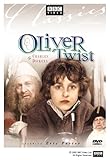
Oliver Twist, BBC: 1985 | $7.68 | Buy on Amazon |
| 4 |
![Oliver Twist (2005) [DVD]](https://m.media-amazon.com/images/I/31WKzTR+biL._SL160_.jpg)
|
Oliver Twist (2005) [DVD] | $16.81 | Buy on Amazon |
| 5 |

|
Oliver Twist (2007) | $14.00 | Buy on Amazon |
Cinema’s Ideal Dickens Adaptation
The story’s episodic structure, iconic characters, and sharply defined environments make it almost tailor-made for film, yet no two adaptations aim for the same emotional destination. Some prioritize realism and social anger, others lean into theatricality, music, or visual expressionism, often revealing more about their moment in film history than about Dickens alone. Ranking the best Oliver Twist movies, then, isn’t about crowning a single definitive version, but understanding how each adaptation interprets Dickens’ social conscience, where it succeeds or falters, and which audiences it ultimately serves best.
How We Ranked Them: Adaptation Fidelity, Cinematic Craft, Performances, and Cultural Impact
To rank Oliver Twist on film is to balance reverence for Dickens with respect for cinema as its own art form. Some adaptations strive for textual loyalty, others chase emotional truth, and a few radically reinterpret the material for new audiences. Our approach weighs not just what each version includes or omits, but how powerfully it translates Dickens’ moral outrage into moving images.
Quick wins for a faster PC:
Scan for outdated or missing drivers - takes under a minuteDriver Scan →Repair Windows errors before they cause bigger problemsFix Now →#1 Best Overall
- DVD
- Multiple Formats, Black & White, Dolby
- Spanish (Published), English (Subtitled), English (Original Language)
- 1
- 116
Adaptation Fidelity: Spirit Over Literalism
Fidelity here is not about page-count accuracy or reproducing every subplot. We prioritized how well each film captures Dickens’ central concerns: systemic cruelty, childhood vulnerability, and the uneasy coexistence of compassion and corruption. An adaptation that condenses or alters the novel can still rank highly if it preserves the story’s ethical force and emotional architecture.
Some versions soften Dickens’ harsher edges for broader appeal, while others confront his bleakness head-on. Neither approach is inherently superior, but departures that undermine the novel’s social critique or moral complexity were weighed accordingly. The strongest adaptations understand what must be preserved, even when the details change.
Cinematic Craft: Direction, Visual Language, and Tone
Cinema gives Oliver Twist a physical immediacy Dickens could only suggest, and craft matters enormously. Direction, production design, cinematography, and editing all shape how oppressive or seductive this world feels. Films that use visual storytelling to deepen character and theme, rather than merely illustrate plot, rise to the top.
We also considered tonal control, especially in adaptations that blend darkness with sentiment or musicality. Dickens himself walked a fine line between melodrama and social realism, and the best films understand when to restrain emotion and when to let it swell. Misjudged tone can flatten the story’s impact, no matter how impressive the sets or costumes.
Do these 3 things before closing this tab:
1Clear out junk files and repair common Windows errors2Scan for outdated or missing drivers - takes under a minute3Repair Windows errors before they cause bigger problemsPerformances: Defining Dickensian Characters for the Screen
Oliver Twist lives or dies on its characters, particularly figures as iconic as Fagin, Bill Sikes, and Oliver himself. Performances were judged on emotional credibility, interpretive depth, and how memorably they embody Dickens’ extremes of vice and virtue. A great Fagin can tilt an entire adaptation toward menace or melancholy, while a miscast Oliver can drain the story of its fragile hope.
Child performances received special consideration, given the difficulty of portraying innocence without sentimentality. The most effective portrayals allow Oliver to remain passive without becoming inert, anchoring the story emotionally even when he is not driving the action.
Cultural Impact: Longevity, Influence, and Audience Reach
Finally, we looked beyond the frame to each film’s cultural footprint. Some adaptations reshaped how audiences visualize Dickens’ world, influencing later films, stage productions, and popular imagination. Others found lasting life through television broadcasts, school curricula, or musical reinventions that introduced Oliver Twist to entirely new generations.
Impact does not always correlate with critical prestige. A technically flawed adaptation can still matter if it broadened the story’s reach or reframed its themes for its time. In ranking these films, we considered not just how well they work today, but how enduringly they have kept Dickens’ most vulnerable hero in the public eye.
Free tools Windows power users keep installed
One-click scans. No signup required.
The Definitive No. 1: The Oliver Twist Film That Best Captures Dickens’ Spirit
There have been many worthy attempts to bring Oliver Twist to the screen, but one adaptation towers above the rest in its fusion of cinematic craft, moral clarity, and Dickensian atmosphere. David Lean’s 1948 Oliver Twist is not merely the best film version of the novel; it is one of the great literary adaptations in British cinema history. More than any other, it understands that Dickens’ story is as much about environment and social cruelty as it is about plot.
Lean approaches the novel with reverence, but never with stiffness. His film strips away excess sentimentality and musical flourish, replacing them with shadow, texture, and a sense of lived-in despair that feels truer to Dickens’ anger and compassion. The result is an adaptation that feels literary in spirit without being beholden to the page.
David Lean’s Visual Dickens: Poverty as Atmosphere
What immediately sets the 1948 film apart is its visual storytelling. Lean and cinematographer Guy Green transform Victorian London into a moral landscape, where crooked alleyways, fog-choked streets, and oppressive interiors reflect the social machinery grinding Oliver down. The workhouse opening alone establishes a tone of institutional cruelty that many later adaptations soften or stylize.
This is not a picturesque Dickens. Lean emphasizes dirt, hunger, and claustrophobia, allowing the setting to shape character behavior rather than merely decorate it. In doing so, the film captures Dickens’ fury at social systems that punish the poor for existing, a theme that lies at the novel’s core.
A Definitive Fagin and a Controlled Emotional Register
Alec Guinness’ Fagin remains one of the most influential performances in the story’s screen history, though not without controversy. Setting aside modern concerns around caricature, Guinness’ interpretation is psychologically sharp, balancing grotesque humor with genuine fear and desperation. His Fagin is not romanticized; he is a survivor shaped by the same brutal world that produces Oliver.
Equally important is Lean’s restraint. The film avoids overplaying emotion, allowing moments of kindness or horror to land with greater force. When violence erupts, particularly in Bill Sikes’ storyline, it feels shocking rather than melodramatic, honoring Dickens’ ability to unsettle without indulgence.
Rank #2
Faithful Without Being Literal
Lean’s Oliver Twist is not a scene-by-scene transcription of the novel, but it is faithful where it matters most. The film preserves Dickens’ moral architecture: innocence endangered, cruelty normalized, and redemption offered sparingly. Oliver himself remains a passive figure, but the film understands that his function is symbolic, a fixed point against which society’s failures are measured.
Later adaptations would find success by reinventing tone through music or modern sensibilities, but Lean’s film remains unmatched in its seriousness of purpose. It treats Dickens not as comforting heritage, but as a social critic whose work still cuts uncomfortably close to the bone.
For viewers seeking the Oliver Twist that most fully embodies Dickens’ worldview, his anger, his empathy, and his unblinking eye for injustice, the 1948 film remains definitive. It is not the warmest adaptation, nor the most immediately accessible, but it is the one that best understands what Dickens was truly writing about, and why the story has endured.
The Strong Contenders: Visually and Performatively Exceptional Adaptations
If David Lean’s film stands as the definitive Dickensian statement, several other adaptations distinguish themselves through striking visuals, bold tonal choices, or performances that have shaped popular understanding of Oliver Twist. These films may not fully eclipse Lean’s severity or coherence, but each excels in specific ways that make them essential viewing for different kinds of audiences.
Oliver! (1968): Dickens as Pop Spectacle, Without Losing the Darkness Entirely
Carol Reed’s Oliver! is often the most familiar version for modern audiences, and for good reason. Lavish, energetic, and unapologetically theatrical, the film transforms Dickens’ grim world into a Broadway-scale musical while retaining surprising emotional bite beneath the spectacle. Its production design, from bustling London streets to the cavernous workhouse, remains one of the most visually iconic realizations of Dickens on film.
Ron Moody’s Fagin is the centerpiece, delivering a performance that is warm, manic, and deeply human, even as it softens the character’s menace. While the musical numbers inevitably dilute the novel’s cruelty, the film compensates with a strong sense of community among society’s outcasts. For viewers who want Dickens filtered through grand entertainment without completely abandoning the story’s moral stakes, Oliver! remains unmatched.
Roman Polanski’s Oliver Twist (2005): Elegance, Restraint, and Lived-In Realism
Roman Polanski’s adaptation takes a markedly different approach, favoring quiet observation over stylization. Visually meticulous and emotionally reserved, the film emphasizes texture, environment, and physical hardship, allowing the story to unfold with almost classical restraint. The result is an adaptation that feels tactile and grounded, closer to a historical drama than a heightened morality play.
Ben Kingsley’s Fagin is subtler than many predecessors, less grotesque and more weary, a man shaped by survival rather than villainy. While the film has been criticized for emotional coolness, its strength lies in its refusal to sentimentalize suffering. This is an Oliver Twist for viewers who value realism and visual authenticity, even if it sometimes keeps Dickens’ outrage at arm’s length.
Television Adaptations: Performance-Driven, Often Uneven, Occasionally Revelatory
Various television versions, particularly British productions from the late 20th century onward, have offered more expansive narrative space to Dickens’ sprawling cast. These adaptations often benefit from strong stage-trained actors and a willingness to linger on secondary characters like Nancy, whose tragic arc gains depth when allowed to breathe. The intimacy of television can amplify emotional detail in ways cinema sometimes cannot.
However, these versions rarely achieve the visual authority or tonal consistency of the best films. Budgetary constraints and conservative direction often limit their impact, making them better suited for viewers interested in character exploration rather than cinematic reinvention. At their best, they reaffirm the strength of Dickens’ writing; at their weakest, they feel dutiful rather than inspired.
Crashes, No Sound, or Screen Glitches?
Random freezes, missing sound and display glitches usually trace back to one bad driver. Find and replace yours safely.Free scan · under a minutePC Slower Than It Used to Be?
A free scan shows the junk files, broken settings and background clutter dragging Windows down - then fixes them in one click.Free scan · Windows 10 & 11Together, these adaptations demonstrate the flexibility of Oliver Twist as a cinematic property. Whether reimagined through song, realism, or extended dramatic form, the story continues to invite filmmakers to reinterpret its balance of cruelty, compassion, and survival, even when they fall short of capturing its full moral ferocity.
Interesting but Imperfect: Notable Versions That Fall Short of Greatness
Not every Oliver Twist adaptation earns a place among the definitive classics, yet several versions remain fascinating for what they attempt, reveal, or inadvertently expose about the eras that produced them. These films often contain one standout performance, stylistic gamble, or thematic angle that keeps them worth revisiting, even as their shortcomings prevent them from fully capturing Dickens’ moral urgency.
Oliver Twist (1922): Silent-Era Ambition, Emotional Distance
Frank Lloyd’s 1922 silent adaptation is historically significant, arriving at a time when literary prestige was used to legitimize cinema as an art form. Lavishly staged for its era, the film demonstrates remarkable visual ambition, particularly in its crowded street scenes and atmospheric interiors. Its Fagin, played by Lon Chaney, leans heavily into theatrical grotesquerie, reflecting silent cinema’s reliance on exaggerated physicality.
What ultimately limits the film is its emotional remove. Without dialogue, Dickens’ social critique becomes more generalized, and Oliver himself risks fading into abstraction rather than lived experience. For viewers interested in early cinema or Chaney’s transformative performances, it remains compelling, but it lacks the moral clarity and intimacy later versions would achieve.
Rank #3
Oliver Twist (1933): Studio Constraints and Narrative Compression
The 1933 adaptation, directed by William J. Cowen, suffers from the pressures of early sound-era filmmaking. At just over an hour, the film rushes through Dickens’ complex narrative, flattening character arcs in the process. Key relationships, particularly between Oliver and Nancy, feel underdeveloped, reducing the emotional stakes of the story’s darker turns.
That said, the film offers a curious snapshot of Hollywood grappling with Dickens during the pre-Code era. Its tone occasionally hints at social critique, but the studio polish and narrative haste blunt its impact. This version is best approached as a historical artifact rather than a fully realized interpretation.
Disney’s Oliver & Company (1988): A Clever Transposition with Limited Depth
Oliver & Company remains one of the most inventive reimaginings of Dickens’ novel, transplanting the story to contemporary New York and framing it as a streetwise animated musical. The film cleverly reassigns roles, with Fagin reimagined as a down-on-his-luck hustler and Dodger transformed into a charismatic canine voiced by Billy Joel. Its energy and pop sensibility make it accessible to younger audiences.
Yet in softening the story’s cruelty, the film sacrifices much of Dickens’ social anger. Poverty becomes a backdrop rather than a central moral concern, and Oliver’s suffering is significantly diluted. As a gateway adaptation for children, it succeeds; as an engagement with Dickens’ themes, it remains necessarily superficial.
The Tool Desk
Outbyte Driver Updater FREEScan for outdated or missing drivers - takes under a minuteDriver Scan →Outbyte PC Repair FREERepair Windows errors before they cause bigger problemsFix Now →International and Lesser-Known Adaptations: Ambition Without Authority
Various international versions, including European television films and low-budget features, have attempted to localize Oliver Twist or emphasize specific thematic elements such as class conflict or criminal psychology. While some offer intriguing cultural reinterpretations, most struggle with uneven production values or inconsistent performances. These limitations often undermine their thematic ambitions.
For dedicated Dickens enthusiasts, these adaptations can be intellectually stimulating, highlighting how the novel’s concerns translate across borders. For general viewers, however, they rarely provide a compelling alternative to the more established versions. Their value lies more in curiosity than in cinematic fulfillment.
Curiosities, Misfires, and Obscurities: The Lesser-Known Oliver Twists
Not every Oliver Twist adaptation earns a place in the canonical conversation, yet these lesser-known versions reveal just how elastic Dickens’ novel can be. Some are fascinating experiments shaped by their era’s cinematic limitations or commercial instincts; others are earnest miscalculations that struggle to reconcile tone, theme, and audience. Taken together, they form a shadow history of Oliver Twist on screen.
The Silent Era Olivers: Historical Importance Over Emotional Precision
Early silent adaptations, particularly the 1909 and 1922 versions, hold undeniable historical value as some of cinema’s first attempts to translate Dickens to the screen. Stripped of dialogue, these films rely heavily on exaggerated performance and intertitles, flattening the novel’s moral complexity into broad melodrama. Characters like Fagin and Bill Sikes become archetypes rather than psychologically textured figures.
What’s actually slowing this PC down?
Pick the symptom - the matching free tool is one click away.
For modern viewers, these films are more instructive than immersive. They demonstrate how early filmmakers grappled with Dickens’ episodic structure and social critique, often favoring plot efficiency over thematic depth. Their appeal today is largely confined to scholars, silent-film enthusiasts, and completists.
Television Musicals and Made-for-TV Experiments
Several television adaptations, particularly British productions from the 1970s and 1980s, attempted to split the difference between prestige drama and family-friendly entertainment. Some leaned into musical elements inspired by Oliver!, while others pursued a restrained BBC-style realism. The results were frequently uneven, with strong casts hampered by limited budgets and compressed runtimes.
These versions often handle Dickens’ language with care but struggle visually, lacking the atmospheric grit that gives Oliver Twist its emotional weight. They are most rewarding for viewers interested in performance-driven interpretations, especially those seeking fidelity to the text rather than cinematic spectacle.
Modern Reimaginings That Miss the Mark
Occasional modernized or stylistically experimental takes on Oliver Twist have emerged in recent decades, often attempting to foreground crime, urban decay, or psychological realism. While conceptually bold, many of these adaptations misunderstand the balance at the heart of Dickens’ novel. By overemphasizing darkness or stripping away sentiment, they lose the story’s moral clarity and emotional pull.
These misfires tend to appeal to niche audiences intrigued by radical reinterpretation. For most viewers, however, they underscore why Oliver Twist endures best when its social outrage is matched by compassion, and its brutality tempered by humanity.
Who These Versions Are Really For
The lesser-known Oliver Twists are not essential viewing for newcomers, but they offer context for how adaptable, and vulnerable, Dickens’ work can be. They illuminate the creative risks filmmakers take when grappling with a literary giant whose themes resist simplification. For curious cinephiles and Dickens devotees, these obscurities enrich the broader conversation, even when the films themselves fall short.
Rank #4
Fagin, Oliver, and the Villain Problem: How Character Interpretation Shapes Each Film
If Oliver Twist resists easy adaptation, much of the difficulty lies in its characters. Dickens wrote archetypes sharpened by social outrage, yet cinema demands psychological texture and visual immediacy. How filmmakers interpret Fagin, Oliver, and the story’s villains often determines whether an adaptation feels timeless, troubling, or quietly transformative.
Fagin and the Shadow of Stereotype
No character in Oliver Twist has caused more controversy than Fagin, whose depiction in the novel is inseparable from Victorian antisemitic caricature. Early film adaptations, particularly silent and pre-war versions, often reproduced these traits uncritically, emphasizing grotesque physicality and predatory cunning. For modern audiences, these portrayals can feel less like characterizations and more like historical artifacts, revealing as much about their era as about Dickens.
What’s actually slowing this PC down?
Pick the symptom - the matching free tool is one click away.
Later adaptations grapple more openly with the problem. David Lean’s 1948 Oliver Twist famously re-edited Fagin’s appearance after accusations of antisemitism, while the 1968 musical Oliver! recasts him as a theatrical rogue, softening menace into mischievous charm. These choices do not erase the issue, but they signal a shift from caricature toward performance, asking viewers to engage with Fagin as a symbol of moral corruption rather than an ethnic stereotype.
Oliver as Moral Constant or Cinematic Liability
Oliver himself presents a subtler challenge. On the page, he is intentionally passive, a vessel for suffering whose goodness exposes the cruelty around him. In film, however, such purity can read as inert, especially when placed alongside flamboyant villains and bustling criminal worlds.
The most successful adaptations accept Oliver’s simplicity and build energy around him rather than within him. Lean frames Oliver as a still center amid chaos, while Oliver! uses music and movement to keep the character emotionally accessible without forcing false complexity. Films that attempt to toughen or modernize Oliver often miss the point, mistaking innocence for weakness and flattening the novel’s moral architecture.
Bill Sikes and the Limits of Darkness
Bill Sikes is where many adaptations test their nerve. Dickens wrote him as unredeemable violence incarnate, yet cinema must decide how far to go in depicting his brutality. Lean’s Sikes is chilling precisely because he is not stylized, while some later versions either sensationalize his cruelty or pull back too far, blunting the story’s sense of real danger.
Quick wins for a faster PC:
Scan for outdated or missing drivers - takes under a minuteDriver Scan →Clear out junk files and repair common Windows errorsFree Scan →This balance matters because Sikes anchors the narrative’s moral stakes. When he feels like a credible threat, Oliver’s survival carries weight. When he becomes exaggerated or symbolic, the film risks turning social tragedy into melodrama.
Why Character Choices Define the Rankings
Ultimately, the best Oliver Twist adaptations are those that understand character as interpretation, not replication. They recognize that Dickens’ figures are moral instruments shaped by their time, and that translating them to the screen requires judgment as much as fidelity. Each era’s filmmakers reveal their values through these choices, whether by confronting uncomfortable legacies, leaning into theatricality, or preserving stark realism.
For viewers deciding which version to watch, these character decisions are often more revealing than production values or textual accuracy. They determine whether Oliver Twist feels like a living story about injustice and compassion, or a museum piece reflecting the blind spots of its age.
Independent reader supportYour contribution helps us test, update, and keep practical guides available for everyone.Which Oliver Twist Should You Watch? Recommendations by Viewer Taste
With so many adaptations spanning nearly a century of filmmaking, the best Oliver Twist for you depends less on “definitive” status and more on what kind of experience you want. Each major version reveals a different face of Dickens’ novel, shaped by its era’s aesthetics, anxieties, and cinematic tools. Think of these recommendations not as a hierarchy, but as a guide through shifting interpretations of the same moral story.
For First-Time Viewers and Literary Purists
David Lean’s 1948 Oliver Twist remains the clearest cinematic translation of Dickens’ world and priorities. Its emphasis on atmosphere, moral gravity, and social cruelty makes it an ideal starting point for viewers who want the novel’s themes intact, without modern smoothing or tonal dilution. Lean’s restraint allows the story’s injustices to speak for themselves, trusting the material rather than embellishing it.
This version best serves viewers who appreciate classic British cinema and are comfortable with its measured pacing. It is less concerned with entertainment flourishes than with moral weight, and that seriousness is precisely why it endures.
For Viewers Who Want Emotional Accessibility and Energy
Carol Reed’s Oliver! from 1968 is the most inviting and emotionally immediate adaptation. By embracing musical spectacle, it externalizes Dickens’ emotions through song and choreography, making the story’s stakes clear even to younger or casual viewers. The criminal underworld becomes theatrical rather than oppressive, but the film never loses sight of hunger, fear, or injustice.
This is the ideal choice for families, musical lovers, or anyone wary of austerity in classic adaptations. While it softens some of Dickens’ darker edges, it compensates with warmth, momentum, and an unusually compassionate sense of character.
Free tools Windows power users keep installed
One-click scans. No signup required.
Best Value
- This gripping tale of Charles Dickens'sic remains faithful to the spirit of the novel while delivering a modern, thrilling, tragic and occasionally comic edge. Oliver is born into poverty and misfortune - the son of an unmarried mother, who dies shortly after his birth. He is soon delivered to the workhouse, where the cruel Mr. Bumble oversees children tormented by starvation and suffering. When O
For Fans of Stylized Darkness and Modern Filmmaking
Roman Polanski’s 2005 adaptation offers a visually rich, deliberately grim interpretation that reflects contemporary sensibilities about realism and trauma. Its production design and attention to physical hardship give Victorian poverty a tactile presence, even when the emotional perspective remains distant. Polanski’s direction prioritizes survival over sentiment, framing Oliver less as a moral beacon and more as a witness to brutality.
This version works best for viewers drawn to somber historical dramas and modern cinematic polish. Those seeking emotional uplift may find it cold, but its commitment to material conditions makes it a compelling, if restrained, experience.
For Viewers Curious About Performance and Period Acting Styles
Earlier adaptations, including David Lean’s silent-era predecessors and lesser-known mid-century versions, are most rewarding for viewers interested in film history rather than narrative immersion. These films often lean heavily on theatrical performance and symbolic storytelling, offering insight into how Dickens was once interpreted for the screen.
They may feel distant or uneven by modern standards, but they illuminate how evolving acting styles and censorship shaped the novel’s cinematic life. For dedicated fans, they function as valuable context rather than essential viewing.
For Viewers Seeking the Darkest Villains and Moral Clarity
If your interest lies in the stark contrast between innocence and corruption, Lean’s Oliver Twist remains unmatched. Its portrayal of figures like Fagin and Bill Sikes defines the moral boundaries of the story with chilling certainty. Other adaptations may soften, stylize, or psychologically complicate these characters, but Lean understands their narrative purpose as embodiments of societal failure.
Viewers who want Dickens’ moral architecture clearly articulated, without ambiguity or revisionism, will find this approach the most satisfying.
Final Verdict: The Enduring Legacy of Oliver Twist in Film History
Few novels have proven as cinematically resilient as Oliver Twist, and the breadth of its screen adaptations reveals as much about filmmaking eras as it does about Dickens’ enduring themes. From studio-bound moral fables to gritty modern realism, each major adaptation reflects the values, anxieties, and stylistic priorities of its time. Together, they form a layered conversation across decades about poverty, innocence, and institutional cruelty.
Why No Single Adaptation Fully Replaces the Novel
Despite their strengths, no film has managed to fully capture the novel’s tonal range, which shifts between satire, horror, sentiment, and social critique. Lean’s 1948 version excels at moral clarity and atmosphere but streamlines Dickens’ narrative complexity. Reed’s musical reimagining trades social severity for emotional accessibility, while Polanski’s adaptation prioritizes physical realism over emotional warmth.
This fragmentation is not a failure but a testament to the novel’s elasticity. Oliver Twist resists definitive interpretation, inviting filmmakers to emphasize different truths within the same story.
The Definitive Versions, Depending on the Viewer
For most viewers seeking the most complete and influential cinematic statement, David Lean’s Oliver Twist remains the benchmark. Its visual language, performances, and thematic confidence continue to shape how the story is imagined on screen. Those drawn to character-driven spectacle and musical storytelling will find Oliver! to be the most emotionally immediate and culturally pervasive adaptation.
Viewers interested in historical realism and modern restraint may gravitate toward Polanski’s version, while cinephiles and scholars will find value in earlier adaptations as records of evolving cinematic language rather than fully immersive narratives.
Oliver Twist as a Mirror of Its Time
What ultimately distinguishes these films is how clearly they mirror the eras that produced them. Postwar Britain found moral certainty and shadowed menace in Lean’s adaptation. The optimistic energy of the late 1960s transformed Dickens into communal entertainment, while the early 21st century demanded psychological realism and historical grit.
In this way, Oliver Twist on film becomes a living archive, tracing shifts in how audiences understand poverty, childhood, and social responsibility.
The lasting power of Oliver Twist lies not in a single definitive adaptation, but in the cumulative weight of its interpretations. Each film adds another lens through which Dickens’ story can be understood, challenged, or rediscovered. For viewers today, the best adaptation is often less about fidelity than resonance, choosing the version that speaks most clearly to their sensibilities while reminding us why Oliver’s quiet plea still echoes through cinema history.




