Do these 3 things before closing this tab:
1Repair Windows errors before they cause bigger problems2Fix the driver behind crashes, sound loss and screen glitches3Clear out junk files and repair common Windows errorsThe moment the Badlands trailer hit, Predator fans knew this wasn’t business as usual. Within seconds, the footage made it clear that the franchise’s iconic hunter was undergoing a visual evolution, one that immediately set social media buzzing. This wasn’t just another Yautja stalking familiar terrain; it was a statement that Badlands intends to push the series into a new era while testing how much reinvention the fandom is willing to embrace.
The design reveal became the trailer’s most dissected element, with fans freezing frames and trading screenshots across X, Reddit, and TikTok. Some praised the Predator’s leaner silhouette and harsher, more feral detailing, calling it a welcome departure from the bulkier, almost ritualized look of recent entries. Others were more cautious, arguing that certain facial and armor changes drift too far from the classic 1987 design that still defines the creature in the cultural imagination.
What makes the reaction especially telling is how deeply tied the design is to the franchise’s legacy. Predator has always balanced mythic consistency with subtle reinvention, and Badlands appears to be testing that balance more aggressively than usual. Whether fans ultimately embrace or reject this new look, the immediate, passionate response shows that the Predator’s visual identity still matters, and that even small deviations can spark big conversations about what the franchise is, and what it should become next.
What’s Changed? Breaking Down the New Predator Design Details
At a glance, the Badlands Predator signals a shift away from the franchise’s more ceremonial, heavily armored hunters. The new design emphasizes speed and brutality over intimidation-by-mass, immediately noticeable in the creature’s slimmer frame and more angular posture. Fans were quick to note that this Predator looks less like a battlefield general and more like a survivalist adapted to hostile terrain.
Quick wins for a faster PC:
Clear out junk files and repair common Windows errorsFree Scan →Fix the driver behind crashes, sound loss and screen glitchesFind Drivers →Repair Windows errors before they cause bigger problemsFix Now →#1 Best Overall

- Package Dimensions: 6.807 cms (L) x 16.205 cms (W) x 27.127 cms (H)
- Product Type: Toy Figure
- Package Quantity: 1
- Country Of Origin: United States
Rather than feeling like a cosmetic update, the changes suggest a deliberate attempt to recontextualize what kind of hunter this Predator is meant to be. That intent is at the heart of both the praise and pushback flooding social media.
A Leaner, More Feral Silhouette
One of the most talked-about changes is the Predator’s overall build. Compared to the broad-chested, almost knight-like designs seen in Predators and The Predator, the Badlands version appears noticeably leaner, with longer limbs and a more predatory stance. Several fans on X described it as “meaner” and “animalistic,” likening it more to a stalking apex predator than a towering enforcer.
This physical shift has been read by some as a return to the creature’s roots, evoking the raw menace of the original 1987 film rather than the bulked-up interpretations of later sequels. Others, however, worry that slimming the Predator down risks making it feel less imposing, especially when stacked against modern action-horror expectations.
Facial Changes That Divide the Fandom
The face is where opinions split most sharply. The Badlands Predator features sharper mandibles, deeper-set eyes, and more pronounced ridging across the skull, giving it a harsher, almost skeletal appearance. For supporters, this adds a ferocity that aligns with the film’s harsher setting, making the creature feel less ritualized and more dangerous.
Critics argue that the face strays too far from the iconic look that has defined the Yautja for decades. On Reddit, comparisons to previous designs are everywhere, with some fans saying the new face feels closer to a creature redesign than an evolution, blurring the line between innovation and reinvention.
Armor and Gear Stripped Back
Equally noticeable is the Predator’s lighter armor configuration. Gone are the ornate chest plates and layered trophies seen in recent films, replaced with minimal protection that appears functional rather than symbolic. This has led to speculation that Badlands is presenting a younger, less established hunter, or perhaps one operating outside traditional Yautja hierarchy.
Many fans have embraced this change, arguing that it reinforces the idea of adaptability that defines the species. Others miss the cultural storytelling embedded in the armor, seeing its absence as a loss of visual world-building that once set Predator apart from other sci-fi monsters.
Why These Changes Hit a Nerve
The intensity of the reaction speaks to how closely the Predator’s design is tied to its identity. Every tweak invites comparison not just to past films, but to what fans believe the Predator represents as a sci-fi icon. Badlands isn’t just updating textures or proportions; it’s subtly reframing the hunter’s role within its own mythology.
Outdated Drivers Are Slowing You Down
One free scan finds every outdated or missing driver and matches the right update for your exact hardware.Free scan · exact hardware matchWindows Errors? Fix Them Before They Spread
Repair common Windows errors and clear accumulated junk for a smoother, more stable PC - no reinstall needed.Free scan · no reinstallThat’s why social media discourse has been so granular, from freeze-frame armor debates to side-by-side skull comparisons. For a franchise built on visual mythmaking, the Predator’s appearance isn’t just aesthetic, it’s a statement, and Badlands has made one that fans are still actively unpacking.
Immediate Fan Reactions: Praise, Shock, and Skepticism Across Social Media
The moment the Badlands trailer dropped, social media lit up with frame-by-frame analysis and gut reactions that ranged from enthusiastic approval to outright disbelief. On platforms like X, Reddit, and TikTok, the new Predator design quickly became the focal point, eclipsing even plot speculation. For a franchise where the creature is the star, that response felt inevitable.
Praise for a More Brutal, Grounded Predator
A vocal segment of fans praised the redesign for making the Predator feel dangerous again in a raw, physical sense. Many pointed to the leaner silhouette and harsher facial structure as a return to horror roots, comparing the Badlands Predator less to a ceremonial hunter and more to an apex predator scraping by in a hostile environment.
Some longtime viewers welcomed the shift as a necessary evolution. Comments frequently referenced Prey, noting that the franchise seems committed to contextual redesigns rather than a one-size-fits-all Yautja, and arguing that this Predator looks like it belongs in Badlands specifically, not on a display pedestal.
Shock, Memes, and Instant Comparisons
Not all reactions were measured. Shock posts and reaction memes spread rapidly, with fans sharing screenshots of the Predator’s face alongside captions expressing disbelief or confusion. Comparisons to earlier designs from Predator 2, AVP, and even expanded universe material flooded timelines, often highlighting how unfamiliar the new skull structure feels at first glance.
This initial jolt isn’t unusual for legacy franchises, but the volume stood out. The design challenged muscle memory built over decades, and for some fans, that visual dissonance was enough to overshadow the trailer’s tone or setting entirely.
Skepticism Rooted in Franchise Identity
Skeptical fans weren’t necessarily opposed to change, but questioned what this redesign signals about the Predator’s place in its own mythology. On Reddit threads and long-form posts, concerns centered on whether Badlands is drifting too far from the cultural specificity that once defined the Yautja, replacing ritual with rawness.
There’s also a lingering anxiety shaped by past franchise missteps. Some fans worry that aesthetic reinvention could precede tonal confusion, especially if the Predator becomes more monster than hunter. That tension, between reinvigoration and erosion of identity, is what keeps the conversation active and unresolved across social media feeds.
Free tools Windows power users keep installed
One-click scans. No signup required.
‘Too Human’ or Bold Evolution? The Biggest Criticisms Explained
If praise has centered on the Badlands Predator’s ferocity, the loudest criticism has focused on something more unsettling: how human it looks. Across X, Reddit, and TikTok, fans repeatedly zeroed in on the facial proportions, arguing that the flatter nose bridge, expressive eyes, and narrower jaw pull the design uncomfortably close to humanoid territory.
For a creature long defined by its alien otherness, that familiarity is a sticking point. Several posts described the face as feeling “emotionally readable,” which, for some viewers, undercuts the Predator’s mystique as a calculating, unknowable hunter.
The Face Debate: Expressive vs. Alien
Much of the pushback stems from how exposed the Predator appears without its mask. While unmasked moments are nothing new to the franchise, Badlands lingers on facial detail in a way earlier films often avoided, inviting scrutiny of skin texture, eye movement, and musculature.
Fans critical of the design argue that the increased realism works against the character. The Predator, in their view, is most effective when its emotions are inferred through posture and action, not facial nuance. Making it too readable risks reframing the creature from mythic threat to character study, a shift not everyone wants.
Rank #2

- Based on Dark Horse Comics' "Predator: 1718" and the iconic scene from the 1990 film Predator 2 when Elder Predator gives his flintlock pistol to Detective Harrigan
- Elder Predator stands a little over 8 inches tall and features over 30 points of articulation
- Accessories included: 3 different heads, alternate hands, trophy necklace, smart disc, shoulder cannon, sword that fits into back sheath and flintlock pistol that tucks through belt
- Collector friendly deluxe window box packaging with opening flap
Where Did the Ritual Go?
Another recurring criticism ties back to lore rather than anatomy. The stripped-down armor and rougher aesthetic have led some fans to question whether Badlands is sidelining the ritualistic culture that helped define the Yautja in earlier films and expanded universe material.
Social media threads often contrast this design with the ceremonial armor of Predator 2 or the ornate gear seen in comics and games. To these fans, the concern isn’t that the Predator looks primitive, but that it looks disconnected from a civilization known for honor codes, trophies, and tradition.
Prey Comparisons and Creative Whiplash
Inevitably, Badlands is being judged against Prey, whose “Feral Predator” design earned widespread acclaim. While that version was also more savage and animalistic, many fans argue it still felt distinctly alien, with exaggerated proportions and a silhouette that immediately read as Predator.
By comparison, Badlands is accused of pushing subtlety too far. Some reactions describe the new design as less iconic at a glance, worrying that it won’t silhouette as cleanly or register instantly in the way classic designs do, especially outside of controlled lighting and close-ups.
Fear of a Slippery Slope
Underlying many critiques is a broader anxiety about franchise direction. Longtime fans have seen redesigns precede tonal shifts before, and there’s caution around whether making the Predator more grounded and expressive could soften its impact as a horror figure.
That concern doesn’t come from hostility toward innovation, but from protectiveness. For critics, the Badlands Predator raises a fundamental question: how much can the creature change before it stops feeling like the apex hunter that made the franchise endure in the first place?
Why Some Fans Love It: Fresh Menace, Modern Effects, and World-Building Potential
While criticism has been loud, it’s far from universal. A significant portion of fans have responded positively to the Badlands Predator, framing the redesign not as dilution, but as recalibration. To them, the new look suggests a franchise willing to evolve its monster without abandoning its core threat.
A Predator That Feels Dangerous Again
One of the most common points of praise centers on menace. Fans supportive of the redesign argue that the Badlands Predator looks less like a ceremonial warrior and more like a relentless survivalist, a hunter shaped by harsher conditions. Social media reactions frequently describe it as “meaner,” “scarier,” and closer to a slasher antagonist than a sci-fi icon.
What’s actually slowing this PC down?
Pick the symptom - the matching free tool is one click away.
That tonal shift resonates with viewers who felt the Predator had become too familiar over time. By stripping back ornamentation and emphasizing raw physicality, Badlands reintroduces unpredictability, making the creature feel less like a known quantity and more like a genuine threat again.
Modern Effects, Practical Weight
Another area where fans are largely impressed is execution. The combination of modern prosthetics, detailed texturing, and restrained CGI has been praised for giving the Predator tangible presence, especially in motion. Many commenters point out that even brief shots in the trailer convey weight and physical effort, something earlier digital-heavy designs sometimes struggled with.
There’s also appreciation for how the creature interacts with its environment. Mud, blood, and lighting cling to the design in ways that sell realism, reinforcing the idea that this Predator exists within the world rather than hovering above it as spectacle.
A Different Clan, A Bigger Universe
For lore-focused fans, the redesign opens intriguing doors rather than closing them. Instead of viewing the stripped-down look as a loss of culture, some interpret it as evidence of a different clan, caste, or hunting philosophy within Yautja society. The absence of ritualized armor becomes a storytelling hook rather than a continuity error.
The Tool Desk
Outbyte Driver Updater FREEFix the driver behind crashes, sound loss and screen glitchesFind Drivers →Outbyte PC Repair FREERepair Windows errors before they cause bigger problemsFix Now →This perspective aligns with how expanded universe material has long portrayed Predator culture as diverse rather than monolithic. From that angle, Badlands isn’t rewriting the rules, but spotlighting a corner of the species we haven’t seen onscreen before.
Less Iconic, More Cinematic
Finally, there’s a segment of fans who simply like that the Predator feels more cinematic than collectible. They argue that instant recognizability isn’t the only metric that matters, especially in a horror-forward entry. If the design works best in shadow, motion, and tension-filled encounters, that may be exactly the point.
For these viewers, Badlands isn’t chasing nostalgia or clean silhouettes. It’s aiming for immersion, atmosphere, and sustained dread, even if that means the Predator reveals itself slowly rather than announcing its presence in a single iconic frame.
How the New Design Stacks Up Against Classic Predators From 1987 to ‘Prey’
Comparisons were inevitable the moment the Badlands trailer dropped. For a franchise where visual design is inseparable from identity, fans have spent decades cataloging every mask, mandible tweak, and armor plate. The new Predator isn’t just being judged on its own merits, but against nearly forty years of evolving interpretations.
The 1987 Original: Iconography vs. Intimidation
John McTiernan’s original Predator remains the gold standard for many fans, largely because of its perfect balance between alien strangeness and warrior regalia. The dreadlocks, bone-adorned mask, and ritual armor created an instantly iconic silhouette that doubled as worldbuilding. By comparison, Badlands’ Predator feels deliberately less ceremonial, trading visual flair for menace.
Some fans see this as a downgrade in personality, while others argue it restores the creature’s horror roots. Where the 1987 design invited fascination, the Badlands version seems engineered to unsettle first and explain itself later.
The Sequel Era: Maximalism and Muscle
Predator 2 and later entries like Predators leaned hard into variation through excess. Bulkier builds, exaggerated facial structures, and increasingly ornate armor helped differentiate individual hunters and clans. Social media reactions note that Badlands pulls sharply away from this approach, favoring restraint over spectacle.
That restraint has split opinion. Critics miss the visual storytelling baked into scars, trophies, and armor customization, while supporters argue the leaner look avoids the action-figure syndrome that crept into some later designs.
Recommended Free Tools
Rank #3
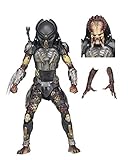
- Based on the upcoming 2018 film The Predator
- Ultimate Fugitive Predator stands over 8 inches tall and features over 30 points of articulation
- Accessories included: 2 interchangeable heads (masked and unmasked); interchangeable forearms; 4 interchangeable hands; 4 wrist blades; articulated shoulder cannon
- Deluxe window box packaging with opening flap
AVP and the Franchise’s Most Divisive Looks
The Alien vs. Predator films loom large in these discussions as cautionary examples. While they expanded Predator lore, their heavily stylized and sometimes over-designed creatures are frequently cited as moments where intimidation gave way to excess. Fans praising Badlands often frame it as a corrective, intentionally stepping back from the glossy, hyper-detailed aesthetic of that era.
In that context, the new design reads as a course correction rather than a reinvention. It strips away what some viewers felt had become visual noise, refocusing on physical presence and threat.
‘Prey’ and the New Benchmark
Perhaps the most telling comparisons are to Prey, which earned near-universal praise for its feral, utilitarian Predator design. That film proved audiences were open to bold reinterpretation as long as it felt purposeful and rooted in story. Badlands’ Predator is being measured against that success, and fan reactions suggest it’s both benefiting from and burdened by Prey’s goodwill.
Where Prey balanced innovation with clear lineage, Badlands pushes further toward austerity. Some fans applaud the risk, while others worry it edges too close to losing the visual DNA that makes a Predator unmistakable at a glance.
Quick wins for a faster PC:
Fix the driver behind crashes, sound loss and screen glitchesFind Drivers →Clear out junk files and repair common Windows errorsFree Scan →Ultimately, the conversation isn’t about whether the new design replaces the classics. It’s about whether it earns its place among them, not as an icon, but as a credible evolution within a franchise that’s constantly renegotiating what its monster should represent.
Independent reader supportYour contribution helps us test, update, and keep practical guides available for everyone.Why Predator Design Changes Matter to the Franchise’s Identity
Predator has always lived or died by instant recognition. Its silhouette, from the dreadlocks to the bio-mask, carries decades of cinematic memory, and fans on social media are keenly aware of how fragile that visual shorthand can be. When Badlands pares the creature down, reactions aren’t just about aesthetics, but about whether the franchise is protecting its most valuable iconography.
Silhouette Is Storytelling
One recurring point in fan discussions is how much storytelling happens before a Predator even moves. Earlier designs used armor, trophies, and scars as a visual résumé, signaling age, rank, and hunting philosophy at a glance. By contrast, Badlands’ design communicates less backstory upfront, which some fans praise as mysterious, while others see it as a loss of narrative texture.
That tension speaks to a core question: should Predator designs explain themselves, or intimidate through absence? Supporters of the new look argue that the stripped-down approach restores menace, forcing audiences to focus on physicality and threat rather than lore cues. Detractors counter that Predator has never been a blank slate monster, and that visual detail is part of its language.
Windows Errors? Fix Them Before They Spread
Repair common Windows errors and clear accumulated junk for a smoother, more stable PC - no reinstall needed.Free scan · no reinstallOutdated Drivers Are Slowing You Down
One free scan finds every outdated or missing driver and matches the right update for your exact hardware.Free scan · exact hardware matchFear Versus Fandom Expectations
Social media reactions often frame the design debate as fear versus familiarity. Fans defending Badlands point out that the original 1987 Predator was terrifying precisely because it felt alien and unreadable, not because it was ornate. In that sense, the new design is seen as an attempt to recapture unease rather than cater to long-time collectors.
At the same time, long-term fans worry that leaning too far into minimalism risks flattening the creature’s personality. Predator fandom has grown around clans, ranks, and visual distinctions, and removing those elements can feel like erasing earned complexity. The mixed response reflects how differently audiences engage with the monster, either as a horror figure or a mythos-rich icon.
Legacy, Longevity, and Visual Evolution
Design changes also signal how confident a franchise is in its legacy. Badlands’ Predator suggests a studio willing to challenge expectations rather than preserve them untouched, a move some fans interpret as healthy evolution. Others view it as a gamble, especially in a franchise where visual continuity has often been the glue holding uneven installments together.
What’s clear from online reactions is that Predator’s identity isn’t static. Each redesign becomes a referendum on what the creature should represent in its era, whether that’s raw terror, warrior culture, or cinematic nostalgia. Badlands steps into that ongoing negotiation, and the intensity of the response proves just how much the look of a Predator still matters.
Early Verdict: Is ‘Badlands’ Setting Up the Predator’s Next Defining Look?
At this early stage, the Badlands Predator appears less like a finalized reinvention and more like a deliberate provocation. The trailer offers just enough to signal a shift in philosophy, inviting debate rather than consensus. For a franchise that has often played it safe visually, that alone feels notable.
A Design Meant to Be Felt, Not Cataloged
One recurring theme in fan reactions is that this Predator isn’t designed to be paused, dissected, and merchandised. Its leaner silhouette and muted detailing seem optimized for movement, shadow, and sudden violence, a creature meant to be experienced in motion. Supporters argue that this approach aligns with Badlands’ harsher setting, where survival and physical dominance matter more than ceremonial identity.
Critics, however, note that what’s lost in that process is visual storytelling. Past Predator designs communicated age, rank, and worldview at a glance, even before the creature acted. For some fans, Badlands risks replacing that richness with a version that feels interchangeable, effective in scares but thinner in personality.
Why This Look Matters More Than It Seems
The intensity of the reaction suggests this isn’t just about aesthetics. Predator designs have long functioned as shorthand for what kind of story audiences are getting, whether it’s jungle horror, sci-fi warfare, or myth-building spectacle. By stripping the design back, Badlands signals a tonal reset, one that prioritizes threat over tradition.
Recommended Free Tools
That choice could influence future installments more than any single plot point. If this Predator resonates on screen, it may redefine what the franchise considers essential versus optional in its iconography. If it doesn’t, the backlash will likely reinforce the idea that Predator’s visual language is inseparable from its lore.
A Defining Look or a Transitional One?
For now, fan consensus remains elusive, but engagement is undeniably high. Social media discourse suggests viewers are open to the experiment, even if they’re not fully sold on the execution yet. Many reactions frame the design as something that could work brilliantly in context, especially if the film leans into atmosphere and tension rather than exposition.
The early verdict, then, is cautious curiosity. Badlands may not yet have delivered the Predator’s next universally beloved look, but it has succeeded in making that look matter again. In a franchise built on reinvention through combat and evolution, that might be the most Predator move of all.
Quick Recap
Product prices and availability are accurate as of the date/time indicated and are subject to change. Any price and availability information displayed on Amazon at the time of purchase will apply.




