Do these 3 things before closing this tab:
1Clear out junk files and repair common Windows errors2Scan for outdated or missing drivers - takes under a minute3Repair Windows errors before they cause bigger problemsFive Nights at Freddy’s began as a deceptively simple indie horror game that tapped into a primal fear: being trapped, alone, and watched. Created by Scott Cawthon and released in 2014, the game placed players in the role of a nighttime security guard at a rundown family pizza restaurant, where animatronic mascots roam after hours with sinister intent. Its minimal mechanics, eerie sound design, and implied backstory sparked a viral sensation, turning a small-scale PC release into one of the most influential horror franchises of the past decade.
From Click-and-Survive Gameplay to Expansive Lore
What truly set Five Nights at Freddy’s apart was its layered storytelling, delivered through environmental clues, cryptic minigames, and fan-driven theory crafting. As sequels piled on, the series developed a dense mythology involving missing children, haunted machines, and a decaying Americana aesthetic that felt both nostalgic and deeply unsettling. The fandom grew alongside the lore, making the franchise a natural candidate for adaptation despite years of false starts in Hollywood.
| # | Preview | Product | Price | |
|---|---|---|---|---|
| 1 |
|
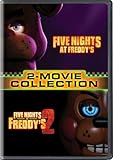
Five Nights at Freddy's 2-Movie Collection (DVD) | $17.99 | Buy on Amazon |
| 2 |

|
Five Nights at Freddy's (DVD) | $7.99 | Buy on Amazon |
| 3 |

|
Five Nights at Freddy's 2 (DVD) | $9.99 | Buy on Amazon |
| 4 |
![Five Nights at Freddy's [DVD]](https://m.media-amazon.com/images/I/51+EQG77NIL._SL160_.jpg)
|
Five Nights at Freddy's [DVD] | $13.37 | Buy on Amazon |
| 5 |

|
Fazbear Frights Four Book Box Set: An AFK Book Series (Five Nights At Freddy's) | $21.28 | Buy on Amazon |
The film version translates that unsettling premise into a more traditional narrative, following a troubled night watchman assigned to Freddy Fazbear’s Pizza as he uncovers the dark history lurking behind its cheerful façade. Produced by Blumhouse with Cawthon closely involved, the movie aims to honor the games’ slow-burn tension and iconic imagery while expanding the story for a broader audience. For longtime fans and newcomers alike, Five Nights at Freddy’s promises a horror experience rooted in indie ingenuity, now reimagined for the big screen.
Five Nights at Freddy’s Movie Plot: A Spoiler-Light Breakdown of the Premise
At its core, Five Nights at Freddy’s follows a familiar setup for fans of the games: a desperate man takes a job that should be easy, only to discover it is anything but. The film centers on Mike Schmidt, a struggling young man haunted by personal trauma, who accepts a night security position at the long-abandoned Freddy Fazbear’s Pizza. What begins as a quiet, monotonous shift quickly turns into a waking nightmare once the building’s animatronic mascots come to life after hours.
Quick wins for a faster PC:
Clear out junk files and repair common Windows errorsFree Scan →Fix the driver behind crashes, sound loss and screen glitchesFind Drivers →#1 Best Overall
- Runtime: 219 minutes
A Haunted Workplace With a Dark Past
Like the games, the movie treats Freddy Fazbear’s Pizza as more than just a creepy location. The restaurant is steeped in history, hinted at through unsettling visuals, fragmented memories, and ominous warnings rather than overt exposition. As Mike digs deeper into the building’s past, he begins to uncover connections between the animatronics and a series of long-buried tragedies that refuse to stay hidden.
The story leans heavily into the idea that the danger isn’t random. Every malfunction, every movement in the shadows, feels purposeful, as though the building itself is testing whether Mike deserves to survive the night. This approach mirrors the franchise’s signature storytelling style, where answers are implied and the audience is invited to piece together the truth.
Mike Schmidt’s Personal Stakes
Unlike the largely silent player characters of the games, the film gives its protagonist a defined emotional arc. Mike isn’t just fighting to stay alive; he’s motivated by guilt, loss, and a need for stability, especially when it comes to protecting his younger sister. That emotional grounding gives the horror weight, making each night feel like a personal trial rather than a simple endurance test.
Josh Hutcherson’s portrayal allows the movie to explore how grief and desperation can push someone to ignore obvious red flags. The longer Mike stays at Freddy’s, the harder it becomes to tell whether he’s trapped by circumstance or by his own refusal to walk away.
The Animatronics as Characters, Not Just Monsters
Freddy, Bonnie, Chica, and Foxy are unmistakably the stars of the show, and the film treats them with reverence. Rather than relying solely on jump scares, the animatronics are portrayed as eerie, almost tragic figures, their child-friendly designs clashing violently with their behavior after dark. The movie leans into practical effects to preserve the tactile, uncanny feel that made the games so effective.
True to the franchise’s lore, the animatronics are more than malfunctioning machines. Their presence hints at unfinished business and moral ambiguity, blurring the line between villain and victim without spelling everything out.
A Slow-Burn Horror Approach
Fans expecting nonstop chaos may be surprised by how patient the film is. The tension builds gradually, emphasizing long silences, flickering lights, and the creeping realization that Mike is never truly alone. When the scares hit, they are earned, often arriving after prolonged unease rather than sudden shock.
Importantly, the movie balances accessibility for newcomers with enough nods and thematic depth to reward longtime fans. It doesn’t require encyclopedic knowledge of the games, but those familiar with the lore will recognize how carefully the film weaves its story around the franchise’s most disturbing ideas.
Cast and Characters: Who’s Who at Freddy Fazbear’s Pizza
One of the film’s biggest strengths is how it anchors its supernatural horror in grounded, recognizable performances. The cast is a deliberate mix of familiar faces, genre veterans, and newcomers, all serving a story that depends as much on emotional credibility as it does on scares. Rather than overwhelming the audience with lore-heavy introductions, the movie lets its characters reveal themselves gradually, mirroring the slow-burn tension of the plot.
Josh Hutcherson as Mike Schmidt
At the center of the story is Josh Hutcherson’s Mike Schmidt, a troubled young man desperate for stability after years of personal loss. Hutcherson brings a weary vulnerability to the role, selling Mike as someone who knows the job is a bad idea but takes it anyway because he has no better options. His performance grounds the film, making Mike’s fear feel earned rather than reactionary.
Importantly, Mike isn’t portrayed as a traditional horror protagonist who stumbles blindly into danger. He’s observant, cautious, and emotionally guarded, which makes his gradual unraveling all the more unsettling as the nights progress.
Piper Rubio as Abby Schmidt
Piper Rubio plays Abby, Mike’s younger sister, whose presence gives the story its emotional stakes. Abby isn’t just a plot device or a reason for Mike to stay employed; she has a distinct personality and an unsettling connection to the world of Freddy Fazbear’s Pizza. Rubio delivers a performance that balances innocence with an eerie curiosity, adding an unexpected layer of tension whenever Abby is involved.
Her relationship with Mike reinforces the film’s recurring theme of responsibility, making every decision he faces feel heavier and more consequential.
Elizabeth Lail as Vanessa
Elizabeth Lail portrays Vanessa, a local police officer who becomes entangled in Mike’s experience at Freddy’s. On the surface, she appears helpful and level-headed, offering guidance and reassurance, but there’s an undercurrent of ambiguity to her character. Lail leans into that uncertainty, keeping viewers guessing about how much Vanessa truly knows.
For fans of the games, Vanessa’s presence carries added intrigue, though the film is careful not to overwhelm newcomers with exposition or overt references.
Rank #2
- Five Nights At Freddy'S
- Product Type: Physical Movie
- Brand: Universal
Matthew Lillard as William Afton
Matthew Lillard’s casting as William Afton is one of the movie’s most talked-about elements, and for good reason. Lillard brings a controlled, unsettling energy to the role, avoiding cartoonish villainy in favor of something colder and more restrained. His performance feels intentionally measured, suggesting a character whose influence extends far beyond what’s immediately visible.
Free tools Windows power users keep installed
One-click scans. No signup required.
Rather than dominating the screen, Afton’s presence lingers, reinforcing the idea that Freddy Fazbear’s Pizza is haunted by choices made long before Mike ever arrived.
Mary Stuart Masterson as Aunt Jane
Mary Stuart Masterson appears as Aunt Jane, a seemingly ordinary figure whose involvement highlights the film’s grounded, real-world pressures. Her character represents the bureaucratic and emotional obstacles Mike faces outside the pizzeria’s walls. While not directly tied to the supernatural horror, Aunt Jane’s role underscores how vulnerable Mike’s situation truly is.
The Animatronics: Freddy, Bonnie, Chica, and Foxy
Though not traditional “characters” in the human sense, the animatronics are brought to life through a combination of practical effects, puppetry, and subtle performance choices. Freddy Fazbear, Bonnie, Chica, and Foxy each have distinct physical behaviors and screen presence, making them feel less like interchangeable threats and more like individual entities.
The film treats them with surprising restraint, allowing their movements and silence to do most of the work. For longtime fans, their faithful designs and mannerisms will feel instantly familiar, while newcomers will quickly understand why these mascots have become horror icons.
The Creative Team Behind the Camera: Director, Writers, and Game Creator Involvement
Behind Five Nights at Freddy’s is a creative team acutely aware of the franchise’s unusually devoted fanbase and the pitfalls that have plagued video game adaptations in the past. Rather than chasing jump scares alone, the filmmakers focused on atmosphere, character, and lore, building a foundation that feels intentional rather than rushed. That approach starts at the top.
Emma Tammi’s Direction
The film is directed by Emma Tammi, whose previous work on The Wind showcased a talent for slow-burn tension and psychological unease. Tammi leans into mood over spectacle, allowing dread to build gradually through silence, framing, and performance. It’s a choice that aligns well with the original games, where fear often comes from anticipation rather than outright chaos.
Tammi has spoken about grounding the story emotionally, using Mike’s trauma and isolation as the audience’s entry point into the horror. Her direction resists the urge to turn Freddy Fazbear’s Pizza into a nonstop scare factory, instead treating it as a decaying space haunted by memory and neglect.
The Writing Team and Story Approach
The screenplay was written by Emma Tammi, franchise creator Scott Cawthon, and Seth Cuddeback, forming a trio that balances cinematic structure with deep knowledge of the source material. The script pulls inspiration from the games’ mythology without attempting to replicate their nonlinear storytelling beat for beat. This results in a narrative that feels accessible while still layered with implications longtime fans will recognize.
Outdated Drivers Are Slowing You Down
One free scan finds every outdated or missing driver and matches the right update for your exact hardware.Free scan · exact hardware matchWindows Errors? Fix Them Before They Spread
Repair common Windows errors and clear accumulated junk for a smoother, more stable PC - no reinstall needed.Free scan · no reinstallRather than over-explaining the lore, the writing allows unanswered questions to linger. That restraint mirrors the way the games encourage players to theorize, preserving the sense of mystery that has fueled the franchise for years.
Scott Cawthon’s Hands-On Involvement
Scott Cawthon’s direct involvement is one of the film’s most reassuring elements for fans. As the creator of Five Nights at Freddy’s, Cawthon played an active role in shaping the story, characters, and rules of the world, ensuring the adaptation didn’t drift too far from its roots. His presence helped the film avoid common adaptation missteps, particularly when it comes to tone and internal logic.
Cawthon has described the movie as a reimagining rather than a strict retelling, giving the filmmakers room to tell a cohesive story while honoring the spirit of the games. That balance is evident throughout, especially in how the animatronics are portrayed as more than simple monsters.
Blumhouse and the Practical Effects Philosophy
Produced by Jason Blum’s Blumhouse Productions, the film benefits from a studio known for smart, character-driven horror. Blumhouse’s influence is felt in the movie’s controlled budget, focused scope, and emphasis on practical scares over excessive CGI. This philosophy aligns perfectly with the franchise’s intimate, claustrophobic horror.
Recommended Free Tools
The animatronics themselves were created with significant input from Jim Henson’s Creature Shop, reinforcing the commitment to tangible, physical creatures. That decision gives Freddy, Bonnie, Chica, and Foxy a weight and presence that digital effects alone often struggle to achieve, making every encounter feel uncomfortably real.
How Faithful Is the Movie to the Games? Lore, Animatronics, and Easter Eggs
One of the biggest questions surrounding Five Nights at Freddy’s was whether the movie would truly feel like the games fans have dissected for nearly a decade. The short answer is yes, but not in a rigid, beat-for-beat way. The film understands that faithfulness isn’t about recreating jump scares exactly as players experienced them, but about capturing mood, mythology, and unease.
Rank #3
Rather than adapting a single entry in the series, the movie draws from the broader Five Nights at Freddy’s canon. It blends familiar concepts, locations, and character dynamics into a streamlined story that works for newcomers while quietly rewarding longtime fans.
Respecting the Lore Without Overloading It
The film treats the franchise’s famously dense lore with restraint. Core ideas like missing children, haunted animatronics, and a decaying family entertainment brand are firmly in place, but the story avoids drowning viewers in timelines or convoluted backstory. That choice mirrors the games themselves, which often imply far more than they explicitly explain.
What’s actually slowing this PC down?
Pick the symptom - the matching free tool is one click away.
Importantly, the movie preserves the moral ambiguity and lingering dread that define the series. Answers are offered sparingly, and some questions are intentionally left open-ended. For fans used to piecing together lore through minigames and environmental clues, that approach feels authentic.
Animatronics That Look and Move Like the Games
Visually, the animatronics are among the film’s most faithful elements. Freddy Fazbear, Bonnie, Chica, and Foxy closely match their in-game counterparts, right down to their proportions, textures, and unsettling blank stares. They feel like physical extensions of the characters players have watched from security cameras for years.
Their movement is equally important. The animatronics don’t behave like fast, acrobatic movie monsters. Instead, they move with a stiff, deliberate heaviness that recalls the games’ uncanny tension, where the fear comes from knowing something is closer than it should be.
Easter Eggs Fans Will Instantly Recognize
For those deeply familiar with the franchise, the movie is packed with subtle nods rather than flashy references. Background details, familiar names, and visual motifs quietly echo moments from the games without stopping the story to call attention to them. These Easter eggs are designed to be noticed, not explained.
The Tool Desk
Outbyte PC Repair FREERepair Windows errors before they cause bigger problemsFix Now →Outbyte Driver Updater FREEScan for outdated or missing drivers - takes under a minuteDriver Scan →Even certain sound cues and framing choices evoke the experience of watching security monitors late at night. None of these references are required to enjoy the movie, but for fans, they create the sense that the filmmakers truly understand the series’ DNA.
A Reimagining That Knows What to Preserve
Ultimately, the movie’s faithfulness lies in what it chooses to protect. It keeps the oppressive atmosphere, the tragic undercurrent beneath the horror, and the idea that the real terror isn’t just the animatronics, but what they represent. At the same time, it reshapes the story into something more character-driven and cinematic.
That balance allows Five Nights at Freddy’s to function as both an entry point and a love letter. It doesn’t replace the games or attempt to “solve” their mysteries. Instead, it stands alongside them, expanding the universe while respecting the legacy that made the franchise a phenomenon.
Horror Tone and Rating: How Scary Is Five Nights at Freddy’s?
One of the biggest questions surrounding the film has always been how far it would push its horror. Five Nights at Freddy’s is rated PG-13, a decision that signals restraint rather than a lack of ambition. Instead of leaning into extreme gore, the movie prioritizes atmosphere, dread, and psychological tension, staying closer to the spirit of the games than many fans initially expected.
Atmospheric Horror Over Gore
The film’s scares are built around anticipation. Long stretches of quiet, dimly lit hallways and security rooms allow unease to settle before anything overt happens. When the animatronics finally move, it’s rarely sudden chaos, but the slow realization that something is wrong and getting closer.
Violence is present, but it’s usually implied rather than explicit. The camera often pulls away at the crucial moment, letting sound design and reaction shots do the work. This approach keeps the film accessible to a younger audience while still maintaining a strong sense of menace.
How It Compares to the Games’ Fear Factor
Fans of the original games will recognize the familiar style of fear. The movie replicates the stress of limited control, the paranoia of watching monitors, and the dread of waiting for an inevitable mistake. It’s not about jump-scare overload, but about sustained tension that builds scene by scene.
That said, the film does include well-timed jump scares, particularly for casual viewers unfamiliar with the franchise. These moments are used sparingly and tend to emerge naturally from the setting rather than feeling like cheap tricks.
Do these 3 things before closing this tab:
1Clear out junk files and repair common Windows errors2Scan for outdated or missing drivers - takes under a minute3Repair Windows errors before they cause bigger problemsIs It Too Scary for Casual Viewers?
For seasoned horror fans, Five Nights at Freddy’s is more unsettling than terrifying. It won’t rival R-rated slashers or extreme horror films, but it offers a consistent, creepy tone that lingers. The emotional weight of the story, especially its themes of grief and guilt, adds an extra layer of discomfort beneath the surface scares.
Rank #4
- Five Nights at Freddy's
For newcomers and younger audiences, the film can be genuinely intense. The animatronics’ uncanny designs, combined with the oppressive nighttime setting, make even quiet scenes feel threatening. It’s a horror experience designed to unnerve rather than overwhelm, staying true to the franchise’s core appeal.
Release Date, Runtime, and Where to Watch
After years of development delays and fan speculation, Five Nights at Freddy’s finally made its long-awaited debut in late 2023. The release strategy was designed to mirror the franchise’s broad appeal, giving both theatrical audiences and at-home viewers a chance to experience the film at the same time.
Theatrical and Streaming Release
Five Nights at Freddy’s was released in theaters on October 27, 2023. In a move that generated significant conversation among horror fans and industry watchers, the film also premiered the same day on Peacock in the United States.
The Tool Desk
Outbyte PC Repair FREEClear out junk files and repair common Windows errorsFree Scan →Outbyte Driver Updater FREEFix the driver behind crashes, sound loss and screen glitchesFind Drivers →This day-and-date release helped the movie reach a massive audience immediately, especially younger fans who grew up with the games and were more likely to watch at home. International release dates varied slightly by region, but most territories received the film within the same week.
Runtime and Rating
The film runs approximately 109 minutes, giving it enough time to establish atmosphere, character backstory, and lore without overstaying its welcome. The pacing reflects its slow-burn horror approach, favoring mood and tension over constant action.
Five Nights at Freddy’s carries a PG-13 rating, aligning with the franchise’s long-standing balance between accessibility and fear. This makes it approachable for teens and younger viewers while still delivering unsettling imagery and themes that resonate with older fans.
Where to Watch Now
In the U.S., Five Nights at Freddy’s is available to stream on Peacock, where it debuted alongside its theatrical run. The film is also widely available for digital rental and purchase on platforms such as Amazon Prime Video, Apple TV, and Google TV.
For collectors and physical media fans, the movie was released on Blu-ray and DVD in December 2023, featuring bonus content that dives deeper into the production and animatronic designs. Availability may vary by region, but the film is now easy to find across both streaming and home video platforms.
Independent reader supportYour contribution helps us test, update, and keep practical guides available for everyone.Production History: Why This Adaptation Took So Long to Make
For fans who followed every rumor and false start, Five Nights at Freddy’s becoming a finished film felt almost mythical. The project spent nearly a decade in development, passing through multiple studios, creative teams, and script iterations before finally reaching the screen. That long road wasn’t due to neglect, but to a careful, often cautious effort to get the adaptation right.
From Indie Game Sensation to Hollywood Interest
Shortly after the first game exploded in popularity in 2014, Warner Bros. and New Line Cinema secured the film rights, with early plans announced in 2015. At the time, the studio envisioned a mainstream horror adaptation, but struggled to lock down a script that captured the game’s unique blend of mystery, atmosphere, and implied violence. Several high-profile creatives, including Gil Kenan, cycled through the project as ideas evolved.
Despite consistent updates assuring fans the film was still alive, progress remained slow. Scott Cawthon, the creator of Five Nights at Freddy’s, was deeply involved from the beginning and repeatedly emphasized that he would rather delay the movie than release something that felt inauthentic.
Creative Resets and Script Overhauls
One of the biggest reasons for the delay was the sheer number of script rewrites. Cawthon has publicly acknowledged discarding multiple completed scripts because they leaned too far into the wrong tone, misunderstood the lore, or overcomplicated the story. Each reset pushed the timeline further back, but also refined the eventual direction.
This process frustrated some fans, but it ultimately ensured the movie would reflect the spirit of the games. The focus shifted toward a more grounded, character-driven story that preserved the unsettling ambiguity fans associate with Freddy Fazbear’s Pizza.
Blumhouse Steps In
A major turning point came in 2017 when Blumhouse Productions acquired the project, with Universal Pictures handling distribution. Blumhouse’s reputation for cost-effective, creator-friendly horror made it a natural fit for Five Nights at Freddy’s. The studio was willing to let Cawthon maintain creative control while prioritizing atmosphere over spectacle.
Even then, the film wasn’t rushed. Development continued quietly for several more years as the creative team refined the story and planned how to bring the animatronics to life in a way that felt tangible and threatening.
Free tools Windows power users keep installed
One-click scans. No signup required.
Practical Effects, Pandemic Delays, and Final Momentum
Once director Emma Tammi was officially attached, the project finally gained momentum. A key decision was committing to practical animatronics rather than relying heavily on CGI, leading to a collaboration with Jim Henson’s Creature Shop. Designing, building, and testing these characters added significant time, but reinforced the film’s tactile, old-school horror feel.
Like many productions, Five Nights at Freddy’s was also impacted by COVID-era delays, pushing filming further into the early 2020s. Principal photography eventually wrapped in 2023, nearly ten years after the film was first announced, marking the end of one of horror cinema’s most prolonged development journeys.
What Fans and Newcomers Should Expect Before Watching
After nearly a decade of anticipation, Five Nights at Freddy’s arrives with the weight of enormous fan expectations and the challenge of welcoming audiences unfamiliar with the games. The finished film aims to strike that balance, delivering a story that stands on its own while quietly rewarding longtime players with familiar ideas, imagery, and unease. This is not a loud, effects-driven horror spectacle, but a deliberately paced descent into dread.
A Grounded Entry Point Into a Strange World
At its core, the film follows Mike Schmidt, a troubled young man who takes a night security job at the long-abandoned Freddy Fazbear’s Pizza. For newcomers, this setup works as a clean introduction, gradually revealing why the building feels wrong long before anything overtly terrifying happens. The story emphasizes mood, mystery, and character psychology rather than dumping lore upfront.
Fans of the games will recognize familiar elements, but the movie reframes them in a more narrative-driven way. You don’t need encyclopedic knowledge of animatronic timelines to follow what’s happening, but those who have spent years theorizing will notice subtle nods and thematic parallels.
Horror Built on Tension, Not Constant Jump Scares
Viewers expecting wall-to-wall jump scares may be surprised by the film’s restraint. The horror leans heavily on atmosphere, silence, and the discomfort of being watched, echoing the games’ slow-burn fear rather than modern blockbuster pacing. When scares do land, they tend to feel earned rather than mechanical.
The practical animatronics play a major role in this approach. Their physical presence gives the film an uncanny, almost nostalgic quality that recalls 1980s and 1990s creature features, making the threat feel tangible even when nothing is moving.
Performances and Characters Take Center Stage
Josh Hutcherson’s Mike grounds the story emotionally, portraying a protagonist shaped by guilt, trauma, and responsibility. His relationship with his younger sister Abby, played by Piper Rubio, adds an unexpectedly tender dimension that contrasts with the film’s darker moments. This emotional anchor helps elevate the movie beyond a simple survival scenario.
Matthew Lillard’s presence looms large as well, offering a performance that longtime horror fans will find especially intriguing. While details are best discovered on-screen, his role ties directly into the unsettling mythology that defines the franchise.
A Faithful Adaptation, Not a Literal One
One of the most important things to understand going in is that Five Nights at Freddy’s is an adaptation, not a shot-for-shot recreation of the games. The film rearranges certain ideas, timelines, and character motivations to function as a cohesive movie narrative. This may surprise purists, but it also allows the story to breathe in a cinematic format.
Scott Cawthon’s involvement ensures that the spirit of the franchise remains intact. The movie respects the core themes of lost innocence, hidden violence, and the uncanny nature of childhood spaces turned hostile, even when it takes creative liberties.
Release and Viewing Options
Five Nights at Freddy’s was released theatrically on October 27, 2023, with a simultaneous streaming debut on Peacock in the United States. This dual release made it accessible to both theatrical horror fans and viewers who preferred to experience the film at home, echoing Blumhouse’s recent distribution strategy.
Recommended Free Tools
Whether watched on the big screen or in a dark living room, the film is designed to be experienced with attention and patience. Subtle visual cues and background details reward viewers who stay engaged rather than treating it as background entertainment.
In the end, Five Nights at Freddy’s succeeds not by reinventing horror, but by honoring what made the games resonate in the first place. It invites newcomers into its eerie world without overwhelming them, while offering fans a long-awaited chance to see Freddy Fazbear’s Pizza brought unsettlingly to life. For a franchise built on anticipation, waiting, and watching the darkness, that feels exactly right.
Quick Recap
Product prices and availability are accurate as of the date/time indicated and are subject to change. Any price and availability information displayed on Amazon at the time of purchase will apply.