Recommended Free Tools
Few modern animated releases arrive with the kind of critical unanimity that greeted The Wild Robot, but DreamWorks’ latest did more than impress. It vaulted straight into the studio’s top tier, matching the highest review scores DreamWorks Animation has ever achieved and immediately joining a shortlist long dominated by legacy titles. For a studio now three decades deep, that kind of consensus is not just rare, it is historically significant.
Where the Numbers Land—and Why They Matter
On major aggregators, The Wild Robot sits in the high‑90s on Rotten Tomatoes with an equally elite average rating, effectively tying How to Train Your Dragon for DreamWorks’ best-reviewed film by critics. Its Metacritic score, hovering in the upper 80s, also places it at or near the top of the studio’s entire catalog, edging past recent standouts like Puss in Boots: The Last Wish and towering over crowd-pleasers such as Kung Fu Panda. This isn’t a case of inflated early reactions; the praise has proven durable across hundreds of reviews, reflecting sustained critical agreement rather than momentary hype.
What makes that achievement resonate is the company it keeps. DreamWorks’ critical peaks have historically been spread across eras and styles—from the technical ambition of How to Train Your Dragon to the stop-motion prestige of Wallace & Gromit: The Curse of the Were-Rabbit. The Wild Robot’s ability to match those benchmarks signals a creative high-water mark for the studio’s modern output, reaffirming DreamWorks as a major force in an animation landscape now defined by elevated storytelling expectations and fierce competition from every corner of the industry.
Breaking Down the Numbers: Rotten Tomatoes, Metacritic, and How the Tie Was Earned
At the heart of The Wild Robot’s historic standing is how decisively it conquered the major review aggregators that shape modern critical consensus. On Rotten Tomatoes, the film sits in the high‑90s among critics, paired with an unusually strong average rating that reflects enthusiasm rather than polite approval. That combination is what allows it to stand shoulder to shoulder with How to Train Your Dragon, long considered DreamWorks’ critical gold standard.
Windows Errors? Fix Them Before They Spread
Repair common Windows errors and clear accumulated junk for a smoother, more stable PC - no reinstall needed.Free scan · no reinstallOutdated Drivers Are Slowing You Down
One free scan finds every outdated or missing driver and matches the right update for your exact hardware.Free scan · exact hardware match#1 Best Overall

- Genre: Family; Animation
- Number of Discs: 1
- Rating: PG
- Director: Chris Sanders
- Number of Movies: 1
Rotten Tomatoes: Consensus and Depth of Praise
The key distinction is not just the percentage of positive reviews, but how glowing those reviews actually are. The Wild Robot’s approval score is matched by consistently high individual ratings, signaling critics weren’t merely recommending it—they were championing it. That mirrors the reception of How to Train Your Dragon, whose near‑perfect Tomatometer score has endured for over a decade.
In practical terms, this means The Wild Robot isn’t benefiting from a softer modern curve or niche goodwill. Its reviews place it firmly in the same critical bracket as DreamWorks’ most universally admired films, rather than alongside titles that earned high percentages with more muted enthusiasm.
Metacritic: Where Prestige Is Measured More Harshly
Metacritic’s weighted system is often less forgiving, making its scores a useful counterbalance to Rotten Tomatoes’ binary approach. Here, The Wild Robot’s upper‑80s placement is especially telling, positioning it at or near the very top of DreamWorks Animation’s entire slate. It stands above modern favorites like Puss in Boots: The Last Wish and rivals the studio’s most respected prestige entries.
Notably, some beloved DreamWorks hits fare significantly lower on Metacritic despite their popularity, underscoring how rare this level of cross‑platform acclaim actually is. The Wild Robot’s performance suggests broad agreement not just on quality, but on artistic merit.
Quick wins for a faster PC:
Repair Windows errors before they cause bigger problemsFix Now →Scan for outdated or missing drivers - takes under a minuteDriver Scan →How the Tie Was Earned, Not Given
The reason this moment is framed as a tie rather than a takeover comes down to how critical history is measured. How to Train Your Dragon still holds an edge in longevity and cultural impact, but on raw review metrics, The Wild Robot matches its critical standing in ways few DreamWorks films ever have. Depending on whether one prioritizes Tomatometer percentage, average rating, or Metacritic weighting, the two films effectively trade statistical advantages.
What matters most is that The Wild Robot clears every bar typically used to define a studio’s best-reviewed work. In doing so, it doesn’t merely echo past success—it proves that DreamWorks, even in a crowded and highly evolved animation landscape, can still produce films that unite critics across generations, tastes, and expectations.
What Critics Responded To: Emotion, Visual Poetry, and a Return to Handcrafted Storytelling
Beyond the numbers, the critical consensus around The Wild Robot centers on how profoundly it connects on an emotional level while embracing a distinctly tactile, storybook sensibility. Reviewers consistently describe the film as disarming rather than overstated, trusting quiet moments, visual nuance, and character-driven empathy instead of relentless spectacle. That restraint is frequently cited as a key reason the film feels timeless rather than trend-chasing. In an era of increasingly maximalist animation, critics saw this as a confident creative recalibration.
An Emotional Core That Feels Earned
Critics responded strongly to the film’s emotional clarity, particularly its refusal to undercut sincerity with irony. Roz’s journey is framed not as a gimmick about artificial intelligence, but as a deeply human exploration of care, responsibility, and belonging. Many reviews highlight how the film allows emotional beats to breathe, trusting silence and gesture over exposition-heavy dialogue. This approach places The Wild Robot closer to DreamWorks’ most emotionally grounded work, echoing the sincerity that defined How to Train Your Dragon at its best.
Visual Poetry Over Sensory Overload
The film’s visual style has been widely praised for its painterly textures and organic movement, standing apart from the hyper-polished digital sheen that dominates much of modern animation. Critics frequently reference the way environments feel illustrated rather than rendered, lending the film a storybook quality that reinforces its themes. Nature is not treated as a backdrop but as a living presence, with color, light, and composition doing as much storytelling as dialogue. This visual restraint is often cited as a reason the film feels emotionally cohesive rather than visually exhausting.
Rank #2

- Genre: Family
- Number of Discs: 2
- Rating: PG
- Director: Chris Sanders
- Number of Movies: 1
A Return to Handcrafted Storytelling Values
Perhaps most importantly, reviewers see The Wild Robot as a reaffirmation of classic animation principles filtered through modern technique. The film prioritizes character arcs, visual storytelling, and thematic clarity over franchise setup or tonal hedging. Several critics note that it feels authored rather than engineered, a distinction that carries significant weight in contemporary animation discourse. That sense of intentionality helps explain why the film resonates across critical platforms, positioning it not just as a standout release, but as a benchmark within DreamWorks’ evolving legacy.
The Company It Keeps: Comparing The Wild Robot to DreamWorks’ Other Top-Rated Films
Landing at the very top of DreamWorks’ critical rankings places The Wild Robot in rarefied territory. Depending on the metric, it sits alongside or directly beside the studio’s most revered titles on major aggregator sites, with scores in the mid-to-high 90s on Rotten Tomatoes and a Metacritic average firmly in “universal acclaim” territory. That level of consensus is not just impressive for a modern animated release, but exceptional within DreamWorks’ own uneven critical history.
Standing Shoulder to Shoulder With How to Train Your Dragon
The comparison critics return to most often is How to Train Your Dragon, long regarded as DreamWorks’ artistic high-water mark. Both films earned praise for emotional sincerity, lyrical pacing, and a willingness to let visuals carry meaning without constant dialogue. Where Dragon used flight and mythic scale to explore empathy and growth, The Wild Robot turns inward, using stillness and natural rhythms to examine care and responsibility. The critical throughline is restraint, a quality that has historically elevated DreamWorks at its best.
Free tools Windows power users keep installed
One-click scans. No signup required.
In Conversation With The Prince of Egypt and Puss in Boots: The Last Wish
The Wild Robot also finds itself grouped with The Prince of Egypt, the studio’s most openly ambitious early film, and Puss in Boots: The Last Wish, its most celebrated modern reinvention. Like Prince of Egypt, Roz’s story is treated with thematic seriousness, trusting audiences to engage with moral complexity rather than overt humor. Like The Last Wish, it demonstrates how DreamWorks can evolve stylistically without abandoning emotional clarity, proving the studio’s creative ceiling remains remarkably high when risk is embraced.
Why This Achievement Feels Different in Today’s Animation Landscape
What makes The Wild Robot’s critical standing especially notable is the context in which it arrives. Many of DreamWorks’ earlier classics emerged during periods of stylistic experimentation or franchise-building momentum, while recent years have been marked by tonal inconsistency and commercial recalibration. By earning reviews comparable to the studio’s most beloved films without leaning on legacy characters or sequel goodwill, The Wild Robot positions itself as a creative outlier. Critics are not rewarding nostalgia here, but authorship, intention, and confidence in the fundamentals of animated storytelling.
A New Benchmark Rather Than an Outlier
Being tied for DreamWorks’ best-reviewed film is not just a statistical footnote, but a reframing of what the studio is capable of right now. The Wild Robot’s placement among Dragon, Prince of Egypt, and The Last Wish suggests a throughline of excellence defined less by era and more by approach. When DreamWorks prioritizes emotional intelligence, visual cohesion, and thematic focus, the critical response follows. In that sense, The Wild Robot is not merely keeping good company, it is redefining it in real time.
Why This Moment Matters for DreamWorks Animation’s Modern Era
For DreamWorks Animation, The Wild Robot’s critical placement is not simply about matching past highs, but about what it signals for the studio’s present and future. Tying the highest review scores in the company’s history reframes the conversation around DreamWorks as a legacy brand capable of genuine artistic renewal. This is not a case of critics revisiting old favorites with softened nostalgia, but of a new release earning comparable acclaim on its own terms.
What’s actually slowing this PC down?
Pick the symptom - the matching free tool is one click away.
Validation Beyond Franchise Safety Nets
One of the most significant aspects of The Wild Robot’s reception is what it is not relying on. Unlike much of DreamWorks’ modern output, it is neither a sequel nor an extension of an established IP universe built over multiple films. Its critical standing, often matching or exceeding films like How to Train Your Dragon or Puss in Boots: The Last Wish in aggregate review scores, suggests that originality remains a viable path to peak reception.
That matters in an era where animation studios are often incentivized to prioritize brand familiarity over narrative risk. The Wild Robot demonstrates that critics and audiences still reward standalone storytelling when it is executed with clarity and purpose. For DreamWorks, this reinforces the idea that creative confidence can be just as commercially and critically valuable as recognizable characters.
Rank #3
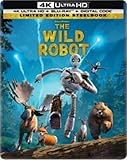
- Limited Edition Steelbook
- Digital Copy
- Bonus content
A Course Correction in the Post-Streaming Shift
DreamWorks’ modern era has been shaped by rapid changes in the animation marketplace, particularly the rise of streaming and shifting theatrical expectations. The studio’s output has, at times, reflected that uncertainty, alternating between visually ambitious projects and more utilitarian releases designed for volume. The Wild Robot’s reception cuts through that inconsistency by reaffirming what the studio looks like when it slows down and commits fully to a singular vision.
Critics have responded to that focus, consistently highlighting the film’s cohesion across story, animation style, and emotional pacing. In doing so, The Wild Robot aligns more closely with DreamWorks’ most respected works than with its more divisive recent titles. It becomes evidence that the studio’s highest standards have not disappeared, only awaited the right project.
Do these 3 things before closing this tab:
1Clear out junk files and repair common Windows errors2Fix the driver behind crashes, sound loss and screen glitches3Repair Windows errors before they cause bigger problemsReestablishing DreamWorks as a Critical Peer
Being tied for the best-reviewed DreamWorks film also carries broader implications within the animation industry. It positions the studio as an active competitor in a landscape often dominated by the critical reputations of Pixar and select international animation houses. The Wild Robot’s standing shows that DreamWorks can still produce films that enter the critical canon, not as genre entertainment alone, but as meaningful cinematic works.
In that sense, this moment is less about chasing past glory and more about reclaiming relevance. The Wild Robot does not feel like a throwback, but a recalibration, reminding audiences and critics alike that DreamWorks’ identity has always been at its strongest when ambition, restraint, and emotional sincerity align.
A Studio Identity Reaffirmed: Themes, Craft, and the Evolution of DreamWorks’ Voice
If The Wild Robot feels like a watershed moment for DreamWorks, it is because the film reconnects the studio to a creative identity that has always existed beneath its genre flexibility. At its best, DreamWorks animation has balanced emotional sincerity with visual bravado, favoring character-driven storytelling over formula. The Wild Robot crystallizes that balance in a way critics have clearly responded to, elevating it into rare company within the studio’s catalog.
Emotion Without Irony
One of the most consistent points of critical praise has been the film’s emotional directness. Unlike many modern animated features that rely on self-awareness or comedic deflection, The Wild Robot allows its sentiment to breathe without apology. That sincerity recalls early DreamWorks triumphs like How to Train Your Dragon, where emotional stakes were treated as essential rather than ornamental.
This tonal clarity has proven crucial to its review scores, with critics highlighting how the film trusts its audience to engage with vulnerability and wonder. In an era where animation often chases momentum, The Wild Robot slows down, and that patience has been rewarded.
Craft as Narrative Language
Visually, the film represents one of DreamWorks’ most unified aesthetic achievements. The animation style does not simply decorate the story but actively reinforces its themes of isolation, adaptation, and connection with nature. Reviewers have repeatedly noted how the film’s painterly textures and environmental design feel purposeful rather than showy.
That cohesion between craft and narrative places The Wild Robot alongside the studio’s most critically admired work, helping explain why it stands shoulder to shoulder with DreamWorks’ highest-reviewed titles. It is not innovation for innovation’s sake, but refinement in service of storytelling.
Rank #4
![The Wild Robot [Blu-ray]](https://m.media-amazon.com/images/I/51cbJ0CcGKL._SL160_.jpg)
- The Wild Robot
A Maturing Creative Voice
What ultimately distinguishes The Wild Robot within DreamWorks’ legacy is how confidently it reflects a matured studio voice. The humor is restrained, the pacing deliberate, and the thematic ambitions broader than simple family entertainment. Critics have responded to that restraint as a sign of creative assurance rather than limitation.
The Tool Desk
Outbyte Driver Updater FREEScan for outdated or missing drivers - takes under a minuteDriver Scan →Outbyte PC Repair FREEClear out junk files and repair common Windows errorsFree Scan →In tying for DreamWorks’ best-reviewed film ever, The Wild Robot signals that the studio’s evolution has not diluted its identity but clarified it. This is DreamWorks operating at a level where its artistic instincts and audience trust are once again in sync.
Independent reader supportYour contribution helps us test, update, and keep practical guides available for everyone.Audience vs. Critics: Is The Wild Robot Also Becoming a Fan Favorite?
Critical acclaim can elevate a film’s profile, but long-term legacy is often decided by audiences. In the case of The Wild Robot, early viewer response suggests that its critical success is not occurring in a vacuum. The same qualities critics have championed—emotional sincerity, visual cohesion, and thematic clarity—are resonating strongly with general audiences.
Rather than feeling like an awards-season outlier or a critics-only darling, the film appears to be finding broad emotional buy-in. That alignment is a crucial factor in understanding why its reception feels unusually durable for a modern animated release.
Audience Scores and Word-of-Mouth Momentum
Across major aggregation platforms, audience ratings have closely mirrored the film’s critical scores, an increasingly rare outcome in the current animation landscape. Viewer feedback has emphasized how emotionally affecting the story is, often citing its quieter moments as the most memorable rather than its spectacle. That response suggests audiences are embracing the film on its own terms rather than expecting it to conform to louder franchise-driven formulas.
Early word-of-mouth has also highlighted the film’s cross-generational appeal. Parents and adult viewers have praised its reflective tone, while younger audiences respond to its clear emotional throughline and immersive world-building. This balance has helped the film avoid the common split where animation pleases one demographic at the expense of another.
CinemaScore, Repeat Viewings, and Emotional Stickiness
One of the strongest indicators of audience approval has been the film’s reception in exit polling and social sentiment. Viewers consistently describe The Wild Robot as moving rather than merely entertaining, a distinction that often correlates with repeat viewings and long-term affection. Films that inspire conversation after the credits tend to age better than those built purely on momentum.
That emotional “stickiness” places The Wild Robot in the same category as DreamWorks favorites like How to Train Your Dragon, which similarly grew into audience touchstones through sustained affection rather than opening-week hype. The comparison is especially notable given how fragmented modern viewing habits have become.
Bridging Prestige Animation and Mainstream Appeal
What makes The Wild Robot’s audience response particularly significant is how it bridges the gap between prestige animation and mainstream accessibility. Its painterly aesthetic and contemplative pacing could have limited its reach, yet audiences appear willing to meet the film where it is. That trust reflects both effective storytelling and a growing appetite for animated films that do not over-explain their emotions.
Best Value
![The Wild Robot by DREAMWORKS - Widescreen Collector's Edition -[Blu-ray]](https://m.media-amazon.com/images/I/41jx1LcPoGL._SL160_.jpg)
- Region A Blu-ray
- 1080pHD
- Collector's Edition
In tying for DreamWorks’ best-reviewed film ever, The Wild Robot is not just benefiting from critical consensus but from genuine viewer connection. Its reception suggests that audiences are ready to embrace animation that prioritizes emotional honesty and craft over noise, reinforcing the idea that DreamWorks’ highest artistic achievements can also be its most beloved.
Legacy Potential: Where The Wild Robot May Ultimately Sit in Animation History
When a film ties for the best-reviewed title in a studio’s history, the immediate question becomes whether that acclaim will endure. Early indicators suggest The Wild Robot has more in common with animation landmarks than with fleeting critical darlings. Its reception feels less like a momentary alignment of reviews and more like the beginning of a long-term reevaluation of what DreamWorks can represent at its artistic peak.
A New Benchmark Within DreamWorks’ Canon
DreamWorks’ legacy has often been defined by franchises and tonal versatility, from Shrek’s genre-defining irreverence to How to Train Your Dragon’s sweeping emotional arcs. The Wild Robot stands apart by achieving near-universal praise without leaning on sequel potential or comedic subversion. That places it in rare company, suggesting a film that may be remembered less as a brand entry and more as a singular achievement.
In critical terms, its review scores align it with the studio’s most revered works, but the nature of the praise is telling. Rather than celebrating spectacle or humor alone, critics consistently highlight restraint, emotional clarity, and visual storytelling. Those are the qualities most often associated with films that grow in stature over time.
Positioning Alongside Animation’s Modern Classics
Animation history tends to favor films that redefine expectations rather than simply meet them. The Wild Robot’s contemplative tone and painterly design place it closer to modern classics like Wall-E or The Iron Giant than to louder, joke-driven counterparts. Its willingness to trust silence and atmosphere feels increasingly rare in a landscape shaped by algorithm-friendly pacing.
This is also where its tie for DreamWorks’ best-reviewed film carries added weight. The consensus is not driven by novelty but by recognition of craft, signaling a film that critics see as durable rather than disposable. That durability is often the foundation of long-term legacy.
Influence Beyond Awards and Rankings
Legacy is ultimately shaped by influence as much as by accolades. If The Wild Robot encourages DreamWorks and other major studios to invest in quieter, emotionally literate animated storytelling, its impact could extend far beyond its own box office or awards run. The film arrives at a moment when audiences appear increasingly receptive to animation that treats emotion with patience rather than urgency.
For DreamWorks, this may mark a subtle but meaningful inflection point. Tying for the studio’s best-reviewed film ever reframes its creative ceiling, reminding both audiences and industry observers that its most resonant work often comes from sincerity rather than scale.
Quick wins for a faster PC:
Fix the driver behind crashes, sound loss and screen glitchesFind Drivers →Repair Windows errors before they cause bigger problemsFix Now →Scan for outdated or missing drivers - takes under a minuteDriver Scan →In the years ahead, The Wild Robot is likely to be cited not just as a critical high point, but as a film that expanded the perceived boundaries of mainstream animation. If legacy is measured by how a movie continues to be discussed, revisited, and quietly influential, its place in animation history already feels remarkably secure.
Quick Recap
Product prices and availability are accurate as of the date/time indicated and are subject to change. Any price and availability information displayed on Amazon at the time of purchase will apply.