Long before movie marketing turned their pairing into a pop-culture event, Deadpool and Wolverine were already circling each other in Marvel Comics like two bad ideas destined to collide. Their relationship was never built on friendship or team loyalty, but on shared trauma, overlapping experiments, and a mutual inability to stay dead. From the start, Marvel treated their dynamic as combustible by design.
What makes their comic history so essential is how it establishes the emotional grammar the films would later borrow from. Wolverine represents the stoic survivor of institutional cruelty, while Deadpool is the same damage refracted through satire and instability. When they meet, it’s rarely coincidence and almost never comfortable.
| # | Preview | Product | Price | |
|---|---|---|---|---|
| 1 |

|
Deadpool & Wolverine: WWIII | $8.99 | Buy on Amazon |
| 2 |

|
Deadpool Vs. Wolverine | $20.59 | Buy on Amazon |
| 3 |
|
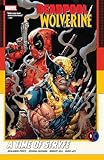
Deadpool/Wolverine: A Time Of Stryfe | $22.50 | Buy on Amazon |
| 4 |

|
Wolverines & Deadpools: Claws & Mercs | $12.80 | Buy on Amazon |
| 5 |

|
Marvel Studios' Deadpool & Wolverine: Exposed - Photos From The Set | $50.00 | Buy on Amazon |
This section unpacks how their rivalry evolved into something resembling respect, tracking the key comic arcs that shaped their dynamic and quietly laid the groundwork for today’s multiversal crossover logic.
Weapon X, Weapon Plus, and Parallel Trauma
Wolverine and Deadpool are bound together by Marvel’s long-running obsession with secret programs and broken soldiers. Logan’s Weapon X past and Wade Wilson’s origin through the Weapon Plus continuum frame them as products of the same cruel system, even when continuity gets deliberately messy. Different experiments, different outcomes, same loss of agency.
#1 Best Overall
Comics often lean into this parallel to create tension rather than sympathy. Wolverine sees Deadpool as a reckless mockery of everything he endured, while Deadpool recognizes Logan as the “successful” version of a life that went horribly wrong. That imbalance fuels their earliest confrontations.
Early Clashes and One-Sided Contempt
In initial encounters, Wolverine is usually the aggressor or the exasperated adult in the room. Deadpool needles him relentlessly, breaking the fourth wall while Logan tries, and often fails, to shut him up permanently. Their fights are brutal, fast, and deeply personal, with healing factors turning violence into conversation.
What’s notable is that Deadpool often admires Wolverine long before that respect is returned. Logan’s moral code, however frayed, becomes a point of fixation for Wade, even as he pretends everything is a joke. That asymmetry defines their early dynamic.
Reluctant Allies and Earned Mutual Respect
Over time, Marvel softened the hostility without erasing it. Team-ups, forced alliances, and shared enemies push them into functional cooperation, especially in stories where survival outweighs personal disdain. The Deadpool vs. Wolverine miniseries famously reframed their relationship across different eras, emphasizing inevitability over hatred.
By this stage, Wolverine doesn’t like Deadpool, but he understands him. Deadpool, in turn, stops chasing approval and starts earning it in small, violent increments. That uneasy equilibrium becomes the template later adaptations would draw from, blending rivalry, respect, and the sense that these two were always going to end up in each other’s orbit.
Early On-Screen Tension: Wolverine’s Presence in the Deadpool Origin Era (X-Men Films Context)
Before Deadpool ever broke the fourth wall on his own terms, his cinematic relationship with Wolverine was defined by absence, distortion, and frustration. Their earliest shared screen history comes not from a proper crossover, but from X-Men Origins: Wolverine, a film that unintentionally set the emotional baseline for everything that followed. Even without sustained interaction, Logan’s presence looms large over Deadpool’s film identity from the start.
X-Men Origins: Wolverine and the Birth of Cinematic Hostility
X-Men Origins: Wolverine introduced Wade Wilson as a fast-talking mercenary who initially feels comic-adjacent, if tonally out of step with the film around him. That version of Wade is positioned as a peer to Logan, fighting alongside him and even earning his respect early on. Then the film infamously strips Wade of his mouth, autonomy, and personality, turning him into a Weapon X experiment gone wrong.
From a continuity standpoint, this is the moment where tension is born, even if the film never treats it that way. Logan doesn’t just defeat this version of Deadpool; he effectively puts down a cautionary tale of what Weapon X can do when it goes too far. Retroactively, the Deadpool films frame this as a personal offense, with Wade repeatedly calling out the creative decision as both in-universe trauma and meta betrayal.
Deadpool’s Films: Logan as Absence, Idol, and Punchline
When Deadpool (2016) arrives, Wolverine is nowhere to be seen, yet he’s referenced constantly. Wade decorates his apartment with a Hugh Jackman cutout, drops Logan’s name like a shared inside joke, and positions Wolverine as the gold standard of mutant celebrity. It’s admiration wrapped in resentment, filtered through humor.
This one-sided fixation mirrors the early comic dynamic. Deadpool wants acknowledgment from Wolverine, while Wolverine, within the logic of these films, either doesn’t know him or is deliberately staying out of his orbit. That imbalance becomes part of the joke, but it also reinforces the idea that Logan represents legitimacy in a franchise world where Wade still feels like an outsider.
Timeline Confusion as Emotional Subtext
The X-Men film timeline has always been messy, and Deadpool weaponizes that confusion. Logan’s multiple deaths, resurrections, and recast eras become fodder for jokes, but they also underline something real: Wade exists in the cracks of Wolverine’s story. He’s a byproduct of the same universe, yet never fully integrated into its emotional canon.
This separation heightens the tension. Wolverine gets the operatic tragedies, the elegiac ending in Logan, and the mythic weight of a franchise centerpiece. Deadpool gets commentary, commentary on the commentary, and the lingering sense that he was created in Wolverine’s shadow.
The Tool Desk
Outbyte Driver Updater FREEScan for outdated or missing drivers - takes under a minuteDriver Scan →Outbyte PC Repair FREEClear out junk files and repair common Windows errorsFree Scan →Setting the Stage for an Inevitable Collision
By the time Deadpool 2 expands Wade’s world, Logan’s absence feels intentional rather than circumstantial. The films understand that their eventual meeting carries decades of baggage, both fictional and industrial. The early on-screen tension isn’t built through fights or dialogue, but through what’s withheld.
That restraint mirrors the comics’ long game. Wolverine and Deadpool don’t start as equals; they start as parallel experiments with wildly different outcomes and reputations. The X-Men film era uses missteps, meta-humor, and timeline chaos to recreate that imbalance, ensuring that when they finally share the screen again, it won’t feel accidental.
Deadpool (2016): Meta Obsession, Off-Screen History, and the Birth of a One-Sided Rivalry
Deadpool doesn’t need Wolverine to appear on screen to establish their relationship. In fact, the absence is the point. From the very beginning, the 2016 film treats Logan less like a character and more like a cultural constant, someone Wade measures himself against whether Wolverine knows it or not.
Rank #2
This is where the rivalry is born, not through confrontation, but through fixation. Deadpool frames Wolverine as the benchmark for mutant stardom and narrative importance, turning Logan into both an idol and an obstacle in Wade’s own origin story.
Recommended Free Tools
Wolverine as an Absent Presence
Throughout Deadpool, Wolverine exists as a running reference rather than a participant. Wade name-drops him casually, decorates his space with Wolverine imagery, and treats Hugh Jackman’s Logan as shorthand for what a “real” X-Men movie looks like. The joke works because the audience already understands Wolverine’s outsized role in the Fox universe.
That absence becomes part of the humor and the tension. Wolverine doesn’t respond, doesn’t acknowledge Wade, and doesn’t validate his existence within the same narrative space. Deadpool is shouting into the void of franchise history, and the silence fuels his resentment as much as his admiration.
Shared Origins, Unequal Legacies
Beneath the jokes, Deadpool quietly establishes a deeper connection rooted in Weapon X. Wade’s torture at Ajax’s hands is framed as a distorted echo of the experiments that created Wolverine, positioning them as products of the same brutal system. The difference is that Logan’s suffering has always been treated with tragic gravitas, while Wade’s pain is filtered through comedy and self-awareness.
This contrast mirrors their comic book origins, where Deadpool was initially conceived as a warped reflection of Wolverine rather than a peer. The film leans into that imbalance. Logan is mythologized; Wade is commodified, aware that he exists on the fringe of a story that was never built around him.
Do these 3 things before closing this tab:
1Scan for outdated or missing drivers - takes under a minute2Clear out junk files and repair common Windows errors3Fix the driver behind crashes, sound loss and screen glitchesMeta Humor as Emotional Armor
Deadpool’s relentless commentary isn’t just fourth-wall-breaking for its own sake. It’s a defense mechanism, allowing Wade to process his place in a franchise dominated by Wolverine’s legacy. By joking about Hugh Jackman’s contract longevity and the X-Men’s rotating cast, Wade asserts control over a narrative where he otherwise lacks authority.
That self-awareness becomes the foundation of their rivalry. Deadpool knows he’s late to the party, knows Wolverine defined the genre before him, and knows that recognition may never come. Instead of fighting Logan, he mocks the system that elevated one mutant into a legend while leaving another to beg for acknowledgment from the sidelines.
Deadpool 2 (2018): Mutual Respect Through Absence, Trauma, and Shared Anti-Hero DNA
If the first Deadpool film fixated on Wolverine as an unreachable benchmark, Deadpool 2 reframes that obsession into something quieter and more mature. Logan is still nowhere to be found, but the absence no longer feels like rejection. Instead, it becomes a shared understanding that some legends operate on a different narrative plane.
This sequel is less about demanding Wolverine’s attention and more about stepping into a similar emotional territory. Wade stops asking to be validated by Logan’s shadow and starts grappling with the kind of pain that defines him.
Quick wins for a faster PC:
Repair Windows errors before they cause bigger problemsFix Now →Fix the driver behind crashes, sound loss and screen glitchesFind Drivers →Clear out junk files and repair common Windows errorsFree Scan →Grief as a Bridge Between Anti-Heroes
Deadpool 2 opens by stripping Wade of his emotional safety net, grounding the film in loss and survivor’s guilt. This is familiar territory for Wolverine fans, echoing Logan’s endless cycle of attachment and tragedy across the Fox films. For the first time, Wade isn’t parodying that trauma; he’s living inside it.
The tonal shift matters. Wade’s jokes still fly, but they’re heavier now, weaponized against despair rather than insecurity. In embracing grief, Deadpool edges closer to Wolverine’s emotional wavelength, even if he refuses to abandon humor as a coping mechanism.
Cable, Weapon X, and Reflected Pasts
Josh Brolin’s Cable becomes an indirect stand-in for Wolverine’s role in Wade’s life. Like Logan, Cable is a hardened soldier shaped by loss, driven by a rigid moral code and an inability to escape his past. Their clashes echo the ideological friction that has long defined Deadpool and Wolverine in the comics.
This dynamic reinforces the idea that Wade’s story doesn’t require Logan’s physical presence to engage with his influence. Weapon X is no longer just a punchline; it’s a shared lineage of broken men trying to justify violence in the name of something better. Deadpool recognizes that pattern now, even when he resists it.
Respect Earned, Not Requested
Unlike the first film, Deadpool 2 doesn’t beg Wolverine to show up. The jokes about the X-Men’s budget and rotating roster remain, but they’re less pointed at Logan specifically. Wade has found his own team, however disastrous, and his own sense of purpose.
That evolution mirrors the comics, where Deadpool’s fixation on Wolverine gradually evolves into begrudging respect. He stops chasing Logan’s approval and starts measuring himself against the same impossible standards. The rivalry matures by becoming internal.
Rank #3
Time Travel, Canon Chaos, and Rewriting the Wound
The film’s infamous mid-credits sequence crystallizes Wade’s complicated relationship with Wolverine’s cinematic history. By traveling back to X-Men Origins: Wolverine and shooting his own past incarnation, Deadpool symbolically rejects the version of himself defined by Logan’s worst movie. It’s not an attack on Wolverine the character, but on the narrative that diminished both of them.
Even the joke about saving Vanessa by rewriting time echoes Logan’s deepest regret: the inability to undo loss. Wade can cheat death and canon, but the emotional cost remains. In that shared impossibility, Deadpool 2 quietly positions Wade Wilson not as Wolverine’s parody, but as his thematic cousin, forged by trauma, shaped by violence, and defined by how he survives it.
What’s actually slowing this PC down?
Pick the symptom - the matching free tool is one click away.
Multiverse Complications: Fox’s X-Men Timeline Chaos and How It Reframes Their Relationship
If Deadpool 2 cracked the door on canon-breaking, Fox’s larger X-Men timeline kicked it clean off the hinges. Between Days of Future Past, Logan, and multiple soft reboots, Wolverine exists in overlapping states of life, death, and narrative contradiction. Deadpool, uniquely aware of all of it, becomes the only character positioned to respond to Logan not as a single continuity figure, but as a multiversal constant.
In that context, their relationship stops being linear and starts being conceptual. Deadpool isn’t reacting to one Wolverine; he’s reacting to the idea of Wolverine across timelines, tones, and creative eras. That reframes Wade’s fixation not as obsession, but as recognition.
Two Logans, One Emotional Truth
By the time Logan released in 2017, Fox had effectively declared that emotional canon mattered more than chronological accuracy. Hugh Jackman’s swan song ignored much of what came before, yet felt definitive. Deadpool respects that version of Logan more than any clean timeline could demand, even as he jokes about the contradictions surrounding it.
That respect shows up in absence. Deadpool never mocks Logan’s ending the way he skewers Origins or other Fox misfires. The silence functions as reverence, acknowledging that some versions of Wolverine deserve to stand untouched, even in a franchise built on meta commentary.
Free tools Windows power users keep installed
One-click scans. No signup required.
Deadpool as the Audience Surrogate
Deadpool’s fourth-wall awareness turns Fox’s timeline chaos into part of his relationship with Wolverine rather than a problem to solve. He knows the audience has watched Logan die, return, reboot, and contradict himself across decades. Wade processes that confusion on-screen, reacting the way fans do, with humor masking genuine attachment.
That dynamic elevates their bond beyond rivalry. Wolverine becomes the emotional anchor of the Fox Marvel era, and Deadpool becomes its commentator, defender, and occasional heckler. Together, they represent two sides of fandom: reverence for myth and frustration with execution.
Comic Influence: When Continuity Stops Mattering
The comics have long treated Deadpool and Wolverine’s relationship as flexible across universes, tones, and creative runs. Whether as rivals, reluctant allies, or mutual punching bags, their bond survives reboots because it’s rooted in contrast rather than plot. Fox’s cinematic mess inadvertently mirrors that tradition.
By breaking continuity, the films push their relationship closer to its comic essence. Logan is the straight line, Wade the scribble around it, but both are drawn from the same ink. The multiverse doesn’t dilute their connection; it distills it.
PC Slower Than It Used to Be?
A free scan shows the junk files, broken settings and background clutter dragging Windows down - then fixes them in one click.Free scan · Windows 10 & 11Crashes, No Sound, or Screen Glitches?
Random freezes, missing sound and display glitches usually trace back to one bad driver. Find and replace yours safely.Free scan · under a minuteSetting the Stage for the Crossover Era
As multiverse storytelling becomes the organizing principle of modern superhero cinema, Deadpool and Wolverine’s fractured history turns into an asset. Their shared past doesn’t need to align perfectly, it just needs to feel earned. The chaos allows their next interaction to carry weight without being shackled to a single timeline.
Deadpool can meet Wolverine again without undoing Logan’s ending, because emotionally, that story already happened. What remains is not continuity, but consequence. And in a universe where canon bends, that might be the most honest relationship either of them has ever had.
Wolverine as Myth and Mirror: Why Logan Is Deadpool’s Ideal Rival and Emotional Anchor
Wolverine occupies a rare space in superhero cinema: a character whose arc feels complete even when the franchise around him refuses to stop. For Deadpool, that makes Logan less a co-star and more a mythic benchmark, the measuring stick for what a superhero story is supposed to feel like. Wade jokes because he cares, and he cares because Logan represents emotional stakes that can’t be hand-waved away by a punchline.
That tension turns Wolverine into Deadpool’s mirror. Logan is sincerity without irony, trauma without commentary, violence without apology. Wade reflects that seriousness back through parody, not to undermine it, but to test whether it holds up under scrutiny.
The Straight Man Who Refuses to Break
Every great comedic rivalry needs an immovable object, and Wolverine is exactly that. Across the Fox films, Logan absorbs absurdity without acknowledging it, whether he’s dealing with time travel, alternate pasts, or a mercenary who won’t stop talking. Deadpool’s humor bounces off him because Logan never plays along, grounding scenes that would otherwise float into pure meta chaos.
Rank #4
This dynamic mirrors their comic relationship, where Wolverine often functions as the genre itself: grim, violent, and internally consistent. Deadpool’s antics don’t work without someone who refuses to validate them. Logan’s refusal to break character is precisely what makes Wade’s commentary meaningful.
Rivalry Built on Envy and Respect
Deadpool doesn’t just mock Wolverine because he’s famous; he does it because Logan got the ending Wade knows he’ll never have. Logan received a definitive, emotionally devastating farewell that treated superhero mortality seriously. Deadpool, cursed with regeneration and narrative awareness, is stuck watching from the sidelines.
That envy fuels their rivalry, but it also deepens their respect. In both comics and film, Deadpool repeatedly acknowledges Wolverine as the better hero, the real one. The jokes are armor for admiration, and the rivalry is less about dominance than proximity to meaning.
Quick wins for a faster PC:
Clear out junk files and repair common Windows errorsFree Scan →Scan for outdated or missing drivers - takes under a minuteDriver Scan →Repair Windows errors before they cause bigger problemsFix Now →An Emotional Anchor in a Multiverse Without Rules
As timelines fracture and universes overlap, Wolverine remains the emotional constant Deadpool can orient himself around. Even when versions of Logan differ, the core traits endure: guilt, endurance, and a stubborn moral code. Deadpool treats those traits as fixed points, reacting to variations while trusting the essence underneath.
This is why Logan works as Deadpool’s anchor in multiverse storytelling. Wade may understand that nothing is sacred, but Logan reminds him that some things still matter. Their relationship thrives not despite the chaos, but because one of them refuses to let the chaos define him.
Why Their Bond Survives Every Reboot
In comics, Deadpool and Wolverine survive continuity resets because their relationship is conceptual, not logistical. They are archetypes in conversation: tragedy versus farce, myth versus commentary. The films, intentionally or not, replicate that structure by letting their shared history feel emotional rather than chronological.
Deadpool doesn’t need the timeline to make sense for Logan to matter. He needs Wolverine to exist as proof that sincerity can survive spectacle. As long as Logan stands there, claws out and emotions buried, Deadpool has something real to react to, and something worth protecting beneath the jokes.
Free tools Windows power users keep installed
One-click scans. No signup required.
Deadpool & Wolverine (2024): From Joke to Co-Lead — How the Relationship Finally Becomes Canon
For years, Deadpool’s obsession with Wolverine functioned like a running gag that never quite paid off. The 2024 film finally cashes that check by turning a meta punchline into a shared narrative spine. This isn’t a cameo, a dream sequence, or a wink to the audience; it’s a story built around the friction, history, and reluctant affection between Wade Wilson and Logan.
What makes the shift significant is intent. Deadpool & Wolverine doesn’t treat their connection as trivia for fans to recognize, but as canon the movie actively depends on. The jokes still land, but now they orbit an actual relationship rather than mocking the absence of one.
From Fourth-Wall Bit to Structural Necessity
Previous Deadpool films used Wolverine as a symbol of everything Wade wasn’t allowed to touch. Hugh Jackman’s absence became a feature, fueling jokes about contracts, studio walls, and cinematic jealousy. In 2024, the presence of Wolverine reframes those jokes as preamble rather than the point.
Once Logan is on screen, Deadpool’s commentary shifts from yearning to confrontation. The movie leans into the idea that Wade has been talking about Logan for so long because he needed him there all along. The humor survives, but it now coexists with consequence.
Co-Leads, Not Straight Man and Clown
One of the film’s smartest moves is refusing to reduce Wolverine to Deadpool’s straight man. Logan is weary, sharp, and actively resistant to Wade’s chaos, but he’s also given narrative weight equal to his co-star. Their scenes aren’t structured as interruptions of seriousness or jokes derailing drama; they’re duets.
This mirrors their best comic pairings, particularly stories where Wolverine tolerates Deadpool not because he’s funny, but because he’s useful and unexpectedly sincere. The film captures that rhythm, letting irritation evolve into trust without ever forcing sentimentality.
Multiverse Logic as Emotional, Not Technical
Deadpool & Wolverine uses the multiverse less as an explanation engine and more as an emotional permission slip. The film doesn’t obsess over which Logan this is in a strict continuity sense. Instead, it treats him as a version that carries the same scars, instincts, and moral fatigue audiences recognize.
That choice aligns with how Deadpool experiences reality. Wade doesn’t need a flowchart to accept Logan; he needs the essence to be intact. The movie understands that their bond operates on recognition, not exposition, and it lets the relationship override timeline anxiety.
Crashes, No Sound, or Screen Glitches?
Random freezes, missing sound and display glitches usually trace back to one bad driver. Find and replace yours safely.Free scan · under a minutePC Slower Than It Used to Be?
A free scan shows the junk files, broken settings and background clutter dragging Windows down - then fixes them in one click.Free scan · Windows 10 & 11Honoring Logan Without Undoing It
A major concern heading into the film was whether bringing Wolverine back would cheapen Logan’s farewell. Instead, Deadpool & Wolverine treats that ending as sacred text. Deadpool openly acknowledges it, frames it as canon in spirit, and reacts to Logan with the reverence of someone who knows what that sacrifice meant.
The result is a version of Wolverine who feels consistent rather than resurrected. He isn’t here to relive old beats, but to clash with someone who processes trauma through jokes instead of silence. That contrast deepens both characters without rewriting either.
Comic DNA Beneath the Meta Surface
While the film speaks in cinematic language, its understanding of the relationship is deeply comic-informed. Deadpool’s needling respect and Wolverine’s begrudging protectiveness echo years of stories where Logan recognizes Wade’s damage long before anyone else does. The dynamic has always been less rivalry than mutual recognition through incompatible coping mechanisms.
By foregrounding that tension, the movie finally treats their relationship as text rather than subtext. Deadpool isn’t chasing Wolverine anymore; he’s standing next to him, testing whether jokes and claws can coexist without one cancelling the other out.
Do these 3 things before closing this tab:
1Repair Windows errors before they cause bigger problems2Scan for outdated or missing drivers - takes under a minute3Clear out junk files and repair common Windows errorsWhat Their Dynamic Means Going Forward: MCU Integration, Legacy, and the Future of the Duo
Deadpool and Wolverine finally sharing narrative space isn’t just a novelty crossover. It’s Marvel testing how legacy characters, tonal extremes, and emotional continuity can coexist inside a single, increasingly flexible MCU. Their dynamic offers a roadmap for how the franchise can move forward without flattening what made either of them iconic.
Deadpool as the Bridge Between Eras
Deadpool’s greatest utility going forward is his ability to function as a living continuity translator. He knows the Fox era happened, he knows the MCU has rules, and he knows which ones are fake. That makes him uniquely qualified to drag characters like Wolverine into the present without demanding hard resets or awkward retcons.
In that sense, Wade becomes the audience’s surrogate for franchise fatigue. He acknowledges the mess, laughs at it, and then keeps going anyway. Pairing him with Logan grounds that chaos in emotional weight, ensuring the jokes don’t dissolve the stakes.
Wolverine’s Role in a Post-Logan World
Wolverine’s future now looks less like a return to center stage and more like selective, purposeful appearances. He doesn’t need another origin or redemption arc. What he offers is contrast: a reminder of consequence, restraint, and earned scars in a universe increasingly comfortable with spectacle.
His dynamic with Deadpool sharpens that role. Logan doesn’t soften Wade, but he contextualizes him. Their interactions suggest that Wolverine’s best use in the MCU may be as a moral constant drifting through different stories, rather than a character tied to one team or saga.
Mutual Respect Over Manufactured Rivalry
What’s striking about their current dynamic is the absence of forced antagonism. Earlier adaptations often leaned on rivalry because it was easy shorthand. Deadpool & Wolverine chooses something rarer: uneasy partnership rooted in recognition.
That evolution mirrors the comics, where their relationship matured from punchlines into trust. Going forward, that allows Marvel to deploy them together without needing constant conflict. The tension is internal now, driven by worldview rather than ego.
Legacy Characters Without the Museum Glass
Perhaps the most important implication is how the film reframes legacy characters. Wolverine isn’t preserved as untouchable myth, and Deadpool isn’t treated as disposable comic relief. Together, they show that legacy doesn’t require stagnation.
What’s actually slowing this PC down?
Pick the symptom - the matching free tool is one click away.
By letting Logan be weary and letting Wade grow more emotionally literate without losing his edge, the MCU demonstrates a way to honor the past while still moving forward. Their relationship becomes proof that evolution doesn’t have to mean erasure.
The Future of the Duo
Whether they reunite often or sparingly, Deadpool and Wolverine now function best as narrative punctuation marks. When they appear, it signals a story willing to interrogate its own history. Their bond carries the weight of everything that came before, without being crushed by it.
In the end, their relationship isn’t about multiverse mechanics or crossover spectacle. It’s about two characters who survived different kinds of pain recognizing each other across timelines. If the MCU handles them with the same care going forward, this unlikely duo may become its most honest reflection of what legacy storytelling can be.
Quick Recap
Product prices and availability are accurate as of the date/time indicated and are subject to change. Any price and availability information displayed on Amazon at the time of purchase will apply.
The Tool Desk
Outbyte Driver Updater FREEScan for outdated or missing drivers - takes under a minuteDriver Scan →Outbyte PC Repair FREERepair Windows errors before they cause bigger problemsFix Now →