Quick wins for a faster PC:
Clear out junk files and repair common Windows errorsFree Scan →Fix the driver behind crashes, sound loss and screen glitchesFind Drivers →Repair Windows errors before they cause bigger problemsFix Now →The moment that sent Oz fans spiraling isn’t a spell or a showstopper — it’s a glance. In Wicked: For Good’s marketing, Dorothy Gale appears in-frame with Fiyero, a pairing that simply shouldn’t exist if you’re tracking the stage musical’s clean separation between Wicked and The Wizard of Oz. That single image fractures the comforting assumption that this sequel will politely step aside once the ruby slippers arrive.
On Broadway, Dorothy is famously peripheral — a silhouette, a rumor, a narrative inevitability that happens offstage while Elphaba and Glinda live in the margins of history. Gregory Maguire’s novel, however, is messier and far more intertwined, threading Dorothy directly through Fiyero’s fate and reframing him as a casualty of Oz’s political theater rather than a romantic footnote. The 1939 film then sanitizes the fallout, transforming tragedy into technicolor destiny, and Wicked has always existed in the tension between those versions.
| # | Preview | Product | Price | |
|---|---|---|---|---|
| 1 |

|
Wicked: For Good - Blu-ray + Digital | $12.99 | Buy on Amazon |
| 2 |

|
Wicked: For Good (4K Ultra HD + Blu-ray + Digital) | $27.49 | Buy on Amazon |
| 3 |

|
Wicked 2-Film Collection - Blu-ray + Digital | $36.99 | Buy on Amazon |
| 4 |
![Wicked For Good [Blu-ray]](https://m.media-amazon.com/images/I/51IV+51NNqL._SL160_.jpg)
|
Wicked For Good [Blu-ray] | $39.99 | Buy on Amazon |
| 5 |
|
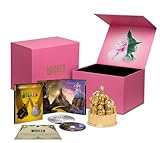
Wicked: For Good - Amazon Exclusive Giftset (4K Ultra HD + Blu-ray + Digital) | $197.50 | Buy on Amazon |
So when Fiyero and Dorothy share space in Wicked: For Good, it signals a deliberate collision of canons. The sequel isn’t just filling in gaps; it’s interrogating the cost of Dorothy’s arrival and who pays for Oz’s happily-ever-after. For the first time, the story isn’t asking what happens before Dorothy lands — it’s asking what happens to everyone else once she does.
Where We Left Fiyero: His Fate in the Stage Musical vs. the Novel
To understand why Fiyero standing near Dorothy feels so destabilizing, you have to rewind to the last time Wicked told us where he ended up. Depending on which version of Oz you know best, Fiyero either exits the story as a tragic magic trick or never really escapes it at all.
Outdated Drivers Are Slowing You Down
One free scan finds every outdated or missing driver and matches the right update for your exact hardware.Free scan · exact hardware matchWindows Errors? Fix Them Before They Spread
Repair common Windows errors and clear accumulated junk for a smoother, more stable PC - no reinstall needed.Free scan · no reinstall#1 Best Overall
Fiyero in the Stage Musical: The Romantic Disappearance
Onstage, Fiyero’s arc is ultimately a sleight of hand. After being captured by the Wizard’s regime, he’s tortured and seemingly executed, only for Wicked to pull its signature reveal: Elphaba’s spell saves him, transforming him into the Scarecrow. He survives, but only by surrendering his identity.
This version of Fiyero exists largely outside Dorothy’s emotional orbit. He becomes part of Oz’s familiar iconography, a silent witness to events we already know will end with the Witch’s death and the girl from Kansas going home. His love story with Elphaba is preserved by absence, sealed off from the canon of The Wizard of Oz rather than colliding with it.
Importantly, the musical keeps Dorothy at a distance. She passes through the narrative like a weather event, devastating but impersonal, allowing Fiyero’s fate to remain intimate and mythic rather than political.
Fiyero in Gregory Maguire’s Novel: The Cost of Being Seen
Maguire’s Wicked offers no such mercy. Fiyero is not a romantic vanishing act but a public casualty of Oz’s power structure, brutally punished for his dissent and connection to Elphaba. His death is not symbolic; it’s deliberate, visible, and horrifying.
Dorothy’s presence in the novel is far more invasive, intersecting directly with the mechanisms that destroy Fiyero. She isn’t just an innocent passerby but an unwitting participant in a system that demands sacrifice to maintain the illusion of order. In this telling, Fiyero becomes a victim of narrative convenience, someone whose humanity is erased so Oz can keep functioning.
That distinction matters. The novel positions Fiyero as proof that stories have consequences, and that the myth of Dorothy’s goodness is built atop bodies the official history never mourns.
Why This Divide Matters for Wicked: For Good
The stage musical leaves Fiyero safely tucked into legend, while the novel leaves him broken by reality. Wicked: For Good placing him alongside Dorothy suggests the sequel isn’t satisfied with the musical’s gentler version of events. It hints at a story willing to reopen wounds Wicked once politely stitched shut.
If Fiyero can exist in Dorothy’s line of sight, then his fate may no longer be sealed by clever transformations or offstage assumptions. It suggests a narrative ready to interrogate whether survival was ever the point, or just another comforting lie Oz tells itself.
Do these 3 things before closing this tab:
1Repair Windows errors before they cause bigger problems2Scan for outdated or missing drivers - takes under a minute3Clear out junk files and repair common Windows errorsDorothy’s Missing Perspective: What Wicked Has Always Withheld
Wicked’s most radical trick has never been sympathizing with the Wicked Witch. It’s been erasing Dorothy almost entirely. By keeping her offstage, unnamed, and emotionally inaccessible, the musical protects its central romance and politics from the moral implications Dorothy inevitably brings with her.
Dorothy, in Wicked, is not a character so much as a force of narrative gravity. She arrives, things collapse, and then she leaves. We are never asked to sit with what she sees, feels, or misunderstands, because doing so would require the story to account for the damage she unknowingly causes.
The Girl from Kansas as a Narrative Blind Spot
In the 1939 film, Dorothy is the moral axis of Oz. The world bends around her innocence, and every character she meets exists to aid her journey home. Wicked quietly subverts that framing by refusing to grant her interiority, turning her into a symbol rather than a soul.
That absence is strategic. If Dorothy were allowed perspective in Wicked, then Elphaba’s death, Fiyero’s disappearance, and Oz’s political machinery could no longer exist in a romantic fog. Someone would have to ask whether Dorothy’s goodness absolves her of complicity, or whether innocence can still harm.
Recommended Free Tools
Rank #2
- Runtime: 138 minutes
Why Fiyero Changes Everything
Placing Fiyero alongside Dorothy in Wicked: For Good threatens to collapse that carefully maintained distance. Fiyero is not a mythic abstraction; he is a person with history, desire, and consequence. If Dorothy truly sees him, then Oz’s fairy tale structure starts to crack.
This is especially potent given Fiyero’s role across versions of the canon. In the musical, he survives by slipping out of the story. In Maguire’s novel, he dies because he is seen too clearly. Dorothy’s gaze becomes the missing variable that determines which version of Fiyero exists.
A Dorothy Who Looks Back
The marketing for Wicked: For Good suggests a Dorothy no longer content to pass through the wreckage without context. If she shares scenes, space, or narrative weight with Fiyero, then the sequel is inviting us to reconsider her role not as savior, but as witness.
That shift aligns Wicked: For Good closer to Maguire’s moral complexity than the stage musical’s protective distance, while still reckoning with the cultural shadow of the 1939 film. Dorothy doesn’t need to become darker to matter. She only needs to be allowed to see, and be seen, within the story Wicked has always been telling around her.
And once Dorothy has perspective, Fiyero can no longer disappear quietly. His presence beside her suggests that Wicked: For Good isn’t just filling in gaps, but deliberately exposing the one voice Oz has always depended on ignoring.
Canon Collision: How Wicked: For Good Bridges Maguire, Broadway, and the 1939 Film
If Wicked: For Good is placing Fiyero in Dorothy’s orbit, it’s not an accident or a stunt. It’s a collision point where three competing Oz canons finally acknowledge each other. The film sequel isn’t choosing between Gregory Maguire, the Broadway musical, or the 1939 MGM classic. It’s daring to let them coexist, friction and all.
That friction is where the story gets interesting.
Maguire’s Oz: Where Dorothy Is a Catalyst, Not a Guest
In Maguire’s Wicked, Dorothy is not a wide-eyed ingénue drifting through spectacle. She’s a disruptive force whose arrival accelerates violence, misunderstanding, and irreversible consequences. Fiyero’s fate in the novel is inseparable from Dorothy’s presence, because being seen in Oz is often more dangerous than being wicked.
By positioning Fiyero alongside Dorothy, Wicked: For Good taps directly into that idea. This isn’t Dorothy as destiny’s darling; this is Dorothy as the moment where private lives become public tragedies. The film seems poised to reintroduce the novel’s core question: what does goodness cost the people caught in its wake?
What’s actually slowing this PC down?
Pick the symptom - the matching free tool is one click away.
Broadway’s Protection Spell, Finally Broken
The stage musical famously keeps Dorothy at arm’s length. She exists as a silhouette, a narrative necessity, but never a character with agency. That distance allows the musical to preserve its romantic melancholy, letting Fiyero survive by becoming a rumor rather than a fact.
Wicked: For Good appears ready to undo that protection. By letting Dorothy share narrative space with Fiyero, the sequel threatens the musical’s most comforting illusion: that love can slip quietly between the cracks of history. If Dorothy sees Fiyero, then survival is no longer poetic. It’s political, visible, and potentially unforgivable.
The 1939 Film’s Shadow and the Cost of Nostalgia
No Oz adaptation escapes the gravitational pull of the 1939 film, where Dorothy’s innocence is absolute and the world rearranges itself to accommodate her moral clarity. That version of Oz depends on everyone else being expendable set dressing. Witches melt, scarecrows smile, and the camera never lingers long enough to ask who paid the price.
Wicked: For Good placing Fiyero beside Dorothy reads like a direct challenge to that legacy. It asks what happens when Dorothy’s journey overlaps with someone whose story cannot be neatly resolved by going home. Nostalgia fractures when confronted with consequences it was never designed to carry.
Rank #3
Why This Moment Changes the Stakes
Fiyero and Dorothy together signals a sequel less interested in retelling events than in interrogating them. It suggests a Dorothy who understands that her choices echo beyond the yellow brick road, and a Fiyero who can no longer vanish into metaphor. Their interaction becomes a referendum on whose story Oz chooses to remember.
This is canon collision as narrative intent. Wicked: For Good isn’t smoothing contradictions; it’s staging them. And by doing so, it reframes Oz not as a fairy tale with villains and victors, but as a shared history where innocence, love, and rebellion all leave scars that someone has to carry.
Is Fiyero Still the Scarecrow? Identity, Disguise, and Narrative Misdirection
The question fans keep circling isn’t just why Fiyero is near Dorothy. It’s who he’s allowed to be when he is. Wicked has always treated Fiyero’s survival as a magic trick, one that works only if you don’t look too closely at the hands.
In the stage musical, the answer is clean and emotionally protective. Fiyero becomes the Scarecrow, Dorothy helps him without ever knowing it, and the story slides past the implications with a smile and a curtain call.
Free tools Windows power users keep installed
One-click scans. No signup required.
The Musical’s Sleight of Hand
Onstage, Fiyero’s transformation is less about disguise and more about permission. By turning him into a familiar Oz icon, the musical lets him survive without demanding recognition. Dorothy doesn’t meet Fiyero; she meets a character she already understands.
That distance is intentional. It allows Elphaba and Fiyero to escape the narrative without rewriting it, preserving the idea that love can exist even if history never records it correctly.
Maguire’s Canon: Identity as Punishment
Gregory Maguire’s novel is less forgiving. In Wicked, identity is something imposed, not chosen, and survival often comes at the cost of selfhood. Fiyero’s fate is darker, more ambiguous, and far less romantic than the musical adaptation suggests.
If Wicked: For Good leans closer to Maguire’s thematic spine, then Fiyero’s proximity to Dorothy may not confirm the Scarecrow disguise so much as destabilize it. He may be hidden in plain sight, or not hidden at all, forced to confront the people who benefit from not knowing who he is.
The 1939 Film’s Problematic Simplicity
The Scarecrow of the 1939 film is uncomplicated, lovable, and narratively safe. He exists to affirm Dorothy’s goodness, not to complicate it. Wicked has always quietly resisted that version of Oz by asking who gets flattened into symbols so others can feel heroic.
Putting Fiyero alongside Dorothy threatens to collapse that symbolic distance. If he is still the Scarecrow, then the disguise becomes ethically loaded. If he isn’t, then Oz’s most comforting transformation is exposed as a lie we chose to believe.
Misdirection as Storytelling Strategy
Wicked: For Good may be using identity not as a reveal, but as a provocation. Marketing images and fleeting moments can suggest familiarity while withholding confirmation, inviting audiences to project the version of Oz they want most.
That uncertainty is the point. By destabilizing whether Fiyero is still the Scarecrow, the sequel reframes disguise as a survival tactic in a world that punishes truth. And when Dorothy enters that equation, misdirection stops being clever and starts being dangerous.
Rank #4
- Blu-ray
What Fiyero Means to Dorothy — and Why Their Encounter Matters Now
Dorothy’s role in Oz has always been deceptively simple. She arrives, fixes what’s broken, and leaves before the mess can complicate her conscience. Putting Fiyero in her orbit disrupts that simplicity, because he represents the cost of the story Dorothy is allowed to experience as a triumph.
In Wicked: For Good, their encounter isn’t about romance or revelation. It’s about proximity. For the first time, Dorothy is close enough to the collateral damage of her journey to feel it.
Dorothy as Catalyst, Not Villain
Dorothy has never been Oz’s antagonist, but she is often its accelerant. Her arrival triggers political shifts, regime changes, and personal reckonings she never fully witnesses. Fiyero standing near her reframes that dynamic, not to indict her, but to show how innocence and consequence can occupy the same space.
In the musical’s logic, Dorothy never needs to understand Fiyero for his sacrifice to matter. But the film has the opportunity to complicate that by letting her presence register, even if comprehension doesn’t. A glance, a pause, a moment of unspoken recognition can carry enormous weight.
The Tool Desk
Outbyte Driver Updater FREEFix the driver behind crashes, sound loss and screen glitchesFind Drivers →Outbyte PC Repair FREERepair Windows errors before they cause bigger problemsFix Now →The Scarecrow Problem, Revisited
If Fiyero is still the Scarecrow in Wicked: For Good, then Dorothy’s interaction with him becomes morally charged in a way the stage musical never explored. She’s not just befriending a whimsical farmhand; she’s leaning on someone who has already given up everything to survive the story she’s inside.
If he isn’t the Scarecrow, the tension shifts but doesn’t disappear. Instead, Dorothy becomes a living reminder of the myth Oz prefers, while Fiyero exists as evidence of what that myth erases. Either version asks the audience to sit with discomfort rather than nostalgia.
Maguire’s Shadow Over the Yellow Brick Road
Gregory Maguire’s Wicked treats Dorothy less as a hero and more as an inevitability. She doesn’t mean to harm, but meaning has very little power in a system built on spectacle and scapegoats. Fiyero’s brush with her embodies that idea perfectly.
By aligning them even briefly, Wicked: For Good signals a tonal shift toward consequence over comfort. This isn’t about exposing Dorothy’s flaws so much as acknowledging that survival in Oz often requires someone else to be misunderstood, forgotten, or turned into a joke.
Do these 3 things before closing this tab:
1Fix the driver behind crashes, sound loss and screen glitches2Repair Windows errors before they cause bigger problems3Scan for outdated or missing drivers - takes under a minuteWhy This Moment Matters Now
Fiyero appearing alongside Dorothy tells us the sequel isn’t interested in clean endings. It’s interested in emotional aftershocks. Love that survives offstage, identities that remain unresolved, and heroes who never realize what their victories cost.
In that sense, Dorothy doesn’t change Fiyero’s fate. She clarifies it. And by letting them share the frame, Wicked: For Good asks whether we’re finally ready to see Oz not as a fairy tale we outgrow, but as one that grows heavier the longer we look at it.
Independent reader supportYour contribution helps us test, update, and keep practical guides available for everyone.Thematic Stakes: Truth, Complicity, and Who Gets to Be the Hero of Oz
By placing Fiyero anywhere near Dorothy’s orbit, Wicked: For Good isn’t just remixing canon. It’s interrogating it. This is the point where Oz stops being a story about who wins and becomes a story about who understands what they’re part of.
Truth Is Not the Same as Innocence
Dorothy has always functioned as Oz’s moral reset button. In the 1939 film, her sincerity cleanses a corrupt system almost by accident, as if goodness alone is enough to expose lies. Wicked, both onstage and on the page, complicates that fantasy by suggesting truth doesn’t automatically absolve anyone who benefits from it.
Free tools Windows power users keep installed
One-click scans. No signup required.
Best Value
- Limited Edition 4K Giftset
- Digital Copy
- Bonus Content
Fiyero standing beside her reframes that idea. He knows the truth about Oz and survives by being erased by it, while Dorothy never needs to know anything beyond what keeps her moving forward. The tension isn’t that she’s wrong, but that she’s protected by a narrative that doesn’t require her to look back.
Complicity Without Villainy
One of Wicked’s sharpest arguments has always been that systems don’t need evil participants, just compliant ones. Dorothy isn’t a tyrant or a liar; she’s a guest who follows the rules of the world she’s dropped into. That’s precisely why her presence next to Fiyero is so unsettling.
If Fiyero is the Scarecrow, then Dorothy’s reliance on him becomes an act of unwitting extraction. She takes wisdom, guidance, and emotional labor from someone whose identity has already been stripped away to keep the story clean. If he isn’t, the point still stands: Oz rewards those who move the plot along and sidelines those who see too much.
Rewriting the Shape of Heroism in Oz
Across Oz canon, heroism has usually belonged to the traveler, not the resident. Dorothy leaves, Glinda stays, and the costs of change are absorbed by those who never get a curtain call. Wicked: For Good appears ready to challenge that hierarchy by letting the emotional center drift toward the people who don’t get to go home.
Quick wins for a faster PC:
Fix the driver behind crashes, sound loss and screen glitchesFind Drivers →Repair Windows errors before they cause bigger problemsFix Now →Fiyero’s proximity to Dorothy signals that the sequel isn’t interested in crowning a new hero so much as questioning why Oz only recognizes one at a time. In this version of the story, bravery might look less like defeating a witch and more like surviving the aftermath of someone else’s victory.
What This Signals for Wicked: For Good’s Ending and the Rewriting of Oz History
If Wicked: For Good is placing Fiyero beside Dorothy this late in the game, it’s not doing it for a cameo thrill. It’s a thesis statement. The sequel appears poised to treat the familiar ending of The Wizard of Oz not as a fixed conclusion, but as a selective memory shaped by who gets to tell the story.
In other words, the yellow brick road may still lead where we expect, but the emotional geography around it is changing. And Fiyero is the clearest signpost that Oz’s past is about to be reframed.
Colliding Canons, Not Contradicting Them
Across Oz history, these characters are never meant to fully intersect. The 1939 film keeps Dorothy insulated from consequence, while Wicked the musical carefully positions its revelations just out of her line of sight. Gregory Maguire’s novel goes further, suggesting that Dorothy’s presence accelerates tragedy without ever bearing responsibility for it.
Wicked: For Good seems less interested in breaking canon than in stitching its seams together. By aligning Fiyero with Dorothy, the film can honor the events we recognize while exposing what those events cost the people left behind. The road still ends in Emerald City, but now we’re invited to notice who had to disappear to make that ending feel clean.
Fiyero as the Keeper of the Unfinished Story
Whether the film confirms Fiyero’s transformation or simply echoes it, his placement alongside Dorothy reframes the Scarecrow archetype as something heavier. He isn’t just a figure seeking wisdom; he’s someone who has already paid for it. Standing next to Dorothy, he embodies everything Oz requires its protectors to forget.
This dynamic transforms Dorothy’s journey into a kind of narrative extraction. She learns, grows, and eventually leaves, while Fiyero remains embedded in the machinery of Oz, carrying truths that will never make it into the official version. It’s not a betrayal of her innocence, but it is an indictment of the story that shields it.
An Ending That Refuses to Reset Oz
The biggest signal here is that Wicked: For Good doesn’t seem interested in restoring balance by rolling the credits on conflict. The presence of Dorothy alongside someone who knows how the story really ends suggests a finale that lingers on aftermath rather than triumph. Oz doesn’t reset; it absorbs.
What’s actually slowing this PC down?
Pick the symptom - the matching free tool is one click away.
That choice aligns the sequel more closely with Maguire’s worldview than the comforting finality of the 1939 film. History, in this version of Oz, is something you survive, not something that neatly resolves.
Why This Changes Everything
By the time Wicked: For Good reaches its conclusion, Dorothy may still go home, and Oz may still crown its heroes. But Fiyero’s role hints that the film wants us to sit with who gets remembered and who gets repurposed. The legend survives, but not without ghosts.
That’s the quiet provocation at the heart of this pairing. Wicked: For Good isn’t asking us to stop loving The Wizard of Oz. It’s asking us to finally see what that love has been built on, and who had to stand beside the road so the rest of us could follow it.
Quick Recap
Product prices and availability are accurate as of the date/time indicated and are subject to change. Any price and availability information displayed on Amazon at the time of purchase will apply.
Recommended Free Tools




