Recommended Free Tools
There are voices that explain the world, and then there are voices that seem to understand it. Morgan Freeman’s narration occupies that rare second category, where tone, rhythm, and authority merge into something instantly recognizable and deeply reassuring. Long before audiences could name the phenomenon, his voice had already become shorthand for truth, gravity, and wonder in nonfiction cinema.
What makes Freeman singular is not just the baritone warmth, but the way he narrates ideas rather than information. His delivery invites patience, allowing complex scientific concepts, sweeping histories, and intimate human stories to unfold with clarity and emotional weight. In documentaries, his voice doesn’t dominate the images; it anchors them, lending credibility without condescension and awe without exaggeration.


This article explores how that rare alchemy plays out across the best documentaries Freeman has narrated. From cosmic explorations to urgent social histories and nature epics, each film demonstrates how his presence elevates the material and shapes the viewing experience. Whether you’re drawn to big-idea science, historical reflection, or visually driven storytelling, these selections reveal why Morgan Freeman’s narration has become a genre unto itself.
How We Ranked the 20 Best Morgan Freeman–Narrated Documentaries
Ranking documentaries narrated by Morgan Freeman requires more than simply measuring the prestige of the subject or the polish of the production. His voice is not an accessory; it is a storytelling instrument that can deepen meaning, clarify complexity, and shape how audiences emotionally process what they see. Our approach reflects that understanding, weighing both cinematic quality and the unique contribution Freeman brings to each film.
The Tool Desk
Outbyte Driver Updater FREEScan for outdated or missing drivers - takes under a minuteDriver Scan →Outbyte PC Repair FREEClear out junk files and repair common Windows errorsFree Scan →#1 Best Overall
The Power of the Subject Matter
We began by evaluating the importance and depth of each documentary’s core subject. Science, history, nature, and social issues all appear frequently in Freeman-narrated projects, but not all topics are treated with equal ambition or insight. Priority was given to films that tackle big ideas with intellectual rigor, curiosity, and a clear sense of purpose.
How Freeman’s Narration Shapes the Experience
A key factor in our ranking was how organically Freeman’s voice integrates into the documentary’s structure. The strongest entries are those where his narration doesn’t simply explain what’s on screen, but enhances tone, pacing, and emotional resonance. We favored films where his delivery adds dimension, whether through quiet contemplation, moral gravity, or a sense of wonder that images alone could not achieve.
Storytelling Craft and Cinematic Execution
Beyond narration, we assessed each documentary’s filmmaking fundamentals. Direction, editing, visual composition, and score all play crucial roles in determining whether a film feels immersive or merely informative. The highest-ranked documentaries demonstrate a confident command of cinematic language, allowing Freeman’s voice to operate in harmony with the visuals rather than compensating for them.
Clarity, Accessibility, and Intellectual Trust
Freeman is often tasked with guiding audiences through complex material, from astrophysics to dense historical narratives. We rewarded documentaries that respect viewers’ intelligence while remaining accessible, using narration to illuminate rather than oversimplify. Films that balance clarity with nuance, trusting the audience to engage thoughtfully, ranked higher.
Do these 3 things before closing this tab:
1Clear out junk files and repair common Windows errors2Scan for outdated or missing drivers - takes under a minute3Repair Windows errors before they cause bigger problemsEmotional and Cultural Impact
Documentaries linger when they provoke reflection or reshape how we understand the world. We considered the emotional weight of each film and its broader cultural significance, particularly those that sparked conversation, influenced public understanding, or remain relevant years after release. Freeman’s narration often amplifies this impact, giving the material a sense of enduring authority.
Rewatch Value and Lasting Presence
Finally, we looked at longevity. The best Morgan Freeman–narrated documentaries reward repeat viewing, revealing new details or emotional textures over time. These are films audiences return to not just for information, but for the experience of being guided once again by a voice that makes learning feel profound and cinematic.
The Definitive Ranking: #20–#16 — Underrated Gems and Deep Cuts
These lower-ranked entries aren’t lesser because of quality, but because they tend to live outside mainstream documentary conversation. They’re films where Morgan Freeman’s narration often does more quiet, structural work, lending gravity and cohesion to projects that might otherwise feel niche, modest, or specialized. For curious viewers willing to dig a little deeper, these are rewarding places to start.
#20. Cosmic Voyage (1996)
Produced for the IMAX format, Cosmic Voyage is a scientifically ambitious journey that scales from subatomic particles to the outer reaches of the universe. Freeman’s narration acts as a stabilizing force amid dense astrophysical concepts, guiding viewers through mind-bending shifts in scale with calm authority. The film’s visuals show their age, but his voice gives the experience coherence and intellectual trust.
Crashes, No Sound, or Screen Glitches?
Random freezes, missing sound and display glitches usually trace back to one bad driver. Find and replace yours safely.Free scan · under a minutePC Slower Than It Used to Be?
A free scan shows the junk files, broken settings and background clutter dragging Windows down - then fixes them in one click.Free scan · Windows 10 & 11This is a documentary best suited for science enthusiasts who appreciate clarity over spectacle. Freeman doesn’t dramatize the material; he reassures you that understanding is possible.
#19. Island of Lemurs: Madagascar (2014)
This nature documentary explores Madagascar’s unique ecosystem through the evolutionary history of its most famous inhabitants. Freeman’s narration brings warmth and curiosity to a story that balances scientific insight with environmental urgency. His tone makes the film feel inviting rather than didactic, especially for younger or casual viewers.
While less sweeping than landmark wildlife documentaries, it benefits from Freeman’s ability to make ecological storytelling feel personal. It’s an ideal entry point for fans of accessible, family-friendly nature films.
#18. Born to Be Wild (2011)
Centered on conservationists rehabilitating orphaned orangutans and elephants, Born to Be Wild leans heavily on emotional connection. Freeman’s narration provides moral grounding without tipping into sentimentality, allowing the animals’ stories to resonate naturally. His voice adds dignity to both the subjects and the humans dedicating their lives to them.
The film’s IMAX presentation emphasizes intimacy over spectacle, and Freeman’s measured delivery reinforces that choice. It’s a quietly affecting documentary that lingers longer than its runtime suggests.
Rank #2

- Factory sealed DVD
#17. The Long Way Home (1997)
This Oscar-winning documentary chronicles the aftermath of World War II through the experiences of Holocaust survivors attempting to rebuild their lives. Freeman’s narration is restrained and respectful, never competing with survivor testimony but framing it with historical clarity. His voice lends solemnity without overshadowing the human stories at the center.
The film’s power lies in its refusal to simplify trauma, and Freeman’s narration supports that restraint. For viewers interested in postwar history and memory, this remains an essential, if often overlooked, work.
#16. IMAX: Destiny in Space (1994)
Destiny in Space captures the early ambitions of space exploration through a blend of archival footage and IMAX visuals. Freeman’s narration imbues the film with a sense of purpose, elevating what could feel like a technical overview into a meditation on human curiosity and risk. His delivery gives historical context emotional weight.
Though modest in scope compared to later space documentaries, it showcases Freeman’s talent for making institutional history feel mythic. It’s a rewarding watch for viewers fascinated by the philosophical implications of exploration.
These documentaries may not dominate popular rankings, but they reveal the breadth of Freeman’s documentary work. Even at this stage of the list, his narration consistently enhances structure, tone, and emotional engagement, setting the foundation for the more iconic entries still to come.
The Definitive Ranking: #15–#11 — Powerful Stories Elevated by Freeman’s Voice
As the list moves closer to the upper tier, the documentaries become more ambitious in scope and more confident in their use of Freeman’s narration. These entries balance intellectual curiosity with emotional resonance, showing how his voice can unify complex ideas while maintaining accessibility for a wide audience.
#15. Journey to Space (2015)
Journey to Space is a visually immersive IMAX documentary that traces humanity’s relationship with space exploration, from early rocket science to the International Space Station. Freeman’s narration frames this technological history as a collective human endeavor rather than a catalog of achievements, emphasizing curiosity, risk, and perseverance.
Quick wins for a faster PC:
Clear out junk files and repair common Windows errorsFree Scan →Fix the driver behind crashes, sound loss and screen glitchesFind Drivers →What elevates the film is Freeman’s ability to humanize abstraction. His calm authority turns orbital mechanics and engineering milestones into reflections on ambition, making the documentary especially rewarding for viewers drawn to the philosophical side of space exploration.
#14. Island of Lemurs: Madagascar (2014)
Island of Lemurs explores the evolutionary history and ecological fragility of Madagascar through its most iconic inhabitants. Freeman’s narration is warm and inviting, perfectly suited to a film that blends scientific explanation with a sense of wonder at nature’s adaptability.
Rather than leaning on spectacle alone, Freeman’s delivery adds narrative cohesion, guiding viewers through millions of years of evolution with clarity and enthusiasm. It’s an ideal entry point for casual nature documentary fans and younger audiences without ever feeling simplistic.
#13. Relentless Enemies (2006)
Relentless Enemies examines predator-prey relationships across diverse ecosystems, focusing on survival as a constant negotiation rather than a simple battle. Freeman’s narration brings balance and gravitas, resisting sensationalism in favor of ecological insight.
His voice reinforces the documentary’s central theme: that nature operates on necessity, not morality. For viewers interested in wildlife documentaries that prioritize understanding over drama, Freeman’s measured tone makes this a quietly compelling watch.
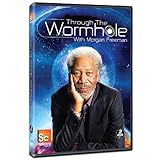
#12. Through the Wormhole (2010–2017)
Through the Wormhole stands out as one of Freeman’s most intellectually ambitious projects, tackling questions about the universe, consciousness, time, and reality itself. His narration serves as a grounding force, guiding audiences through advanced theoretical science without condescension.
Rank #3
Freeman’s presence is essential to the series’ success. He bridges the gap between speculative physics and human curiosity, making complex ideas feel approachable while preserving their mystery. For viewers who enjoy documentaries that challenge as much as they inform, this remains a standout.
#11. The Known Universe (2009)
The Known Universe offers a sweeping visual journey from Earth to the farthest reaches of the observable cosmos. Freeman’s narration provides a steady emotional anchor as the film moves through staggering scales of distance and time.
Free tools Windows power users keep installed
One-click scans. No signup required.
What makes the documentary memorable is how Freeman transforms cosmic enormity into something contemplative rather than overwhelming. His voice invites reflection on humanity’s place in the universe, making this an essential watch for fans of astronomy and cosmic storytelling alike.
The Definitive Ranking: #10–#6 — Cultural, Historical, and Scientific Cornerstones
#10. March of the Penguins (2005)
March of the Penguins became a global phenomenon, and Morgan Freeman’s narration for the U.S. release played a significant role in its crossover appeal. The film chronicles the brutal, awe-inspiring breeding cycle of emperor penguins, presenting survival as an act of quiet endurance rather than spectacle.
Freeman’s voice lends the documentary a sense of dignity and emotional restraint, avoiding anthropomorphism while still fostering deep empathy. For viewers new to nature documentaries, this remains one of the most accessible and emotionally resonant entry points in Freeman’s body of work.
#9. Madagascar (2008)
Madagascar explores one of Earth’s most biologically unique ecosystems, shaped by millions of years of isolation. Freeman’s narration guides viewers through the island’s evolutionary oddities with a storyteller’s curiosity rather than a lecturer’s distance.
What elevates the film is Freeman’s ability to balance scientific explanation with wonder. His delivery transforms niche evolutionary concepts into engaging narrative beats, making the documentary especially appealing to audiences fascinated by biodiversity and natural history.
#8. Oceans (2010)
Oceans plunges viewers into the planet’s least understood environment, revealing marine life on both an epic and intimate scale. Freeman’s narration acts as a calm, contemplative counterweight to the film’s sweeping visuals and urgent conservation themes.
Rather than moralizing, his voice frames the ocean as a living system shaped by delicate balances and mounting human pressure. For viewers drawn to environmental documentaries that inspire reflection rather than alarm, Oceans stands as a quietly powerful experience.
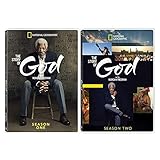
#7. The Story of God with Morgan Freeman (2016–2019)
The Story of God places Freeman not just behind the microphone, but at the center of the inquiry. Traveling across cultures and belief systems, the series examines humanity’s enduring questions about faith, meaning, and the divine.
What’s actually slowing this PC down?
Pick the symptom - the matching free tool is one click away.
Freeman’s narration feels personal without becoming prescriptive. His thoughtful curiosity and lived-in gravitas allow the series to explore sensitive topics with respect, making it essential viewing for audiences interested in religion, philosophy, and cultural anthropology.
#6. Our Universe (2022)
Our Universe blends cutting-edge cosmology with the history of life on Earth, linking stars, planets, and biology into a single cosmic narrative. Freeman’s narration provides coherence across vast scales of time and space, grounding abstract science in human perspective.
What makes the series stand out is how effortlessly Freeman connects the scientific to the existential. For viewers who enjoy documentaries that merge astrophysics with storytelling ambition, this ranks among his most polished and accessible modern projects.
The Definitive Ranking: #5–#2 — Essential Viewing for Documentary Fans
#5. March of the Penguins (2005)
March of the Penguins remains one of the most culturally ubiquitous nature documentaries of the 21st century, and Freeman’s narration is central to its enduring appeal. Chronicling the harrowing breeding cycle of emperor penguins in Antarctica, the film transforms survival biology into an emotionally legible journey.
Freeman’s voice lends warmth and narrative clarity to a story that could easily have felt remote or clinical. By framing the penguins’ struggle with understated empathy rather than sentimentality, he helps elevate the documentary into a universally resonant tale about endurance, cooperation, and life against impossible odds.
#4. Through the Wormhole with Morgan Freeman (2010–2017)
Through the Wormhole is Freeman at his most intellectually adventurous, guiding viewers through cutting-edge theories about space, time, consciousness, and the nature of reality itself. Each episode tackles questions that hover at the outer limits of human understanding, drawing on physicists, philosophers, and futurists.
Freeman’s narration functions less as explanation and more as invitation. His calm authority reassures viewers as the series ventures into abstract territory, making complex scientific speculation feel approachable without oversimplifying the ideas at stake.
#3. Life on Our Planet (2023)
Life on Our Planet offers an ambitious synthesis of Earth’s evolutionary history, using state-of-the-art visual effects to recreate long-extinct species and ecosystems. The series connects mass extinctions, climate shifts, and biological innovation into a single, sweeping narrative of life’s resilience.
Freeman’s narration anchors the spectacle with perspective and urgency. His measured delivery underscores the fragility of biodiversity without drifting into alarmism, making the series particularly compelling for viewers interested in both deep time and present-day environmental stakes.
#2. The Story of Us with Morgan Freeman (2010)
The Story of Us examines humanity itself, tracing how innovation, conflict, culture, and cooperation have shaped civilizations across millennia. Rather than presenting history as a timeline of events, the series frames it as an evolving experiment in survival and identity.
Freeman’s narration gives the material cohesion and moral gravity. His reflective tone invites viewers to consider not just where humanity has been, but what our collective choices reveal about who we are and where we may be headed.
Independent reader supportYour contribution helps us test, update, and keep practical guides available for everyone.The #1 Best Documentary Narrated by Morgan Freeman — Why It Stands Above the Rest
#1. March of the Penguins (2005)
At the very top of Morgan Freeman’s documentary canon stands March of the Penguins, a film that has become inseparable from his voice in the cultural imagination. Chronicling the harrowing annual journey of Emperor penguins across Antarctica, the documentary transforms an animal migration into a sweeping epic about survival, devotion, and endurance.
Quick wins for a faster PC:
Fix the driver behind crashes, sound loss and screen glitchesFind Drivers →Repair Windows errors before they cause bigger problemsFix Now →Scan for outdated or missing drivers - takes under a minuteDriver Scan →What elevates March of the Penguins above every other Freeman-narrated project is the perfect alignment between subject, storytelling, and voice. The film’s stark landscapes and life-or-death stakes demand a narrator who can convey awe without embellishment, emotion without sentimentality. Freeman’s narration does exactly that, granting the penguins’ struggle a quiet dignity that never feels anthropomorphic, yet remains deeply moving.
A Voice That Shapes the Emotional Experience
Freeman does not simply describe what the penguins are doing; he frames how we feel about what we are witnessing. His delivery balances warmth and restraint, allowing moments of loss, perseverance, and reunion to resonate organically. The result is a narration that guides rather than dominates, trusting the audience to engage emotionally without being told what to feel.
This approach proved transformative for mainstream nature documentaries. March of the Penguins reached audiences far beyond traditional wildlife enthusiasts, becoming a global phenomenon and an Academy Award winner. Freeman’s voice played a central role in making the film accessible to families, casual viewers, and first-time documentary watchers alike.
Why It Remains Essential Viewing
Nearly two decades later, March of the Penguins endures as a benchmark for narrated documentaries. It demonstrates how voiceover, when used with discipline and intention, can elevate factual storytelling into something mythic without sacrificing authenticity.
For viewers seeking the definitive Morgan Freeman documentary experience, this is the one where everything aligns. His narration does not merely enhance the film; it defines its legacy, setting a standard that few documentaries, narrated or otherwise, have ever matched.
What Type of Viewer Should Watch Which Films — A Curated Viewing Guide
Morgan Freeman’s documentary work spans nature epics, cosmic inquiry, human history, and intimate character studies. While his voice provides a unifying throughline, each film speaks to a different kind of viewer. Consider this a tailored guide to finding the Freeman-narrated documentary that best matches your curiosity, mood, and appetite for discovery.
For First-Time Documentary Viewers and Families
If you are easing into documentaries or looking for something universally engaging, March of the Penguins remains the ideal entry point. Its clear narrative, emotional accessibility, and awe-inspiring visuals make it suitable for all ages without ever feeling simplistic. Freeman’s narration functions as a steady, reassuring presence that helps newcomers connect instinctively with the story.
Born to Be Wild and Island of Lemurs: Madagascar are similarly welcoming. Both focus on animal conservation and human compassion, using Freeman’s warmth to guide viewers through visually rich environments while keeping the tone hopeful and approachable.
Windows Errors? Fix Them Before They Spread
Repair common Windows errors and clear accumulated junk for a smoother, more stable PC - no reinstall needed.Free scan · no reinstallOutdated Drivers Are Slowing You Down
One free scan finds every outdated or missing driver and matches the right update for your exact hardware.Free scan · exact hardware matchFor Nature Lovers and Wildlife Enthusiasts
Viewers drawn to the rhythms of the natural world will find Freeman at his most lyrical in March of the Penguins and Island of Lemurs. These films benefit from his ability to narrate without overpowering the imagery, allowing landscapes and animal behavior to command attention.
Unlikely Animal Friends offers a lighter, more episodic experience for those who enjoy observational storytelling. Freeman’s relaxed delivery lends charm and cohesion to a format built around small, surprising moments rather than grand narrative arcs.
For Science, Space, and Big-Question Thinkers
For viewers fascinated by the universe and humanity’s place within it, Through the Wormhole stands as Freeman’s most intellectually ambitious project. The series invites audiences to explore black holes, consciousness, and time itself, with Freeman acting less as a lecturer and more as a philosophical guide.
Cosmic Voyage offers a more visual, IMAX-driven experience of space exploration. Freeman’s narration anchors the vastness of the cosmos, making abstract scales and distances feel comprehensible rather than overwhelming.
The Tool Desk
Outbyte Driver Updater FREEScan for outdated or missing drivers - takes under a minuteDriver Scan →Outbyte PC Repair FREEClear out junk files and repair common Windows errorsFree Scan →For History Buffs and Cultural Explorers
America: The Story of Us is tailored for viewers who enjoy sweeping historical narratives grounded in personal storytelling. Freeman’s authoritative tone lends gravity to major events while maintaining clarity across a wide chronological scope.
The Story of God with Morgan Freeman appeals to culturally curious viewers interested in belief systems, rituals, and shared human questions. Freeman’s calm, inquisitive presence fosters dialogue rather than judgment, making complex spiritual topics accessible to a broad audience.
For Viewers Seeking Comfort Viewing and Reflective Calm
Some documentaries are best enjoyed as meditative experiences, and several Freeman-narrated projects fit this role perfectly. His voice, measured and unhurried, turns films like Unlikely Animal Friends and Born to Be Wild into ideal late-evening viewing, where the pleasure lies as much in listening as in watching.
These selections highlight Freeman’s unique ability to make documentaries feel companionable. Even when the subject matter is serious, his narration offers a sense of balance and reassurance.
Choosing the Right Freeman Documentary
The enduring appeal of Morgan Freeman’s documentary work lies in its versatility. Whether you are seeking emotional resonance, intellectual stimulation, or simple wonder, his narration adapts to the needs of the story and the viewer.
Taken together, these films demonstrate why Freeman remains one of documentary filmmaking’s most trusted voices. His narration does not merely tell stories; it invites viewers into them, shaping experiences that linger long after the screen fades to black.
Quick Recap
Product prices and availability are accurate as of the date/time indicated and are subject to change. Any price and availability information displayed on Amazon at the time of purchase will apply.